• Home
  • Latest
  • Fortune 500
  • Finance
  • Tech
  • Leadership
  • Lifestyle
  • Rankings
  • Multimedia

Trendingnow

1

Despite having a $165 million net worth, Scarlett Johansson says work-life balance doesn’t exist—and the first step to success is admitting that

2

The Bezos family just donated $100 million to help achieve one of Mayor Zohran Mamdani’s top campaign promises

3

Microsoft AI chief gives it 18 months—for all white-collar work to be automated by AI

1

Despite having a $165 million net worth, Scarlett Johansson says work-life balance doesn’t exist—and the first step to success is admitting that

2

The Bezos family just donated $100 million to help achieve one of Mayor Zohran Mamdani’s top campaign promises

3

Microsoft AI chief gives it 18 months—for all white-collar work to be automated by AI
TechIntel

How Intel Took Moore’s Law from Idea To Ideology

By
Brent Schlender
Brent Schlender
Down Arrow Button Icon
By
Brent Schlender
Brent Schlender
Down Arrow Button Icon
November 11, 2002, 1:00 AM ET
Fortune Nov. 11, 2002: Intel's Gordon Moore and Andy Grove
Gordon Moore (left) and Andy Grove reflect on Intel's beginnings.Evan Kafka

In 1965, you wrote the article that contained the observation we now call Moore’s Law. When you started Intel (INTC) with Robert Noyce and Andy three years later, was it your explicit goal for the company to try to live up to Moore’s Law?

MOORE: You know, this whole notion of Moore’s Law being the driving force of the company wasn’t the case in the beginning. In fact, it wasn’t until ten or 15 years ago that I could even say “Moore’s Law.” We started out just trying to extend the technologies in the ways we felt were appropriate for memory circuits.

GROVE: We didn’t build it into the company mission, we just took it for granted.

MOORE: We just tried to move the technology at as fast a rate as made sense, and it turns out that it pretty much stays on the same curve. The time that we really started pushing and driving it would be over the last few generations of technology. The fact that, although this challenge got harder and more expensive, we’ve been able to accelerate it by a third just amazes me. And by the time we get the 90-nanometers fab up and running, we think we can get to the next generation even a little ahead of that rate. I grew up with this technology, and it’s hard for me to believe that we can either design or build the things we do today.

Why is Intel’s “copy exactly” strategy to ramp up production of new plants quickly such an important element of living up to Moore’s Law?

MOORE: It’s extremely important because it takes a couple of years out of the life span of a generation of products. Historically, with a slower ramp-up it took a lot longer to move a new technology into full-volume production. So in addition to shortening the time between generations, you’ve also taken a couple of years out of the time a generation of products is available in volume. That in turn allows us to set a faster pace of innovation for our competitors to keep up with.

GROVE: Ideally you want to simply throw a switch and convert your entire production from the old and relatively less competitive range of products and technologies to a new generation. You can’t literally convert a whole new product generation in a single step-function fashion, but our fast, copy-exactly ramp-up approximates it.

MOORE: The point is to move the whole product line, not just a single part, to a more competitive performance position, which is several price points that you have to hit. People talk about how Intel cuts prices 20% or 30% or something–that’s standard business. But Intel puts a new, higher-performance chip into the mix where the top one was before and at a similar price. The idea with each new generation is to move a new performance group of product in to be competitive, rather than lower the price to be competitive.

Moore’s Law buys you more transistors to work with in each generation of your chip designs, which enables you to integrate more functions onto the basic processor. Have you always spent these transistors wisely?

MOORE: We’ve tried a variety of things along the way, and some of them were stillborn. The other things on the computer motherboard are changing a lot too. So if you stick everything on the main chip, you end up losing a lot of the flexibility that’s been so important in the evolution of the computer industry. A couple of years ago there was a product we called Timna, which was quite far along in development, that tightly integrated graphics right into the processor, and we decided pretty near to the end that, because of the flexibility it gave up, it wasn’t the best way to approach the market. So we killed it.

GROVE: It wasn’t that the market shifted, either. It was that the total wasn’t technologically competitive. But most of the time we manage to make these things work. A good example was putting the floating-point processor on the old 486 chip. That was a big success.

The implementation of on-chip cache memory was a success. Maybe my mind is playing games with me, but most of the things we’ve integrated into the chips have been successful, at least the things that I remember.

MOORE: I tend to remember the failures. (Laughter.) I expect everything to work.

This article first appeared in the November 11, 2002 issue of Fortune magazine.

About the Author
By Brent Schlender
See full bioRight Arrow Button Icon

Latest in Tech

Finance
Lorem ipsum dolor sit amet, consectetur adipiscing elit, sed do eiusmod tempor incididunt ut labore et dolore magna aliqua. Ut enim ad minim veniam
By Fortune Editors
October 20, 2025
Finance
Lorem ipsum dolor sit amet, consectetur adipiscing elit, sed do eiusmod tempor incididunt ut labore et dolore magna aliqua. Ut enim ad minim veniam
By Fortune Editors
October 20, 2025
Finance
Lorem ipsum dolor sit amet, consectetur adipiscing elit, sed do eiusmod tempor incididunt ut labore et dolore magna aliqua. Ut enim ad minim veniam
By Fortune Editors
October 20, 2025
Finance
Lorem ipsum dolor sit amet, consectetur adipiscing elit, sed do eiusmod tempor incididunt ut labore et dolore magna aliqua. Ut enim ad minim veniam
By Fortune Editors
October 20, 2025
Finance
Lorem ipsum dolor sit amet, consectetur adipiscing elit, sed do eiusmod tempor incididunt ut labore et dolore magna aliqua. Ut enim ad minim veniam
By Fortune Editors
October 20, 2025
Finance
Lorem ipsum dolor sit amet, consectetur adipiscing elit, sed do eiusmod tempor incididunt ut labore et dolore magna aliqua. Ut enim ad minim veniam
By Fortune Editors
October 20, 2025

Most Popular

Finance
Lorem ipsum dolor sit amet, consectetur adipiscing elit, sed do eiusmod tempor incididunt ut labore et dolore magna aliqua. Ut enim ad minim veniam
By Fortune Editors
October 20, 2025
Finance
Lorem ipsum dolor sit amet, consectetur adipiscing elit, sed do eiusmod tempor incididunt ut labore et dolore magna aliqua. Ut enim ad minim veniam
By Fortune Editors
October 20, 2025
Finance
Lorem ipsum dolor sit amet, consectetur adipiscing elit, sed do eiusmod tempor incididunt ut labore et dolore magna aliqua. Ut enim ad minim veniam
By Fortune Editors
October 20, 2025
Finance
Lorem ipsum dolor sit amet, consectetur adipiscing elit, sed do eiusmod tempor incididunt ut labore et dolore magna aliqua. Ut enim ad minim veniam
By Fortune Editors
October 20, 2025
Finance
Lorem ipsum dolor sit amet, consectetur adipiscing elit, sed do eiusmod tempor incididunt ut labore et dolore magna aliqua. Ut enim ad minim veniam
By Fortune Editors
October 20, 2025
Finance
Lorem ipsum dolor sit amet, consectetur adipiscing elit, sed do eiusmod tempor incididunt ut labore et dolore magna aliqua. Ut enim ad minim veniam
By Fortune Editors
October 20, 2025
Fortune Secondary Logo
Rankings
  • 100 Best Companies
  • Fortune 500
  • Global 500
  • Fortune 500 Europe
  • Most Powerful Women
  • World's Most Admired Companies
  • See All Rankings
  • Lists Calendar
Sections
  • Finance
  • Fortune Crypto
  • Features
  • Leadership
  • Health
  • Commentary
  • Success
  • Retail
  • Mpw
  • Tech
  • Lifestyle
  • CEO Initiative
  • Asia
  • Politics
  • Conferences
  • Europe
  • Newsletters
  • Personal Finance
  • Environment
  • Magazine
  • Education
Customer Support
  • Frequently Asked Questions
  • Customer Service Portal
  • Privacy Policy
  • Terms Of Use
  • Single Issues For Purchase
  • International Print
Commercial Services
  • Advertising
  • Fortune Brand Studio
  • Fortune Analytics
  • Fortune Conferences
  • Business Development
  • Group Subscriptions
About Us
  • About Us
  • Press Center
  • Work At Fortune
  • Terms And Conditions
  • Site Map
  • About Us
  • Press Center
  • Work At Fortune
  • Terms And Conditions
  • Site Map
  • Facebook icon
  • Twitter icon
  • LinkedIn icon
  • Instagram icon
  • Pinterest icon

Latest in Tech

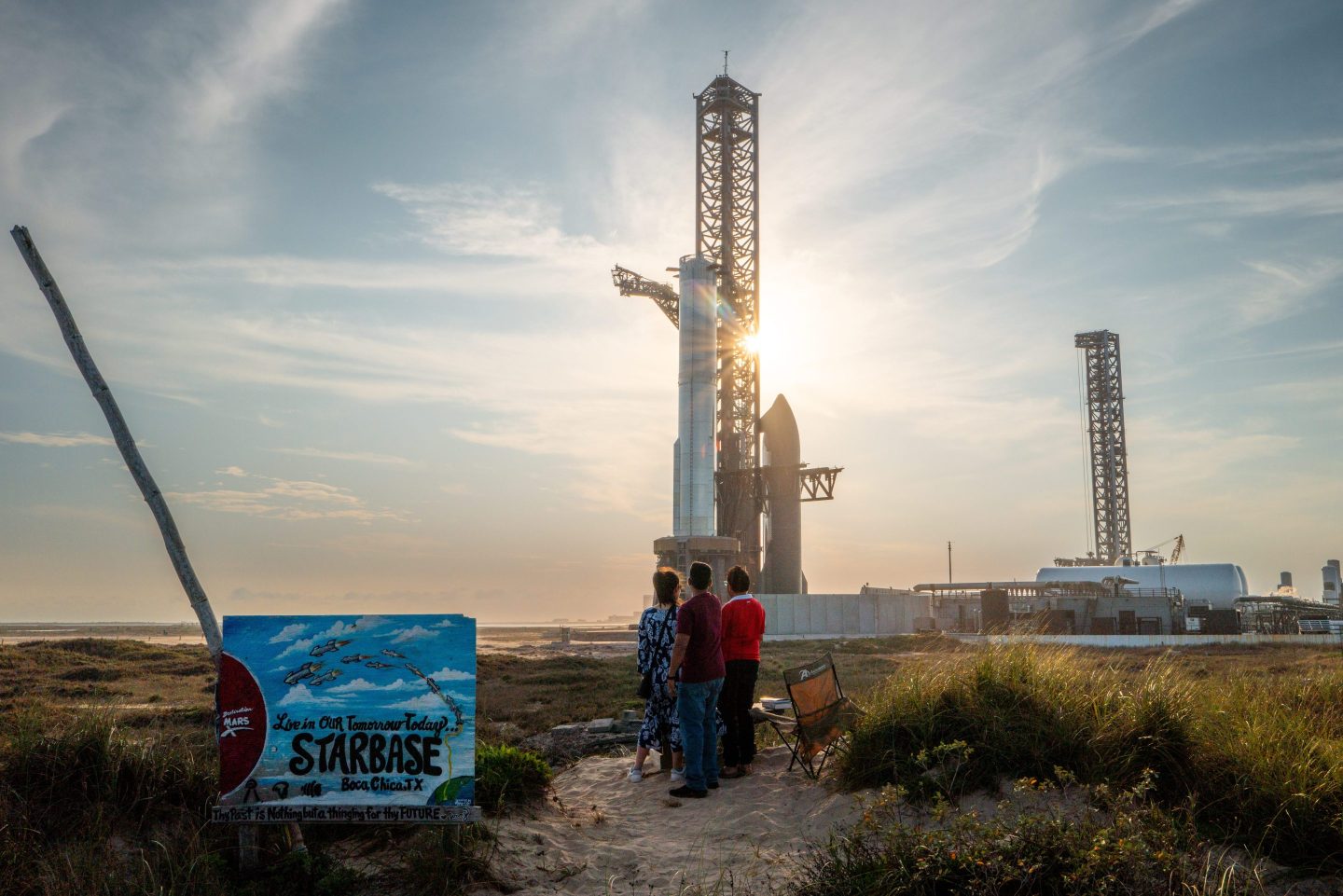
SpaceX heads into a record-shattering IPO with the ‘deepest moat that exists today’ as investors vow to ‘never bet against Elon’
InnovationIPOs
SpaceX heads into a record-shattering IPO with the ‘deepest moat that exists today’ as investors vow to ‘never bet against Elon’
By Jason MaMay 16, 2026
2 hours ago
tarot
AICulture
We talked to 12 tarot card readers who are using AI. They split in 2 camps, with big implications for the technology
By Ziv Epstein, Farnaz Jahanbakhsh, Vana Goblot and The ConversationMay 16, 2026
4 hours ago
liberman
Commentarystart-ups
We watched social media concentrate. The same thing is happening in AI, only at a deeper layer
By David Liberman and Daniil LibermanMay 16, 2026
5 hours ago
mustafa suleyman
AIMicrosoft
Microsoft AI chief gives it 18 months—for all white-collar work to be automated by AI
By Jake AngeloMay 16, 2026
6 hours ago
olivier
CommentaryAnthropic
I’ve been studying Big Tech for a long time. What just happened with Anthropic and the Pentagon terrifies me
By Olivier SylvainMay 16, 2026
6 hours ago
bhaskar
Economydisruption
The prophet of the ‘Wired Belt’ says capitalism is finally eating itself
By Bhaskar ChakravortiMay 16, 2026
8 hours ago

Most Popular

Despite having a $165 million net worth, Scarlett Johansson says work-life balance doesn’t exist—and the first step to success is admitting that
Success
Despite having a $165 million net worth, Scarlett Johansson says work-life balance doesn’t exist—and the first step to success is admitting that
By Preston ForeMay 13, 2026
3 days ago
The Bezos family just donated $100 million to help achieve one of Mayor Zohran Mamdani’s top campaign promises
Politics
The Bezos family just donated $100 million to help achieve one of Mayor Zohran Mamdani’s top campaign promises
By Jake AngeloMay 12, 2026
4 days ago
Microsoft AI chief gives it 18 months—for all white-collar work to be automated by AI
AI
Microsoft AI chief gives it 18 months—for all white-collar work to be automated by AI
By Jake AngeloMay 16, 2026
6 hours ago
Current price of oil as of May 15, 2026
Personal Finance
Current price of oil as of May 15, 2026
By Joseph HostetlerMay 15, 2026
1 day ago
Meet the 20-year-old CEO who launched a company in high school to solve Gen Z's entry-level job crisis
Future of Work
Meet the 20-year-old CEO who launched a company in high school to solve Gen Z's entry-level job crisis
By Jake AngeloMay 16, 2026
10 hours ago
Debbie Gibson, Geezer Butler of Black Sabbath want you to adopt a beagle rescued from an experimental lab in Wisconsin
North America
Debbie Gibson, Geezer Butler of Black Sabbath want you to adopt a beagle rescued from an experimental lab in Wisconsin
By Scott Bauer and The Associated PressMay 13, 2026
3 days ago

© 2026 Fortune Media IP Limited. All Rights Reserved. Use of this site constitutes acceptance of our Terms of Use and Privacy Policy | CA Notice at Collection and Privacy Notice | Do Not Sell/Share My Personal Information
FORTUNE is a trademark of Fortune Media IP Limited, registered in the U.S. and other countries. FORTUNE may receive compensation for some links to products and services on this website. Offers may be subject to change without notice.