• Home
  • Latest
  • Fortune 500
  • Finance
  • Tech
  • Leadership
  • Lifestyle
  • Rankings
  • Multimedia

Exclusive

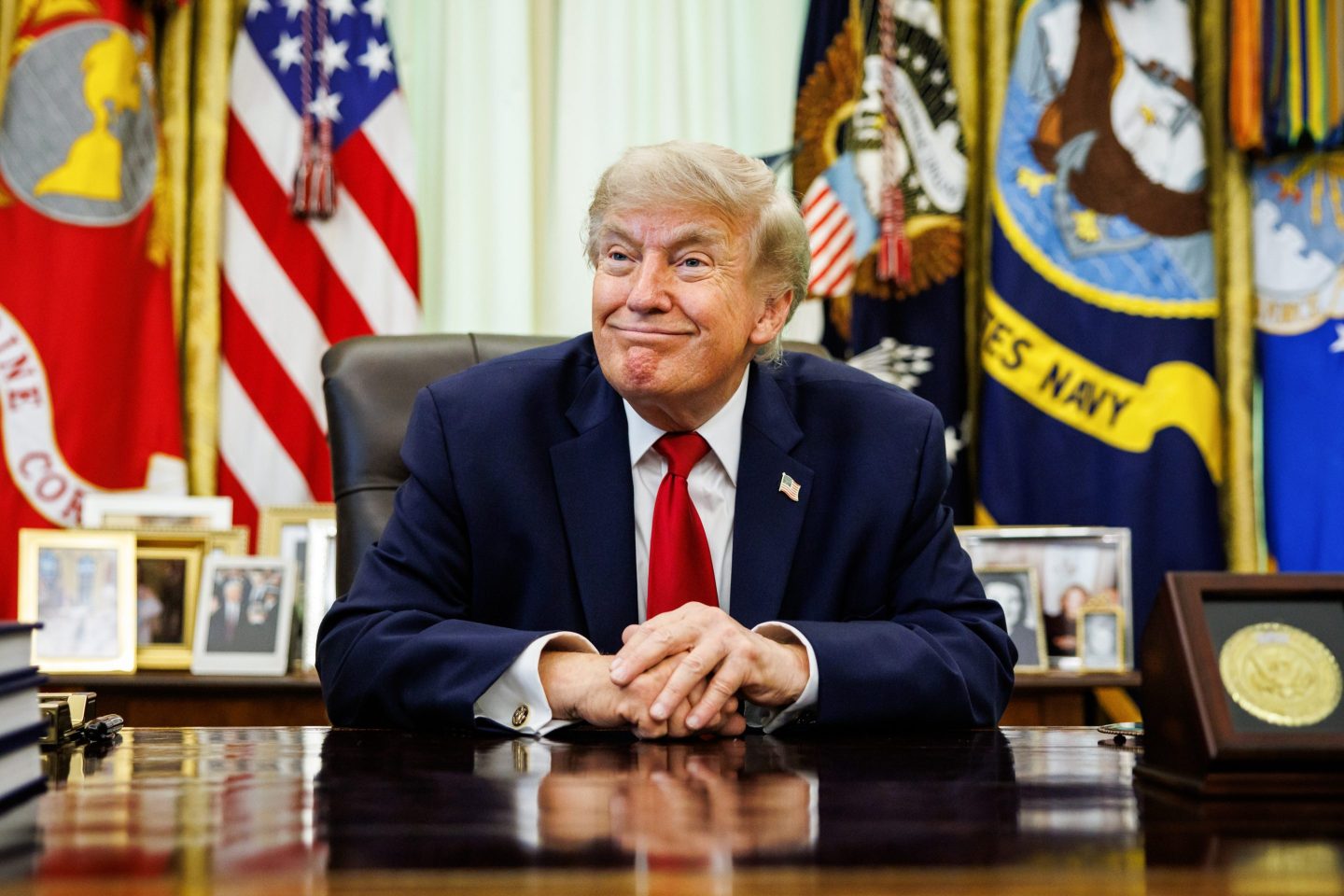
An hour in the Oval Office with President Trump.

An hour in the Oval Office with President Trump.

An hour in the Oval Office with President Trump.

An hour in the Oval Office with President Trump.

An hour in the Oval Office with President Trump.

An hour in the Oval Office with President Trump.

An hour in the Oval Office with President Trump.

An hour in the Oval Office with President Trump.

An hour in the Oval Office with President Trump.

An hour in the Oval Office with President Trump.

FinanceEconomic Stimulus

Parsing the arguments against new stimulus

Fortune Editors
By
Fortune Editors
Fortune Editors
Down Arrow Button Icon
Fortune Editors
By
Fortune Editors
Fortune Editors
Down Arrow Button Icon
October 21, 2010, 10:00 AM ET

By James Hamilton, Econbrowser

Having earlier reviewed some of the reasons in favor of additional quantitative easing (QE2), I’d like to acknowledge some of the dissenting views.

(1) One concern was expressed by Edward Hugh (hat tip: Tyler Cowen):

it is no exaggeration to say that a protracted and rigourously implemented round of QE2 in the United States could put so much pressure on the euro that the common currency would be put in danger of shattering under the pressure. Japan is already heading back into recession, as the yen is pushed to ever higher levels, and Germany, where the economy has been slowing since its June high, could easily follow Japan into recession as the fourth quarter advances.

Perhaps there’s some basic issue I’m overlooking, but here’s how I see it. If other countries want to prevent their exchange rates from appreciating, they should respond with easing of their own, which from my perspective would be a win-win outcome for everybody. If other countries feel that easing is contraindicated for their domestic situation, then isn’t that part of the case why the dollar needs to depreciate relative to their currencies, given the current economic conditions in the U.S.?

(2) Stanford Professor Myron Scholes raises a separate issue:

If the Fed takes on more risk, society still has the risk. The risk doesn’t go away, any more than the risk of holding subprime mortgages went away before the crisis. We cannot structure the risk such that it disappears. Society still has the risk, and will want to hold safe assets if the Fed affects the risk premium.

I think that’s a very important observation. Here’s how Cynthia Wu and I have been thinking about this issue within the context of our recent paper claiming that the Fed could flatten the slope of the yield curve by buying more long-term bonds:

Certainly from the perspective of an individual investor, a 10-year Treasury bond has different risk characteristics from a 6-month T-bill, and these differences get priced by the market. If an individual investor changes her relative holdings of these assets, she perceives herself to have a different risk exposure, and perceives the U.S. Treasury to be the counterparty…. If the government changes the maturity structure of its outstanding debt, it is in fact committing to a different state-contingent path for spending, taxes, or inflation.

The time path of spending, taxes, and inflation are part of society’s risk structure that Scholes is discussing, and is something that we assume would have to be altered as a result of these kinds of policy choices. Our interpretation is that the average positive upward slope to the term structure comes from the historical desire of the government to pass along interest-rate risk to its creditors.

(3) Robert Waldman (along with Arnold Kling and Bob Hall) asks:

But why the Fed? The Treasury is a huge player in the bond market. They are still selling long term bonds. Why? What if the Treasury decided to finance the deficit with 1 and 3 month T-bills alone?

Again this is an excellent question, and one with which I also have struggled. In terms of my theoretical understanding of the mechanism by which large-scale asset purchases might be effective, the operation is identical whether implemented by the Treasury or the Fed. One reason one might give for having the Fed conduct the operations is the possible additional benefits of using it as a signal and framework for the conduct of future monetary policy. A second is that the primary goal of the proposal is to prevent what I regard as a harmfully low level of inflation, and targeting inflation is traditionally the responsibility of the Federal Reserve rather than the Treasury.

(4) Federal Reserve Bank of Kansas City President Thomas Hoenig has expressed the following concerns:

without clear terms and goals, quantitative easing becomes an open-ended commitment that leads to maintaining the funds rate too low and the Federal Reserve’s balance sheet too large…. rather than inflation rising to 2 or 3 percent, and demand rising in a systematic fashion, we have no idea at what level inflation might settle. It could remain where it is or inflation expectations could become unanchored and perhaps increase to 4 or 5 percent.

Again I agree that these are critical issues. At a minimum, we need to acknowledge up front the limited potential of QE2 and be prepared to admit when it has accomplished all it can. Options for limiting the commitment include targeting the 2- or 3-year Treasury yield or announcing an exit strategy based on a particular level for the core PCE, as I discussed here. I’ve also urged the Fed to keep a close eye on commodity prices through this process.

(5) A final concern is that QE2 will be ineffective in restoring full employment. Variations on this perfectly accurate statement have been made by a great number of people; for a recent collection see Yves Smith. But the issue is not, and in my mind has never been, whether monetary policy can “solve our problems”. Instead the question is whether a sufficiently low or negative rate of inflation would make our problems worse. If it would make our problems worse, then the goal of monetary policy is to avoid doing that. Here’s another reminder from the October 14 FedViews of what’s at stake:


Source: Federal Reserve Bank of San Francisco

James D. Hamilton is Professor of Economics at the University of California, San Diego.

About the Author
Fortune Editors
By Fortune Editors
See full bioRight Arrow Button Icon

Latest in Finance

Finance
Lorem ipsum dolor sit amet, consectetur adipiscing elit, sed do eiusmod tempor incididunt ut labore et dolore magna aliqua. Ut enim ad minim veniam
By Fortune Editors
October 20, 2025
Finance
Lorem ipsum dolor sit amet, consectetur adipiscing elit, sed do eiusmod tempor incididunt ut labore et dolore magna aliqua. Ut enim ad minim veniam
By Fortune Editors
October 20, 2025
Finance
Lorem ipsum dolor sit amet, consectetur adipiscing elit, sed do eiusmod tempor incididunt ut labore et dolore magna aliqua. Ut enim ad minim veniam
By Fortune Editors
October 20, 2025
Finance
Lorem ipsum dolor sit amet, consectetur adipiscing elit, sed do eiusmod tempor incididunt ut labore et dolore magna aliqua. Ut enim ad minim veniam
By Fortune Editors
October 20, 2025
Finance
Lorem ipsum dolor sit amet, consectetur adipiscing elit, sed do eiusmod tempor incididunt ut labore et dolore magna aliqua. Ut enim ad minim veniam
By Fortune Editors
October 20, 2025
Finance
Lorem ipsum dolor sit amet, consectetur adipiscing elit, sed do eiusmod tempor incididunt ut labore et dolore magna aliqua. Ut enim ad minim veniam
By Fortune Editors
October 20, 2025

Most Popular

Finance
Lorem ipsum dolor sit amet, consectetur adipiscing elit, sed do eiusmod tempor incididunt ut labore et dolore magna aliqua. Ut enim ad minim veniam
By Fortune Editors
October 20, 2025
Finance
Lorem ipsum dolor sit amet, consectetur adipiscing elit, sed do eiusmod tempor incididunt ut labore et dolore magna aliqua. Ut enim ad minim veniam
By Fortune Editors
October 20, 2025
Finance
Lorem ipsum dolor sit amet, consectetur adipiscing elit, sed do eiusmod tempor incididunt ut labore et dolore magna aliqua. Ut enim ad minim veniam
By Fortune Editors
October 20, 2025
Finance
Lorem ipsum dolor sit amet, consectetur adipiscing elit, sed do eiusmod tempor incididunt ut labore et dolore magna aliqua. Ut enim ad minim veniam
By Fortune Editors
October 20, 2025
Finance
Lorem ipsum dolor sit amet, consectetur adipiscing elit, sed do eiusmod tempor incididunt ut labore et dolore magna aliqua. Ut enim ad minim veniam
By Fortune Editors
October 20, 2025
Finance
Lorem ipsum dolor sit amet, consectetur adipiscing elit, sed do eiusmod tempor incididunt ut labore et dolore magna aliqua. Ut enim ad minim veniam
By Fortune Editors
October 20, 2025
Fortune Secondary Logo
Rankings
  • 100 Best Companies
  • Fortune 500
  • Global 500
  • Fortune 500 Europe
  • Most Powerful Women
  • World's Most Admired Companies
  • See All Rankings
  • Lists Calendar
Sections
  • Finance
  • Fortune Crypto
  • Features
  • Leadership
  • Health
  • Commentary
  • Success
  • Retail
  • Mpw
  • Tech
  • Lifestyle
  • CEO Initiative
  • Asia
  • Politics
  • Conferences
  • Europe
  • Newsletters
  • Personal Finance
  • Environment
  • Magazine
  • Education
Customer Support
  • Frequently Asked Questions
  • Customer Service Portal
  • Privacy Policy
  • Terms Of Use
  • Single Issues For Purchase
  • International Print
Commercial Services
  • Advertising
  • Fortune Brand Studio
  • Fortune Analytics
  • Fortune Conferences
  • Business Development
  • Group Subscriptions
About Us
  • About Us
  • Press Center
  • Work At Fortune
  • Terms And Conditions
  • Site Map
  • About Us
  • Press Center
  • Work At Fortune
  • Terms And Conditions
  • Site Map
  • Facebook icon
  • Twitter icon
  • LinkedIn icon
  • Instagram icon
  • Pinterest icon

Latest in Finance

Markets are jittery as the global oil crisis bleeds into a global debt selloff, while Trump weighs new military options on Iran
EnergyOil
Markets are jittery as the global oil crisis bleeds into a global debt selloff, while Trump weighs new military options on Iran
By Jason MaMay 17, 2026
5 hours ago
Gundlach says it’s ‘just not possible’ for the Fed to cut rates
EconomyFederal Reserve
Gundlach says it’s ‘just not possible’ for the Fed to cut rates
By Jordan Fitzgerald, Sam Kim and BloombergMay 17, 2026
8 hours ago
Supply shocks weren’t random. They were strategic—and should be seen as ‘supply coercion’ instead, former Fed official says 
Economysupply chains
Supply shocks weren’t random. They were strategic—and should be seen as ‘supply coercion’ instead, former Fed official says 
By Jason MaMay 17, 2026
8 hours ago
U.S. says China to buy $17 billion of agricultural goods annually
EconomyChina
U.S. says China to buy $17 billion of agricultural goods annually
By Yash Roy and BloombergMay 17, 2026
10 hours ago
The top foreign holders of U.S. debt may soon dump Treasury bonds and bring their money back home, potentially spiking borrowing costs
EconomyDebt
The top foreign holders of U.S. debt may soon dump Treasury bonds and bring their money back home, potentially spiking borrowing costs
By Jason MaMay 17, 2026
11 hours ago
BlackRock private credit fund’s valuations are probed by DOJ
InvestingDepartment of Justice
BlackRock private credit fund’s valuations are probed by DOJ
By Olivia Fishlow, Ava Benny-Morrison and BloombergMay 17, 2026
13 hours ago

Most Popular

Microsoft AI chief gives it 18 months—for all white-collar work to be automated by AI
AI
Microsoft AI chief gives it 18 months—for all white-collar work to be automated by AI
By Jake AngeloMay 16, 2026
2 days ago
The Bezos family just donated $100 million to help achieve one of Mayor Zohran Mamdani’s top campaign promises
Politics
The Bezos family just donated $100 million to help achieve one of Mayor Zohran Mamdani’s top campaign promises
By Jake AngeloMay 12, 2026
5 days ago
The top foreign holders of U.S. debt may soon dump Treasury bonds and bring their money back home, potentially spiking borrowing costs
Economy
The top foreign holders of U.S. debt may soon dump Treasury bonds and bring their money back home, potentially spiking borrowing costs
By Jason MaMay 17, 2026
11 hours ago
Former top Russian official admits the country is over Putin and can 'imagine a future without him' — even elites bail as Kremlin seizes their assets 
Politics
Former top Russian official admits the country is over Putin and can 'imagine a future without him' — even elites bail as Kremlin seizes their assets 
By Jason MaMay 16, 2026
1 day ago
'No one was coming to save me': How Reese Witherspoon built a $900 million company from a problem Hollywood wouldn't fix
Success
'No one was coming to save me': How Reese Witherspoon built a $900 million company from a problem Hollywood wouldn't fix
By Sydney LakeMay 17, 2026
18 hours ago
SpaceX heads into a record-shattering IPO with the 'deepest moat that exists today' as investors vow to 'never bet against Elon'
Innovation
SpaceX heads into a record-shattering IPO with the 'deepest moat that exists today' as investors vow to 'never bet against Elon'
By Jason MaMay 16, 2026
2 days ago

© 2026 Fortune Media IP Limited. All Rights Reserved. Use of this site constitutes acceptance of our Terms of Use and Privacy Policy | CA Notice at Collection and Privacy Notice | Do Not Sell/Share My Personal Information
FORTUNE is a trademark of Fortune Media IP Limited, registered in the U.S. and other countries. FORTUNE may receive compensation for some links to products and services on this website. Offers may be subject to change without notice.