• Home
  • Latest
  • Fortune 500
  • Finance
  • Tech
  • Leadership
  • Lifestyle
  • Rankings
  • Multimedia

Trendingnow

1

Microsoft AI chief gives it 18 months—for all white-collar work to be automated by AI

2

Former top Russian official admits the country is over Putin and can 'imagine a future without him' — even elites bail as Kremlin seizes their assets 

3

The Bezos family just donated $100 million to help achieve one of Mayor Zohran Mamdani’s top campaign promises

1

Microsoft AI chief gives it 18 months—for all white-collar work to be automated by AI

2

Former top Russian official admits the country is over Putin and can 'imagine a future without him' — even elites bail as Kremlin seizes their assets 

3

The Bezos family just donated $100 million to help achieve one of Mayor Zohran Mamdani’s top campaign promises

Chavez’s death won’t spur new Venezuela oil drilling

By
Cyrus Sanati
Cyrus Sanati
Down Arrow Button Icon
By
Cyrus Sanati
Cyrus Sanati
Down Arrow Button Icon
March 6, 2013, 3:38 PM ET
Hugo Chavez

FORTUNE — The death of Venezuelan President Hugo Chavez is no panacea for the nation’s dysfunctional energy industry. Political and economic uncertainty will likely continue to deter foreign investors from fully committing the necessary cash, resources, and expertise that are desperately needed to effectively tap the nation’s oil wealth. Whoever takes over the reins of the nation will need to dismantle the policies, structures, and rhetoric that have made investing in Venezuela a fool’s errand.

It is not hyperbole to say that Hugo Chavez’s death Tuesday rocked the energy industry. The “Bolivarian” strongman has been the oil industry’s biggest villain for over a decade. In his tenure as president of Venezuela, Chavez not only trashed contracts and expropriated lands and equipment from foreign oil companies, like ExxonMobil (XOM) and ConocoPhillips (COP); he also managed to crush the national oil company, Petróleos de Venezuela (PDVSA), by using it as a piggy bank to fund the programs and policies associated with his nebulously defined “21st Century Socialism” experiment.

There was a time when Venezuela was seen as a bastion of liberalism — an exception to the so-called resource curse, which posits that oil wealth fosters corrupt and dictatorial regimes. Its democratically-elected governments, while far from perfect, were seen as more stable than other oil-rich nations, such as those in the Middle East. This stability attracted foreign investors from around the globe, especially U.S. oil giants like ConocoPhillips and Chevron (CVX).

MORE: Global warming is about to remake worldwide shipping

By the 1990s PDVSA and its foreign partners, which at the time included pretty much all the big U.S. and European oil giants, were pumping around three million barrels a day of oil from Venezuelan fields, making it the third-largest oil exporter in OPEC. PDVSA’s long-term plan was to gradually increase its production capacity to around eight million barrels a day, which would have put Venezuela on par with oil exporting giants like Russia and Saudi Arabia.

But the ineptitude and corruption of the Chavez kleptocracy have contributed to a decline in overall Venezuelan oil output, which at last count came in at 2.4 million barrels a day, 25% less than what it was when Chavez took power 14 years ago. That would have been excusable if Venezuela’s oil reserves were rapidly depleting, but that isn’t the case — not by a long shot. Indeed, in 2010, OPEC confirmed that Venezuela’s Orinoco oil belt contained tar sand deposits equivalent to around 300 billion barrels of oil, enough to fulfill current world demand for 10 years. That would mean Venezuela would have the largest oil reserves on the planet, outstripping Saudi Arabia’s 260 billion barrel oil stash.

With today’s oil price being 10 times higher than where it was when Chavez took power in 1998, one would surmise that the Orinoco oil belt today would be littered with equipment and workers trying furiously to tap its abundant oil wealth. But, of course, that isn’t the case. During his reign, Chavez instituted a series of devastating “reforms” to the nation’s oil industry, which ended up breaking its back. He ripped up production sharing contracts signed under the previous government, forcing foreign oil companies to hand over more of their profit to the state.

Chavez then used PDVSA as his own personal ATM, starving the company of the necessary investment capital needed to expand its operations in the Orinoco. In 2011, PDVSA was left with just $11 billion, or 9%, of its total income, to fund future operations. That was barely enough to keep the lights on, let alone go out and enough to drill. By contrast, Pemex, Mexico’s state owned-oil company (and all-around bureaucratic basket case), spent around $19 billion, or 17%, of its income on operations, while Brazil’s Petrobras invested $42 billion, or 29%, of its income.

MORE: The unseen hand that moves the world’s oil

PDVSA says it will be investing some $140 billion in the Orinoco by 2015. It is hard to see how that can happen given how much the government is siphoning off. In January, Chavez ordered PDVSA to increase its payments to his off-the-books slush fund, Fonden, which is used to support the “revolution,” further draining its resources. Lastly, the government has saddled PDVSA with around $35 billion in debt, slapping the company with fat interest payments, which will only augment its money woes.

But probably the fatal blow to Venezuelan oil investment came in 2007 when Chavez essentially “renationalized” the industry, booting out a number of foreign oil companies who refused to (once again) renegotiate their contracts, namely U.S. oil giants ExxonMobil and ConocoPhilips, which had each invested billions of dollars in the country since the early 1990s.

The new rules, which are more or less the same today, require foreign investors to form partnerships with PDVSA in which the state-owned oil company would have a 60% ownership. The foreign company, which would have 40% ownership, would still have to fund 100% of the investment. Furthermore, whatever the foreign company made would be subject to a 50% tax rate and a 33% royalty (tax). Oh, and investors must agree that any dispute that may arise in the future concerning their ownership with the government will be heard by Venezuelan courts, not those pesky impartial international arbitration courts.

But while the risk/reward ratio is clearly off, Venezuela says that it has auctioned off 36 lease blocks in the Orinoco to 27 companies hailing from 21 nations. Most are bizarre state-owned or controlled oil companies from places like Iran, Belorussia, and Cuba. But some of the big publicly traded oil companies like Spain’s Repsol, Brazil’s Petrobras, Italy’s Eni and France’s Total have stakes as well. Even Chevron was allocated a block — albeit a small one.

MORE: Petrobras: The next oil colossus

While it makes sense to have a few foreign partners to help to spread out the risk, one can go too far, especially when those partners have pretty much zero experience working with oil sands. Indeed, this split looks more like a bizarre public relations stunt than a real division of labor. It should therefore come as no surprise to learn that there isn’t too much drilling going on in the Orinoco right now. While PDVSA says that it has started to drill wells with its Russian and Vietnamese partners, the initial production numbers reported are trivial. Meanwhile, India’s ONGC and several other companies are reportedly holding back from investing any more cash until there is some clarity as to the political situation in the country. You can bet even Venezuela’s staunchest allies, like China, which has loaned the Chavez regime some $46 billion in the last few years, will be among those taking a breather.

It is difficult to see what, if anything, could change in Venezuela’s oil industry in the next few months. The political apparatus Chavez has set up seems fully entrenched. It would probably take a full-fledged revolution for it to be wiped out at this point. Nevertheless, Venezuela is nearing a breaking point when it comes to oil production. The government cannot continue to rely on PDVSA to pay its bills. It needs real foreign partners with real experience to come in and help it boost production.

That means bringing back companies like ConocoPhilips, which before getting the boot in 2007, was the largest foreign operator in the country. They have the engineers and know-how to help Venezuela quickly get off the ground. Venezuela would be wise to also consult with oil companies like Husky, Suncor (SU), Syncrude and Nexen, all of which have extensive experience working in Canada’s vast Athabasca oil sands.

To lure the right talent, Venezuela needs to make some serious changes to its ownership and tax laws. Companies must feel safe to make their investments so security and legal protections will need to be ironclad. But even if Venezuela’s new leaders give in to all of the oil companies’ demands, it will probably be a while before you see any real drilling. Chavez obliterated the nation’s credibility, and it will take some time for Venezuela to earn back that trust. So when Venezuelans go to the polls in a month to choose their new leader, they would be wise to choose someone who knows how to eat a big helping of humble pie.

About the Author
By Cyrus Sanati
See full bioRight Arrow Button Icon

Latest in

Finance
Lorem ipsum dolor sit amet, consectetur adipiscing elit, sed do eiusmod tempor incididunt ut labore et dolore magna aliqua. Ut enim ad minim veniam
By Fortune Editors
October 20, 2025
Finance
Lorem ipsum dolor sit amet, consectetur adipiscing elit, sed do eiusmod tempor incididunt ut labore et dolore magna aliqua. Ut enim ad minim veniam
By Fortune Editors
October 20, 2025
Finance
Lorem ipsum dolor sit amet, consectetur adipiscing elit, sed do eiusmod tempor incididunt ut labore et dolore magna aliqua. Ut enim ad minim veniam
By Fortune Editors
October 20, 2025
Finance
Lorem ipsum dolor sit amet, consectetur adipiscing elit, sed do eiusmod tempor incididunt ut labore et dolore magna aliqua. Ut enim ad minim veniam
By Fortune Editors
October 20, 2025
Finance
Lorem ipsum dolor sit amet, consectetur adipiscing elit, sed do eiusmod tempor incididunt ut labore et dolore magna aliqua. Ut enim ad minim veniam
By Fortune Editors
October 20, 2025
Finance
Lorem ipsum dolor sit amet, consectetur adipiscing elit, sed do eiusmod tempor incididunt ut labore et dolore magna aliqua. Ut enim ad minim veniam
By Fortune Editors
October 20, 2025

Most Popular

Finance
Lorem ipsum dolor sit amet, consectetur adipiscing elit, sed do eiusmod tempor incididunt ut labore et dolore magna aliqua. Ut enim ad minim veniam
By Fortune Editors
October 20, 2025
Finance
Lorem ipsum dolor sit amet, consectetur adipiscing elit, sed do eiusmod tempor incididunt ut labore et dolore magna aliqua. Ut enim ad minim veniam
By Fortune Editors
October 20, 2025
Finance
Lorem ipsum dolor sit amet, consectetur adipiscing elit, sed do eiusmod tempor incididunt ut labore et dolore magna aliqua. Ut enim ad minim veniam
By Fortune Editors
October 20, 2025
Finance
Lorem ipsum dolor sit amet, consectetur adipiscing elit, sed do eiusmod tempor incididunt ut labore et dolore magna aliqua. Ut enim ad minim veniam
By Fortune Editors
October 20, 2025
Finance
Lorem ipsum dolor sit amet, consectetur adipiscing elit, sed do eiusmod tempor incididunt ut labore et dolore magna aliqua. Ut enim ad minim veniam
By Fortune Editors
October 20, 2025
Finance
Lorem ipsum dolor sit amet, consectetur adipiscing elit, sed do eiusmod tempor incididunt ut labore et dolore magna aliqua. Ut enim ad minim veniam
By Fortune Editors
October 20, 2025
Fortune Secondary Logo
Rankings
  • 100 Best Companies
  • Fortune 500
  • Global 500
  • Fortune 500 Europe
  • Most Powerful Women
  • World's Most Admired Companies
  • See All Rankings
  • Lists Calendar
Sections
  • Finance
  • Fortune Crypto
  • Features
  • Leadership
  • Health
  • Commentary
  • Success
  • Retail
  • Mpw
  • Tech
  • Lifestyle
  • CEO Initiative
  • Asia
  • Politics
  • Conferences
  • Europe
  • Newsletters
  • Personal Finance
  • Environment
  • Magazine
  • Education
Customer Support
  • Frequently Asked Questions
  • Customer Service Portal
  • Privacy Policy
  • Terms Of Use
  • Single Issues For Purchase
  • International Print
Commercial Services
  • Advertising
  • Fortune Brand Studio
  • Fortune Analytics
  • Fortune Conferences
  • Business Development
  • Group Subscriptions
About Us
  • About Us
  • Press Center
  • Work At Fortune
  • Terms And Conditions
  • Site Map
  • About Us
  • Press Center
  • Work At Fortune
  • Terms And Conditions
  • Site Map
  • Facebook icon
  • Twitter icon
  • LinkedIn icon
  • Instagram icon
  • Pinterest icon

Latest in

U.S. says China to buy $17 billion of agricultural goods annually
EconomyChina
U.S. says China to buy $17 billion of agricultural goods annually
By Yash Roy and BloombergMay 17, 2026
13 minutes ago
Taiwan’s president says the U.S. arms sales that Trump called a bargaining chip with China are ‘the most important deterrent’ of regional conflict
AsiaChina
Taiwan’s president says the U.S. arms sales that Trump called a bargaining chip with China are ‘the most important deterrent’ of regional conflict
By The Associated PressMay 17, 2026
24 minutes ago
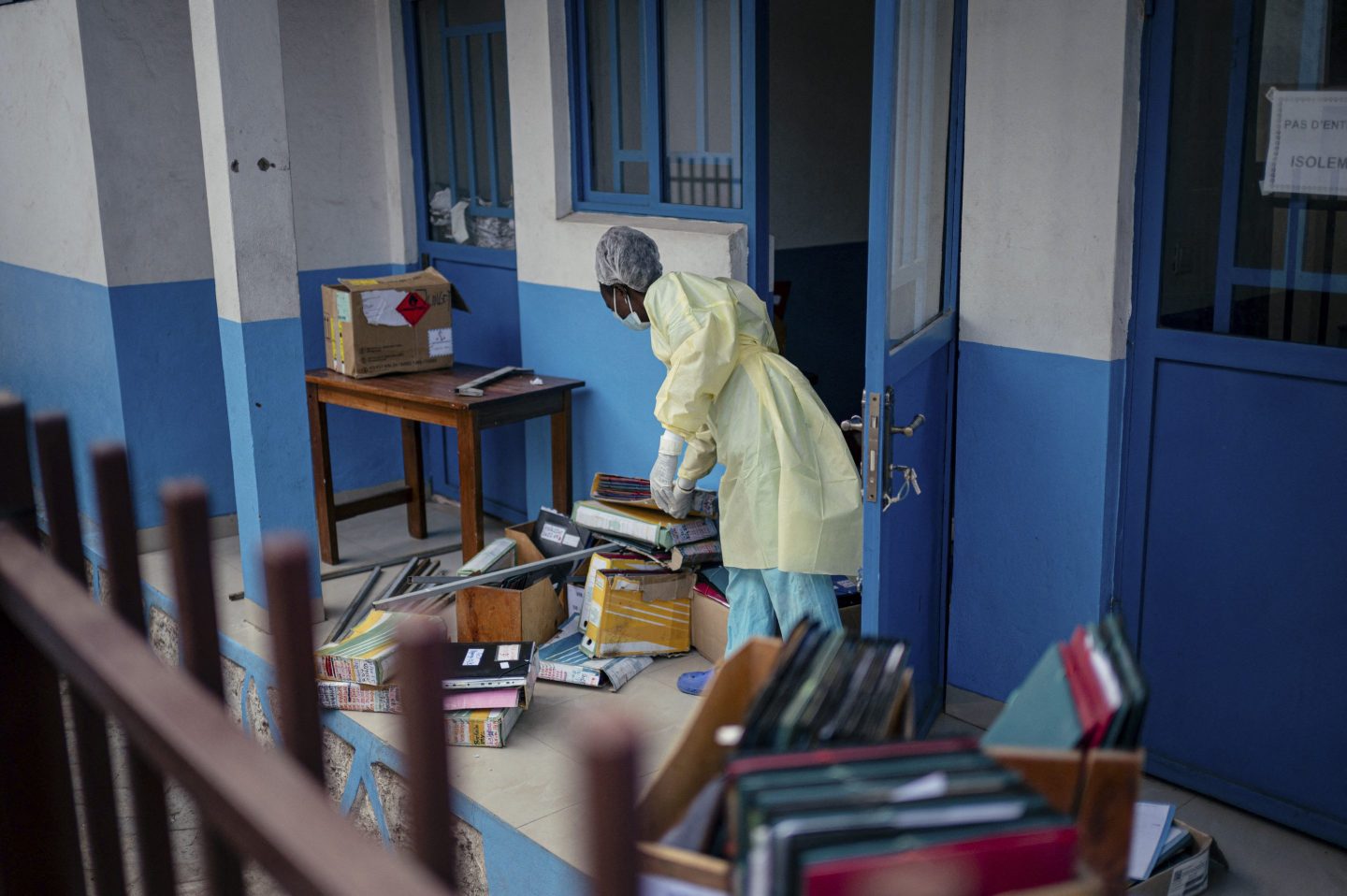
WHO declares latest Ebola outbreak a global health emergency. A rare variant of the disease with no approved treatments is to blame
HealthHealth
WHO declares latest Ebola outbreak a global health emergency. A rare variant of the disease with no approved treatments is to blame
By Chinedu Asadu and The Associated PressMay 17, 2026
33 minutes ago
The top foreign holders of U.S. debt may soon dump Treasury bonds and bring their money back home, potentially spiking borrowing costs
EconomyDebt
The top foreign holders of U.S. debt may soon dump Treasury bonds and bring their money back home, potentially spiking borrowing costs
By Jason MaMay 17, 2026
1 hour ago
BlackRock private credit fund’s valuations are probed by DOJ
InvestingDepartment of Justice
BlackRock private credit fund’s valuations are probed by DOJ
By Olivia Fishlow, Ava Benny-Morrison and BloombergMay 17, 2026
3 hours ago
Ukraine brings the war to Moscow with one its largest drone attacks on the capital, adding to the ‘darkening cloud of anxiety over Russia’
EuropeRussia
Ukraine brings the war to Moscow with one its largest drone attacks on the capital, adding to the ‘darkening cloud of anxiety over Russia’
By Samya Kullab and The Associated PressMay 17, 2026
3 hours ago

Most Popular

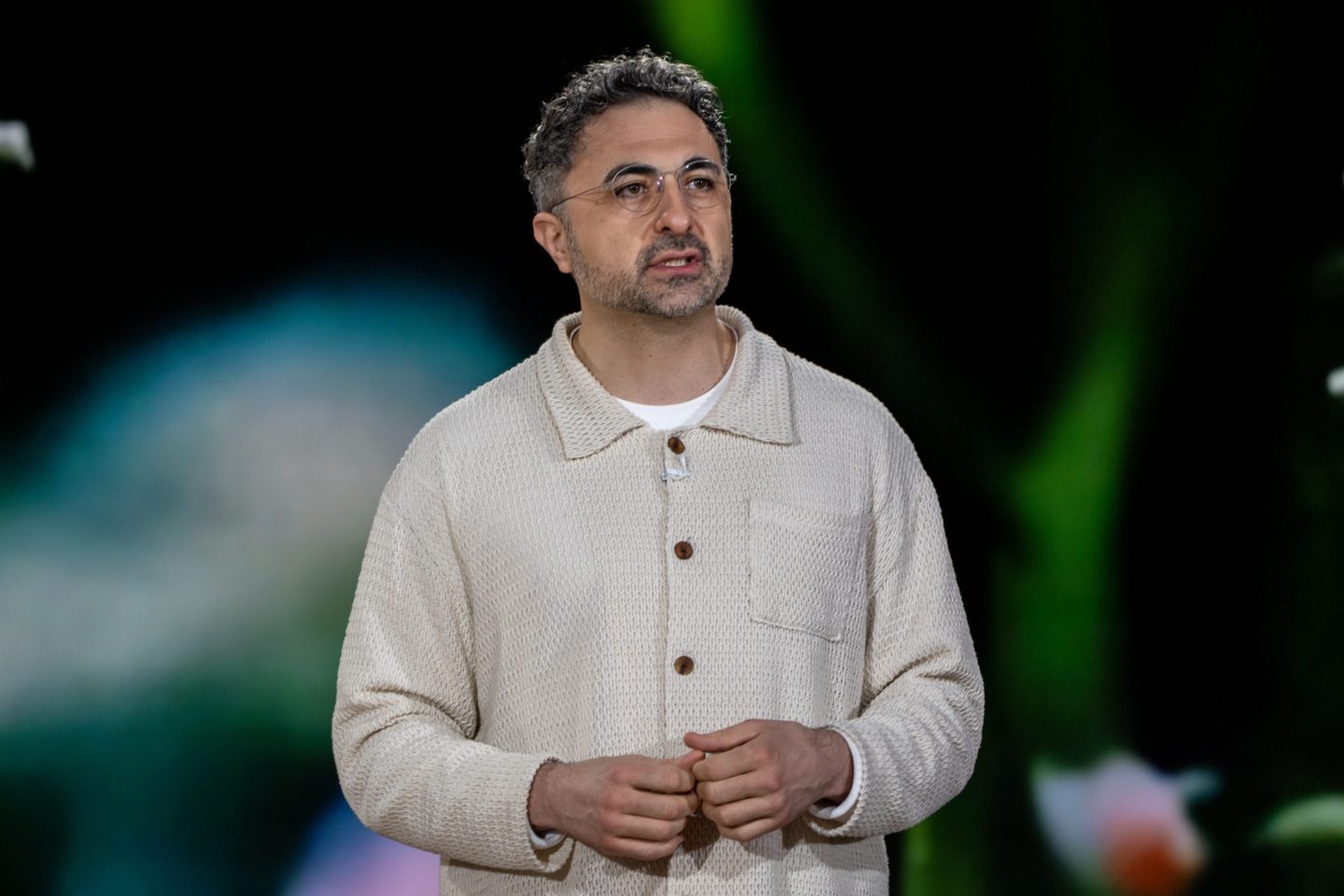
Microsoft AI chief gives it 18 months—for all white-collar work to be automated by AI
AI
Microsoft AI chief gives it 18 months—for all white-collar work to be automated by AI
By Jake AngeloMay 16, 2026
1 day ago
Former top Russian official admits the country is over Putin and can 'imagine a future without him' — even elites bail as Kremlin seizes their assets 
Politics
Former top Russian official admits the country is over Putin and can 'imagine a future without him' — even elites bail as Kremlin seizes their assets 
By Jason MaMay 16, 2026
21 hours ago
The Bezos family just donated $100 million to help achieve one of Mayor Zohran Mamdani’s top campaign promises
Politics
The Bezos family just donated $100 million to help achieve one of Mayor Zohran Mamdani’s top campaign promises
By Jake AngeloMay 12, 2026
5 days ago
SpaceX heads into a record-shattering IPO with the 'deepest moat that exists today' as investors vow to 'never bet against Elon'
Innovation
SpaceX heads into a record-shattering IPO with the 'deepest moat that exists today' as investors vow to 'never bet against Elon'
By Jason MaMay 16, 2026
1 day ago
Oil markets could be a month away from the moment of truth. Brace for a 'non-linear' price spike and panic buying, analysts warn
Energy
Oil markets could be a month away from the moment of truth. Brace for a 'non-linear' price spike and panic buying, analysts warn
By Jason MaMay 16, 2026
23 hours ago
Meet the 20-year-old CEO who launched a company in high school to solve Gen Z's entry-level job crisis
Future of Work
Meet the 20-year-old CEO who launched a company in high school to solve Gen Z's entry-level job crisis
By Jake AngeloMay 16, 2026
1 day ago

© 2026 Fortune Media IP Limited. All Rights Reserved. Use of this site constitutes acceptance of our Terms of Use and Privacy Policy | CA Notice at Collection and Privacy Notice | Do Not Sell/Share My Personal Information
FORTUNE is a trademark of Fortune Media IP Limited, registered in the U.S. and other countries. FORTUNE may receive compensation for some links to products and services on this website. Offers may be subject to change without notice.