• Home
  • Latest
  • Fortune 500
  • Finance
  • Tech
  • Leadership
  • Lifestyle
  • Rankings
  • Multimedia

Trendingnow

1

Microsoft AI chief gives it 18 months—for all white-collar work to be automated by AI

2

Despite having a $165 million net worth, Scarlett Johansson says work-life balance doesn’t exist—and the first step to success is admitting that

3

The Bezos family just donated $100 million to help achieve one of Mayor Zohran Mamdani’s top campaign promises

1

Microsoft AI chief gives it 18 months—for all white-collar work to be automated by AI

2

Despite having a $165 million net worth, Scarlett Johansson says work-life balance doesn’t exist—and the first step to success is admitting that

3

The Bezos family just donated $100 million to help achieve one of Mayor Zohran Mamdani’s top campaign promises
China

A Chinese gold standard? Don’t hold your breath

By
Chris Matthews
Chris Matthews
Down Arrow Button Icon
By
Chris Matthews
Chris Matthews
Down Arrow Button Icon
August 8, 2014, 3:30 PM ET
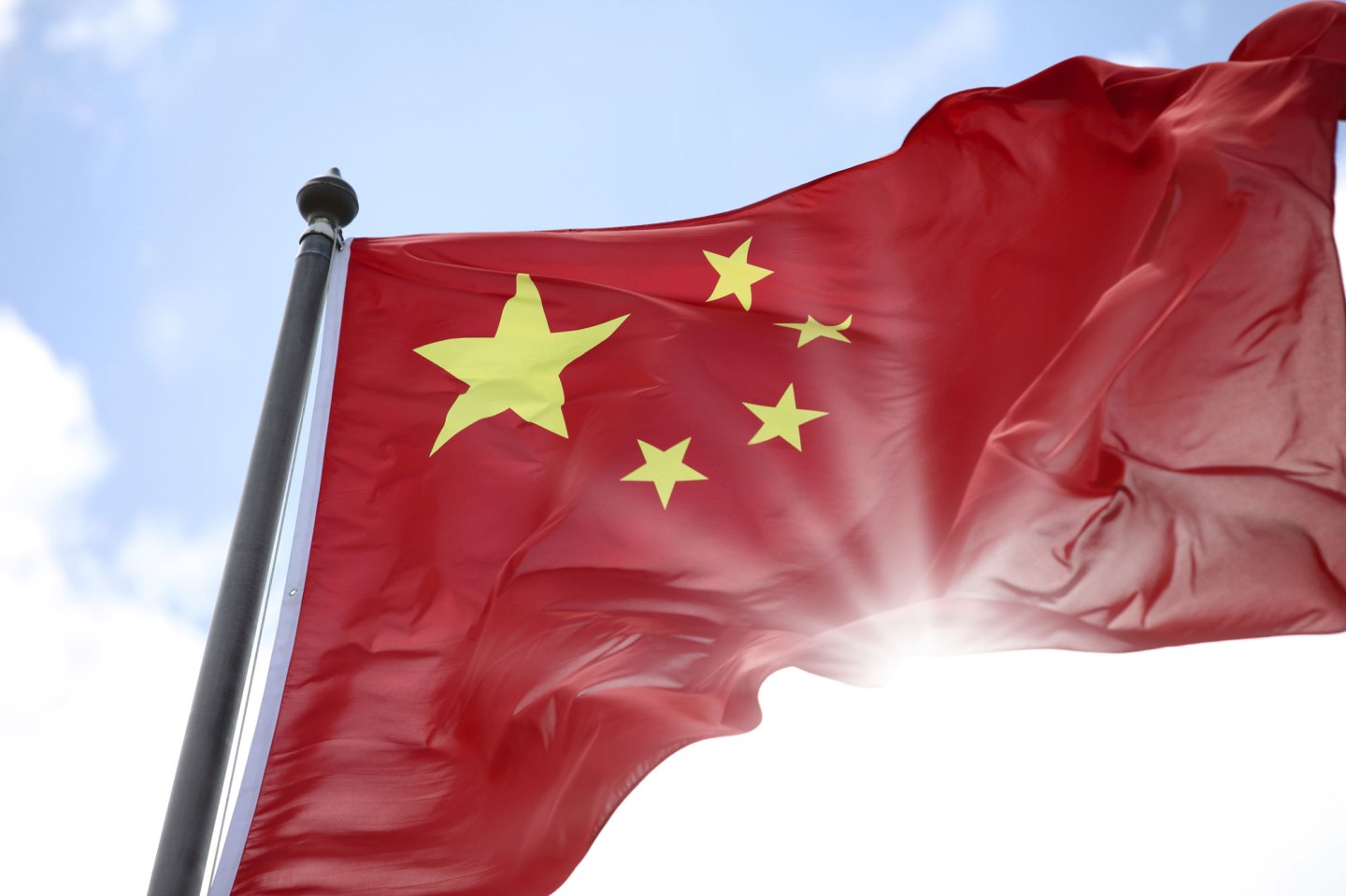
China flag
China National FlagPhotograph by blackred—Getty Images

When it comes to daft economic policy ideas, America has no monopoly.

But it’s possible that the U.S. offers a larger willing audience for bad economics, as British MP Kwasi Kwarteng had to travel pretty far from England to get his misguided ideas about monetary policy published. Kwarteng recently penned an article in The New York Times called “A Chinese Gold Standard?” in which he links the declining relative strength of first the British and then the American economy to the nations’ abandonment of the gold standard and then predicts the Chinese will adopt a gold standard to cement their role as a global economic hegemon.

Kwarteng is correct that the global monetary system based around the dollar is somewhat unstable. Many analysts believe that the dominance of the U.S. dollar as the world’s single reserve currency has artificially inflated the value of the dollar, all while rendering emerging markets vulnerable to changes in Federal Reserve policy. But the idea that the shifts in economic power in America, Britain, and China have to do with monetary policy is a misreading of history. And the notion that an authoritarian regime like China would give up control over its currency by pegging it to gold doesn’t pass the smell test.

As for the first point, Kwarteng writes:

For most of the 19th century the British pound had been the world’s “reserve currency,” the currency in which trade and finance were denominated. “As sound as a pound” became a widely used expression. The pound was pegged to gold at a fixed rate of just under £4 per ounce.

But the Great Depression and two taxing wars forced Britain to abandon both the gold standard and its fiscally prudent ways, encouraging gold to flow across the Atlantic. By the end of World War II, it was America, not Britain, that had all the gold and therefore could make the rules:

By the time of Bretton Woods, the United States held roughly 60 percent of the world’s gold supply. “Think of the gold in Fort Knox,” America’s chief negotiator at Bretton Woods, Harry Dexter White, said. “That is why we are in a powerful position.” He added, “We have the wherewithal to buy any currency we want.”

This gold-centric reading of history, however, ignores the real cause of the shift in economic power from Britain to America. America was in a position to dictate the terms of the post-war monetary order for the same reason America was in the position to decide the fate of World War II: it had a strong, vibrant economy and a massive population. It’s estimated that the U.S. economy became larger than Britain’s as early as 1880, while the U.S. population surpassed that of Britain even earlier. Furthermore, the U.S. had the luxury of fighting World War II far away from home, so its industrial base was more or less undamaged. Britain wasn’t so fortunate.

In other words, the fact that the U.S. accumulated so much gold in the first half of the 20th century was an effect of the relative strength of the economy rather than because of its hard money policies or fiscally prudent ways. And while it’s true that the U.S. was also forced to abandon the gold standard due to its Vietnam-related budget deficits, Kwarteng’s view of international monetary system isn’t accurate. He writes:

International critics said that the United States, by ending the dollar link to gold, was turning its back on its responsibilities as the guarantor of the international monetary system. Over the decades, the situation has gotten worse. The United States is $17.6 trillion in debt owed to the public, and large trade deficits are the norm. Yet there is no scope for revisiting the international monetary system, despite great dissatisfaction by countries like China and the Persian Gulf states, which hold large foreign currency reserves. Americans themselves question the security of the dollar when their country faces such large trade and budget deficits.

Kwarteng paints a picture of a profligate U.S. government terrorizing a world that is hooked on the dollar standard, but this couldn’t be further from the truth. The Chinese probably don’t like the fact that their purchasing of dollars enables the U.S. government to spend at a lower cost, but they are more concerned with keeping their currency cheap and exports flowing than they are with buttressing Chinese purchasing power or with the fact that their dollar investments might depreciate through inflation. As far as the Chinese are concerned, buying dollars is a great investment if it keeps Americans buying Chinese goods.

Kwarteng concedes that while the Chinese might be fine with the state of affairs today, they’ll surely want to peg the yuan to gold in 20 years or, as China attempts to rebalance its economy by exporting less and giving its own citizens more purchasing power. But why would it have to peg the yuan to gold to do that? If China really wanted a stronger currency, it could simply let the yuan appreciate against the dollar. Such a move would reduce the international demand for U.S. government debt and encourage Americans to spend less and export more. This would address the global imbalance and not require the Chinese government to give up control of its currency by going with a gold standard.

About the Author
By Chris Matthews
See full bioRight Arrow Button Icon

Latest in International

Finance
Lorem ipsum dolor sit amet, consectetur adipiscing elit, sed do eiusmod tempor incididunt ut labore et dolore magna aliqua. Ut enim ad minim veniam
By Fortune Editors
October 20, 2025
Finance
Lorem ipsum dolor sit amet, consectetur adipiscing elit, sed do eiusmod tempor incididunt ut labore et dolore magna aliqua. Ut enim ad minim veniam
By Fortune Editors
October 20, 2025
Finance
Lorem ipsum dolor sit amet, consectetur adipiscing elit, sed do eiusmod tempor incididunt ut labore et dolore magna aliqua. Ut enim ad minim veniam
By Fortune Editors
October 20, 2025
Finance
Lorem ipsum dolor sit amet, consectetur adipiscing elit, sed do eiusmod tempor incididunt ut labore et dolore magna aliqua. Ut enim ad minim veniam
By Fortune Editors
October 20, 2025
Finance
Lorem ipsum dolor sit amet, consectetur adipiscing elit, sed do eiusmod tempor incididunt ut labore et dolore magna aliqua. Ut enim ad minim veniam
By Fortune Editors
October 20, 2025
Finance
Lorem ipsum dolor sit amet, consectetur adipiscing elit, sed do eiusmod tempor incididunt ut labore et dolore magna aliqua. Ut enim ad minim veniam
By Fortune Editors
October 20, 2025

Most Popular

Finance
Lorem ipsum dolor sit amet, consectetur adipiscing elit, sed do eiusmod tempor incididunt ut labore et dolore magna aliqua. Ut enim ad minim veniam
By Fortune Editors
October 20, 2025
Finance
Lorem ipsum dolor sit amet, consectetur adipiscing elit, sed do eiusmod tempor incididunt ut labore et dolore magna aliqua. Ut enim ad minim veniam
By Fortune Editors
October 20, 2025
Finance
Lorem ipsum dolor sit amet, consectetur adipiscing elit, sed do eiusmod tempor incididunt ut labore et dolore magna aliqua. Ut enim ad minim veniam
By Fortune Editors
October 20, 2025
Finance
Lorem ipsum dolor sit amet, consectetur adipiscing elit, sed do eiusmod tempor incididunt ut labore et dolore magna aliqua. Ut enim ad minim veniam
By Fortune Editors
October 20, 2025
Finance
Lorem ipsum dolor sit amet, consectetur adipiscing elit, sed do eiusmod tempor incididunt ut labore et dolore magna aliqua. Ut enim ad minim veniam
By Fortune Editors
October 20, 2025
Finance
Lorem ipsum dolor sit amet, consectetur adipiscing elit, sed do eiusmod tempor incididunt ut labore et dolore magna aliqua. Ut enim ad minim veniam
By Fortune Editors
October 20, 2025
Fortune Secondary Logo
Rankings
  • 100 Best Companies
  • Fortune 500
  • Global 500
  • Fortune 500 Europe
  • Most Powerful Women
  • World's Most Admired Companies
  • See All Rankings
  • Lists Calendar
Sections
  • Finance
  • Fortune Crypto
  • Features
  • Leadership
  • Health
  • Commentary
  • Success
  • Retail
  • Mpw
  • Tech
  • Lifestyle
  • CEO Initiative
  • Asia
  • Politics
  • Conferences
  • Europe
  • Newsletters
  • Personal Finance
  • Environment
  • Magazine
  • Education
Customer Support
  • Frequently Asked Questions
  • Customer Service Portal
  • Privacy Policy
  • Terms Of Use
  • Single Issues For Purchase
  • International Print
Commercial Services
  • Advertising
  • Fortune Brand Studio
  • Fortune Analytics
  • Fortune Conferences
  • Business Development
  • Group Subscriptions
About Us
  • About Us
  • Press Center
  • Work At Fortune
  • Terms And Conditions
  • Site Map
  • About Us
  • Press Center
  • Work At Fortune
  • Terms And Conditions
  • Site Map
  • Facebook icon
  • Twitter icon
  • LinkedIn icon
  • Instagram icon
  • Pinterest icon

Most Popular

Microsoft AI chief gives it 18 months—for all white-collar work to be automated by AI
AI
Microsoft AI chief gives it 18 months—for all white-collar work to be automated by AI
By Jake AngeloMay 16, 2026
15 hours ago
Despite having a $165 million net worth, Scarlett Johansson says work-life balance doesn’t exist—and the first step to success is admitting that
Success
Despite having a $165 million net worth, Scarlett Johansson says work-life balance doesn’t exist—and the first step to success is admitting that
By Preston ForeMay 13, 2026
4 days ago
The Bezos family just donated $100 million to help achieve one of Mayor Zohran Mamdani’s top campaign promises
Politics
The Bezos family just donated $100 million to help achieve one of Mayor Zohran Mamdani’s top campaign promises
By Jake AngeloMay 12, 2026
4 days ago
Meet the 20-year-old CEO who launched a company in high school to solve Gen Z's entry-level job crisis
Future of Work
Meet the 20-year-old CEO who launched a company in high school to solve Gen Z's entry-level job crisis
By Jake AngeloMay 16, 2026
19 hours ago
Former top Russian official admits the country is over Putin and can 'imagine a future without him' — even elites bail as Kremlin seizes their assets 
Politics
Former top Russian official admits the country is over Putin and can 'imagine a future without him' — even elites bail as Kremlin seizes their assets 
By Jason MaMay 16, 2026
5 hours ago
‘You’re not a hero, you’re a liability’: Shark Tank’s Kevin O’Leary warns Gen Z founders to stop glorifying hustle culture
Future of Work
‘You’re not a hero, you’re a liability’: Shark Tank’s Kevin O’Leary warns Gen Z founders to stop glorifying hustle culture
By Jacqueline MunisMay 16, 2026
15 hours ago

© 2026 Fortune Media IP Limited. All Rights Reserved. Use of this site constitutes acceptance of our Terms of Use and Privacy Policy | CA Notice at Collection and Privacy Notice | Do Not Sell/Share My Personal Information
FORTUNE is a trademark of Fortune Media IP Limited, registered in the U.S. and other countries. FORTUNE may receive compensation for some links to products and services on this website. Offers may be subject to change without notice.