• Home
  • Latest
  • Fortune 500
  • Finance
  • Tech
  • Leadership
  • Lifestyle
  • Rankings
  • Multimedia

Trendingnow

1

Egg companies made $1.22 billion in profit off a $6 carton — now they’re buying their way out of a price-fixing case with 53 million donated eggs

2

Meet the Zillennials: The luckiest micro-generation in the workforce, born between 1993 and 1998

3

Economists have found an answer to slowing cognitive decline: Avoid retiring early, study finds

1

Egg companies made $1.22 billion in profit off a $6 carton — now they’re buying their way out of a price-fixing case with 53 million donated eggs

2

Meet the Zillennials: The luckiest micro-generation in the workforce, born between 1993 and 1998

3

Economists have found an answer to slowing cognitive decline: Avoid retiring early, study finds
FinanceInequality

Bill Gates’ solution to income inequality

By
Chris Matthews
Chris Matthews
Down Arrow Button Icon
By
Chris Matthews
Chris Matthews
Down Arrow Button Icon
October 15, 2014, 11:42 AM ET
19th International AIDS Conference Convenes In Washington
WASHINGTON, DC - JULY 23: Co-founder and co-chairman of the Bill and Melinda Gates Foundation and chairman and former chief executive of Microsoft, Bill Gates listens during a panel discussion of the 19th International AIDS Conference July 23, 2012 in Washington, DC. The International AIDS Conference, the world's largest one, is held in the U.S. for the first time sine 1990. (Photo by Alex Wong/Getty Images)Photography by Alex Wong — Getty Images
Add Fortune on Google for similar content.

It might not come as a surprise to many that Bill Gates, whom Forbes’ magazine ranks as the second wealthiest man in the world, doesn’t agree with the ideas of French economist Thomas Piketty.

It’s Piketty, after all, who made a big splash this year with his book Capital in the 21st Century, which argued that it is a fundamental law of capitalism that wealth will grow more concentrated absent destabilizing events like global wars. Piketty’s solution? A global tax on capital that could help governments better understand how wealth is distributed and stem the tide of inevitably increasing inequality, which Piketty believes is socially destabilizing.

If you believe the Forbes list, there is nobody in the world besides Carlos Slim who has more to lose than Bill Gates if Piketty’s global tax on wealth were to be instituted. But Gates’ critique of Piketty’s work, published Monday on his personal blog, isn’t completely self-interested. After all, Gates has already pledged to give away half his fortune over the course of his lifetime, a much larger amount than the 1% or 2% wealth tax, proposed by Piketty, would confiscate. His problem isn’t with the idea that the super wealthy should spread their fortunes around, but ratherwith Piketty’s mechanism and the incentives it would create:

Imagine three types of wealthy people. One guy is putting his capital into building his business. Then there’s a woman who’s giving most of her wealth to charity. A third person is mostly consuming, spending a lot of money on things like a yacht and plane. While it’s true that the wealth of all three people is contributing to inequality, I would argue that the first two are delivering more value to society than the third. I wish Piketty had made this distinction, because it has important policy implications.

Gates shares Piketty’s goal of spreading wealth, yet he doesn’t want to discourage the uber wealthy (like Gates) who are taking risks, investing in value-creating businesses, and helping the world through philanthropy. Gates’ solution? Shift the American tax code from one that taxes labor to one that taxes consumption. Now, this sounds like standard, right-wing economic theory. Consumption taxes are usually favored by the wealthy and by conservative economists because they tend to be regressive in nature. Since everyone—rich and poor—have to consume some amount of goods and services, and because the proportion of income spent is much higher for the poor than the rich, consumption taxes like state and local sales tax burden the poor more than the rich.

But this doesn’t necessarily have to be the case. Economists like Cornell University’s Robert Frank have long advocated for progressive consumption taxes that could do much to solve what they perceive as the ills of growing income inequality. As Frank writes:

Under such a tax, people would report not only their income but also their annual savings, as many already do under 401(k) plans and other retirement accounts. A family’s annual consumption is simply the difference between its income and its annual savings. That amount, minus a standard deduction—say, $30,000 for a family of four—would be the family’s taxable consumption. Rates would start low, like 10 percent. A family that earned $50,000 and saved $5,000 would thus have taxable consumption of $15,000.

Consider a family that spends $10 million a year and is deciding whether to add a $2 million wing to its mansion. If the top marginal tax rate on consumption were 100 percent, the project would cost $4 million. The additional tax payment would reduce the federal deficit by $2 million. Alternatively, the family could scale back, building only a $1 million addition. Then it would pay $1 million in additional tax and could deposit $2 million in savings. The federal deficit would fall by $1 million, and the additional savings would stimulate investment, promoting growth. Either way, the nation would come out ahead with no real sacrifice required of the wealthy family, because when all build larger houses, the result is merely to redefine what constitutes acceptable housing. With a consumption tax in place, most neighbors would also scale back the new wings on their mansions.

As you can see, one of the strategies behind this tax regime is to reduce the incentive to consume. With less conspicuous consumption, the poor would suffer from the negative effects of having less than those around them. As many behavioral studies have shown, relative wealth has more of an impact on personal happiness than absolute wealth.

Such a regime could appeal to both the right and left sides of the political spectrum. For those on the left, who are sometimes uncomfortable with the effects of a culture based around consumption, this tax would discourage such behavior. Meanwhile, a regime that encourages savings and investment would appeal to conservatives.

But for a progressive consumption tax to be truly progressive, there would need to be a hefty estate tax to prevent the rich from simply letting their wealth grow over generations through interest income. But Gates argues this is not a problem, because we have the ability to institute estate taxes, a policy which he is a “big believer” in.


 

About the Author
By Chris Matthews
See full bioRight Arrow Button Icon
Add Fortune on Google for similar content.

Latest in Finance

Finance
Lorem ipsum dolor sit amet, consectetur adipiscing elit, sed do eiusmod tempor incididunt ut labore et dolore magna aliqua. Ut enim ad minim veniam
By Fortune Editors
October 20, 2025
Finance
Lorem ipsum dolor sit amet, consectetur adipiscing elit, sed do eiusmod tempor incididunt ut labore et dolore magna aliqua. Ut enim ad minim veniam
By Fortune Editors
October 20, 2025
Finance
Lorem ipsum dolor sit amet, consectetur adipiscing elit, sed do eiusmod tempor incididunt ut labore et dolore magna aliqua. Ut enim ad minim veniam
By Fortune Editors
October 20, 2025
Finance
Lorem ipsum dolor sit amet, consectetur adipiscing elit, sed do eiusmod tempor incididunt ut labore et dolore magna aliqua. Ut enim ad minim veniam
By Fortune Editors
October 20, 2025
Finance
Lorem ipsum dolor sit amet, consectetur adipiscing elit, sed do eiusmod tempor incididunt ut labore et dolore magna aliqua. Ut enim ad minim veniam
By Fortune Editors
October 20, 2025
Finance
Lorem ipsum dolor sit amet, consectetur adipiscing elit, sed do eiusmod tempor incididunt ut labore et dolore magna aliqua. Ut enim ad minim veniam
By Fortune Editors
October 20, 2025

Most Popular

Finance
Lorem ipsum dolor sit amet, consectetur adipiscing elit, sed do eiusmod tempor incididunt ut labore et dolore magna aliqua. Ut enim ad minim veniam
By Fortune Editors
October 20, 2025
Finance
Lorem ipsum dolor sit amet, consectetur adipiscing elit, sed do eiusmod tempor incididunt ut labore et dolore magna aliqua. Ut enim ad minim veniam
By Fortune Editors
October 20, 2025
Finance
Lorem ipsum dolor sit amet, consectetur adipiscing elit, sed do eiusmod tempor incididunt ut labore et dolore magna aliqua. Ut enim ad minim veniam
By Fortune Editors
October 20, 2025
Finance
Lorem ipsum dolor sit amet, consectetur adipiscing elit, sed do eiusmod tempor incididunt ut labore et dolore magna aliqua. Ut enim ad minim veniam
By Fortune Editors
October 20, 2025
Finance
Lorem ipsum dolor sit amet, consectetur adipiscing elit, sed do eiusmod tempor incididunt ut labore et dolore magna aliqua. Ut enim ad minim veniam
By Fortune Editors
October 20, 2025
Finance
Lorem ipsum dolor sit amet, consectetur adipiscing elit, sed do eiusmod tempor incididunt ut labore et dolore magna aliqua. Ut enim ad minim veniam
By Fortune Editors
October 20, 2025
Fortune Secondary Logo
Rankings
  • 100 Best Companies
  • Fortune 500
  • Global 500
  • Fortune 500 Europe
  • Most Powerful Women
  • World's Most Admired Companies
  • See All Rankings
  • Lists Calendar
Sections
  • Finance
  • Fortune Crypto
  • Features
  • Leadership
  • Health
  • Commentary
  • Success
  • Retail
  • Mpw
  • Tech
  • Lifestyle
  • CEO Initiative
  • Asia
  • Politics
  • Conferences
  • Europe
  • Newsletters
  • Personal Finance
  • Environment
  • Magazine
  • Education
Customer Support
  • Frequently Asked Questions
  • Customer Service Portal
  • Privacy Policy
  • Terms Of Use
  • Single Issues For Purchase
  • International Print
Commercial Services
  • Advertising
  • Fortune Brand Studio
  • Fortune Analytics
  • Fortune Conferences
  • Business Development
  • Group Subscriptions
About Us
  • About Us
  • Press Center
  • Work At Fortune
  • Terms And Conditions
  • Site Map
  • About Us
  • Press Center
  • Work At Fortune
  • Terms And Conditions
  • Site Map
  • Facebook icon
  • Twitter icon
  • LinkedIn icon
  • Instagram icon
  • Pinterest icon

Latest in Finance

Chad Hurley and Steven Chen wearing suits
SuccessWealth
YouTube’s founders split over $650 million when they sold to Google in 2006—had they held out, they could have taken a slice of $550 billion
By Preston ForeJuly 3, 2026
11 hours ago
Photo: Paris, france
Environmentclimate change
Brutal heatwave in France is killing 2,000 people per week, undertakers are overwhelmed, and health agency says there’s worse to come
By John Leicester and The Associated PressJuly 3, 2026
11 hours ago
Photo: World Cup fans drinking.
EconomyEconomics
On Wall Street, analysts increasingly don’t believe the U.S. government’s ‘misleading’ job numbers
By Jim EdwardsJuly 3, 2026
15 hours ago
U.S. President Donald Trump talks to reporters after signing an executive order dealing with automobile repairs with Environmental Protection Agency Administrator Lee Zeldin in the Oval Office at the White House on June 29, 2026 in Washington, DC.
EconomyFed
Trump is already causing a headache for his new Fed chairman, saying the central bank’s board is ‘hostile’ and ‘doing the wrong thing’
By Eleanor PringleJuly 3, 2026
15 hours ago
A $75 billion valuation, 75 million global customers and on its way to America—Revolut is London’s disruptor extraordinaire
EuropeLetter from London
A $75 billion valuation, 75 million global customers and on its way to America—Revolut is London’s disruptor extraordinaire
By Kamal AhmedJuly 3, 2026
16 hours ago
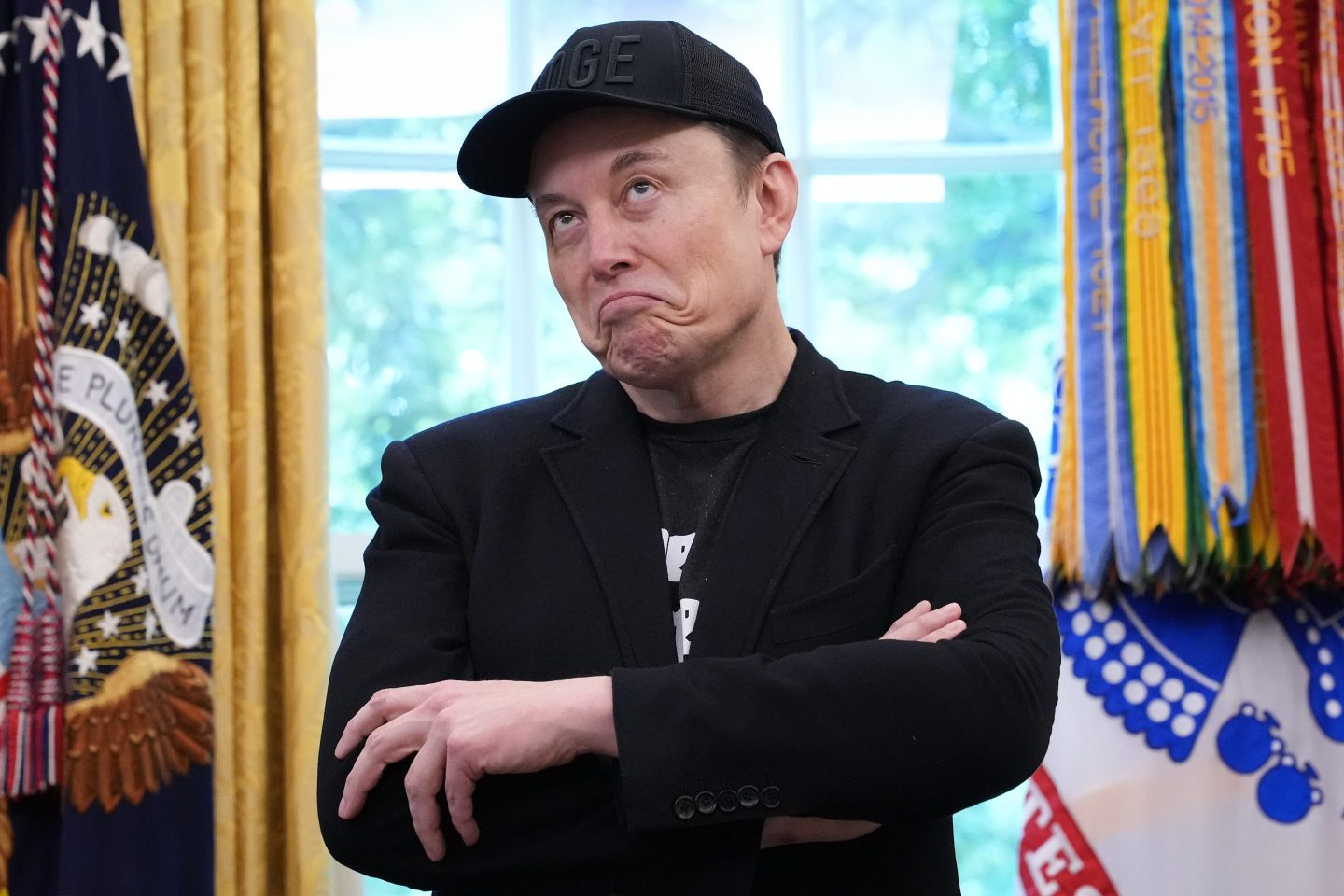
Man in a black hat and jacket
InvestingSpace Exploration
Elon Musk can’t sell a single SpaceX share for a year—and then all the locks crack open at once
By Amanda GerutJuly 3, 2026
16 hours ago

Most Popular

Egg companies made $1.22 billion in profit off a $6 carton — now they’re buying their way out of a price-fixing case with 53 million donated eggs
Law
Egg companies made $1.22 billion in profit off a $6 carton — now they’re buying their way out of a price-fixing case with 53 million donated eggs
By Wyatte Grantham-Philips and The Associated PressJuly 2, 2026
1 day ago
Meet the Zillennials: The luckiest micro-generation in the workforce, born between 1993 and 1998
AI
Meet the Zillennials: The luckiest micro-generation in the workforce, born between 1993 and 1998
By Nick LichtenbergJuly 3, 2026
19 hours ago
Economists have found an answer to slowing cognitive decline: Avoid retiring early, study finds
Economy
Economists have found an answer to slowing cognitive decline: Avoid retiring early, study finds
By Sasha RogelbergJuly 2, 2026
1 day ago
On Wall Street, analysts increasingly don’t believe the U.S. government’s 'misleading' job numbers
Economy
On Wall Street, analysts increasingly don’t believe the U.S. government’s 'misleading' job numbers
By Jim EdwardsJuly 3, 2026
15 hours ago
Current price of oil as of July 2, 2026
Personal Finance
Current price of oil as of July 2, 2026
By Joseph HostetlerJuly 2, 2026
2 days ago
$25 billion CEO says one-hour interviews are a waste of time—he puts candidates through six hours of tests and wants them to order wine at lunch
Success
$25 billion CEO says one-hour interviews are a waste of time—he puts candidates through six hours of tests and wants them to order wine at lunch
By Orianna Rosa RoyleJuly 3, 2026
19 hours ago

© 2026 Fortune Media IP Limited. All Rights Reserved. Use of this site constitutes acceptance of our Terms of Use and Privacy Policy | CA Notice at Collection and Privacy Notice | Do Not Sell/Share My Personal Information
FORTUNE is a trademark of Fortune Media IP Limited, registered in the U.S. and other countries. FORTUNE may receive compensation for some links to products and services on this website. Offers may be subject to change without notice.