• Home
  • Latest
  • Fortune 500
  • Finance
  • Tech
  • Leadership
  • Lifestyle
  • Rankings
  • Multimedia
CommentaryCommentary

6 principles that made Nelson Mandela a renowned leader

By
Paul J.H. Schoemaker
and
Steven Krupp
Steven Krupp
Down Arrow Button Icon
By
Paul J.H. Schoemaker
and
Steven Krupp
Steven Krupp
Down Arrow Button Icon
December 5, 2014, 9:44 AM ET
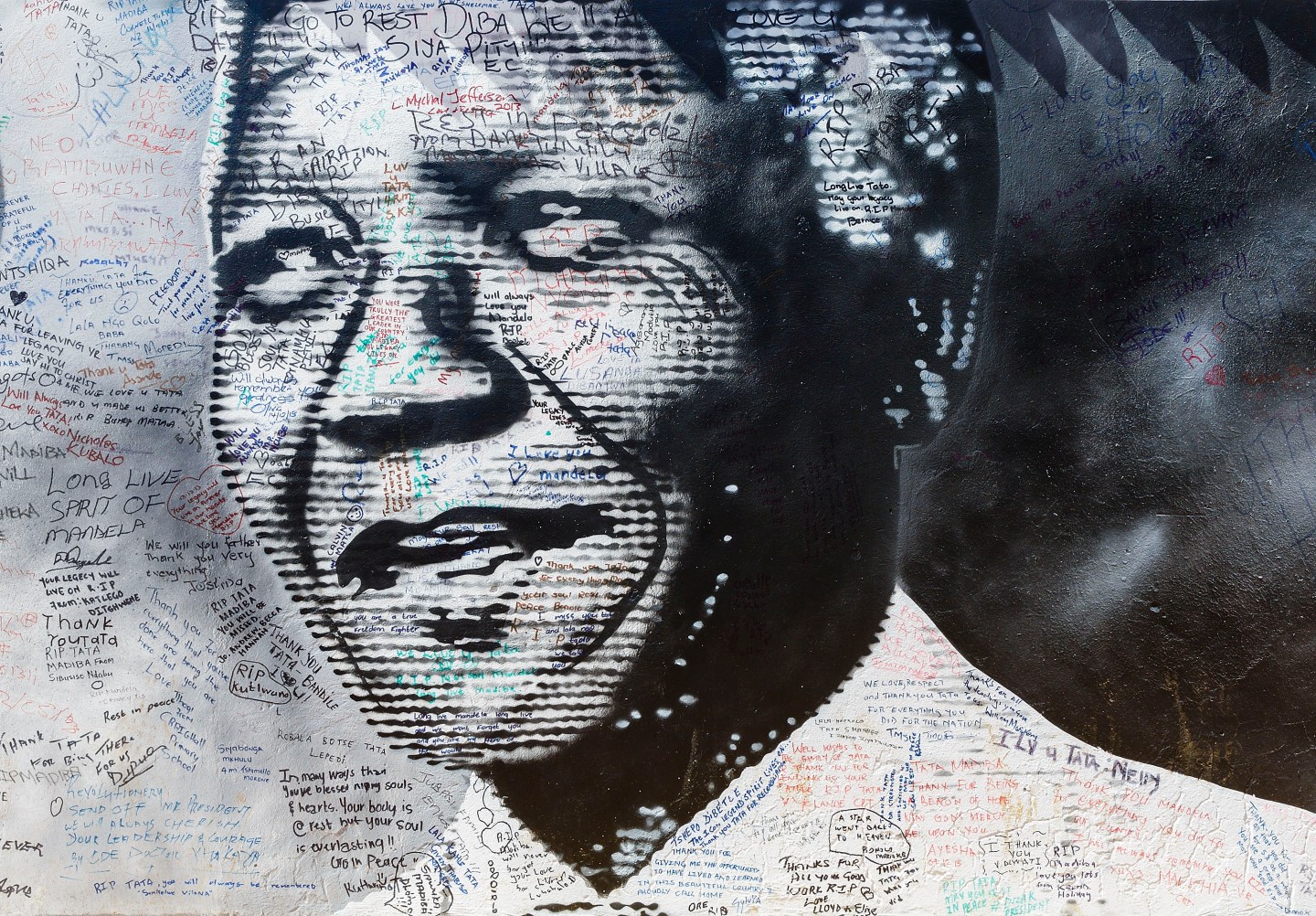
Photograph by Marco Prosch — Getty Images

As today marks the one-year anniversary of Nelson Mandela’s death, we reflect on the timeless lessons from his life story that will endure for years to come. Mandela was a gifted visionary. He exercised a full range of cognitive, emotional and behavioral abilities to bring about profound change in South Africa. All leaders who aspire to be more strategic can learn from Mandela’s six key behaviors that distinguish him as a true strategic leader.

He anticipated

Mandela looked ahead and could see that South Africa’s system of apartheid would not survive into the future. From his prison cell, he strategically assessed his moves and anticipated reactions. When offered freedom in exchange for renouncing opposition to the government, Mandela rebuked President Botha: “What freedom am I being offered while the organization of the people remains banned? … What freedom am I being offered if I must ask permission to live in an urban area?” Mandela decided to serve out his sentence rather than exchange it for the political prison of apartheid. His vision was right. The outside world recoiled against South Africa, while local business leaders and young whites pushed for change domestically.

He challenged

Mandela stood out among prisoners and guards as a man of principle and dignity, willing to sacrifice his life for his beliefs. Despite harsh prison life, Mandela mustered energy to challenge his keepers. He was unwilling to accept the status quo and his presence on Robben Island held a mirror up to the face of apartheid’s leaders. Through word, deed and symbol, he challenged the system that denied him liberty.

Eventually, Botha’s successor F.W. de Klerk called for democratic elections and in 1994, Mandela became president of South Africa in a very rare, peaceful and orderly transition from white minority to black-majority rule. Mandela and de Klerk shared the Nobel Peace Prize in 1993 “for their work for the peaceful termination of the apartheid regime, and for laying the foundations for a new democratic South Africa.”

He interpreted

Mandela studied the errors of Robert Mugabe in bordering Zimbabwe whose brutal dictatorship resulted in the country’s demise. He recognized that South Africa could follow in Zimbabwe’s footsteps, unless he practiced racial harmony. That meant forgiving without forgetting and sharing power. “We have to surprise [the white minority] with restraints and generosity,” he said. A master of symbolism, Mandela invited his prison guards to the presidential swearing-in ceremony. Mandela’s interpretation of history was spot on. South Africa could prosper as a multi-racial society only if leaders mutually forgave each other.

He decided

In 1993, a white man assassinated Chris Hani, a leader of the South African Communist Party, triggering a widespread demonstration against the de Klerk government. Mandela, recently out of prison, had the guts to call for peace when people wanted revenge.

He also made a courageous decision to use sports as a means of healing, believing, “Sport…has the power to unite people in a way that little else does.” When the ban was lifted on South Africa’s participation in the 1992 Olympics, Mandela at first opposed but ultimately decided to support the mostly white athletes. “There is no doubt in my mind this is the correct decision,” Mandela said. Of the 95-person delegation, only eight were black. “I would have liked [the team] to be a reflection of our population, but there has to be a starting point.”

He aligned

After being elected South Africa’s first black president, Mandela announced he would serve only one term, though two were permissible. He understood rallying the country and bridging diverse interests meant making room for others. Black supremacy was as depraved as white supremacy, in his view. Mandela knew that over a billion people would watch his inaugural presidential address and used this speech—and key plural pronouns we, us, and our—to align a deeply divided nation around a common vision: “We understand it still that there is no easy road to freedom…none of us acting alone can achieve success. We must therefore act together as a united people, for national reconciliation, for nation building, for the birth of a new world.”

He learned

Mandela faced big questions after his release from prison: What to do with the faltering economy? For most of his life, Mandela was a socialist and even a Marxist. He was suspicious of free markets and private ownership, given the abuses he witnessed. He said, “The nationalization of the mines, banks and monopoly industries is the policy of the ANC [African National Congress], and a change or modification of our views in this regard is inconceivable.”

But then he came to learn what decades of socialism had done to the states of the former Soviet Union. His thinking took a sharp turn when he met leaders of the Communist Parties of China and Vietnam who were striving to privatize state enterprises. “They changed my views altogether,” Mandela told a biographer.

Mandela exemplifies how a strategic leader adjusts strategy and execution amid complex social, political, legal and economic forces without compromising deeply held values. Leadership is not just about motivating people and creating political support for a strategy, but also about maintaining broad support through successive adjustments to the plan.

This article was adapted from “Winning the Long Game: How Strategic Leaders Shape the Future.” Schoemaker is Founder and Executive Chairman, and Steven Krupp is CEO of Decision Strategies International, a consulting and training firm specializing in leadership development and strategy formulation. Schoemaker also serves as Research Director of the Mack Institute for Innovation Management at the Wharton School of the University of Pennsylvania.

About the Authors
By Paul J.H. Schoemaker
See full bioRight Arrow Button Icon
By Steven Krupp
See full bioRight Arrow Button Icon

Latest in Commentary

Finance
Lorem ipsum dolor sit amet, consectetur adipiscing elit, sed do eiusmod tempor incididunt ut labore et dolore magna aliqua. Ut enim ad minim veniam
By Fortune Editors
October 20, 2025
Finance
Lorem ipsum dolor sit amet, consectetur adipiscing elit, sed do eiusmod tempor incididunt ut labore et dolore magna aliqua. Ut enim ad minim veniam
By Fortune Editors
October 20, 2025
Finance
Lorem ipsum dolor sit amet, consectetur adipiscing elit, sed do eiusmod tempor incididunt ut labore et dolore magna aliqua. Ut enim ad minim veniam
By Fortune Editors
October 20, 2025
Finance
Lorem ipsum dolor sit amet, consectetur adipiscing elit, sed do eiusmod tempor incididunt ut labore et dolore magna aliqua. Ut enim ad minim veniam
By Fortune Editors
October 20, 2025
Finance
Lorem ipsum dolor sit amet, consectetur adipiscing elit, sed do eiusmod tempor incididunt ut labore et dolore magna aliqua. Ut enim ad minim veniam
By Fortune Editors
October 20, 2025
Finance
Lorem ipsum dolor sit amet, consectetur adipiscing elit, sed do eiusmod tempor incididunt ut labore et dolore magna aliqua. Ut enim ad minim veniam
By Fortune Editors
October 20, 2025

Most Popular

Finance
Lorem ipsum dolor sit amet, consectetur adipiscing elit, sed do eiusmod tempor incididunt ut labore et dolore magna aliqua. Ut enim ad minim veniam
By Fortune Editors
October 20, 2025
Finance
Lorem ipsum dolor sit amet, consectetur adipiscing elit, sed do eiusmod tempor incididunt ut labore et dolore magna aliqua. Ut enim ad minim veniam
By Fortune Editors
October 20, 2025
Finance
Lorem ipsum dolor sit amet, consectetur adipiscing elit, sed do eiusmod tempor incididunt ut labore et dolore magna aliqua. Ut enim ad minim veniam
By Fortune Editors
October 20, 2025
Finance
Lorem ipsum dolor sit amet, consectetur adipiscing elit, sed do eiusmod tempor incididunt ut labore et dolore magna aliqua. Ut enim ad minim veniam
By Fortune Editors
October 20, 2025
Finance
Lorem ipsum dolor sit amet, consectetur adipiscing elit, sed do eiusmod tempor incididunt ut labore et dolore magna aliqua. Ut enim ad minim veniam
By Fortune Editors
October 20, 2025
Finance
Lorem ipsum dolor sit amet, consectetur adipiscing elit, sed do eiusmod tempor incididunt ut labore et dolore magna aliqua. Ut enim ad minim veniam
By Fortune Editors
October 20, 2025
Fortune Secondary Logo
Rankings
  • 100 Best Companies
  • Fortune 500
  • Global 500
  • Fortune 500 Europe
  • Most Powerful Women
  • Future 50
  • World’s Most Admired Companies
  • See All Rankings
Sections
  • Finance
  • Fortune Crypto
  • Features
  • Leadership
  • Health
  • Commentary
  • Success
  • Retail
  • Mpw
  • Tech
  • Lifestyle
  • CEO Initiative
  • Asia
  • Politics
  • Conferences
  • Europe
  • Newsletters
  • Personal Finance
  • Environment
  • Magazine
  • Education
Customer Support
  • Frequently Asked Questions
  • Customer Service Portal
  • Privacy Policy
  • Terms Of Use
  • Single Issues For Purchase
  • International Print
Commercial Services
  • Advertising
  • Fortune Brand Studio
  • Fortune Analytics
  • Fortune Conferences
  • Business Development
  • Group Subscriptions
About Us
  • About Us
  • Editorial Calendar
  • Press Center
  • Work At Fortune
  • Diversity And Inclusion
  • Terms And Conditions
  • Site Map
  • About Us
  • Editorial Calendar
  • Press Center
  • Work At Fortune
  • Diversity And Inclusion
  • Terms And Conditions
  • Site Map
  • Facebook icon
  • Twitter icon
  • LinkedIn icon
  • Instagram icon
  • Pinterest icon

Latest in Commentary

LI
CommentaryLinkedIn
AI adoption isn’t the hard part, it’s building employee agency
By Teuila Hanson and Mohak ShroffApril 3, 2026
11 hours ago
I helped build Uber and Discord and now my tools help fuel billion-dollar unicorns. But Silicon Valley is losing the AI race to itself
CommentarySilicon Valley
I helped build Uber and Discord and now my tools help fuel billion-dollar unicorns. But Silicon Valley is losing the AI race to itself
By Sumeet VaidyaApril 3, 2026
11 hours ago
messi
CommentaryFlorida
Apollo and FC Barcelona just proved legacy markets are losing their grip on business
By Mike SimasApril 2, 2026
1 day ago
kroenke
CommentarySoccer
Why American billionaires are abandoning Wall Street for English soccer clubs
By Andrés MartinezApril 2, 2026
1 day ago
wyle
CommentaryTV
What HBO’s ‘The Pitt’ gets right—and wrong—about treating alcohol use disorder
By Jonathan Hunt-GlassmanApril 2, 2026
1 day ago
nic
CommentaryInsider trading
Prediction markets caught insider traders in real time. Congress wants to shut them down anyway
By Nic PuckrinApril 2, 2026
1 day ago

Most Popular

Gen Z fled San Francisco for Texas and Florida. Now they’re turning ‘welcomer cities’ into the next big tech towns
Real Estate
Gen Z fled San Francisco for Texas and Florida. Now they’re turning ‘welcomer cities’ into the next big tech towns
By Fortune EditorsApril 2, 2026
2 days ago
Google CEO Sundar Pichai says we’re just a decade away from a new normal of extraterrestrial data centers
Innovation
Google CEO Sundar Pichai says we’re just a decade away from a new normal of extraterrestrial data centers
By Fortune EditorsApril 3, 2026
15 hours ago
Major 4-day workweek study suggests that when we work 5 days we spend one doing basically nothing
Success
Major 4-day workweek study suggests that when we work 5 days we spend one doing basically nothing
By Fortune EditorsApril 2, 2026
1 day ago
The Walmart billionaires next door: Quiet backlash is brewing against the heirs who remade the retailer’s hometown
Magazine
The Walmart billionaires next door: Quiet backlash is brewing against the heirs who remade the retailer’s hometown
By Fortune EditorsApril 3, 2026
17 hours ago
Current price of oil as of April 2, 2026
Personal Finance
Current price of oil as of April 2, 2026
By Fortune EditorsApril 2, 2026
1 day ago
Paul Krugman smacks down Trump speech with argument that $4 gas is ‘less than half’ of the Hormuz hit. Here’s what he’s talking about
Economy
Paul Krugman smacks down Trump speech with argument that $4 gas is ‘less than half’ of the Hormuz hit. Here’s what he’s talking about
By Fortune EditorsApril 2, 2026
1 day ago

© 2026 Fortune Media IP Limited. All Rights Reserved. Use of this site constitutes acceptance of our Terms of Use and Privacy Policy | CA Notice at Collection and Privacy Notice | Do Not Sell/Share My Personal Information
FORTUNE is a trademark of Fortune Media IP Limited, registered in the U.S. and other countries. FORTUNE may receive compensation for some links to products and services on this website. Offers may be subject to change without notice.