• Home
  • Latest
  • Fortune 500
  • Finance
  • Tech
  • Leadership
  • Lifestyle
  • Rankings
  • Multimedia

Trendingnow

1

As Big Tech showers employees with perks to win the talent war, Nvidia built a nearly $5 trillion company by making people pay for their own lunch

2

Mark Zuckerberg feeds his cows macadamia nuts and beer to create the 'highest-quality beef in the world' on his $300 million estate in Hawaii

3

MacKenzie Scott alone accounted for one-third of America's $19.2 billion in megagifts last year

1

As Big Tech showers employees with perks to win the talent war, Nvidia built a nearly $5 trillion company by making people pay for their own lunch

2

Mark Zuckerberg feeds his cows macadamia nuts and beer to create the 'highest-quality beef in the world' on his $300 million estate in Hawaii

3

MacKenzie Scott alone accounted for one-third of America's $19.2 billion in megagifts last year
FinanceBanks

Big U.S. banks facing the Fed’s next round of stress tests

Fortune Editors
By
Fortune Editors
Fortune Editors
Down Arrow Button Icon
Fortune Editors
By
Fortune Editors
Fortune Editors
Down Arrow Button Icon
December 9, 2014, 7:41 AM ET
JPMorgan Profit Rises 76% As Bad Loans Dwindle
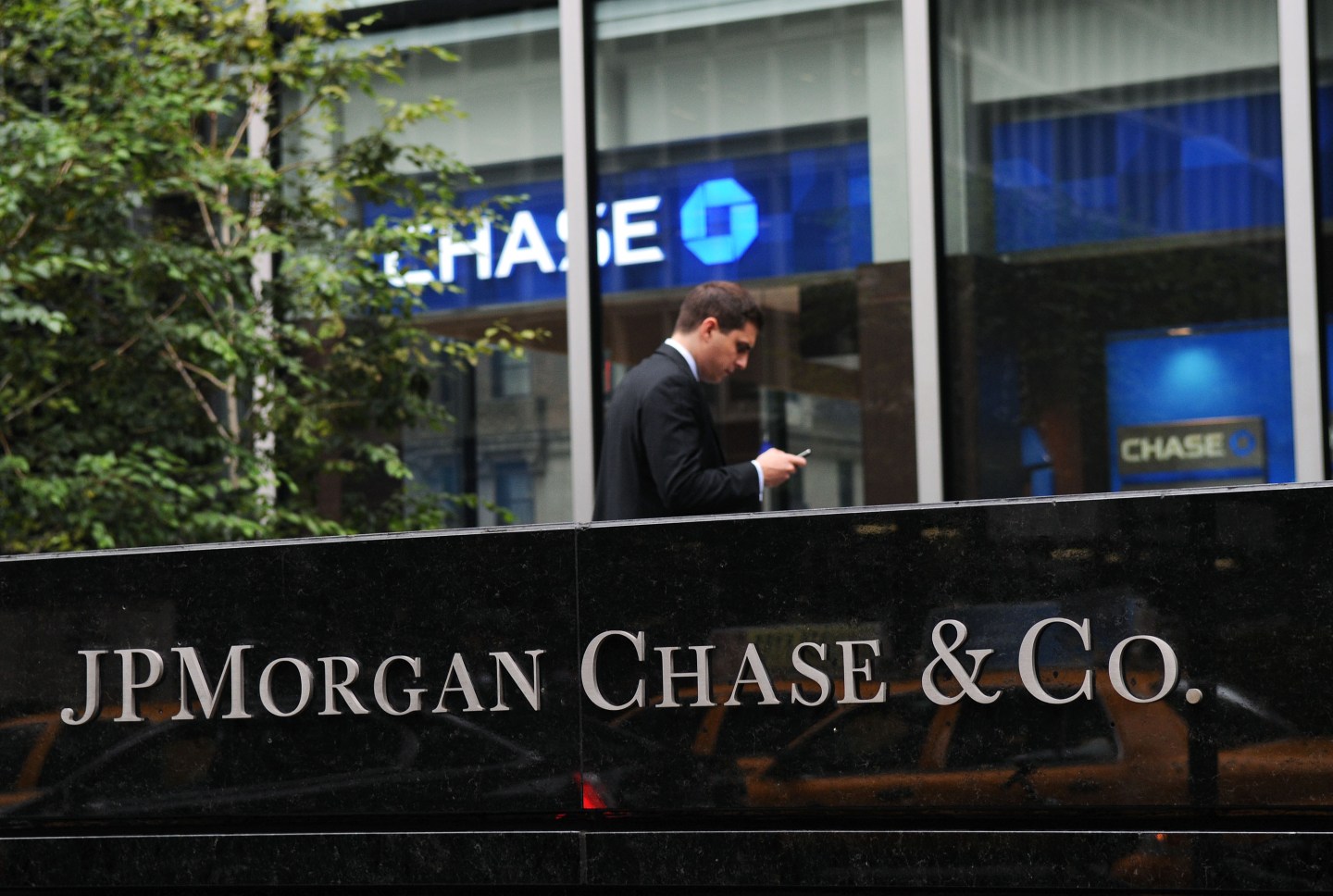
A man uses a cell phone outside the JPMorgan Chase & Co. headquarters on Park Avenue in New York, U.S. on Thursday, July 15, 2010. JPMorgan, the second-biggest U.S. bank by assets, said profit rose 76 percent, bouyed by a $6.3 billion reduction in provisions for soured mortgages and credit-card loans from last year. Photographer: Jonathan Fickies/Bloomberg via Getty ImagesPhotograph by Jonathan Fickies — Bloomberg via Getty Images
Add Fortune on Google for similar content.

Some of the biggest U.S. banks, including Citigroup and JPMorgan Chase, are set to find out how risky the U.S. Federal Reserve thinks they are.

The Fed is set to conduct its annual “stress tests,” which measure how banks will hold up during times of economic turmoil, bank executives, former Fed officials and consultants involved in the process told Reuters.

In gatherings organized by industry groups as well as more informal forums, executives say they have swapped tips about everything from how to best communicate their data to regulators — who evidently appreciate robust summaries — to how to project legal losses in a hypothetical downturn.

The Fed deliberately keeps quiet about how it measures lenders’ performance during downturns, to prevent banks from finding loopholes in the process that would allow them to take more risk, senior regulators have said publicly. It has given banks a little more information recently, but many executives still gripe about the tests.

“You put something in and one year it’s okay and the next year they say ‘no,’ and you’re scratching your head,” said one bank executive. The executive, like others that spoke to Reuters, spoke about the stress tests on the condition of anonymity.

A few years ago, banks might have hesitated to share information with rivals about how they measure risk and how they communicate with the Fed. Their willingness to talk to competitors about these issues underscores just how exasperated they are with the process.

The Fed does not mind the information sharing, because the banks do not share confidential supervisory information and it is not collusion in any legal sense – it does not result in price fixing or evidently hurt customers in any other way, the executive said. A Fed spokesman declined to comment.

Regulators have multiple tools for keeping banks in check, including global capital rules known as “Basel III,” which rule-makers world-wide have been crafting for years. But Basel III is viewed by the Fed as flawed, because it gives so much leeway to banks to measure how risky certain assets are.

The Fed has more control over the stress test process, which is part of its annual Comprehensive Capital Analysis and Review. Many analysts believe the Fed will not hesitate to use stress tests to pressure banks to make their balance sheets safer.

“The Fed will likely use the CCAR process as a way to help drive capital requirements even higher for the largest U.S. banks,” said Steven Chubak, a bank analyst at Nomura.

As part of the CCAR process, the Fed lists a series of bad scenarios for the financial sector — for example, U.S. economic activity shrinking by 4.25 percent over nine future quarters and unemployment spiking to 11.25 percent, and banks estimate how much their assets will deteriorate in those scenarios.

They submit reports that run into the thousands of pages to regulators who then make their own estimates for how banks would perform using Federal Reserve models. If the Fed does not like what it sees, the bank cannot increase dividends to shareholders or buy back more stock.

A wide gap
What irks banks is that their stress test results and the Fed’s are often far apart, and regulators give little information about how or why they disagree.

For instance, in 2014 Zions Bancorporation, a Salt Lake City, Utah-based bank with $55 billion of assets, said its assessment showed it passed the stress tests: in a hypothetical downturn, it would have capital equal to about 5.9 percent of its assets, above the Fed’s 5.0 percent threshold. But the Fed ruled Zions’s capital ratio would fall to 3.6 percent in its scenario and issued a failing grade.

Executives also complain that strong capital levels are often not enough: well-capitalized banks can still be prohibited from paying out more dividends for “qualitative” reasons, such as a flaw in its capital planning process. Banks including Citigroup Inc, BB&T Corp and Ally Financial Inc have failed the qualitative portion of the stress tests in recent years.

To combat the opacity, banks have met in forums hosted by the Clearing House, a trade group for big U.S. commercial and retail banks, the American Bankers’ Association, and at other informal venues.

Among the problems they have discussed is how to effectively write their reports, which must contain detailed information on the mathematical models they employ as well as a narrative piece that describes a lot of the methods that banks used to arrive at their conclusions. Executives say it is a challenge to produce a document that clearly and concisely explains everything to Fed modelers and examiners who may be unfamiliar with individual institutions.

One senior executive at a large U.S. bank involved in the stress-test process said one thing the Fed pays close attention to is the changes a bank made since the last submission. Instead of describing those changes in an appendix, the executive has learned the Fed preferred it to be addressed at the beginning of the document.

The executive added that given that the Fed has a limited period of time to review submissions, examiners have told other banks that they prefer to see a more detailed executive summary.

The Fed itself has taken some steps to help banks get a better sense of its expectations on the qualitative portion of the stress tests and how banks should organize their information – its October instructions for the 2015 stress test included a section on their preferential format.

The instructions also contained a “common themes” appendix that explained issues the Fed was looking closely at, such as if assumptions banks used to estimate losses are clearly articulated and how banks account for potential limitations and weaknesses in the models they use.

But some executives say that the more specific information about what it is looking for is not helpful if the Fed does not detail how it reached its conclusions.

“We’ve had a lot of conversations about methodologies and the approach to transparency in the CCAR process that have been more of a concern,” said Chris Halmy, finance chief of Ally Financial Inc, in an October interview. Ally has been seeking clarity “less about instructions and more about the feedback,” Halmy said.

Another unresolved issue that banks have been powwowing about is how to estimate legal losses nine quarters into the future. In its common themes appendix, the Fed faulted many banks’ projections and said they needed to take into account “possible claims of all types.”

Legal losses are notoriously difficult to forecast. Without any more specifics about what the Fed wants banks to incorporate into their forecasts, it is a struggle to produce a result that will satisfy regulators, said one consultant that does stress-testing work for large banks.

“No one really knows what the Fed is looking for” with respect to potential legal losses, the consultant said. “There may be some objections to capital plans next year as a result.”

—Reuters contributed to this report.

About the Author
Fortune Editors
By Fortune Editors
See full bioRight Arrow Button Icon
Add Fortune on Google for similar content.

Latest in Finance

Finance
Lorem ipsum dolor sit amet, consectetur adipiscing elit, sed do eiusmod tempor incididunt ut labore et dolore magna aliqua. Ut enim ad minim veniam
By Fortune Editors
October 20, 2025
Finance
Lorem ipsum dolor sit amet, consectetur adipiscing elit, sed do eiusmod tempor incididunt ut labore et dolore magna aliqua. Ut enim ad minim veniam
By Fortune Editors
October 20, 2025
Finance
Lorem ipsum dolor sit amet, consectetur adipiscing elit, sed do eiusmod tempor incididunt ut labore et dolore magna aliqua. Ut enim ad minim veniam
By Fortune Editors
October 20, 2025
Finance
Lorem ipsum dolor sit amet, consectetur adipiscing elit, sed do eiusmod tempor incididunt ut labore et dolore magna aliqua. Ut enim ad minim veniam
By Fortune Editors
October 20, 2025
Finance
Lorem ipsum dolor sit amet, consectetur adipiscing elit, sed do eiusmod tempor incididunt ut labore et dolore magna aliqua. Ut enim ad minim veniam
By Fortune Editors
October 20, 2025
Finance
Lorem ipsum dolor sit amet, consectetur adipiscing elit, sed do eiusmod tempor incididunt ut labore et dolore magna aliqua. Ut enim ad minim veniam
By Fortune Editors
October 20, 2025

Most Popular

Finance
Lorem ipsum dolor sit amet, consectetur adipiscing elit, sed do eiusmod tempor incididunt ut labore et dolore magna aliqua. Ut enim ad minim veniam
By Fortune Editors
October 20, 2025
Finance
Lorem ipsum dolor sit amet, consectetur adipiscing elit, sed do eiusmod tempor incididunt ut labore et dolore magna aliqua. Ut enim ad minim veniam
By Fortune Editors
October 20, 2025
Finance
Lorem ipsum dolor sit amet, consectetur adipiscing elit, sed do eiusmod tempor incididunt ut labore et dolore magna aliqua. Ut enim ad minim veniam
By Fortune Editors
October 20, 2025
Finance
Lorem ipsum dolor sit amet, consectetur adipiscing elit, sed do eiusmod tempor incididunt ut labore et dolore magna aliqua. Ut enim ad minim veniam
By Fortune Editors
October 20, 2025
Finance
Lorem ipsum dolor sit amet, consectetur adipiscing elit, sed do eiusmod tempor incididunt ut labore et dolore magna aliqua. Ut enim ad minim veniam
By Fortune Editors
October 20, 2025
Finance
Lorem ipsum dolor sit amet, consectetur adipiscing elit, sed do eiusmod tempor incididunt ut labore et dolore magna aliqua. Ut enim ad minim veniam
By Fortune Editors
October 20, 2025
Fortune Secondary Logo
Rankings
  • 100 Best Companies
  • Fortune 500
  • Global 500
  • Fortune 500 Europe
  • Most Powerful Women
  • World's Most Admired Companies
  • See All Rankings
  • Lists Calendar
Sections
  • Finance
  • Fortune Crypto
  • Features
  • Leadership
  • Health
  • Commentary
  • Success
  • Retail
  • Mpw
  • Tech
  • Lifestyle
  • CEO Initiative
  • Asia
  • Politics
  • Conferences
  • Europe
  • Newsletters
  • Personal Finance
  • Environment
  • Magazine
  • Education
Customer Support
  • Frequently Asked Questions
  • Customer Service Portal
  • Privacy Policy
  • Terms Of Use
  • Single Issues For Purchase
  • International Print
Commercial Services
  • Advertising
  • Fortune Brand Studio
  • Fortune Analytics
  • Fortune Conferences
  • Business Development
  • Group Subscriptions
About Us
  • About Us
  • Press Center
  • Work At Fortune
  • Terms And Conditions
  • Site Map
  • About Us
  • Press Center
  • Work At Fortune
  • Terms And Conditions
  • Site Map
  • Facebook icon
  • Twitter icon
  • LinkedIn icon
  • Instagram icon
  • Pinterest icon

Latest in Finance

Best private student loans for medical school
Personal Financestudent loans and debt
Best private student loans for medical school
By Joseph HostetlerJuly 2, 2026
7 hours ago
Michael Burry just shorted Caterpillar’s 172% AI rally. One analyst says his bet won’t even matter
Investingstock prices
Michael Burry just shorted Caterpillar’s 172% AI rally. One analyst says his bet won’t even matter
By Marco Quiroz-GutierrezJuly 2, 2026
8 hours ago
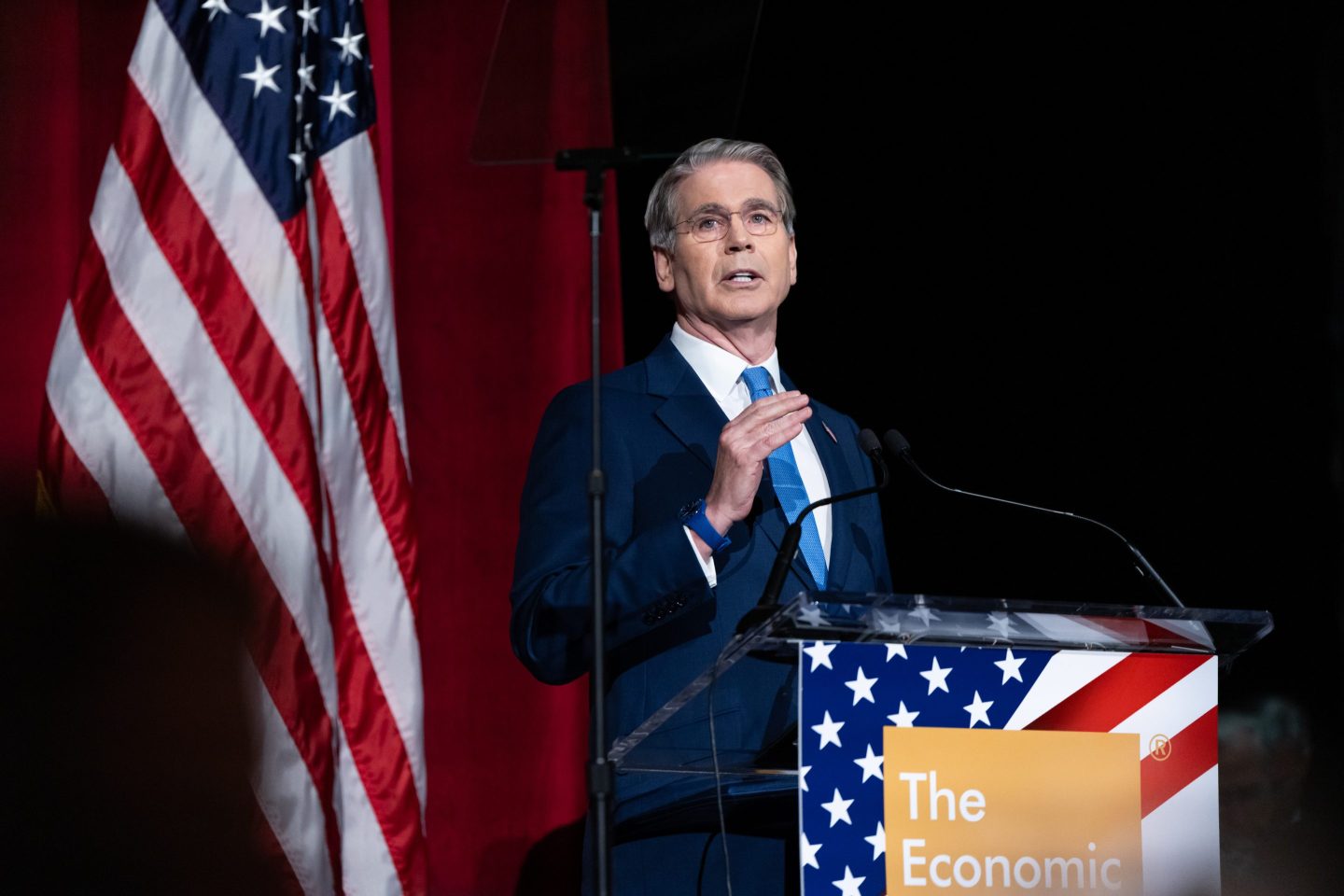
U.S. Treasury Secretary Scott Bessent
EconomyDebt
AI’s $2.2 trillion deficit fix is already half fake, economists say
By Tristan BoveJuly 2, 2026
9 hours ago
s
Personal FinanceSports
The sports economy is unaffordable at the bar, let alone the stadium
By Catherina GioinoJuly 2, 2026
10 hours ago
sb
North AmericaU.S. Department of the Treasury
Scott Bessent goes after the top Mexican cartel’s new billion-dollar business: gas stations
By Fatima Hussein and The Associated PressJuly 2, 2026
10 hours ago
eggs
LawAntitrust
Egg companies made $1.22 billion in profit off a $6 carton — now they’re buying their way out of a price-fixing case with 53 million donated eggs
By Wyatte Grantham-Philips and The Associated PressJuly 2, 2026
10 hours ago

Most Popular

As Big Tech showers employees with perks to win the talent war, Nvidia built a nearly $5 trillion company by making people pay for their own lunch
Big Tech
As Big Tech showers employees with perks to win the talent war, Nvidia built a nearly $5 trillion company by making people pay for their own lunch
By Marco Quiroz-GutierrezJuly 1, 2026
2 days ago
Mark Zuckerberg feeds his cows macadamia nuts and beer to create the 'highest-quality beef in the world' on his $300 million estate in Hawaii
Success
Mark Zuckerberg feeds his cows macadamia nuts and beer to create the 'highest-quality beef in the world' on his $300 million estate in Hawaii
By Sasha RogelbergJuly 2, 2026
11 hours ago
MacKenzie Scott alone accounted for one-third of America's $19.2 billion in megagifts last year
Success
MacKenzie Scott alone accounted for one-third of America's $19.2 billion in megagifts last year
By Sydney LakeJune 25, 2026
8 days ago
Today, Emily Blunt is worth $80 million thanks to her Hollywood career—but she actually wanted to be a UN Spanish translator on $80K
Success
Today, Emily Blunt is worth $80 million thanks to her Hollywood career—but she actually wanted to be a UN Spanish translator on $80K
By Orianna Rosa RoyleJuly 2, 2026
21 hours ago
Americans are escaping the U.S. for New Zealand where house prices have hit a new low—but only wealthy Americans with $3 million spare can invest
Success
Americans are escaping the U.S. for New Zealand where house prices have hit a new low—but only wealthy Americans with $3 million spare can invest
By Emma BurleighJuly 2, 2026
13 hours ago
Current price of oil as of July 2, 2026
Personal Finance
Current price of oil as of July 2, 2026
By Joseph HostetlerJuly 2, 2026
15 hours ago

© 2026 Fortune Media IP Limited. All Rights Reserved. Use of this site constitutes acceptance of our Terms of Use and Privacy Policy | CA Notice at Collection and Privacy Notice | Do Not Sell/Share My Personal Information
FORTUNE is a trademark of Fortune Media IP Limited, registered in the U.S. and other countries. FORTUNE may receive compensation for some links to products and services on this website. Offers may be subject to change without notice.