• Home
  • Latest
  • Fortune 500
  • Finance
  • Tech
  • Leadership
  • Lifestyle
  • Rankings
  • Multimedia

Exclusive

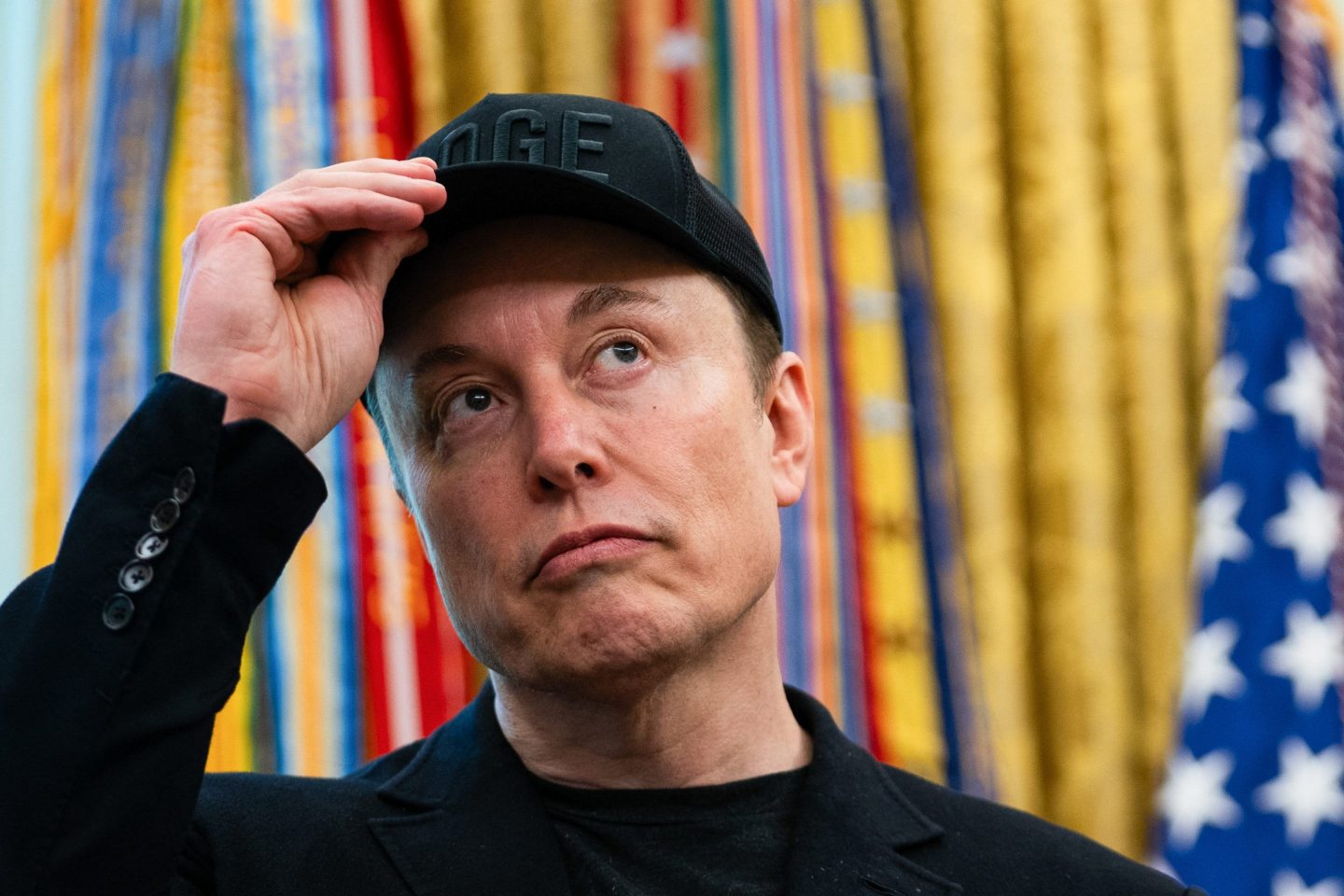
An hour in the Oval Office with President Trump.

An hour in the Oval Office with President Trump.

An hour in the Oval Office with President Trump.

An hour in the Oval Office with President Trump.

An hour in the Oval Office with President Trump.

An hour in the Oval Office with President Trump.

An hour in the Oval Office with President Trump.

An hour in the Oval Office with President Trump.

An hour in the Oval Office with President Trump.

An hour in the Oval Office with President Trump.

CommentaryState of the Union

Why Obama’s free college plan is bad for poor Americans

By
Stuart Butler
Stuart Butler
Down Arrow Button Icon
By
Stuart Butler
Stuart Butler
Down Arrow Button Icon
January 20, 2015, 9:15 PM ET
Video Poster

In Tuesday’s State of the Union address, Barack Obama proposed to make community college as free and universal as high school undoubtedly does have a surface attraction. Educational attainment is crucial to the economic success of an individual, and when Americans get a good education their children also tend to become better educated and do well.

It’s true as well that community colleges can be an important first rung up the higher education ladder for many young Americans from lower-income households, and an associate degree from a community college typically provides a boost to the graduate’s income. Compared with a four-year degree, these colleges provide an alternative and less expensive two-year credential. For some, an associate degree from a community college is a much cheaper alternative to the first two years of a four-year institution and gives those students transferable course credit to use at a four-year university – something the President’s proposal would encourage.

President Obama urges Congress to make community college tuition free for all young Americans, through a proposed $60 billion (over 10 years) cost-sharing program with the states.

So, given the important role of community colleges, isn’t that a good idea? Unfortunately not, for several reasons.

For one, the plan is badly targeted. Covering the full tuition of all community college students would mean middle-income, and even upper-income, students would get hefty subsidies, even though many do not need the help. Meanwhile, many lower-income students at community colleges would still not have the money to cover the non-tuition costs, such as books, supplies and transportation – and room and board for those not living at home. These costs usually dwarf tuition at a public community college – annual total costs averages over $16,000, while free tuition would account for only about one-fifth of that. True, lower-income students can qualify for Pell grants, but the maximum this year is $5,730, making community college a financial challenge for many, even if tuition were free.

Rather than spend $60 billion to make tuition free to rich and poor alike, a better approach would be to apply an income test and make any new federal program a sliding-scale contribution to total costs.

What’s more, community college is usually a dead end. Rather than being a firm first rung on the higher education ladder, for too many, community college turns out to be a broken rung. Just 20% of students who begin a two-year public community college program actually graduate within 3 years, and typically only 60% of enrolled students return the following year. As for being a low-cost gateway to a successful four-year college, just 15% of students entering community colleges earn a bachelor’s degree within 6 years.

So rather than putting so many eggs in the flimsy community college basket, it would be wiser to help states and school districts provide a fuller range of opportunities at the high school and college levels, such as professional credentials, apprenticeships and high-school career academies.

The plan could also add to the undermatching problem. A grave concern about higher education in America is that many high-performing high-schoolers, especially from less-affluent African-American and Hispanic households, do not apply for challenging universities for which they actually have the academic ability. Instead, many such young people settle for community college or less rigorous four-year institutions. This is a phenomenon known as “undermatching.” This happens for several reasons, including concerns about the financial risks to the student and his or her family. Undermatching widens the education gap between racial groups, and between richer and less-affluent families.

An unintended consequence of providing free tuition at only community colleges is that it would likely add to undermatching. That’s because many smart high-schoolers who come from minority or less-affluent families, or who are the first in their family to go to college, would for financial reasons be even more likely to opt for community college rather that a rigorous four-year college.

If President Obama can convince Congress to provide funds for a college proposal, a better approach would be to enhance income-based Pell Grant funding for the full range of higher education options, rather than trying to steer students to community colleges.

Better still, the President should foster steps to bring down the cost of higher education. Rather than adding subsidies to one part of higher education, he could make more progress towards his goal of making college affordable by giving more enthusiastic backing to new, low-cost competitors to traditional colleges and universities.

Thanks to new business models and the creative use of online education and other innovations, many of today’s middle-schoolers and even high-schoolers may have the chance of customized higher education at a fraction of today’s costs. But such things as the outdated accreditation system are holding back this potential revolution in higher education. President Obama would be much wiser to use his political capital to spur competition and real cost reduction in higher education rather than subsidizing community college tuition.

Stuart Butler is a Senior Fellow in Economic Studies at The Brookings Institution.

About the Author
By Stuart Butler
See full bioRight Arrow Button Icon

Latest in Commentary

Finance
Lorem ipsum dolor sit amet, consectetur adipiscing elit, sed do eiusmod tempor incididunt ut labore et dolore magna aliqua. Ut enim ad minim veniam
By Fortune Editors
October 20, 2025
Finance
Lorem ipsum dolor sit amet, consectetur adipiscing elit, sed do eiusmod tempor incididunt ut labore et dolore magna aliqua. Ut enim ad minim veniam
By Fortune Editors
October 20, 2025
Finance
Lorem ipsum dolor sit amet, consectetur adipiscing elit, sed do eiusmod tempor incididunt ut labore et dolore magna aliqua. Ut enim ad minim veniam
By Fortune Editors
October 20, 2025
Finance
Lorem ipsum dolor sit amet, consectetur adipiscing elit, sed do eiusmod tempor incididunt ut labore et dolore magna aliqua. Ut enim ad minim veniam
By Fortune Editors
October 20, 2025
Finance
Lorem ipsum dolor sit amet, consectetur adipiscing elit, sed do eiusmod tempor incididunt ut labore et dolore magna aliqua. Ut enim ad minim veniam
By Fortune Editors
October 20, 2025
Finance
Lorem ipsum dolor sit amet, consectetur adipiscing elit, sed do eiusmod tempor incididunt ut labore et dolore magna aliqua. Ut enim ad minim veniam
By Fortune Editors
October 20, 2025

Most Popular

Finance
Lorem ipsum dolor sit amet, consectetur adipiscing elit, sed do eiusmod tempor incididunt ut labore et dolore magna aliqua. Ut enim ad minim veniam
By Fortune Editors
October 20, 2025
Finance
Lorem ipsum dolor sit amet, consectetur adipiscing elit, sed do eiusmod tempor incididunt ut labore et dolore magna aliqua. Ut enim ad minim veniam
By Fortune Editors
October 20, 2025
Finance
Lorem ipsum dolor sit amet, consectetur adipiscing elit, sed do eiusmod tempor incididunt ut labore et dolore magna aliqua. Ut enim ad minim veniam
By Fortune Editors
October 20, 2025
Finance
Lorem ipsum dolor sit amet, consectetur adipiscing elit, sed do eiusmod tempor incididunt ut labore et dolore magna aliqua. Ut enim ad minim veniam
By Fortune Editors
October 20, 2025
Finance
Lorem ipsum dolor sit amet, consectetur adipiscing elit, sed do eiusmod tempor incididunt ut labore et dolore magna aliqua. Ut enim ad minim veniam
By Fortune Editors
October 20, 2025
Finance
Lorem ipsum dolor sit amet, consectetur adipiscing elit, sed do eiusmod tempor incididunt ut labore et dolore magna aliqua. Ut enim ad minim veniam
By Fortune Editors
October 20, 2025
Fortune Secondary Logo
Rankings
  • 100 Best Companies
  • Fortune 500
  • Global 500
  • Fortune 500 Europe
  • Most Powerful Women
  • World's Most Admired Companies
  • See All Rankings
  • Lists Calendar
Sections
  • Finance
  • Fortune Crypto
  • Features
  • Leadership
  • Health
  • Commentary
  • Success
  • Retail
  • Mpw
  • Tech
  • Lifestyle
  • CEO Initiative
  • Asia
  • Politics
  • Conferences
  • Europe
  • Newsletters
  • Personal Finance
  • Environment
  • Magazine
  • Education
Customer Support
  • Frequently Asked Questions
  • Customer Service Portal
  • Privacy Policy
  • Terms Of Use
  • Single Issues For Purchase
  • International Print
Commercial Services
  • Advertising
  • Fortune Brand Studio
  • Fortune Analytics
  • Fortune Conferences
  • Business Development
  • Group Subscriptions
About Us
  • About Us
  • Press Center
  • Work At Fortune
  • Terms And Conditions
  • Site Map
  • About Us
  • Press Center
  • Work At Fortune
  • Terms And Conditions
  • Site Map
  • Facebook icon
  • Twitter icon
  • LinkedIn icon
  • Instagram icon
  • Pinterest icon

Latest in Commentary

charlie
CommentarySoftware
Anaplan CEO: AI isn’t eating software. It’s sorting it
By Charlie GottdienerMay 18, 2026
27 minutes ago
shyam
CommentaryHealth
World Economic Forum: women’s health gets only 20% of R&D funding. We must seize this $1 trillion opportunity
By Shyam BishenMay 18, 2026
8 hours ago
murdochs
CommentaryMedia
OpenAI paid $100 million for a talk show. James Murdoch is eyeing an even bigger deal. The hot new asset class is humanity
By Lin CherryMay 17, 2026
23 hours ago
dennis
CommentaryAI agents
Freshworks CEO: why agile enterprises are winning the AI race — and what they did differently
By Dennis WoodsideMay 17, 2026
23 hours ago
Mary Moreland-Abbott Executive Vice President of Human Resources.
CommentaryRetirement
Gen X is the most indebted generation in America. Their employers can fix that
By Mary MorelandMay 17, 2026
1 day ago
liberman
Commentarystart-ups
We watched social media concentrate. The same thing is happening in AI, only at a deeper layer
By David Liberman and Daniil LibermanMay 16, 2026
2 days ago

Most Popular

Microsoft AI chief gives it 18 months—for all white-collar work to be automated by AI
AI
Microsoft AI chief gives it 18 months—for all white-collar work to be automated by AI
By Jake AngeloMay 16, 2026
2 days ago
The top foreign holders of U.S. debt may soon dump Treasury bonds and bring their money back home, potentially spiking borrowing costs
Economy
The top foreign holders of U.S. debt may soon dump Treasury bonds and bring their money back home, potentially spiking borrowing costs
By Jason MaMay 17, 2026
19 hours ago
The Bezos family just donated $100 million to help achieve one of Mayor Zohran Mamdani’s top campaign promises
Politics
The Bezos family just donated $100 million to help achieve one of Mayor Zohran Mamdani’s top campaign promises
By Jake AngeloMay 12, 2026
6 days ago
'No one was coming to save me': How Reese Witherspoon built a $900 million company from a problem Hollywood wouldn't fix
Success
'No one was coming to save me': How Reese Witherspoon built a $900 million company from a problem Hollywood wouldn't fix
By Sydney LakeMay 17, 2026
1 day ago
SpaceX heads into a record-shattering IPO with the 'deepest moat that exists today' as investors vow to 'never bet against Elon'
Innovation
SpaceX heads into a record-shattering IPO with the 'deepest moat that exists today' as investors vow to 'never bet against Elon'
By Jason MaMay 16, 2026
2 days ago
Former top Russian official admits the country is over Putin and can 'imagine a future without him' — even elites bail as Kremlin seizes their assets 
Politics
Former top Russian official admits the country is over Putin and can 'imagine a future without him' — even elites bail as Kremlin seizes their assets 
By Jason MaMay 16, 2026
2 days ago

© 2026 Fortune Media IP Limited. All Rights Reserved. Use of this site constitutes acceptance of our Terms of Use and Privacy Policy | CA Notice at Collection and Privacy Notice | Do Not Sell/Share My Personal Information
FORTUNE is a trademark of Fortune Media IP Limited, registered in the U.S. and other countries. FORTUNE may receive compensation for some links to products and services on this website. Offers may be subject to change without notice.