• Home
  • Latest
  • Fortune 500
  • Finance
  • Tech
  • Leadership
  • Lifestyle
  • Rankings
  • Multimedia

Exclusive

An hour in the Oval Office with President Trump.

An hour in the Oval Office with President Trump.

An hour in the Oval Office with President Trump.

An hour in the Oval Office with President Trump.

An hour in the Oval Office with President Trump.

An hour in the Oval Office with President Trump.

An hour in the Oval Office with President Trump.

An hour in the Oval Office with President Trump.

An hour in the Oval Office with President Trump.

An hour in the Oval Office with President Trump.

CommentaryNet neutrality

An open Internet: how new regulations hurt both sides of the debate

By
Christopher S. Yoo
Christopher S. Yoo
Down Arrow Button Icon
By
Christopher S. Yoo
Christopher S. Yoo
Down Arrow Button Icon
February 18, 2015, 10:35 AM ET
Internet Providers Should Guarantee Equal Access to All Users, Obama Says
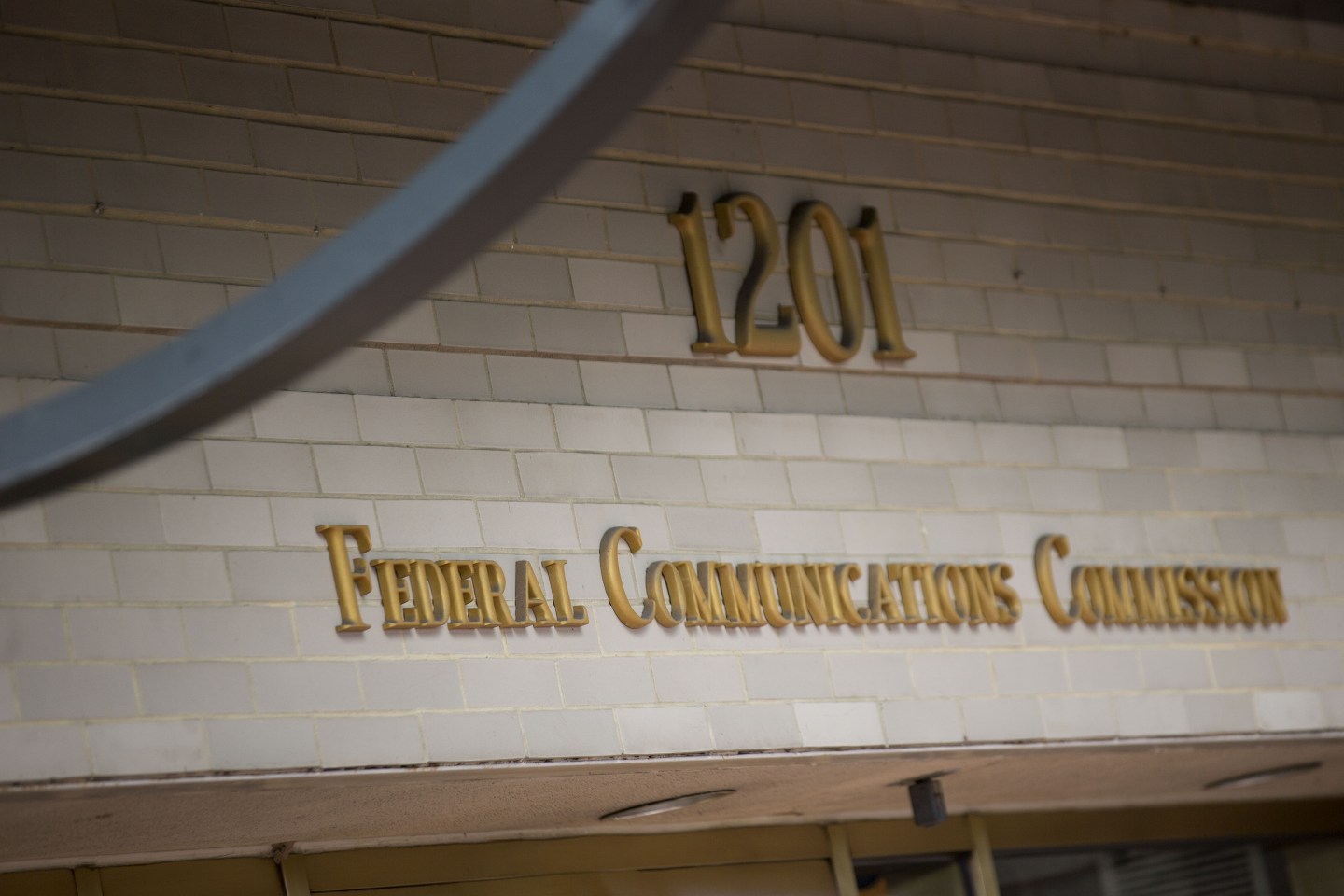
The Federal Communications Commission (FCC) headquarters stands in Washington, D.C., U.S., on Monday, Nov. 10, 2014. President Barack Obama called for the "strongest possible rules" to protect the open Internet, advocating stricter controls than a regulator he appointed and causing shares of Comcast Corp. and other broadband providers to drop. Obama's comments tilt the White House against positions advocated by broadband providers and FCC Chairman Tom Wheeler. Photographer: Andrew Harrer/Bloomberg via Getty ImagesPhotograph by Andrew Harrer —Bloomberg via Getty Images

Later this month, the Federal Communications Commission (FCC) is expected to vote on new open Internet rules, bringing the decade-long debate over network neutrality and the future of the Internet to a key turning point. Although the FCC’s proposal is intended to protect content providers, such as Netflix (NFLX), against potential anticompetitive actions of Internet Service Providers, such as Comcast, a closer look reveals that it creates risks for both sides.

One of the most distinctive aspects about U.S. Internet policy is the decision not to impose old regulatory burdens on this new technology. The U.S. was one of the few countries not to reflexively regulate the Internet like the nation’s century-old telephone system, which essentially operated like a monopoly. The result was to facilitate a vibrant new industry offering a torrent of new applications and services on advanced networks that are the envy of the rest of the world.Furthermore, among all U.S. companies, network providers have led the way in creating jobs and investing in America’s future. In fact, two leading Internet service providers, AT&T (T) and Verizon (VZ), outpaced all other U.S. nonfinancial companies in capital spending over the past several years, and a third network provider, Comcast (CMCSA), placed seventh, according to a 2014 report by the Progressive Policy Institute. Together, the broadband industry has created more than 860,000 jobs. For comparison, European broadband providers, who are subject to telephone-style regulation, have invested less than half as much per household as their American counterparts. Statistical analysis finds a significant correlation between these low investment levels and regulation.

The FCC’s proposals would break with this tradition; it would reclassify consumer broadband Internet as a utility, banning Internet Service Providers from charging content providers for better service. The risks for network providers are apparent. The effect of telephone-style regulation would be to limit the packages that networks can offer and threaten providers that deviate from the status quo with possible fines. For example, it would endanger popular new plans such as T-Mobile’s Music Freedom, which allows customers to stream music without counting that traffic against their data caps. The imposition of such intrusive government oversight would mark a return to command-and-control style regulation that has long been discredited and would impede the spirit of flexibility and innovation that has characterized the Internet since its inception. It would also potentially open the door to another layer of regulation by the states.

Although the FCC has promised to “forbear” from enforcing certain aspects of telephone-style regulation on the Internet, the agency has yet to develop a coherent framework to guide the exercise of this authority. Moreover, any such forbearance would be a product of bureaucratic largesse and would be subject to reversal at any time. The uncertainty created by such an environment would threaten to dampen incentives to innovate and invest.

What is less widely recognized is the risks that such regulations would pose for providers of content and applications, the supposed beneficiaries of open Internet rules. For example, the privacy restrictions that apply to telephone networks (which were developed for a different context and are widely regarded as outdated) may undermine the business models on which many Internet applications are based. In addition, although the FCC does not plan to tax broadband access at this time, it reserves the right to do so in the future. As customers continue to abandon the fixed-line telephone service that currently supports the universal service fund, the pressure to do so will likely become irresistible.

Furthermore, while previous rules only restricted how traffic was handled within a network, the new rules would extend regulation to equalize how traffic is handled between networks. This would impose unprecedented bureaucratic oversight on the more than 45,000 networks comprising the Internet, which currently interconnect through bilateral commercial agreements. Parties who think they could get a better deal through regulation than through bargaining will be tempted to hold out. Moreover, network providers may hesitate to extend better terms out of fear that those terms will become a benchmark that will limit all future negotiations.

Finally, supporters of the current proposal must face the danger that the prohibitions on discrimination that they so desire may be rolled back in the future. The last two attempts to enforce network neutrality were overturned by the courts for exceeding the authority that Congress had granted the FCC. The current rules bear considerable risk of suffering the same fate. In addition, a future FCC under a different Administration could simply reverse the rules, and the U.S. Supreme Court has already ruled that no legal barriers would prevent them from doing so. Thus, even those who favor the FCC’s proposed rules must acknowledge the risk that the current efforts may prove to be ephemeral.

The rules would be made permanent and all uncertainty about regulatory authority would be eliminated if Congress were to enact compromise legislation establishing network neutrality rules. Several such bills have already been submitted, and the sponsors of those proposals have indicated their willingness to negotiate. For opponents of network neutrality, legislation would eliminate the overhanging threat of the hydraulic expansion of regulation sometime in the future. For supporters, enactment of such a law would ensure the rules could not be reversed by judicial challenge or a subsequent FCC.

The best outcome would thus be for every part of the Internet industry to work together to find common ground. The leaders of both political parties have the chance to act like statesmen and take steps to ensure that the vibrant atmosphere that has promoted innovation and investment so effectively can continue to thrive. We can only hope that they seize the opportunity.

Christopher S. Yoo is the John H. Chestnut Professor of Law, Communication, and Computer & Information Science at the University of Pennsylvania. He is also the Founding Director of the university’s Center for Technology, Innovation and Competition.


About the Author
By Christopher S. Yoo
See full bioRight Arrow Button Icon

Latest in Commentary

Finance
Lorem ipsum dolor sit amet, consectetur adipiscing elit, sed do eiusmod tempor incididunt ut labore et dolore magna aliqua. Ut enim ad minim veniam
By Fortune Editors
October 20, 2025
Finance
Lorem ipsum dolor sit amet, consectetur adipiscing elit, sed do eiusmod tempor incididunt ut labore et dolore magna aliqua. Ut enim ad minim veniam
By Fortune Editors
October 20, 2025
Finance
Lorem ipsum dolor sit amet, consectetur adipiscing elit, sed do eiusmod tempor incididunt ut labore et dolore magna aliqua. Ut enim ad minim veniam
By Fortune Editors
October 20, 2025
Finance
Lorem ipsum dolor sit amet, consectetur adipiscing elit, sed do eiusmod tempor incididunt ut labore et dolore magna aliqua. Ut enim ad minim veniam
By Fortune Editors
October 20, 2025
Finance
Lorem ipsum dolor sit amet, consectetur adipiscing elit, sed do eiusmod tempor incididunt ut labore et dolore magna aliqua. Ut enim ad minim veniam
By Fortune Editors
October 20, 2025
Finance
Lorem ipsum dolor sit amet, consectetur adipiscing elit, sed do eiusmod tempor incididunt ut labore et dolore magna aliqua. Ut enim ad minim veniam
By Fortune Editors
October 20, 2025

Most Popular

Finance
Lorem ipsum dolor sit amet, consectetur adipiscing elit, sed do eiusmod tempor incididunt ut labore et dolore magna aliqua. Ut enim ad minim veniam
By Fortune Editors
October 20, 2025
Finance
Lorem ipsum dolor sit amet, consectetur adipiscing elit, sed do eiusmod tempor incididunt ut labore et dolore magna aliqua. Ut enim ad minim veniam
By Fortune Editors
October 20, 2025
Finance
Lorem ipsum dolor sit amet, consectetur adipiscing elit, sed do eiusmod tempor incididunt ut labore et dolore magna aliqua. Ut enim ad minim veniam
By Fortune Editors
October 20, 2025
Finance
Lorem ipsum dolor sit amet, consectetur adipiscing elit, sed do eiusmod tempor incididunt ut labore et dolore magna aliqua. Ut enim ad minim veniam
By Fortune Editors
October 20, 2025
Finance
Lorem ipsum dolor sit amet, consectetur adipiscing elit, sed do eiusmod tempor incididunt ut labore et dolore magna aliqua. Ut enim ad minim veniam
By Fortune Editors
October 20, 2025
Finance
Lorem ipsum dolor sit amet, consectetur adipiscing elit, sed do eiusmod tempor incididunt ut labore et dolore magna aliqua. Ut enim ad minim veniam
By Fortune Editors
October 20, 2025
Fortune Secondary Logo
Rankings
  • 100 Best Companies
  • Fortune 500
  • Global 500
  • Fortune 500 Europe
  • Most Powerful Women
  • World's Most Admired Companies
  • See All Rankings
  • Lists Calendar
Sections
  • Finance
  • Fortune Crypto
  • Features
  • Leadership
  • Health
  • Commentary
  • Success
  • Retail
  • Mpw
  • Tech
  • Lifestyle
  • CEO Initiative
  • Asia
  • Politics
  • Conferences
  • Europe
  • Newsletters
  • Personal Finance
  • Environment
  • Magazine
  • Education
Customer Support
  • Frequently Asked Questions
  • Customer Service Portal
  • Privacy Policy
  • Terms Of Use
  • Single Issues For Purchase
  • International Print
Commercial Services
  • Advertising
  • Fortune Brand Studio
  • Fortune Analytics
  • Fortune Conferences
  • Business Development
  • Group Subscriptions
About Us
  • About Us
  • Press Center
  • Work At Fortune
  • Terms And Conditions
  • Site Map
  • About Us
  • Press Center
  • Work At Fortune
  • Terms And Conditions
  • Site Map
  • Facebook icon
  • Twitter icon
  • LinkedIn icon
  • Instagram icon
  • Pinterest icon

Latest in Commentary

shyam
CommentaryHealth
World Economic Forum: women’s health gets only 20% of R&D funding. We must seize this $1 trillion opportunity
By Shyam BishenMay 18, 2026
5 hours ago
murdochs
CommentaryMedia
OpenAI paid $100 million for a talk show. James Murdoch is eyeing an even bigger deal. The hot new asset class is humanity
By Lin CherryMay 17, 2026
21 hours ago
dennis
CommentaryAI agents
Freshworks CEO: why agile enterprises are winning the AI race — and what they did differently
By Dennis WoodsideMay 17, 2026
21 hours ago
Mary Moreland-Abbott Executive Vice President of Human Resources.
CommentaryRetirement
Gen X is the most indebted generation in America. Their employers can fix that
By Mary MorelandMay 17, 2026
23 hours ago
liberman
Commentarystart-ups
We watched social media concentrate. The same thing is happening in AI, only at a deeper layer
By David Liberman and Daniil LibermanMay 16, 2026
2 days ago
olivier
CommentaryAnthropic
I’ve been studying Big Tech for a long time. What just happened with Anthropic and the Pentagon terrifies me
By Olivier SylvainMay 16, 2026
2 days ago

Most Popular

Microsoft AI chief gives it 18 months—for all white-collar work to be automated by AI
AI
Microsoft AI chief gives it 18 months—for all white-collar work to be automated by AI
By Jake AngeloMay 16, 2026
2 days ago
The top foreign holders of U.S. debt may soon dump Treasury bonds and bring their money back home, potentially spiking borrowing costs
Economy
The top foreign holders of U.S. debt may soon dump Treasury bonds and bring their money back home, potentially spiking borrowing costs
By Jason MaMay 17, 2026
16 hours ago
The Bezos family just donated $100 million to help achieve one of Mayor Zohran Mamdani’s top campaign promises
Politics
The Bezos family just donated $100 million to help achieve one of Mayor Zohran Mamdani’s top campaign promises
By Jake AngeloMay 12, 2026
6 days ago
'No one was coming to save me': How Reese Witherspoon built a $900 million company from a problem Hollywood wouldn't fix
Success
'No one was coming to save me': How Reese Witherspoon built a $900 million company from a problem Hollywood wouldn't fix
By Sydney LakeMay 17, 2026
22 hours ago
Former top Russian official admits the country is over Putin and can 'imagine a future without him' — even elites bail as Kremlin seizes their assets 
Politics
Former top Russian official admits the country is over Putin and can 'imagine a future without him' — even elites bail as Kremlin seizes their assets 
By Jason MaMay 16, 2026
1 day ago
SpaceX heads into a record-shattering IPO with the 'deepest moat that exists today' as investors vow to 'never bet against Elon'
Innovation
SpaceX heads into a record-shattering IPO with the 'deepest moat that exists today' as investors vow to 'never bet against Elon'
By Jason MaMay 16, 2026
2 days ago

© 2026 Fortune Media IP Limited. All Rights Reserved. Use of this site constitutes acceptance of our Terms of Use and Privacy Policy | CA Notice at Collection and Privacy Notice | Do Not Sell/Share My Personal Information
FORTUNE is a trademark of Fortune Media IP Limited, registered in the U.S. and other countries. FORTUNE may receive compensation for some links to products and services on this website. Offers may be subject to change without notice.