• Home
  • Latest
  • Fortune 500
  • Finance
  • Tech
  • Leadership
  • Lifestyle
  • Rankings
  • Multimedia
FinanceEconomics

Is GDP destroying the world?

By
Chris Matthews
Chris Matthews
Down Arrow Button Icon
By
Chris Matthews
Chris Matthews
Down Arrow Button Icon
June 3, 2015, 8:00 AM ET
Global Economy
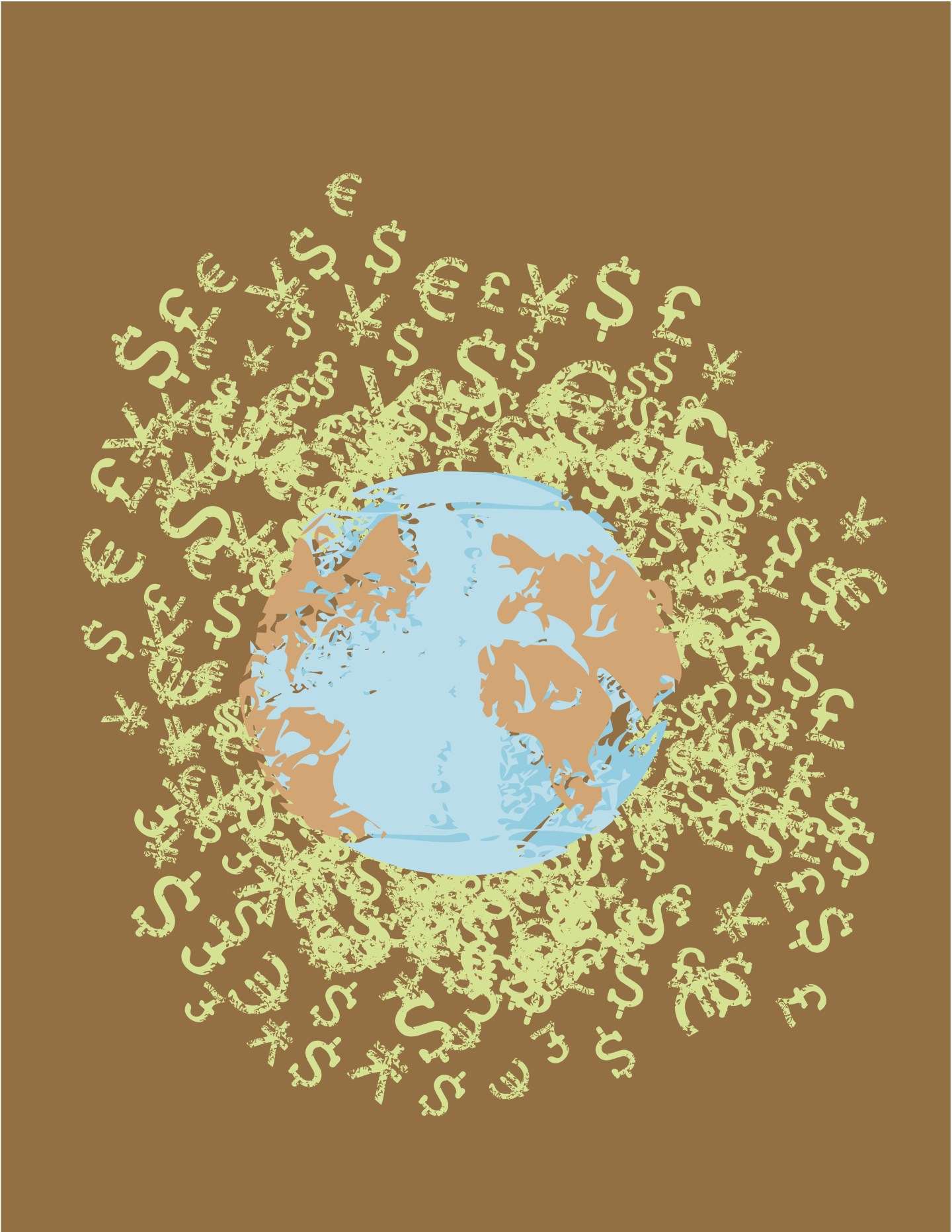
Global EconomyPhoto by Jayesh—Getty Images

If you divided up all the wealth and income in the world evenly and, somehow in the process, the global economy remained as efficient as it is today, each person would earn about $10,000 per year and have $34,500 in wealth. In other words, everyone in the world would be in poverty, at least by the U.S. government’s definition of the term.

This is the sort of basic math you would hope someone would do if he were imagining a global economic revolution. It’s the sort of basic math Dirk Philipsen, economic historian author of the new volume, “The Little Big Number: How GDP Came to Rule the World and What to Do about It,” doesn’t do. And the book–and its readers–suffer greatly for this omission.

Though Philipsen admits that “no system in history” can compete with capitalism in terms of “the amount of wealth and freedom created,” he argues it’s time to leave capitalism behind, or at least transform it so radically so as to leave it unrecognizable.

Philipsen’s argument against our current economic system is a familiar one. He argues that the global economy’s obsession with growth has left people in the rich world overworked and overstressed, focused on material acquisition and career advancement that doesn’t actually make us happy. The poor, meanwhile, spend each day fighting for basic survival, despite the fact that the world “has more than enough material goods to go around.” This claim goes unsubstantiated.

Perhaps most worryingly of all, the author argues, constant economic growth simply isn’t environmentally sustainable. Before long, all this growth is going to lead to so much resource depletion that it will leave future generations much poorer than we are today.

The above points, while not original, are important for all of us to take seriously. Any capitalist who hopes to see his economic system continue into the future must grapple with the system’s many flaws and help to fix them, even if he doesn’t agree with Philipsen’s diagnoses of the magnitude of capitalism’s defects. The irredeemable flaw of Philipsen’s book is that he conflates his criticism of the capitalist system with one statistic–GDP– that we use to understand the system. He writes:

Our most important performance measure [GDP] says nothing about whether quality of life is improving, or even if our activities are viable. It only tells us about how much stuff was produced, and how much money has exchanged hands. As a result, cultures around the world promote, quite literally, blind and mindless growth–and increasingly dangerous growth. And they do so largely of what they subjectively want.

This analysis gets it exactly backwards. Modern economies revere growth because it happens to be the thing we (mostly) all agree on, not because economists like Simon Kuznets helped invent a way to measure it 70 years ago. That’s because when growth goes well, it is an unalloyed good. We’ve all heard the aphorism, “there’s no such thing as a free lunch.” While this saying sounds true in its hard-headed realism, it’s actually often not. In fact, productivity growth has created more free lunches than can be counted. It is like a simple machine in physics, a force that enables us to create more with the same amount of effort.

Capitalism, of course, can sometimes be a pernicious force. Economic growth can sometimes come at the cost of environmental degridation or human exploitation rather than innovation. But the solution to these problems is not to stop measuring economic growth, but to create economic incentives, like carbon taxes or laws against child labor, that can address these problems.

Philipsen compares his effort to wean us off GDP with the revolution in baseball statistics called the “sabermetrics” movement, most famously documented in Michael Lewis’ Moneyball. The movement argued that traditional statistics like batting averages and runs batted in didn’t accurately measure the value of a hitter, and that other statistics like on-base percentage and slugging percentage were better gauges. The difference between baseball and the global economy is, however, that in baseball there is a clearly defined goal: score more runs than the other team. A player with a high on-base percentage will, on average, help your team score more runs than a player with a high batting average.

But there is no equivalent to “score more runs than the other team” in the global economy. Philipsen writes that, “the basic assumption of this book [is that] the sole object of our efforts should be to sustain and expand human well-being, not simply to promote income or growth.”

But what is well-being? Phillipsen knows what he thinks is well-being. He values things like the equitable distribution of resources, the environment, and direct democracy. But there are other reasonable things to value, like material wealth, self actualization through hard work, and the pride of ownership. Philipsen, who at one point in his book suggests that our descendents will view land ownership the same way we view chattel slavery today, obviously doesn’t think so.

The governments that track GDP can’t afford to ignore the large portion of the human population who disagree with Philipsen. And people, left or right, like getting richer. More importantly, they want their government to respond when the economy contracts and jobs disappear.

Furthermore, Philipsen himself admits that the economics profession has no lack of alternative indicators for human progress, like the Genuine Progress Indicator, which capture things that GDP misses, including environmental degradation and economic inequality. Nor is there a lack of public attention to these issues. Despite Philipsen’s protestations to the contrary, the Democratic Party here in the U.S.–which has won the majority of votes in five of the six past presidential elections–has made issues like economic inequality and early childhood education major planks in its platform.

Capitalism and economic growth are more than a century older than GDP. We invented the statistic, and closely track it, because economic growth is important to most people on the planet. We are not what we measure, but measure what we are.
About the Author
By Chris Matthews
See full bioRight Arrow Button Icon

Latest in Finance

Finance
Lorem ipsum dolor sit amet, consectetur adipiscing elit, sed do eiusmod tempor incididunt ut labore et dolore magna aliqua. Ut enim ad minim veniam
By Fortune Editors
October 20, 2025
Finance
Lorem ipsum dolor sit amet, consectetur adipiscing elit, sed do eiusmod tempor incididunt ut labore et dolore magna aliqua. Ut enim ad minim veniam
By Fortune Editors
October 20, 2025
Finance
Lorem ipsum dolor sit amet, consectetur adipiscing elit, sed do eiusmod tempor incididunt ut labore et dolore magna aliqua. Ut enim ad minim veniam
By Fortune Editors
October 20, 2025
Finance
Lorem ipsum dolor sit amet, consectetur adipiscing elit, sed do eiusmod tempor incididunt ut labore et dolore magna aliqua. Ut enim ad minim veniam
By Fortune Editors
October 20, 2025
Finance
Lorem ipsum dolor sit amet, consectetur adipiscing elit, sed do eiusmod tempor incididunt ut labore et dolore magna aliqua. Ut enim ad minim veniam
By Fortune Editors
October 20, 2025
Finance
Lorem ipsum dolor sit amet, consectetur adipiscing elit, sed do eiusmod tempor incididunt ut labore et dolore magna aliqua. Ut enim ad minim veniam
By Fortune Editors
October 20, 2025

Most Popular

Finance
Lorem ipsum dolor sit amet, consectetur adipiscing elit, sed do eiusmod tempor incididunt ut labore et dolore magna aliqua. Ut enim ad minim veniam
By Fortune Editors
October 20, 2025
Finance
Lorem ipsum dolor sit amet, consectetur adipiscing elit, sed do eiusmod tempor incididunt ut labore et dolore magna aliqua. Ut enim ad minim veniam
By Fortune Editors
October 20, 2025
Finance
Lorem ipsum dolor sit amet, consectetur adipiscing elit, sed do eiusmod tempor incididunt ut labore et dolore magna aliqua. Ut enim ad minim veniam
By Fortune Editors
October 20, 2025
Finance
Lorem ipsum dolor sit amet, consectetur adipiscing elit, sed do eiusmod tempor incididunt ut labore et dolore magna aliqua. Ut enim ad minim veniam
By Fortune Editors
October 20, 2025
Finance
Lorem ipsum dolor sit amet, consectetur adipiscing elit, sed do eiusmod tempor incididunt ut labore et dolore magna aliqua. Ut enim ad minim veniam
By Fortune Editors
October 20, 2025
Finance
Lorem ipsum dolor sit amet, consectetur adipiscing elit, sed do eiusmod tempor incididunt ut labore et dolore magna aliqua. Ut enim ad minim veniam
By Fortune Editors
October 20, 2025
Fortune Secondary Logo
Rankings
  • 100 Best Companies
  • Fortune 500
  • Global 500
  • Fortune 500 Europe
  • Most Powerful Women
  • Future 50
  • World’s Most Admired Companies
  • See All Rankings
Sections
  • Finance
  • Fortune Crypto
  • Features
  • Leadership
  • Health
  • Commentary
  • Success
  • Retail
  • Mpw
  • Tech
  • Lifestyle
  • CEO Initiative
  • Asia
  • Politics
  • Conferences
  • Europe
  • Newsletters
  • Personal Finance
  • Environment
  • Magazine
  • Education
Customer Support
  • Frequently Asked Questions
  • Customer Service Portal
  • Privacy Policy
  • Terms Of Use
  • Single Issues For Purchase
  • International Print
Commercial Services
  • Advertising
  • Fortune Brand Studio
  • Fortune Analytics
  • Fortune Conferences
  • Business Development
  • Group Subscriptions
About Us
  • About Us
  • Editorial Calendar
  • Press Center
  • Work At Fortune
  • Diversity And Inclusion
  • Terms And Conditions
  • Site Map
  • About Us
  • Editorial Calendar
  • Press Center
  • Work At Fortune
  • Diversity And Inclusion
  • Terms And Conditions
  • Site Map
  • Facebook icon
  • Twitter icon
  • LinkedIn icon
  • Instagram icon
  • Pinterest icon

Latest in Finance

Current price of Bitcoin for April 2, 2026
Personal FinanceCryptocurrency
Current price of Bitcoin for April 2, 2026
By Joseph HostetlerApril 2, 2026
19 minutes ago
Current price of gold as of April 2, 2026
Personal Financegold prices
Current price of gold as of April 2, 2026
By Danny BakstApril 2, 2026
38 minutes ago
Current price of oil as of April 2, 2026
Personal FinanceOil
Current price of oil as of April 2, 2026
By Joseph HostetlerApril 2, 2026
42 minutes ago
Current price of silver as of Thursday, April 2, 2026
Personal Financesilver
Current price of silver as of Thursday, April 2, 2026
By Joseph HostetlerApril 2, 2026
55 minutes ago
wyle
CommentaryTV
What HBO’s ‘The Pitt’ gets right—and wrong—about treating alcohol use disorder
By Jonathan Hunt-GlassmanApril 2, 2026
2 hours ago
nic
CommentaryInsider trading
Prediction markets caught insider traders in real time. Congress wants to shut them down anyway
By Nic PuckrinApril 2, 2026
3 hours ago

Most Popular

Gen Z fled San Francisco for Texas and Florida. Now they're turning 'welcomer cities' into the next big tech towns
Real Estate
Gen Z fled San Francisco for Texas and Florida. Now they're turning 'welcomer cities' into the next big tech towns
By Fortune EditorsApril 2, 2026
8 hours ago
Current price of gold as of April 1, 2026
Personal Finance
Current price of gold as of April 1, 2026
By Fortune EditorsApril 1, 2026
1 day ago
Two-thirds of parents say their adult Gen Z kids still rely on them financially  for support—even though it's putting them under strain
Success
Two-thirds of parents say their adult Gen Z kids still rely on them financially  for support—even though it's putting them under strain
By Fortune EditorsMarch 31, 2026
2 days ago
Current price of oil as of April 1, 2026
Personal Finance
Current price of oil as of April 1, 2026
By Fortune EditorsApril 1, 2026
1 day ago
Jerome Powell says the $39 trillion national debt is ‘not unsustainable,’ but warns the trajectory ‘will not end well’
Economy
Jerome Powell says the $39 trillion national debt is ‘not unsustainable,’ but warns the trajectory ‘will not end well’
By Fortune EditorsMarch 30, 2026
3 days ago
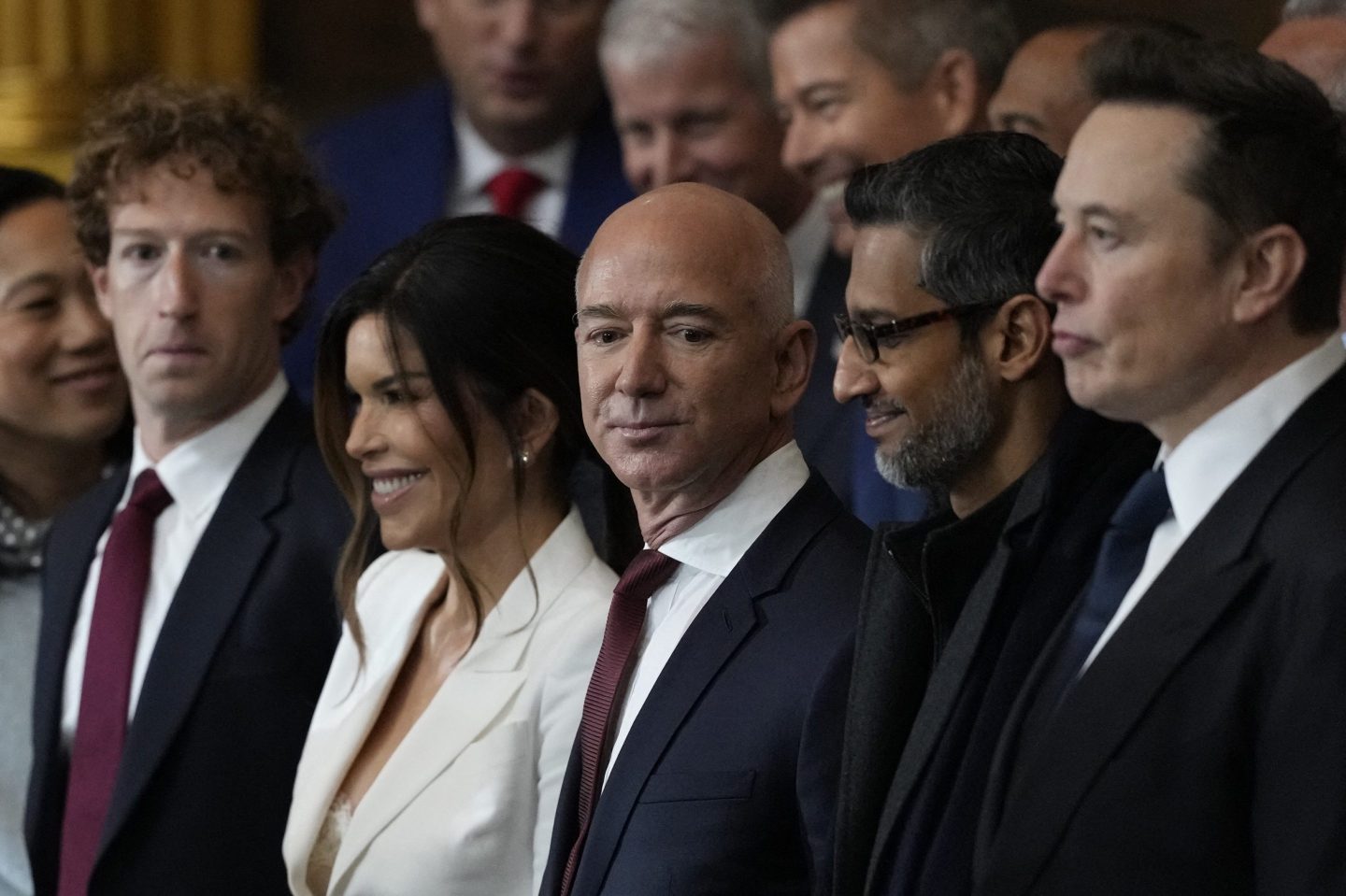
2 years after Musk challenged Zuckerberg to a cage match, they were texting about DOGE and a joint OpenAI bid, court records reveal
Law
2 years after Musk challenged Zuckerberg to a cage match, they were texting about DOGE and a joint OpenAI bid, court records reveal
By Fortune EditorsMarch 31, 2026
2 days ago

© 2026 Fortune Media IP Limited. All Rights Reserved. Use of this site constitutes acceptance of our Terms of Use and Privacy Policy | CA Notice at Collection and Privacy Notice | Do Not Sell/Share My Personal Information
FORTUNE is a trademark of Fortune Media IP Limited, registered in the U.S. and other countries. FORTUNE may receive compensation for some links to products and services on this website. Offers may be subject to change without notice.