• Home
  • Latest
  • Fortune 500
  • Finance
  • Tech
  • Leadership
  • Lifestyle
  • Rankings
  • Multimedia

Trendingnow

1

As Big Tech showers employees with perks to win the talent war, Nvidia built a nearly $5 trillion company by making people pay for their own lunch

2

MacKenzie Scott alone accounted for one-third of America's $19.2 billion in megagifts last year

3

Today, Emily Blunt is worth $80 million thanks to her Hollywood career—but she actually wanted to be a UN Spanish translator on $80K

1

As Big Tech showers employees with perks to win the talent war, Nvidia built a nearly $5 trillion company by making people pay for their own lunch

2

MacKenzie Scott alone accounted for one-third of America's $19.2 billion in megagifts last year

3

Today, Emily Blunt is worth $80 million thanks to her Hollywood career—but she actually wanted to be a UN Spanish translator on $80K
Tech

How Facebook is teaching computers to see

By
Stacey Higginbotham
Stacey Higginbotham
Down Arrow Button Icon
By
Stacey Higginbotham
Stacey Higginbotham
Down Arrow Button Icon
June 15, 2015, 1:15 PM ET
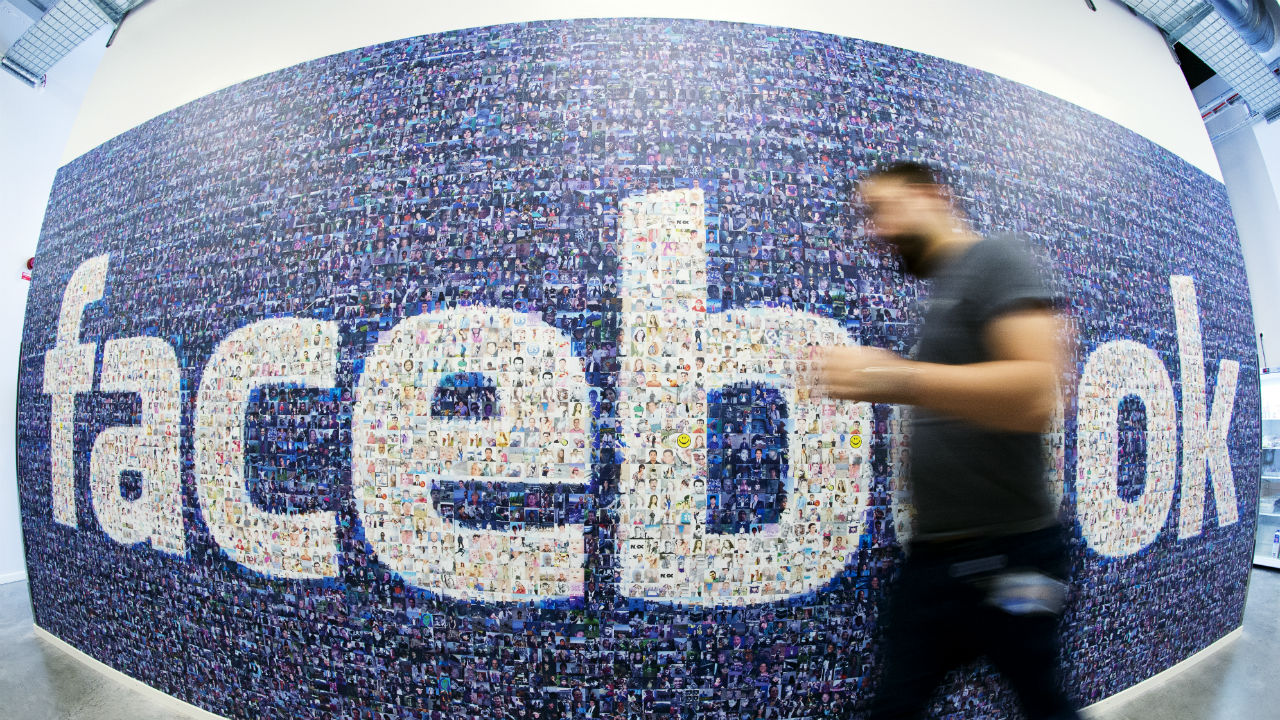
Photograph by Jonathan Nackstrand — Getty Images
Add Fortune on Google for similar content.

Facebook today launched its Moments product, which uses Facebook’s image recognition abilities to scan your photos for your friends and then lets people create private photo albums with a particular group, such as the people in the photo. The idea is to make it easier to share photos from a big event among attendees without the cumbersome process of emailing snapshots to everyone or the awkward end-of-event huddle while six people take the exact same group shot. It’s not a cure for cancer, but behind the scenes of this new feature is an impressive technology that Facebook has been working on for years.

A key element of the Moments feature is the ability for Facebook’s algorithms to recognize people’s faces across different photos, so that Moments knows who was at the event. This requires computer vision expertise that companies such as Google, Microsoft, Baidu, and others are currently researching for everything from self-driving cars to silly web products such as Microsoft’s How Old Do I Look?

In launching the Moments product Facebook is sharing data about its own successes in computer vision research. Namely, that Facebook can recognize faces with a 98% accuracy, and it can do so quickly—the company says it can identify you in one picture out of 800 million in less than 5 seconds. Finally, it can do all of this even if it doesn’t have the full frontal shot of your face (or even if your face isn’t in the photo at all), thanks to a machine learning algorithm that can look at other elements in the picture and associated with the photo’s data.

150615051503-facebook-moments-app-780x439
Facebook

Inside Moments
Fortune spoke with Yann LeCun, Facebook’s director of artificial intelligence research, to understand how his team helped a computer understand who you are, and where Facebook is heading next with its AI research. Perhaps the first thing to understand is that when LeCun discusses computer vision, it’s not the same as how a person sees, although the process of teaching software how to recognize an object has some similarities.

For example, Facebook’s facial recognition, which is the basis of the current efforts, can’t identify you. It only can recognize if a person in one photo is the same as a person in another photo. Identification is a completely separate step.


Because Facebook is about connecting people, its computer vision efforts have focused on recognizing faces as opposed to cats, cars, or other non-human subjects. To do this, it uses a database of celebrity and politicians photos called Labeled Faces in the Wild. This collection of images has 13,000 photos of people with different hairdos, different outfits, sometimes wearing glasses and more. Facebook used this collection to train its machine learning algorithms. Other companies have used this data set as well, and some universities have even trained systems with a higher than 98% accuracy rate using Labeled Faces.

So how did Facebook get from giving a machine a picture of Angelina Jolie to somehow using that photo to help identify your sister across different photo albums on Facebook? LeCun is the man to ask. About 20 years ago when he was working at Bell Labs (now AT&T’s Image Processing Research Department), he happened upon a way of thinking about teaching computers to see that wasn’t really used outside of academia until about three years ago.

How computers learn to see
That technique is called convolutional neural networking, and takes its name from both a mathematical operation called a convolution, and inspiration from how the human brain learns. The brain learns by establishing connections between neurons, and the more often a signal is sent over those neurons, the denser those connections get. In a similar vein, when computers establish similarities between two images it assigns a weight to those similarities. In convolutional neural networks, the goal is to train the machine to recognize the changes in weights between those connections so it can tell with increasing accuracy if the image matches.

The process of doing this is incredibly complicated and involves different calculations that work to establish how important certain aspects of the image are to the actual process of recognizing what the image is. For example, if you want to train a computer to recognize faces, the pixels related to the background are less important. The tricky—and frankly amazing— part of this is that the machine learns on its own how to tell what part of the image is most relevant, and then can generalize those relationships going forward. It still takes a lot of human effort to nudge the computer into recognizing the right way to weight the similarities, but once the model is built, it can generalize going forward.

The process can take a few days on a powerful computer.

[youtube https://www.youtube.com/watch?v=9T45bs9di_U]

Convolutional neural networks have become the basis for almost all of the computer vision research done today, after a team of researchers led by Geoffrey Hinton at the University of Toronto, used that technique to win a competition where image recognition algorithms vie to be most accurate. Hinton, whose team and startup were later acquired by Google, won the competition with a test error rate of 15.3%, compared to 26.2% for the second-place winner.

Don’t post that photo!
As research continues, the opportunities for use in our day-to-day life are significant. Yes, there is the ability to match people’s faces in a crowd that might lead to greater government surveillance, but there is also an opportunity to use better facial recognition to manage your privacy. For example, with automatic facial recognition at scale, any picture of you uploaded to Facebook (or perhaps even the web) could result in a notification.

For example, if you are somehow captured in the background of a tourist shot of Times Square, you could get a notification and the option to blur your face. Applied to children, the blurring or removal could be automated. LeCun notes that Facebook is interested in such tools, but also stresses that Facebook’s interest in machine learning goes far beyond image recognition.

[fortune-brightcove videoid=4278647741001]


Facebook’s goal is to get a computer to understand empathy. Obviously, it won’t be able to feel what humans do, but it can be trained to recognize what emotions are and how people will react. With that level of understanding, Facebook could, say, offer a warning when you are about to post a photo of you drunk and ask if you really want to do that.

“This would not be face recognition,” said LeCun. “We don’t care who is in the picture. We would use other types of image recognition and train them differently to say that this looks embarrassing and then tap you on the shoulder to make sure you want to post this publicly.”

This isn’t something Facebook can do today, but LeCun offered these concepts as a thought experiment to show where Facebook could head with its AI research. Of course, this sort of expertise informed by an algorithm can make people deeply uncomfortable. Today Facebook doesn’t turn on its auto tagging features in countries like Canada and the EU because of privacy concerns, and there’s a certain creep factor in having a computer second guess your photo-sharing choices or having software trying to parse your jokes to try to understand what you find funny.

“What we’d like to do is make machines more intelligent, understanding text, images, videos and posts,” LeCun said. “Anything that can happen in the digital world we want to understand the context.” Because there is so much digital content people could easily become overwhelmed by the information flooding their feeds. The efforts of LeCun’s team will help connect people with the content that is most relevant to their interests and priorities. It’s a complex solution to a simple goal: to make sure that you see what you want to see on Facebook.

“That’s the big mission that we at Facebook are trying to fulfill,” LeCun said. “Machines that understand people.”


About the Author
By Stacey Higginbotham
See full bioRight Arrow Button Icon
Add Fortune on Google for similar content.

Latest in Tech

Finance
Lorem ipsum dolor sit amet, consectetur adipiscing elit, sed do eiusmod tempor incididunt ut labore et dolore magna aliqua. Ut enim ad minim veniam
By Fortune Editors
October 20, 2025
Finance
Lorem ipsum dolor sit amet, consectetur adipiscing elit, sed do eiusmod tempor incididunt ut labore et dolore magna aliqua. Ut enim ad minim veniam
By Fortune Editors
October 20, 2025
Finance
Lorem ipsum dolor sit amet, consectetur adipiscing elit, sed do eiusmod tempor incididunt ut labore et dolore magna aliqua. Ut enim ad minim veniam
By Fortune Editors
October 20, 2025
Finance
Lorem ipsum dolor sit amet, consectetur adipiscing elit, sed do eiusmod tempor incididunt ut labore et dolore magna aliqua. Ut enim ad minim veniam
By Fortune Editors
October 20, 2025
Finance
Lorem ipsum dolor sit amet, consectetur adipiscing elit, sed do eiusmod tempor incididunt ut labore et dolore magna aliqua. Ut enim ad minim veniam
By Fortune Editors
October 20, 2025
Finance
Lorem ipsum dolor sit amet, consectetur adipiscing elit, sed do eiusmod tempor incididunt ut labore et dolore magna aliqua. Ut enim ad minim veniam
By Fortune Editors
October 20, 2025

Most Popular

Finance
Lorem ipsum dolor sit amet, consectetur adipiscing elit, sed do eiusmod tempor incididunt ut labore et dolore magna aliqua. Ut enim ad minim veniam
By Fortune Editors
October 20, 2025
Finance
Lorem ipsum dolor sit amet, consectetur adipiscing elit, sed do eiusmod tempor incididunt ut labore et dolore magna aliqua. Ut enim ad minim veniam
By Fortune Editors
October 20, 2025
Finance
Lorem ipsum dolor sit amet, consectetur adipiscing elit, sed do eiusmod tempor incididunt ut labore et dolore magna aliqua. Ut enim ad minim veniam
By Fortune Editors
October 20, 2025
Finance
Lorem ipsum dolor sit amet, consectetur adipiscing elit, sed do eiusmod tempor incididunt ut labore et dolore magna aliqua. Ut enim ad minim veniam
By Fortune Editors
October 20, 2025
Finance
Lorem ipsum dolor sit amet, consectetur adipiscing elit, sed do eiusmod tempor incididunt ut labore et dolore magna aliqua. Ut enim ad minim veniam
By Fortune Editors
October 20, 2025
Finance
Lorem ipsum dolor sit amet, consectetur adipiscing elit, sed do eiusmod tempor incididunt ut labore et dolore magna aliqua. Ut enim ad minim veniam
By Fortune Editors
October 20, 2025
Fortune Secondary Logo
Rankings
  • 100 Best Companies
  • Fortune 500
  • Global 500
  • Fortune 500 Europe
  • Most Powerful Women
  • World's Most Admired Companies
  • See All Rankings
  • Lists Calendar
Sections
  • Finance
  • Fortune Crypto
  • Features
  • Leadership
  • Health
  • Commentary
  • Success
  • Retail
  • Mpw
  • Tech
  • Lifestyle
  • CEO Initiative
  • Asia
  • Politics
  • Conferences
  • Europe
  • Newsletters
  • Personal Finance
  • Environment
  • Magazine
  • Education
Customer Support
  • Frequently Asked Questions
  • Customer Service Portal
  • Privacy Policy
  • Terms Of Use
  • Single Issues For Purchase
  • International Print
Commercial Services
  • Advertising
  • Fortune Brand Studio
  • Fortune Analytics
  • Fortune Conferences
  • Business Development
  • Group Subscriptions
About Us
  • About Us
  • Press Center
  • Work At Fortune
  • Terms And Conditions
  • Site Map
  • About Us
  • Press Center
  • Work At Fortune
  • Terms And Conditions
  • Site Map
  • Facebook icon
  • Twitter icon
  • LinkedIn icon
  • Instagram icon
  • Pinterest icon

Latest in Tech

Michael Burry just shorted Caterpillar’s 172% AI rally. One analyst says his bet won’t even matter
Investingstock prices
Michael Burry just shorted Caterpillar’s 172% AI rally. One analyst says his bet won’t even matter
By Marco Quiroz-GutierrezJuly 2, 2026
7 hours ago
U.S. Treasury Secretary Scott Bessent
EconomyDebt
AI’s $2.2 trillion deficit fix is already half fake, economists say
By Tristan BoveJuly 2, 2026
8 hours ago
Anthropic CEO Dario Amodei
AIEye on AI
Anthropic’s Fable model is back. But U.S. AI policy is still a mess
By Jeremy KahnJuly 2, 2026
8 hours ago
ai
North AmericaImmigration
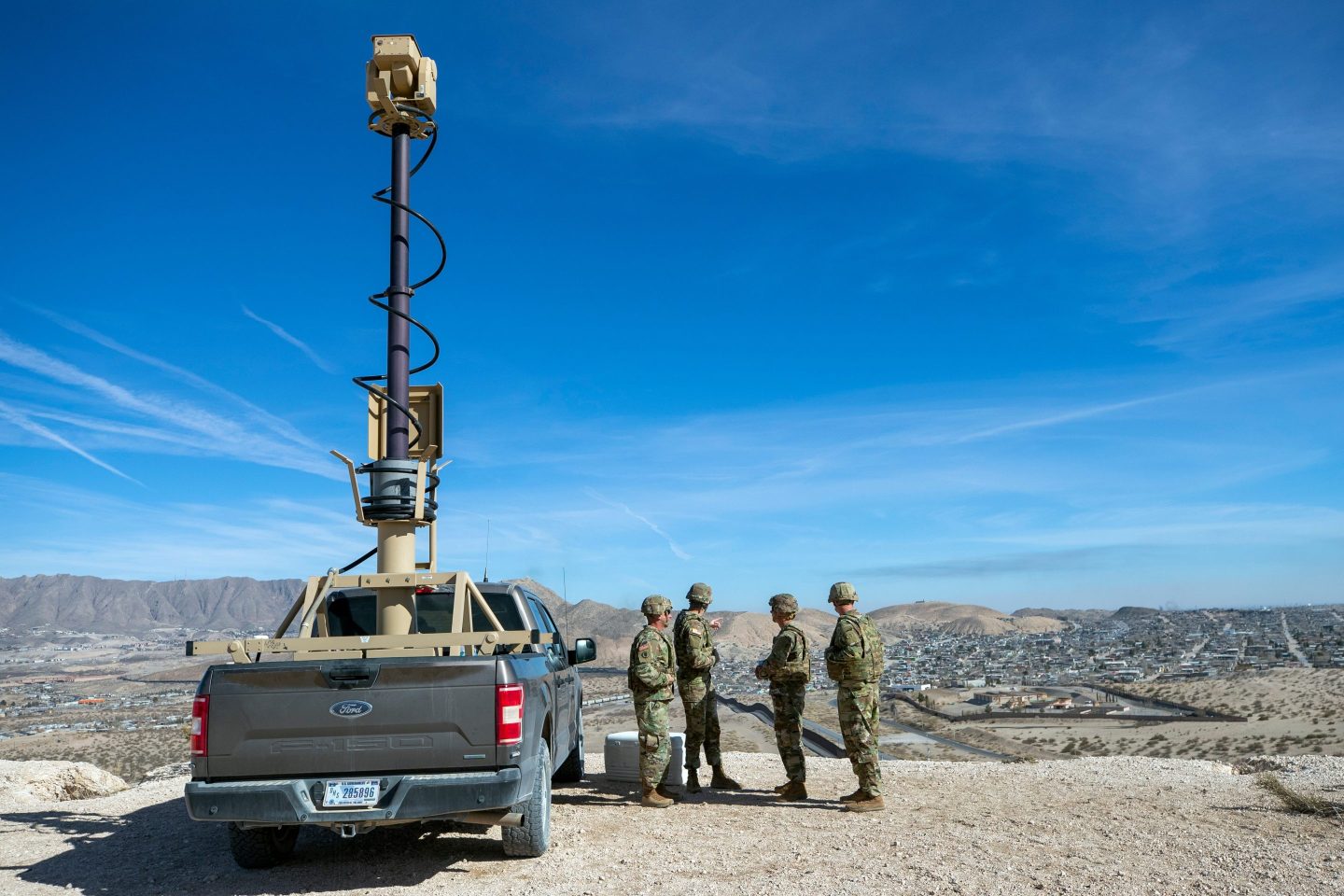
Trump’s $46 billion ‘smart wall’ with Mexico bets on AI and scale
By Rebecca Santana and The Associated PressJuly 2, 2026
10 hours ago
sk
AISouth Korea
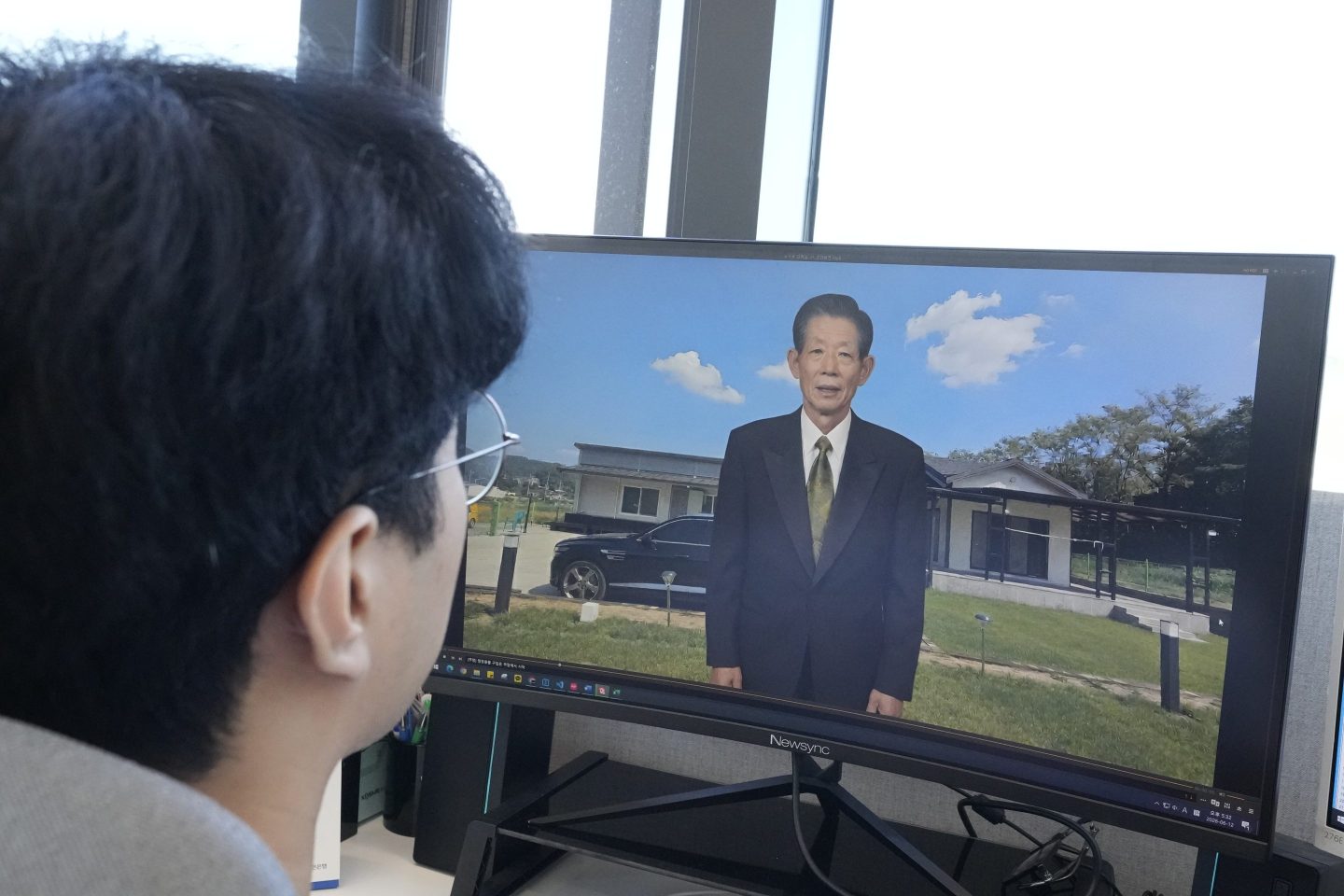
AI “grief videos” turn mourning into a $390 service in South Korea
By Hyung-Jin Kim and The Associated PressJuly 2, 2026
10 hours ago
Securitize CEO Carlos Domingo looks to the far right during a conference.
CryptoBlockchain
Securitize is latest crypto company to go public as BlackRock-backed firm sees stock jump 3% on debut
By Camila Grigera NaónJuly 2, 2026
10 hours ago

Most Popular

As Big Tech showers employees with perks to win the talent war, Nvidia built a nearly $5 trillion company by making people pay for their own lunch
Big Tech
As Big Tech showers employees with perks to win the talent war, Nvidia built a nearly $5 trillion company by making people pay for their own lunch
By Marco Quiroz-GutierrezJuly 1, 2026
2 days ago
MacKenzie Scott alone accounted for one-third of America's $19.2 billion in megagifts last year
Success
MacKenzie Scott alone accounted for one-third of America's $19.2 billion in megagifts last year
By Sydney LakeJune 25, 2026
8 days ago
Today, Emily Blunt is worth $80 million thanks to her Hollywood career—but she actually wanted to be a UN Spanish translator on $80K
Success
Today, Emily Blunt is worth $80 million thanks to her Hollywood career—but she actually wanted to be a UN Spanish translator on $80K
By Orianna Rosa RoyleJuly 2, 2026
20 hours ago
Mark Zuckerberg feeds his cows macadamia nuts and beer to create the 'highest-quality beef in the world' on his $300 million estate in Hawaii
Success
Mark Zuckerberg feeds his cows macadamia nuts and beer to create the 'highest-quality beef in the world' on his $300 million estate in Hawaii
By Sasha RogelbergJuly 2, 2026
10 hours ago
Current price of oil as of July 1, 2026
Personal Finance
Current price of oil as of July 1, 2026
By Joseph HostetlerJuly 1, 2026
2 days ago
Americans are escaping the U.S. for New Zealand where house prices have hit a new low—but only wealthy Americans with $3 million spare can invest
Success
Americans are escaping the U.S. for New Zealand where house prices have hit a new low—but only wealthy Americans with $3 million spare can invest
By Emma BurleighJuly 2, 2026
12 hours ago

© 2026 Fortune Media IP Limited. All Rights Reserved. Use of this site constitutes acceptance of our Terms of Use and Privacy Policy | CA Notice at Collection and Privacy Notice | Do Not Sell/Share My Personal Information
FORTUNE is a trademark of Fortune Media IP Limited, registered in the U.S. and other countries. FORTUNE may receive compensation for some links to products and services on this website. Offers may be subject to change without notice.