• Home
  • Latest
  • Fortune 500
  • Finance
  • Tech
  • Leadership
  • Lifestyle
  • Rankings
  • Multimedia

Trendingnow

1

MacKenzie Scott alone accounted for one-third of America's $19.2 billion in megagifts last year

2

As Big Tech showers employees with perks to win the talent war, Nvidia built a nearly $5 trillion company by making people pay for their own lunch

3

Philanthropy leader at Warren Buffett and Bill Gates’ Giving Pledge says children of billionaires are pushing them to give their wealth away faster

1

MacKenzie Scott alone accounted for one-third of America's $19.2 billion in megagifts last year

2

As Big Tech showers employees with perks to win the talent war, Nvidia built a nearly $5 trillion company by making people pay for their own lunch

3

Philanthropy leader at Warren Buffett and Bill Gates’ Giving Pledge says children of billionaires are pushing them to give their wealth away faster
Leadership

Could more overtime pay be bad for employees?

By
July 1, 2015, 1:54 PM ET
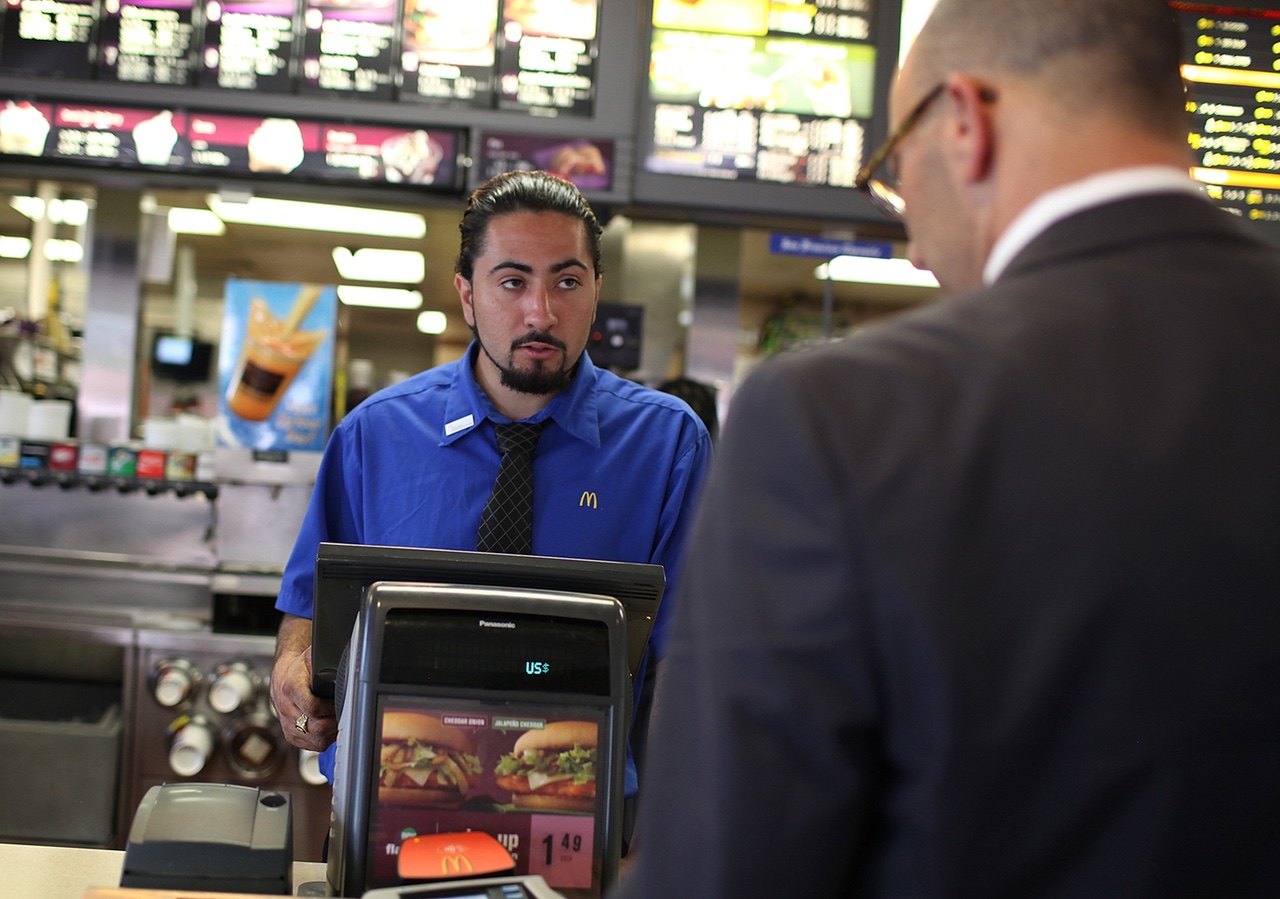
Photograph by Justin Sullivan — Getty Images
Add Fortune on Google for similar content.

If President Obama gets his way, starting in 2016, companies will have to start paying overtime to about 5 million more employees. Under the plan, people with salaries up to $50,440 would be eligible for time-and-a-half for any hours they work beyond 40 in a given week — time they are now, in many cases, putting in for free.

That’s a big jump from the current overtime cutoff of $23,660, and (no surprise) the usual suspects are sounding off for and against it. An array of fair-pay advocates and labor groups, including the American Federation of Teachers, believes the change is long overdue. They contend that the U.S. workforce’s huge productivity gains in recent years have come at the expense of the lowest paid workers, since a salary at the current $23,660 cutoff puts a family of four below the poverty level.

At the same time, such a huge increase in labor costs naturally makes employers cringe. The National Retail Federation, with researchers from Oxford Economics, has published a study that paints a dark, dystopian picture of how the new rules would play out, but with a twist. The worst impact, the study says, would be not on companies or their shareholders, but on employees.

How so? Raising the overtime threshold from its present $455 per week to the level the government is proposing would mean employers would have to pay overtime to over 2 million more people in the retail and restaurant industries alone, at a cost of about $9 billion a year, the study says. So, assuming companies pass none of that along to their customers, they’ll take the overtime hit by cutting workers’ pay in ways that will keep overall compensation budgets the same as they are now.

The NRF sees three ways to do that. First, companies would simply lower hourly pay rates across the board, so that everyone earning below $970 per week would make less than they make now. Employers could also avoid paying overtime by cutting some workers’ hours to fewer than 40 per week, and bringing in new, part-time workers to pick up the slack.

In other words, the overtime paid to previously exempt employees would come straight out of the pockets of the employees who are under them. Leaving aside the obvious consequence (more people would be worse off than they already are), it’s hard to imagine a better way to make people resent their bosses.

There’s more. Companies could control labor costs by cutting everyone’s benefits (and bonuses, if they make any) to raise newly non-exempt supervisors’ and managers’ salaries above the new overtime threshold (to, one imagines, something like $50,441 per year). Or employers could do away with some lower-level professional and managerial jobs altogether and, in jobs with back-office duties, replace those people with automation.

“The net result of these changes would be an accelerated ‘hollowing out’ of low-level administrative and professional functions,” the report says. “Workplaces would become more hierarchical and inequality would increase. Lower-level employees … would find it harder to rise into the professional ranks as the number of midlevel salaried positions contracts.”

Sounds pretty awful, doesn’t it? Luckily, the NRF’s Dickensian vision of the future won’t necessarily happen. For one thing, the overtime threshold has been raised twice in the past 40 years and, after the initial moans of protest from the business community, the increase both times was offset by economic growth. There’s no reason to believe this time is different.

Employers and anyone else who wants to argue otherwise will have a chance to say so. The Department of Labor won’t issue a new overtime rule until next year, after reviewing comments from the public that may influence regulators in unexpected ways.

Moreover, the assumption that businesses won’t pass their higher labor costs on to consumers is dubious at best — and that may be okay.

Consider, if you will, a view that runs counter to the NRF’s. Last fall, national restaurant workers’ organization ROC United was trying to persuade Olive Garden, the biggest restaurant chain in the U.S., to raise its pay from the “tipped minimum wage” of $2.13 per hour to a “living wage” of $15 per hour, gradually over five years.

For most companies, that kind of increase would be a far bigger deal than a higher overtime threshold. Yet a detailed analysis showed that the resulting hit to the company’s revenues would be about 2% per year and that, even if Olive Garden passed the entire cost on to diners, the effect on menu prices would be tiny. Customers would pay 10 cents more for a plate of tortellini al forno, for instance. The average Olive Garden check would increase from its then-current $16.75 to $17.10.

Given that the proposed higher overtime cutoff could put more cash in about 5 million consumers’ wallets, shoppers and restaurant customers may be willing to spend a few extra cents here and there.

But the larger economic and cultural context matters, too. As certain politicians have noticed, voters care about income inequality, and most Americans favor more overtime pay. If nothing else, resisting the populist tide on this issue could be a big public relations headache for companies. It’s tough to tell, say, a restaurant supervisor making $24,000 a year working 60 hours a week that she shouldn’t get overtime when U.S. companies are sitting on trillions in cash—and paying their CEOs more than 300 times what the average employee takes home.


Add Fortune on Google for similar content.

Latest in Leadership

Finance
Lorem ipsum dolor sit amet, consectetur adipiscing elit, sed do eiusmod tempor incididunt ut labore et dolore magna aliqua. Ut enim ad minim veniam
By Fortune Editors
October 20, 2025
Finance
Lorem ipsum dolor sit amet, consectetur adipiscing elit, sed do eiusmod tempor incididunt ut labore et dolore magna aliqua. Ut enim ad minim veniam
By Fortune Editors
October 20, 2025
Finance
Lorem ipsum dolor sit amet, consectetur adipiscing elit, sed do eiusmod tempor incididunt ut labore et dolore magna aliqua. Ut enim ad minim veniam
By Fortune Editors
October 20, 2025
Finance
Lorem ipsum dolor sit amet, consectetur adipiscing elit, sed do eiusmod tempor incididunt ut labore et dolore magna aliqua. Ut enim ad minim veniam
By Fortune Editors
October 20, 2025
Finance
Lorem ipsum dolor sit amet, consectetur adipiscing elit, sed do eiusmod tempor incididunt ut labore et dolore magna aliqua. Ut enim ad minim veniam
By Fortune Editors
October 20, 2025
Finance
Lorem ipsum dolor sit amet, consectetur adipiscing elit, sed do eiusmod tempor incididunt ut labore et dolore magna aliqua. Ut enim ad minim veniam
By Fortune Editors
October 20, 2025

Most Popular

Finance
Lorem ipsum dolor sit amet, consectetur adipiscing elit, sed do eiusmod tempor incididunt ut labore et dolore magna aliqua. Ut enim ad minim veniam
By Fortune Editors
October 20, 2025
Finance
Lorem ipsum dolor sit amet, consectetur adipiscing elit, sed do eiusmod tempor incididunt ut labore et dolore magna aliqua. Ut enim ad minim veniam
By Fortune Editors
October 20, 2025
Finance
Lorem ipsum dolor sit amet, consectetur adipiscing elit, sed do eiusmod tempor incididunt ut labore et dolore magna aliqua. Ut enim ad minim veniam
By Fortune Editors
October 20, 2025
Finance
Lorem ipsum dolor sit amet, consectetur adipiscing elit, sed do eiusmod tempor incididunt ut labore et dolore magna aliqua. Ut enim ad minim veniam
By Fortune Editors
October 20, 2025
Finance
Lorem ipsum dolor sit amet, consectetur adipiscing elit, sed do eiusmod tempor incididunt ut labore et dolore magna aliqua. Ut enim ad minim veniam
By Fortune Editors
October 20, 2025
Finance
Lorem ipsum dolor sit amet, consectetur adipiscing elit, sed do eiusmod tempor incididunt ut labore et dolore magna aliqua. Ut enim ad minim veniam
By Fortune Editors
October 20, 2025
Fortune Secondary Logo
Rankings
  • 100 Best Companies
  • Fortune 500
  • Global 500
  • Fortune 500 Europe
  • Most Powerful Women
  • World's Most Admired Companies
  • See All Rankings
  • Lists Calendar
Sections
  • Finance
  • Fortune Crypto
  • Features
  • Leadership
  • Health
  • Commentary
  • Success
  • Retail
  • Mpw
  • Tech
  • Lifestyle
  • CEO Initiative
  • Asia
  • Politics
  • Conferences
  • Europe
  • Newsletters
  • Personal Finance
  • Environment
  • Magazine
  • Education
Customer Support
  • Frequently Asked Questions
  • Customer Service Portal
  • Privacy Policy
  • Terms Of Use
  • Single Issues For Purchase
  • International Print
Commercial Services
  • Advertising
  • Fortune Brand Studio
  • Fortune Analytics
  • Fortune Conferences
  • Business Development
  • Group Subscriptions
About Us
  • About Us
  • Press Center
  • Work At Fortune
  • Terms And Conditions
  • Site Map
  • About Us
  • Press Center
  • Work At Fortune
  • Terms And Conditions
  • Site Map
  • Facebook icon
  • Twitter icon
  • LinkedIn icon
  • Instagram icon
  • Pinterest icon

Latest in Leadership

How foodservice giant Sodexo is embracing AI and robotics to reshape the kitchen
NewslettersCIO Intelligence
How foodservice giant Sodexo is embracing AI and robotics to reshape the kitchen
By John KellJuly 1, 2026
5 hours ago
U.S. Polo Assn. CEO J. Michael Prince
SuccessThe Promotion Playbook
U.S. Polo Assn. CEO was told he wasn’t right for a promotion—so he ‘outworked’ anyone else who wanted the job for 6 months straight
By Orianna Rosa RoyleJuly 1, 2026
6 hours ago
Nikesh Arora, chief executive officer at Palo Alto Networks
SuccessJobs
CEO of $248 billion cybersecurity company says workers are about to face a ‘Darwinian moment’ thanks to AI: Evolve or get cut
By Emma BurleighJuly 1, 2026
7 hours ago
DHL plane being refuelled at airport by man in high-vis jacket
EuropeAviation
The Iran conflict saw jet fuel prices soar—when you use 1.88 million tonnes a year, how you respond really matters (just ask DHL)
By Sam ForsdickJuly 1, 2026
9 hours ago
I know how Gen Z can survive the ‘jobpocalypse’ because I built an AI company — in 2015
CommentaryCareers
I know how Gen Z can survive the ‘jobpocalypse’ because I built an AI company — in 2015
By Jeremy FainJuly 1, 2026
11 hours ago
mr
Commentary250 Years of Innovation
America needs 3.8 million manufacturing workers. This CEO has a blueprint to find them
By Mark RayfieldJuly 1, 2026
11 hours ago

Most Popular

MacKenzie Scott alone accounted for one-third of America's $19.2 billion in megagifts last year
Success
MacKenzie Scott alone accounted for one-third of America's $19.2 billion in megagifts last year
By Sydney LakeJune 25, 2026
7 days ago
As Big Tech showers employees with perks to win the talent war, Nvidia built a nearly $5 trillion company by making people pay for their own lunch
Big Tech
As Big Tech showers employees with perks to win the talent war, Nvidia built a nearly $5 trillion company by making people pay for their own lunch
By Marco Quiroz-GutierrezJuly 1, 2026
14 hours ago
Philanthropy leader at Warren Buffett and Bill Gates’ Giving Pledge says children of billionaires are pushing them to give their wealth away faster
Success
Philanthropy leader at Warren Buffett and Bill Gates’ Giving Pledge says children of billionaires are pushing them to give their wealth away faster
By Preston ForeJune 27, 2026
4 days ago
Elon Musk on MacKenzie Scott giving away $26 billion of her fortune: 'Sadly,' it makes the world a worse place
Success
Elon Musk on MacKenzie Scott giving away $26 billion of her fortune: 'Sadly,' it makes the world a worse place
By Sydney LakeJune 29, 2026
2 days ago
The Supreme Court's birthright citizenship ruling hands the U.S. economy a $7.7 trillion win
Newsletters
The Supreme Court's birthright citizenship ruling hands the U.S. economy a $7.7 trillion win
By Diane BradyJuly 1, 2026
12 hours ago
The U.S. Army is opening military bases to private billions — here's why that changes everything for the next 250 years
Commentary
The U.S. Army is opening military bases to private billions — here's why that changes everything for the next 250 years
By Marc AndersenJune 30, 2026
1 day ago

© 2026 Fortune Media IP Limited. All Rights Reserved. Use of this site constitutes acceptance of our Terms of Use and Privacy Policy | CA Notice at Collection and Privacy Notice | Do Not Sell/Share My Personal Information
FORTUNE is a trademark of Fortune Media IP Limited, registered in the U.S. and other countries. FORTUNE may receive compensation for some links to products and services on this website. Offers may be subject to change without notice.