• Home
  • Latest
  • Fortune 500
  • Finance
  • Tech
  • Leadership
  • Lifestyle
  • Rankings
  • Multimedia

Trendingnow

1

MacKenzie Scott alone accounted for one-third of America's $19.2 billion in megagifts last year

2

Philanthropy leader at Warren Buffett and Bill Gates’ Giving Pledge says children of billionaires are pushing them to give their wealth away faster

3

Elon Musk on MacKenzie Scott giving away $26 billion of her fortune: 'Sadly,' it makes the world a worse place

1

MacKenzie Scott alone accounted for one-third of America's $19.2 billion in megagifts last year

2

Philanthropy leader at Warren Buffett and Bill Gates’ Giving Pledge says children of billionaires are pushing them to give their wealth away faster

3

Elon Musk on MacKenzie Scott giving away $26 billion of her fortune: 'Sadly,' it makes the world a worse place
CommentaryU.S. military

Blame higher education for America’s potentially weaker military

By
Matthew F. Cancian
Matthew F. Cancian
and
Michael W. Klein
Michael W. Klein
Down Arrow Button Icon
By
Matthew F. Cancian
Matthew F. Cancian
and
Michael W. Klein
Michael W. Klein
Down Arrow Button Icon
July 27, 2015, 6:00 AM ET
181214664
A new study breaks down how hard it is for former students to pay off their student loans based on their chosen major.Photograph by Ariel Skelley — Getty Images/Blend Images
Add Fortune on Google for similar content.

The law of unintended consequences is alive and well in a strange place: more Americans are going to college, which is a good thing, but it has reduced the quality of officers joining the military.

I saw the importance of having a high-quality officer corps firsthand when I was deployed with an infantry company to Sangin, Afghanistan in 2011. For seven frustrating months, our battalion was stuck in a Groundhog’s day of either finding Improvised Explosive Devices (IEDs) or having the IEDs find us. The only variation was imposed on us by the actions of the other side.

Waiting for the plane home, I joked to another officer, “That was nothing like what the counterinsurgency manual described.”

“I wouldn’t know – I haven’t read it,” he replied. “I don’t need a book to tell me what to do.”

This anecdote of one lieutenant’s antipathy to “book learning” reflects a deeper problem: the decline in the intelligence of military officers, which our recent study found has become significant. This is not just a result of continuing wars in Iraq and Afghanistan, but has been a trend for at least 35 years.

Using data from a Freedom of Information Act request, we found that the average intelligence of Marine Corps officers has dropped since 1980. For example, 41% of new Marine officers in 2014 would not have met the intelligence standards demanded of officers in World War II. This decline is especially surprising because, as others have documented, 2011 saw the most intelligent group of enlistees in the history of the volunteer military. Thus, even as the intelligence of our enlisted troops have been rising, that of our commissioned officers has been declining.

Why the decrease in officer quality?

We didn’t find it was due to more minorities or women in the ranks, as many have assumed. The basic answer is that more people are going to college. Officers in the volunteer military have always been required to have a four-year college degree. The pool of college students has increased by over 50% since 1980, so these days a lot more Americans meet the key qualification to become an officer than was the case three decades ago. That has been very positive for society by increasing social mobility. But perhaps it hasn’t been all good news. The expansion of the pool of college students means a larger, but lower quality, pool of potential officers. While our data were about Marine officers, the results likely apply to the whole military.

Another example drawn from my experience shows the problems created by a lack of intellectual curiosity. The Afghan Army had several large pictures in their bases and on their trucks of Ahmed Shah Massoud, the famous Tajik warlord who fought against the Soviets. Few of the Marine officers knew his history, but more importantly many others didn’t care to learn. They then couldn’t understand why the local Pashtuns were upset with the presence of “foreign” Tajik troops in their village. Wrongly, we measured success as merely counting the number of Afghan Army patrols, which we took as an indicator of closer relations with the local Pashtuns, without recognizing how the locals truly felt.

Our military is being given increasingly complex and diverse missions across the globe; it doesn’t make sense to train a young officer how to fight against the Soviets in World War III and then ask him or her to be a sociologist and diplomat. But as long as the United States relies on the military to conduct foreign affairs, the military needs to be staffed with knowledgeable, intellectually capable officers.

This decline has not been helped by the anti-military culture that has prevailed at elite universities since the Vietnam War. While Harvard University restored its ROTC program following the repeal of ‘Don’t Ask, Don’t Tell’ in 2011, the continued paucity of cadets there belies their claim that it was always about homosexuals in the military. This year, only *one* cadet was commissioned from Harvard into the Navy — hardly the contribution we would need to create a more intelligent officer corps.

This need for critical thinkers was recognized well before the current wars. In the 1990s, Marine General Charles Krulak wrote of the “Three Block War.” In a single city, the military is conducting humanitarian relief on one block; peacekeeping operations are conducted on the next; and in the third, the troops are engaged in a full-out fight for their lives. Krulak’s prediction was eerily prescient; in Iraq and Afghanistan, we would hand out candy to children on one block, on the next we were trying to solve problems of local governance, and on the third we were walking through a minefield of IEDs.

The military needs intelligent, flexible leaders. We are lacking enough of them right now. As a first step, administer the existing enlisted intelligence test (ASVAB) to all potential officers’ intelligence. After a year of results, establish a minimum score as a short-term solution. In the long-term, we will need to critically evaluate what qualifications produce a successful officer and how we measure those qualifications. The long-term solution will be complicated, but it is vital. Not just for national security, but for the sake of the enlistees who entrust their lives to officers.

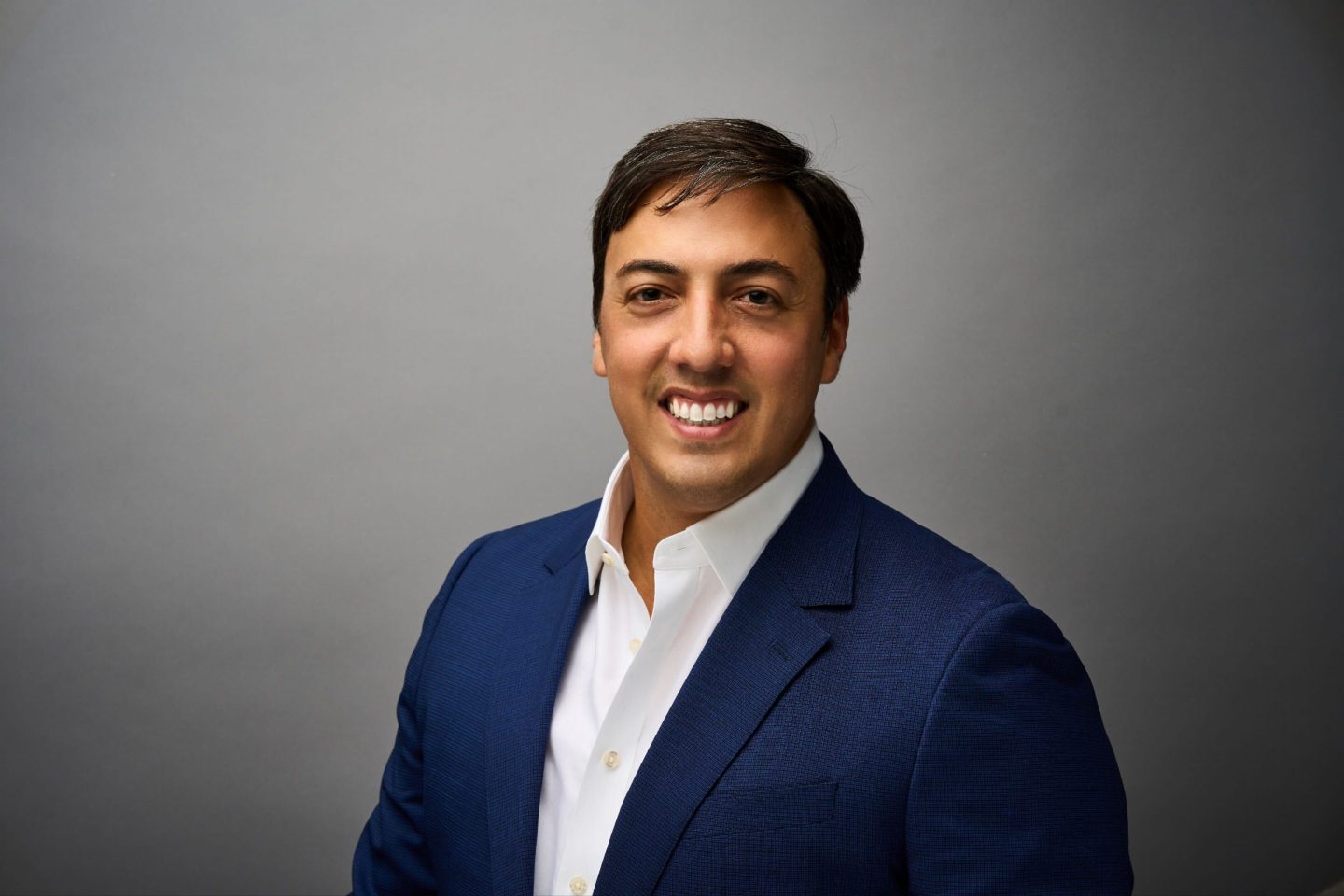
Matthew F. Cancian served as a U.S. Marine Lieutenant in Afghanistan, and is currently a graduate student at Tufts University’s Fletcher School. Michael W. Klein is the William L. Clayton Professor of International Economic Affairs at Tufts University’s Fletcher School.
About the Authors
By Matthew F. Cancian
See full bioRight Arrow Button Icon
By Michael W. Klein
See full bioRight Arrow Button Icon
Add Fortune on Google for similar content.

Latest in Commentary

Finance
Lorem ipsum dolor sit amet, consectetur adipiscing elit, sed do eiusmod tempor incididunt ut labore et dolore magna aliqua. Ut enim ad minim veniam
By Fortune Editors
October 20, 2025
Finance
Lorem ipsum dolor sit amet, consectetur adipiscing elit, sed do eiusmod tempor incididunt ut labore et dolore magna aliqua. Ut enim ad minim veniam
By Fortune Editors
October 20, 2025
Finance
Lorem ipsum dolor sit amet, consectetur adipiscing elit, sed do eiusmod tempor incididunt ut labore et dolore magna aliqua. Ut enim ad minim veniam
By Fortune Editors
October 20, 2025
Finance
Lorem ipsum dolor sit amet, consectetur adipiscing elit, sed do eiusmod tempor incididunt ut labore et dolore magna aliqua. Ut enim ad minim veniam
By Fortune Editors
October 20, 2025
Finance
Lorem ipsum dolor sit amet, consectetur adipiscing elit, sed do eiusmod tempor incididunt ut labore et dolore magna aliqua. Ut enim ad minim veniam
By Fortune Editors
October 20, 2025
Finance
Lorem ipsum dolor sit amet, consectetur adipiscing elit, sed do eiusmod tempor incididunt ut labore et dolore magna aliqua. Ut enim ad minim veniam
By Fortune Editors
October 20, 2025

Most Popular

Finance
Lorem ipsum dolor sit amet, consectetur adipiscing elit, sed do eiusmod tempor incididunt ut labore et dolore magna aliqua. Ut enim ad minim veniam
By Fortune Editors
October 20, 2025
Finance
Lorem ipsum dolor sit amet, consectetur adipiscing elit, sed do eiusmod tempor incididunt ut labore et dolore magna aliqua. Ut enim ad minim veniam
By Fortune Editors
October 20, 2025
Finance
Lorem ipsum dolor sit amet, consectetur adipiscing elit, sed do eiusmod tempor incididunt ut labore et dolore magna aliqua. Ut enim ad minim veniam
By Fortune Editors
October 20, 2025
Finance
Lorem ipsum dolor sit amet, consectetur adipiscing elit, sed do eiusmod tempor incididunt ut labore et dolore magna aliqua. Ut enim ad minim veniam
By Fortune Editors
October 20, 2025
Finance
Lorem ipsum dolor sit amet, consectetur adipiscing elit, sed do eiusmod tempor incididunt ut labore et dolore magna aliqua. Ut enim ad minim veniam
By Fortune Editors
October 20, 2025
Finance
Lorem ipsum dolor sit amet, consectetur adipiscing elit, sed do eiusmod tempor incididunt ut labore et dolore magna aliqua. Ut enim ad minim veniam
By Fortune Editors
October 20, 2025
Fortune Secondary Logo
Rankings
  • 100 Best Companies
  • Fortune 500
  • Global 500
  • Fortune 500 Europe
  • Most Powerful Women
  • World's Most Admired Companies
  • See All Rankings
  • Lists Calendar
Sections
  • Finance
  • Fortune Crypto
  • Features
  • Leadership
  • Health
  • Commentary
  • Success
  • Retail
  • Mpw
  • Tech
  • Lifestyle
  • CEO Initiative
  • Asia
  • Politics
  • Conferences
  • Europe
  • Newsletters
  • Personal Finance
  • Environment
  • Magazine
  • Education
Customer Support
  • Frequently Asked Questions
  • Customer Service Portal
  • Privacy Policy
  • Terms Of Use
  • Single Issues For Purchase
  • International Print
Commercial Services
  • Advertising
  • Fortune Brand Studio
  • Fortune Analytics
  • Fortune Conferences
  • Business Development
  • Group Subscriptions
About Us
  • About Us
  • Press Center
  • Work At Fortune
  • Terms And Conditions
  • Site Map
  • About Us
  • Press Center
  • Work At Fortune
  • Terms And Conditions
  • Site Map
  • Facebook icon
  • Twitter icon
  • LinkedIn icon
  • Instagram icon
  • Pinterest icon

Latest in Commentary

senate
CommentaryCongress
One rare bipartisan AI bill is moving through Congress. Here’s why it deserves to pass
By Neil Björkman and Betsy BrewerJuly 1, 2026
6 hours ago
I know how Gen Z can survive the ‘jobpocalypse’ because I built an AI company — in 2015
CommentaryCareers
I know how Gen Z can survive the ‘jobpocalypse’ because I built an AI company — in 2015
By Jeremy FainJuly 1, 2026
7 hours ago
mr
Commentary250 Years of Innovation
America needs 3.8 million manufacturing workers. This CEO has a blueprint to find them
By Mark RayfieldJuly 1, 2026
7 hours ago
usa
Commentary250 Years of Innovation
America at 250: why the Constitution was built to restrain government, not celebrate majority rule
By Steve H. HankeJuly 1, 2026
7 hours ago
t
CommentaryMedia
Netflix could turn NBC into its biggest bet yet — and this time, the math actually works
By Jeffrey Sonnenfeld and Steven TianJune 30, 2026
1 day ago
wb
CommentaryLeadership
I grew BDO from $600 million to $3.4 billion. Here’s the 3-part formula that made it possible
By Wayne BersonJune 30, 2026
1 day ago

Most Popular

MacKenzie Scott alone accounted for one-third of America's $19.2 billion in megagifts last year
Success
MacKenzie Scott alone accounted for one-third of America's $19.2 billion in megagifts last year
By Sydney LakeJune 25, 2026
6 days ago
Philanthropy leader at Warren Buffett and Bill Gates’ Giving Pledge says children of billionaires are pushing them to give their wealth away faster
Success
Philanthropy leader at Warren Buffett and Bill Gates’ Giving Pledge says children of billionaires are pushing them to give their wealth away faster
By Preston ForeJune 27, 2026
4 days ago
Elon Musk on MacKenzie Scott giving away $26 billion of her fortune: 'Sadly,' it makes the world a worse place
Success
Elon Musk on MacKenzie Scott giving away $26 billion of her fortune: 'Sadly,' it makes the world a worse place
By Sydney LakeJune 29, 2026
2 days ago
As Big Tech showers employees with perks to win the talent war, Nvidia built a nearly $5 trillion company by making people pay for their own lunch
Big Tech
As Big Tech showers employees with perks to win the talent war, Nvidia built a nearly $5 trillion company by making people pay for their own lunch
By Marco Quiroz-GutierrezJuly 1, 2026
10 hours ago
The U.S. Army is opening military bases to private billions — here's why that changes everything for the next 250 years
Commentary
The U.S. Army is opening military bases to private billions — here's why that changes everything for the next 250 years
By Marc AndersenJune 30, 2026
1 day ago
The Supreme Court's birthright citizenship ruling hands the U.S. economy a $7.7 trillion win
Newsletters
The Supreme Court's birthright citizenship ruling hands the U.S. economy a $7.7 trillion win
By Diane BradyJuly 1, 2026
8 hours ago

© 2026 Fortune Media IP Limited. All Rights Reserved. Use of this site constitutes acceptance of our Terms of Use and Privacy Policy | CA Notice at Collection and Privacy Notice | Do Not Sell/Share My Personal Information
FORTUNE is a trademark of Fortune Media IP Limited, registered in the U.S. and other countries. FORTUNE may receive compensation for some links to products and services on this website. Offers may be subject to change without notice.