• Home
  • Latest
  • Fortune 500
  • Finance
  • Tech
  • Leadership
  • Lifestyle
  • Rankings
  • Multimedia

Trendingnow

1

As Big Tech showers employees with perks to win the talent war, Nvidia built a nearly $5 trillion company by making people pay for their own lunch

2

Mark Zuckerberg feeds his cows macadamia nuts and beer to create the 'highest-quality beef in the world' on his $300 million estate in Hawaii

3

Today, Emily Blunt is worth $80 million thanks to her Hollywood career—but she actually wanted to be a UN Spanish translator on $80K

1

As Big Tech showers employees with perks to win the talent war, Nvidia built a nearly $5 trillion company by making people pay for their own lunch

2

Mark Zuckerberg feeds his cows macadamia nuts and beer to create the 'highest-quality beef in the world' on his $300 million estate in Hawaii

3

Today, Emily Blunt is worth $80 million thanks to her Hollywood career—but she actually wanted to be a UN Spanish translator on $80K
CommentaryFinance

3 reasons the global stock market meltdown won’t hurt average Americans

By
Jay L. Zagorsky
Jay L. Zagorsky
Down Arrow Button Icon
By
Jay L. Zagorsky
Jay L. Zagorsky
Down Arrow Button Icon
August 25, 2015, 8:33 AM ET
CHINA-ECONOMY-STOCKS
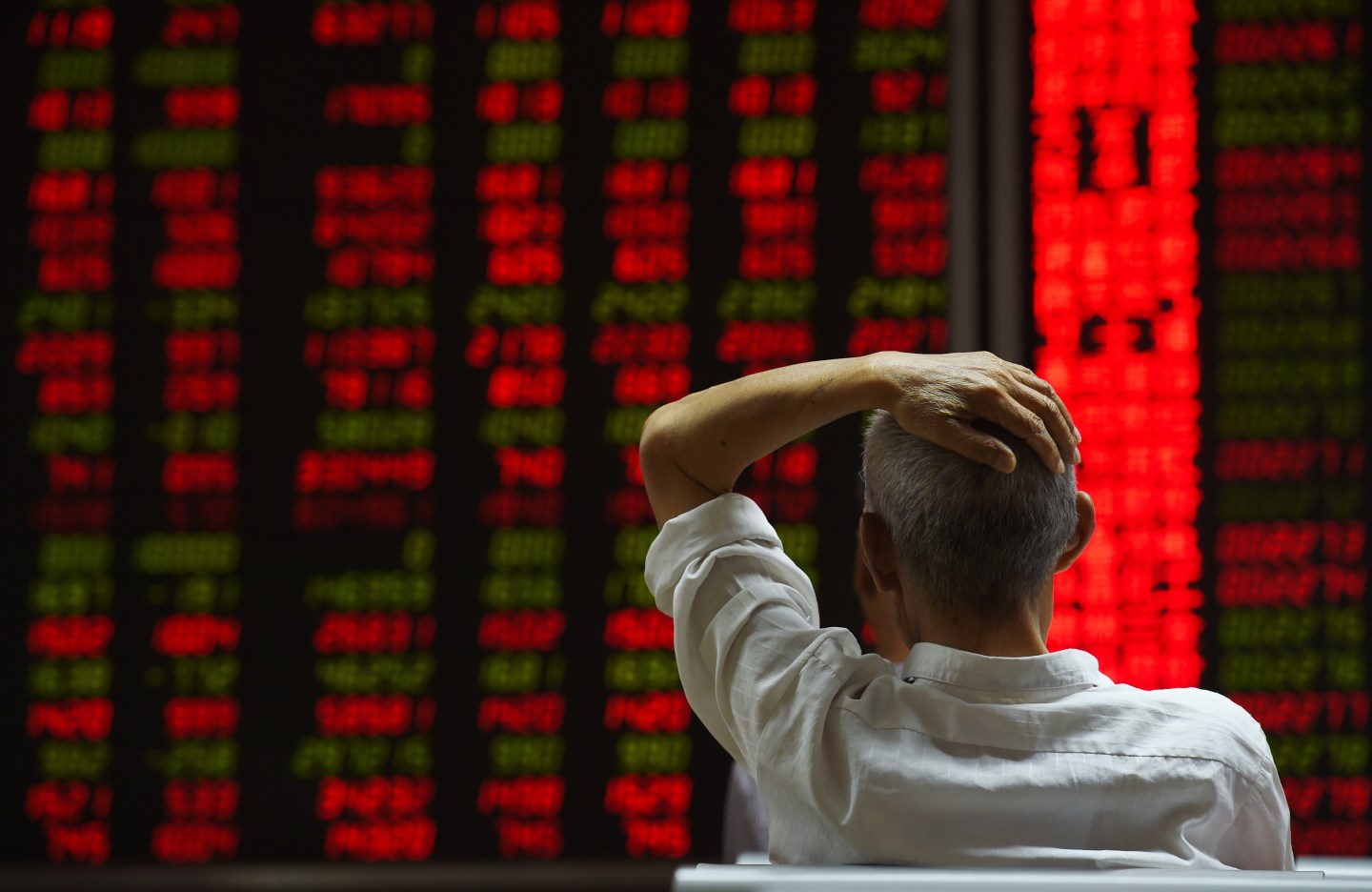
An investor looks at screens showing stock market movements at a securities company in Beijing on July 14, 2015. Hundreds of firms were expected to resume trading again on July 14, adding to the more than 400 that returned July 13, after they were suspended over the past few weeks to prevent a market meltdown. Authorities intervened after the Shanghai index plunged 30 percent in three weeks, wiping trillions of dollars from market capitalisations, spreading contagion in regional markets and raising fears over the potential impact to the real economy. AFP PHOTO / GREG BAKER (Photo credit should read GREG BAKER/AFP/Getty Images)Photograph by Greg Baker – Getty Images
Add Fortune on Google for similar content.

On Monday, the world’s stock markets continued to fall after suffering steep losses the previous week.

The Dow Jones Industrial Average, one of the most widely followed indexes, opened for trading by dropping more than 1,000 points in the first six minutes, or about 6.5%. This thousand-point drop was the largest intraday plunge in the index’s history.

While the market pared some of those losses during the day, the Dow still settled almost 600 points below Friday’s close at the lowest level since October. It also put some markets in what is known as “correction” territory, or 10% down from their most recent peaks.

What does this mean for investors and the rest of us? In my view, there are three important ideas to keep in mind as we assess the impact of a plunging stock market on the economy and our wallets.

Large losses may quickly reverse

First, the stock market often makes very dramatic moves in a short period of time, and extreme volatility like Monday’s occasionally occurs. One of the most famous market plunges occurred in 1929, at the start of the Great Depression.

On Friday afternoon, October 25 1929, the Dow Jones Industrial Average closed at 301. The following Monday, dubbed “Black Monday” in trading lore, the Dow closed at 260, a drop of 13.5%. Then the next day, called “Black Tuesday,” the Dow fell to 230 points, a loss of 11.7%. People were in a panic after two days of steep losses, but on Wednesday, which has no moniker, the Dow reversed course and rose up to 259. This rise on Wednesday almost entirely wiped out “Black Tuesday’s” fall.

In a space of less than 36 hours on Tuesday and Wednesday in October of 1929, the Dow fell and then rose around 12%. This whipsaw action means the stock market is not a place for investors who are faint of heart. It also means that just because the stock market has large losses today does not means these large losses won’t be quickly reversed in the future.

Main Street spending reacts little to Wall Street woes

Second, Wall Street does not directly impact Main Street.

Falling or rising stock prices, even when the market changes dramatically, typically do not have a large or immediate effect on sales at stores, restaurants or other retailers. One reason for this is that people spend only a portion of their wealth each year.

Few people pay current bills and expenses from their stock market accounts. Instead, most people base their day-to-day spending decisions on their paycheck and other sources of income, not on their stock market holdings. Instead, stocks are often held to achieve long-term goals like retirement, a child’s or grandchild’s education, or a place to store money until needed to make a major purchase.

Moreover, when wealth increases, like when the stock market or housing market rises in value, people often spend only a fraction of that. When wealth decreases, many people don’t cut back their purchases on a dollar-for-dollar basis.

Economists call this change in spending the “marginal propensity to consume out of wealth,” and many believe the change in spending is around 4% of the total change in wealth. This means that whenever the value of people’s stock market holding goes up or down, spending at stores, restaurants and other retailers changes by only a small fraction.

The 4% spending figure might even be too high. Research by James Poterba and Andrew Samwick from the mid-1990s investigated what happened when the stock market went up, and they found “little evidence that luxury spending rises in the wake of rising stock prices.” Since other economic research suggests the 4% figure might be too low, it is likely the figure is about right.

[fortune-brightcove videoid=4441520689001]


Relatively few families own stocks or mutual funds

The third idea to understand is that any dramatic drop or rise in the stock market affects relatively few people in the US.

Many US families have no savings, and, among those that have saved, not all have invested in the stock market. Every three years, the Federal Reserve surveys thousands of American families about their finances. The effort is called the Survey of Consumer Finances, or SCF.

The latest SCF data, which come from 2013, show that just 18% of all US families directly own shares or stock mutual funds. That means when the market goes down or up, 82% of all US families don’t care since they do not have a direct stake in how the market is doing.

Moreover, the number of families that own stocks shrinks quite a bit from the 18% figure when people who have only small amounts of money invested in the stock market are eliminated. Only 12% of all US families own at least US$10,000 of stocks or mutual funds, and just 10% of US families have invested $25,000 or more.

It is important to note that some people who don’t directly own stocks are still affected by the market’s performance. Pensions and money stored in retirement accounts experience the market’s ups and downs, so some retirees’ income is affected.

However, changes in future retirement income typically don’t affect spending today. Also, some people have options to buy their company’s stock in the future. While many of these options lost value recently, most people could not have spent the money from these options until years in the future.

What does this all mean?

What all this means is that the next time you hear that the stock market has set a new record low, or even a record high, know that it only affects a small proportion of US families. Among the families that are directly affected, the average family will likely change its spending habits by only a small percentage. Finally, a plunge today does not rule out a dramatic rise tomorrow.

A dramatic plunge in the Dow, DAX, FTSE, Shanghai or other index makes big news. However, like many headline news stories, there is only a small chance the news of a single-day large plunge in stock values has an immediate and direct impact on your life.

Jay L Zagorsky is an economist and research scientist at The Ohio State University. This article originally appeared in The Conversation.

[fortune-brightcove videoid=4441886976001]

The Conversation

About the Author
By Jay L. Zagorsky
See full bioRight Arrow Button Icon
Add Fortune on Google for similar content.

Latest in Commentary

Finance
Lorem ipsum dolor sit amet, consectetur adipiscing elit, sed do eiusmod tempor incididunt ut labore et dolore magna aliqua. Ut enim ad minim veniam
By Fortune Editors
October 20, 2025
Finance
Lorem ipsum dolor sit amet, consectetur adipiscing elit, sed do eiusmod tempor incididunt ut labore et dolore magna aliqua. Ut enim ad minim veniam
By Fortune Editors
October 20, 2025
Finance
Lorem ipsum dolor sit amet, consectetur adipiscing elit, sed do eiusmod tempor incididunt ut labore et dolore magna aliqua. Ut enim ad minim veniam
By Fortune Editors
October 20, 2025
Finance
Lorem ipsum dolor sit amet, consectetur adipiscing elit, sed do eiusmod tempor incididunt ut labore et dolore magna aliqua. Ut enim ad minim veniam
By Fortune Editors
October 20, 2025
Finance
Lorem ipsum dolor sit amet, consectetur adipiscing elit, sed do eiusmod tempor incididunt ut labore et dolore magna aliqua. Ut enim ad minim veniam
By Fortune Editors
October 20, 2025
Finance
Lorem ipsum dolor sit amet, consectetur adipiscing elit, sed do eiusmod tempor incididunt ut labore et dolore magna aliqua. Ut enim ad minim veniam
By Fortune Editors
October 20, 2025

Most Popular

Finance
Lorem ipsum dolor sit amet, consectetur adipiscing elit, sed do eiusmod tempor incididunt ut labore et dolore magna aliqua. Ut enim ad minim veniam
By Fortune Editors
October 20, 2025
Finance
Lorem ipsum dolor sit amet, consectetur adipiscing elit, sed do eiusmod tempor incididunt ut labore et dolore magna aliqua. Ut enim ad minim veniam
By Fortune Editors
October 20, 2025
Finance
Lorem ipsum dolor sit amet, consectetur adipiscing elit, sed do eiusmod tempor incididunt ut labore et dolore magna aliqua. Ut enim ad minim veniam
By Fortune Editors
October 20, 2025
Finance
Lorem ipsum dolor sit amet, consectetur adipiscing elit, sed do eiusmod tempor incididunt ut labore et dolore magna aliqua. Ut enim ad minim veniam
By Fortune Editors
October 20, 2025
Finance
Lorem ipsum dolor sit amet, consectetur adipiscing elit, sed do eiusmod tempor incididunt ut labore et dolore magna aliqua. Ut enim ad minim veniam
By Fortune Editors
October 20, 2025
Finance
Lorem ipsum dolor sit amet, consectetur adipiscing elit, sed do eiusmod tempor incididunt ut labore et dolore magna aliqua. Ut enim ad minim veniam
By Fortune Editors
October 20, 2025
Fortune Secondary Logo
Rankings
  • 100 Best Companies
  • Fortune 500
  • Global 500
  • Fortune 500 Europe
  • Most Powerful Women
  • World's Most Admired Companies
  • See All Rankings
  • Lists Calendar
Sections
  • Finance
  • Fortune Crypto
  • Features
  • Leadership
  • Health
  • Commentary
  • Success
  • Retail
  • Mpw
  • Tech
  • Lifestyle
  • CEO Initiative
  • Asia
  • Politics
  • Conferences
  • Europe
  • Newsletters
  • Personal Finance
  • Environment
  • Magazine
  • Education
Customer Support
  • Frequently Asked Questions
  • Customer Service Portal
  • Privacy Policy
  • Terms Of Use
  • Single Issues For Purchase
  • International Print
Commercial Services
  • Advertising
  • Fortune Brand Studio
  • Fortune Analytics
  • Fortune Conferences
  • Business Development
  • Group Subscriptions
About Us
  • About Us
  • Press Center
  • Work At Fortune
  • Terms And Conditions
  • Site Map
  • About Us
  • Press Center
  • Work At Fortune
  • Terms And Conditions
  • Site Map
  • Facebook icon
  • Twitter icon
  • LinkedIn icon
  • Instagram icon
  • Pinterest icon

Latest in Commentary

rn
CommentaryCryptocurrency
Former Iran director at NSC: Crypto legislation is a ticket to sanctions evasion
By Richard NephewJuly 2, 2026
15 hours ago
m
Commentary250 Years of Innovation
McKinsey chairs: Building a more resilient industrial base may require $2 trillion in investment
By Eric Kutcher and Shubham SinghalJuly 2, 2026
15 hours ago
em
Commentary250 Years of Innovation
America’s 250th birthday has Elon Musk and a record IPO. Its 15th had Alexander Hamilton — and a stock market bubble
By Owen LamontJuly 2, 2026
19 hours ago
paramount
CommentaryAntitrust
How Paramount’s theater commitments could boost local economies across the nation
By Ike BrannonJuly 2, 2026
19 hours ago
elon
CommentaryChina
China has 400 private space companies. The West is barely paying attention
By Rainer ZitelmannJuly 2, 2026
21 hours ago
senate
CommentaryCongress
One rare bipartisan AI bill is moving through Congress. Here’s why it deserves to pass
By Neil Björkman and Betsy BrewerJuly 1, 2026
2 days ago

Most Popular

As Big Tech showers employees with perks to win the talent war, Nvidia built a nearly $5 trillion company by making people pay for their own lunch
Big Tech
As Big Tech showers employees with perks to win the talent war, Nvidia built a nearly $5 trillion company by making people pay for their own lunch
By Marco Quiroz-GutierrezJuly 1, 2026
2 days ago
Mark Zuckerberg feeds his cows macadamia nuts and beer to create the 'highest-quality beef in the world' on his $300 million estate in Hawaii
Success
Mark Zuckerberg feeds his cows macadamia nuts and beer to create the 'highest-quality beef in the world' on his $300 million estate in Hawaii
By Sasha RogelbergJuly 2, 2026
13 hours ago
Today, Emily Blunt is worth $80 million thanks to her Hollywood career—but she actually wanted to be a UN Spanish translator on $80K
Success
Today, Emily Blunt is worth $80 million thanks to her Hollywood career—but she actually wanted to be a UN Spanish translator on $80K
By Orianna Rosa RoyleJuly 2, 2026
23 hours ago
Americans are escaping the U.S. for New Zealand where house prices have hit a new low—but only wealthy Americans with $3 million spare can invest
Success
Americans are escaping the U.S. for New Zealand where house prices have hit a new low—but only wealthy Americans with $3 million spare can invest
By Emma BurleighJuly 2, 2026
15 hours ago
Current price of oil as of July 2, 2026
Personal Finance
Current price of oil as of July 2, 2026
By Joseph HostetlerJuly 2, 2026
16 hours ago
MacKenzie Scott alone accounted for one-third of America's $19.2 billion in megagifts last year
Success
MacKenzie Scott alone accounted for one-third of America's $19.2 billion in megagifts last year
By Sydney LakeJune 25, 2026
8 days ago

© 2026 Fortune Media IP Limited. All Rights Reserved. Use of this site constitutes acceptance of our Terms of Use and Privacy Policy | CA Notice at Collection and Privacy Notice | Do Not Sell/Share My Personal Information
FORTUNE is a trademark of Fortune Media IP Limited, registered in the U.S. and other countries. FORTUNE may receive compensation for some links to products and services on this website. Offers may be subject to change without notice.