• Home
  • Latest
  • Fortune 500
  • Finance
  • Tech
  • Leadership
  • Lifestyle
  • Rankings
  • Multimedia

Trendingnow

1

Microsoft AI chief gives it 18 months—for all white-collar work to be automated by AI

2

Former top Russian official admits the country is over Putin and can 'imagine a future without him' — even elites bail as Kremlin seizes their assets 

3

Meet the 20-year-old CEO who launched a company in high school to solve Gen Z's entry-level job crisis

1

Microsoft AI chief gives it 18 months—for all white-collar work to be automated by AI

2

Former top Russian official admits the country is over Putin and can 'imagine a future without him' — even elites bail as Kremlin seizes their assets 

3

Meet the 20-year-old CEO who launched a company in high school to solve Gen Z's entry-level job crisis
Commentary

What the Paris Attacks Mean for the Future of Cybersecurity

By
David Burg
David Burg
Down Arrow Button Icon
By
David Burg
David Burg
Down Arrow Button Icon
November 17, 2015, 1:21 PM ET
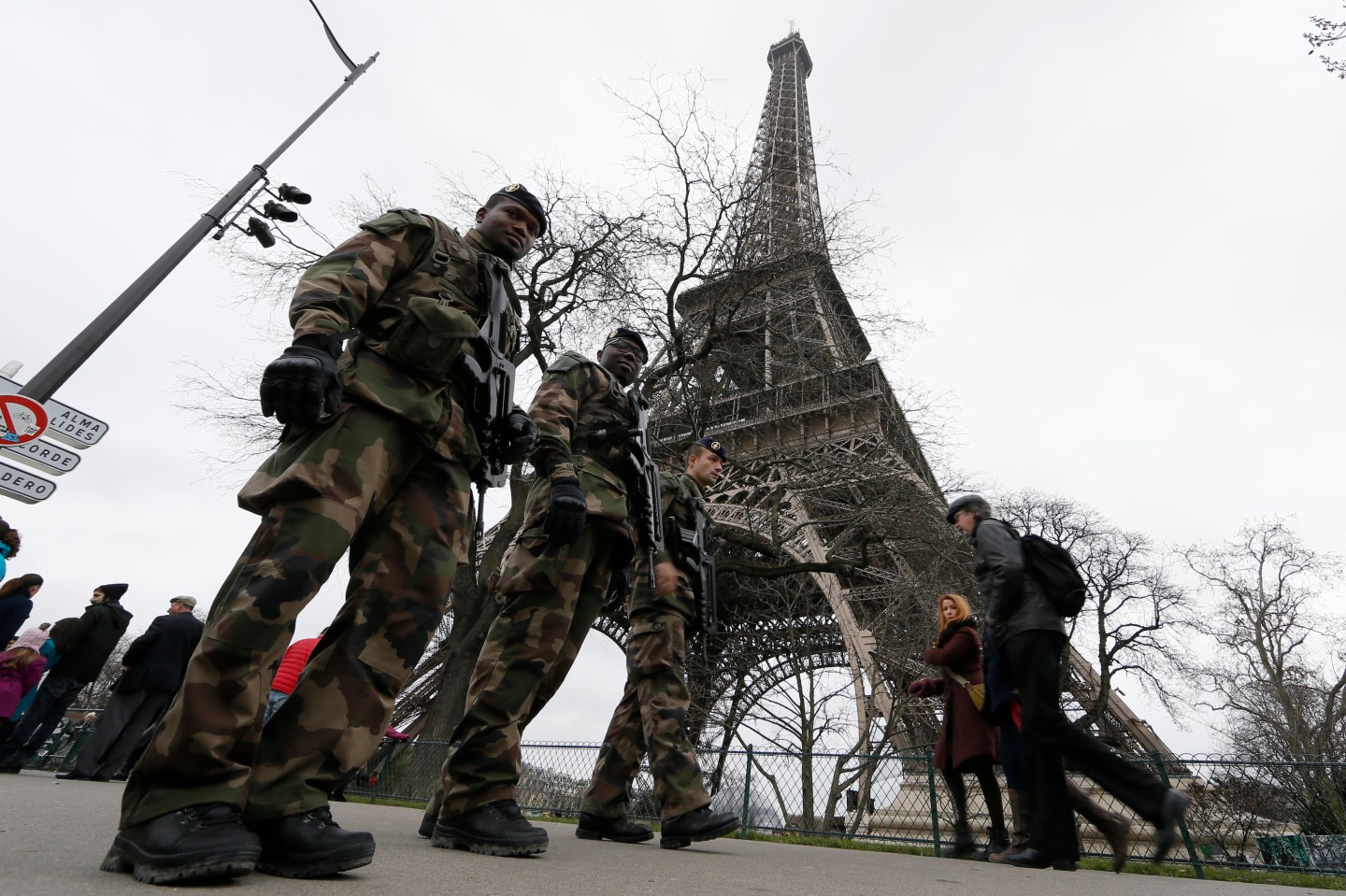
French soldiers patrol near the Eiffel Tower in Paris as part of the "Vigipirate" security plan
French soldiers patrol near the Eiffel Tower in Paris as part of the "Vigipirate" security plan December 23, 2014. French security forces stepped up protection of public places on Tuesday after three acts of violence in three days left some 30 wounded and reignited fears about France's vulnerability to attacks by Islamic radicals. REUTERS/Gonzalo Fuentes (FRANCE - Tags: TRAVEL MILITARY POLITICS) - RTR4J2O9Photograph by Gonzalo Fuentes — Reuters

The horrendous Paris attacks raise a number of national security issues, including one involving cybersecurity, and the debate over whether governments should have easy ways to break through technology that safeguards the privacy of our communications and transactions — all in the name of national security.

Paris thrusts this issue onto the front pages because one of the big questions that quickly emerged was how a group could execute such a complex attack while evading detection from intelligence services. Encryption is one potential answer. Indeed, experts hypothesize three different possibilities: (1) the attackers used powerful over-the-counter encryption; (2) they collaborated on the dark web; (3) they stopped using technology for coordination once they reached a certain level of operational readiness.

Let’s be sure we understand how modern encryption technologies work and why they are now springing to the forefront. Though encryption technologies have been used to securely transmit information for hundreds of years, never before have advanced encryption techniques and technology been so widely available and so sophisticated.

Simply put, encryption is the process of converting information or data into a code that obscures information so it cannot be read without the correct key (or keys) used to decipher or decrypt the message. Today, anyone around the world can easily purchase and use highly-sophisticated, 256 bit AES encryption technologies – encryption that is so strong that it has been the U.S. Government standard since 2002.

Businesses use encryption every day to prevent identity theft and other crimes. For example, it was once common to capture and transmit credit card information in an unencrypted state to process payments. Cybercriminals knew this and found ways to copy the information at specific points in the payment process lifecycle. They were then able to use the payment card information and monetize it.

Recognizing the problem, payment processors deployed a number of different encryption technologies, rendering the transmitted information far more difficult to intercept and monetize. While encrypted communications can be decrypted, doing so requires time and computing power. And encrypted devices and communications are now common throughout our personal and commercial lives.

Indeed, terrorists need not look far to find secure ways to communicate. Many apps that we use every day enable encrypted communications to protect our privacy and personal information. And, many of the devices we buy – such as our smartphones – encrypt he data on it for the same reasons. Thus, our data is encrypted at the source (our devices), as its communicated in transit, and at the receiving device. The issue is, such is the case for terrorists’ devices and communications as well.

This, of course, is just encryption. On top of it are software and services that protect privacy in other ways, such as those enabling us to use the Internet anonymously – bad actors and intelligence services alike are unable to identify a user or his location when he goes on the Internet using such software and services.

After the Paris attacks, the world is already seeing heightened attention to the way terrorists and other bad actors can use this commonly-available technology to help them inflict enormous harm. We will need to watch closely to see whether the debate and its outcomes shift.

For example, as the use of encrypted communication has spread, law enforcement and intelligence agencies have pushed for “back doors” – ways to enable law enforcement to bypass the encryption. Some technology companies and privacy advocates have opposed them, fearing government intrusion into their personal lives. And, just last month, the White House overruled law enforcement’s request to push tech companies to create such back doors.

Notably, the White House concluded that creating such back doors would increase U.S. citizens’ vulnerability to foreign government, cyber criminal, and terrorist intrusions.

Time will tell whether the Paris attacks change the White House’s calculus. More broadly, the battle over encryption and other privacy-related technologies will increasingly reflect the larger public policy debates we have seen that balance national security with civil liberties. As we move in the next decade into a world where far more powerful computing capability will come on line, specifically as quantum computing becomes widely available, the ability for every man and woman to encrypt their communications at levels that may not be able to be decrypted will only help sharpen that debate.

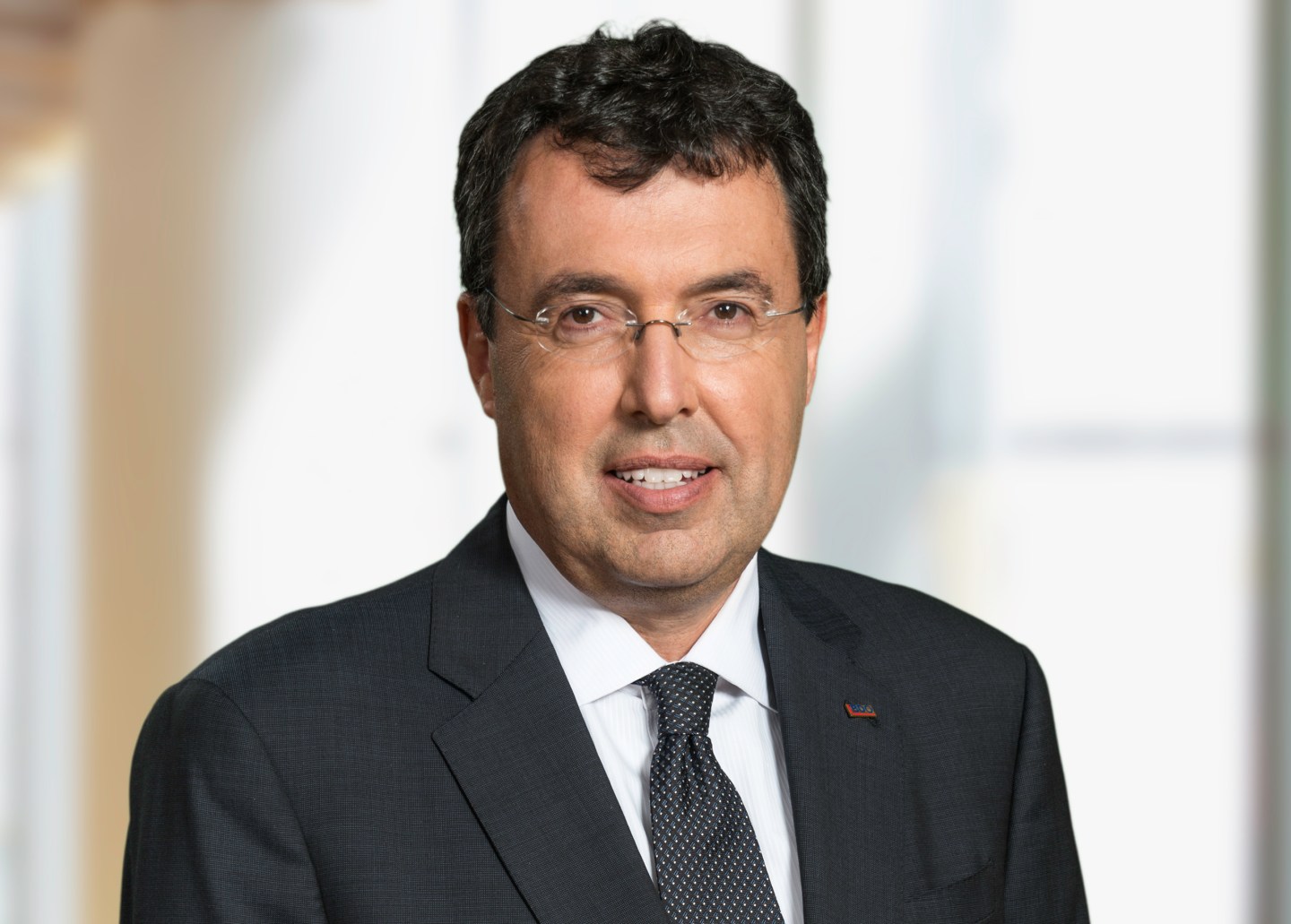
David Burg is the global cybersecurity leader at PricewaterhouseCoopers.
About the Author
By David Burg
See full bioRight Arrow Button Icon

Latest in Commentary

Finance
Lorem ipsum dolor sit amet, consectetur adipiscing elit, sed do eiusmod tempor incididunt ut labore et dolore magna aliqua. Ut enim ad minim veniam
By Fortune Editors
October 20, 2025
Finance
Lorem ipsum dolor sit amet, consectetur adipiscing elit, sed do eiusmod tempor incididunt ut labore et dolore magna aliqua. Ut enim ad minim veniam
By Fortune Editors
October 20, 2025
Finance
Lorem ipsum dolor sit amet, consectetur adipiscing elit, sed do eiusmod tempor incididunt ut labore et dolore magna aliqua. Ut enim ad minim veniam
By Fortune Editors
October 20, 2025
Finance
Lorem ipsum dolor sit amet, consectetur adipiscing elit, sed do eiusmod tempor incididunt ut labore et dolore magna aliqua. Ut enim ad minim veniam
By Fortune Editors
October 20, 2025
Finance
Lorem ipsum dolor sit amet, consectetur adipiscing elit, sed do eiusmod tempor incididunt ut labore et dolore magna aliqua. Ut enim ad minim veniam
By Fortune Editors
October 20, 2025
Finance
Lorem ipsum dolor sit amet, consectetur adipiscing elit, sed do eiusmod tempor incididunt ut labore et dolore magna aliqua. Ut enim ad minim veniam
By Fortune Editors
October 20, 2025

Most Popular

Finance
Lorem ipsum dolor sit amet, consectetur adipiscing elit, sed do eiusmod tempor incididunt ut labore et dolore magna aliqua. Ut enim ad minim veniam
By Fortune Editors
October 20, 2025
Finance
Lorem ipsum dolor sit amet, consectetur adipiscing elit, sed do eiusmod tempor incididunt ut labore et dolore magna aliqua. Ut enim ad minim veniam
By Fortune Editors
October 20, 2025
Finance
Lorem ipsum dolor sit amet, consectetur adipiscing elit, sed do eiusmod tempor incididunt ut labore et dolore magna aliqua. Ut enim ad minim veniam
By Fortune Editors
October 20, 2025
Finance
Lorem ipsum dolor sit amet, consectetur adipiscing elit, sed do eiusmod tempor incididunt ut labore et dolore magna aliqua. Ut enim ad minim veniam
By Fortune Editors
October 20, 2025
Finance
Lorem ipsum dolor sit amet, consectetur adipiscing elit, sed do eiusmod tempor incididunt ut labore et dolore magna aliqua. Ut enim ad minim veniam
By Fortune Editors
October 20, 2025
Finance
Lorem ipsum dolor sit amet, consectetur adipiscing elit, sed do eiusmod tempor incididunt ut labore et dolore magna aliqua. Ut enim ad minim veniam
By Fortune Editors
October 20, 2025
Fortune Secondary Logo
Rankings
  • 100 Best Companies
  • Fortune 500
  • Global 500
  • Fortune 500 Europe
  • Most Powerful Women
  • World's Most Admired Companies
  • See All Rankings
  • Lists Calendar
Sections
  • Finance
  • Fortune Crypto
  • Features
  • Leadership
  • Health
  • Commentary
  • Success
  • Retail
  • Mpw
  • Tech
  • Lifestyle
  • CEO Initiative
  • Asia
  • Politics
  • Conferences
  • Europe
  • Newsletters
  • Personal Finance
  • Environment
  • Magazine
  • Education
Customer Support
  • Frequently Asked Questions
  • Customer Service Portal
  • Privacy Policy
  • Terms Of Use
  • Single Issues For Purchase
  • International Print
Commercial Services
  • Advertising
  • Fortune Brand Studio
  • Fortune Analytics
  • Fortune Conferences
  • Business Development
  • Group Subscriptions
About Us
  • About Us
  • Press Center
  • Work At Fortune
  • Terms And Conditions
  • Site Map
  • About Us
  • Press Center
  • Work At Fortune
  • Terms And Conditions
  • Site Map
  • Facebook icon
  • Twitter icon
  • LinkedIn icon
  • Instagram icon
  • Pinterest icon

Latest in Commentary

liberman
Commentarystart-ups
We watched social media concentrate. The same thing is happening in AI, only at a deeper layer
By David Liberman and Daniil LibermanMay 16, 2026
17 hours ago
olivier
CommentaryAnthropic
I’ve been studying Big Tech for a long time. What just happened with Anthropic and the Pentagon terrifies me
By Olivier SylvainMay 16, 2026
19 hours ago
lawyer
CommentaryLaw
Would you hire the lawyer who just got sanctioned for using AI?
By Alexandra SmythMay 16, 2026
20 hours ago
greg
Personal FinanceAviation
Mamdani’s New York is coming to tax your private jet. Here’s how to prepare
By Greg RaiffMay 16, 2026
22 hours ago
chase
CommentaryCities
San Francisco has $2 trillion in AI wealth and can’t fix its own city. That’s every city’s problem
By Chase GarbarinoMay 15, 2026
2 days ago
lori
Commentarymental health
I run Valvoline Instant Oil Change and work with young people every day. They’re in crisis—and we all have to try to help
By Lori FleesMay 15, 2026
2 days ago

Most Popular

Microsoft AI chief gives it 18 months—for all white-collar work to be automated by AI
AI
Microsoft AI chief gives it 18 months—for all white-collar work to be automated by AI
By Jake AngeloMay 16, 2026
18 hours ago
Former top Russian official admits the country is over Putin and can 'imagine a future without him' — even elites bail as Kremlin seizes their assets 
Politics
Former top Russian official admits the country is over Putin and can 'imagine a future without him' — even elites bail as Kremlin seizes their assets 
By Jason MaMay 16, 2026
9 hours ago
Meet the 20-year-old CEO who launched a company in high school to solve Gen Z's entry-level job crisis
Future of Work
Meet the 20-year-old CEO who launched a company in high school to solve Gen Z's entry-level job crisis
By Jake AngeloMay 16, 2026
22 hours ago
The Bezos family just donated $100 million to help achieve one of Mayor Zohran Mamdani’s top campaign promises
Politics
The Bezos family just donated $100 million to help achieve one of Mayor Zohran Mamdani’s top campaign promises
By Jake AngeloMay 12, 2026
4 days ago
Despite having a $165 million net worth, Scarlett Johansson says work-life balance doesn’t exist—and the first step to success is admitting that
Success
Despite having a $165 million net worth, Scarlett Johansson says work-life balance doesn’t exist—and the first step to success is admitting that
By Preston ForeMay 13, 2026
4 days ago
‘You’re not a hero, you’re a liability’: Shark Tank’s Kevin O’Leary warns Gen Z founders to stop glorifying hustle culture
Future of Work
‘You’re not a hero, you’re a liability’: Shark Tank’s Kevin O’Leary warns Gen Z founders to stop glorifying hustle culture
By Jacqueline MunisMay 16, 2026
19 hours ago

© 2026 Fortune Media IP Limited. All Rights Reserved. Use of this site constitutes acceptance of our Terms of Use and Privacy Policy | CA Notice at Collection and Privacy Notice | Do Not Sell/Share My Personal Information
FORTUNE is a trademark of Fortune Media IP Limited, registered in the U.S. and other countries. FORTUNE may receive compensation for some links to products and services on this website. Offers may be subject to change without notice.