• Home
  • Latest
  • Fortune 500
  • Finance
  • Tech
  • Leadership
  • Lifestyle
  • Rankings
  • Multimedia
FinanceInvestors Guide

America’s Most Popular Investment May Be Toxic

By
Lauren Silva Laughlin
Down Arrow Button Icon
By
Lauren Silva Laughlin
Down Arrow Button Icon
December 30, 2015, 8:00 AM ET
New York city navigation: Wall street signboard with Water
NEW YORK CITY, NEW YORK, UNITED STATES - 2015/10/17: New York city navigation: Wall street signboard with Water street and one way signboards fixed on a pole at a traffic intersection in New York city, USA. Wall Street is a 1.1 km street from Broadway to South Street on the East River in the Financial District of lower Manhattan, New York City. (Photo by Roberto Machado Noa/LightRocket via Getty Images)Photo by Roberto Machado Nao – LightRocket via Getty Images

The virtue of index funds is well known. They tend to offer higher investment returns than actively managed mutual funds, in part because of their lower fees. That’s made them one of the most popular investments in America. Nearly $145 billion flowed into these funds in the first 11 months of the year, according to Investment Company Institute. At the same time, $161 billion flowed out of actively managed mutual funds. But perhaps we have gotten too much of a good thing.

That’s the conclusion of a number of recent research studies that came out this year. Their findings: The growth in the amount of money in index funds is chipping away at the true spirit of stock ownership. The issue has to do with the fact that index funds are so-called passive investors, meaning the funds and their managers don’t pick the companies they invest in. They are selected by an the company that creates the index, like Standard & Poor’s. And the investors have to go along for the ride.

That’s been good for investment returns. Many studies have proven, that investors, even professionals, tend to buy and sell at the wrong time. According to Morningstar’s most recent Active/Passive Barometer report, actively managed funds have generally underperformed their passive counterparts. More than three-quarters of active managers in the U.S. Large Cap category lagged the equal-weighted composite of their passive peers during the ten years ending December 31, 2014.

But what may be good for investors individually, may not be good for the economy or the market as a whole. As passive owners snag a larger and larger share of the companies in the market, they change how companies are managed, so the new studies say. First of all, their growing presence during proxy season wields power, when companies put up proposals to shareholder votes. And although they aren’t actively run, index funds still vote shares. The problem is index funds are more likely to vote as a group, according to a paper from Peter Iliev and Michelle Lowry at Penn State University. Traditional actively managed funds are “less likely to vote in a ‘one size fits all’ manner,” according to the paper. So more index funds means fewer disparate groups are keeping on top of management.

Second, while they aren’t watching individual managers, index funds are more likely to vote for provisions that take power away from managements, according to a papers from Wharton School professors Ian Appel, Todd Gormley, and Donald Keim, titled “Passive Investors, Not Passive Owners.”

“Passive investors appear to exert influence through their large voting blocs—passive ownership is associated with less support for management proposals and more support for shareholder-initiated governance proposals,” the paper says.

That’s good for problem companies, but it can dilute the power of companies that actually have too good leaders. And passive funds, which don’t have the ability to chose, seem to treat all companies the same way.

Lastly, index funds tend to not just own one company in an industry, but most of their rivals as well. What happens, according to a paper Martin Schmalz, assistant professor of finance at University of Michigan wrote with Jose Azar and Isabel Tecu of Charles River Associates, is that stock ownership becomes too concentrated when companies like Blackrock or Vanguard, two large managers of index funds, vote the shares of passive funds. It can create anti-competitive behavior in an industry.

For example, U.S. airline tickets prices are 11% higher because the largest index funds that track the S&P 500 own not just American Airlines (AAL), but Delta (DAL) and United Continental (UAL) as well. And common ownership makes companies less likely to want to compete with rivals. If that sounds like hocus pocus, Schmalz likens it to two gasoline companies on opposing corners. If they have different owners, they might undercut each other’s prices. However, “if you own both gas stations on both sides of the street, are you still going to do the same thing? Probably not.”

Schmalz worries that a lack of competition is driving up prices for consumers and making the economy less dynamic. But other research suggests that the structure of index funds is a trouble for the stock market as well.

The reason John Osterweis, founder and chief investment officer of Osterweis Capital Management, says is because index funds are capitalization weighted. This dynamic often favors the largest companies, which make up the largest weights in the most popular index, and it has a momentum effect. And as those companies’ market value gets bigger, a greater percentage of the money index funds invest flow to those companies. Osterweis points to the returns in the first part of this year as an example. In the S&P 500, the top 10 contributors were up an average of 35%, while the bottom 490 stocks in the index were down almost 7%, he says.

The result, Osterweis says, is that investors through index funds get trapped in a few companies, and it’s the same companies everyone else is buying, so they tend to be over priced. “You might underperform for a period of time, but ultimately you might outperform because you might not be trapped in this thing,” says Osterweis. The question is whether index funds have become such a force that they have the economy trapped as well.

 

About the Author
By Lauren Silva Laughlin
See full bioRight Arrow Button Icon

Latest in Finance

Finance
Lorem ipsum dolor sit amet, consectetur adipiscing elit, sed do eiusmod tempor incididunt ut labore et dolore magna aliqua. Ut enim ad minim veniam
By Fortune Editors
October 20, 2025
Finance
Lorem ipsum dolor sit amet, consectetur adipiscing elit, sed do eiusmod tempor incididunt ut labore et dolore magna aliqua. Ut enim ad minim veniam
By Fortune Editors
October 20, 2025
Finance
Lorem ipsum dolor sit amet, consectetur adipiscing elit, sed do eiusmod tempor incididunt ut labore et dolore magna aliqua. Ut enim ad minim veniam
By Fortune Editors
October 20, 2025
Finance
Lorem ipsum dolor sit amet, consectetur adipiscing elit, sed do eiusmod tempor incididunt ut labore et dolore magna aliqua. Ut enim ad minim veniam
By Fortune Editors
October 20, 2025
Finance
Lorem ipsum dolor sit amet, consectetur adipiscing elit, sed do eiusmod tempor incididunt ut labore et dolore magna aliqua. Ut enim ad minim veniam
By Fortune Editors
October 20, 2025
Finance
Lorem ipsum dolor sit amet, consectetur adipiscing elit, sed do eiusmod tempor incididunt ut labore et dolore magna aliqua. Ut enim ad minim veniam
By Fortune Editors
October 20, 2025

Most Popular

Finance
Lorem ipsum dolor sit amet, consectetur adipiscing elit, sed do eiusmod tempor incididunt ut labore et dolore magna aliqua. Ut enim ad minim veniam
By Fortune Editors
October 20, 2025
Finance
Lorem ipsum dolor sit amet, consectetur adipiscing elit, sed do eiusmod tempor incididunt ut labore et dolore magna aliqua. Ut enim ad minim veniam
By Fortune Editors
October 20, 2025
Finance
Lorem ipsum dolor sit amet, consectetur adipiscing elit, sed do eiusmod tempor incididunt ut labore et dolore magna aliqua. Ut enim ad minim veniam
By Fortune Editors
October 20, 2025
Finance
Lorem ipsum dolor sit amet, consectetur adipiscing elit, sed do eiusmod tempor incididunt ut labore et dolore magna aliqua. Ut enim ad minim veniam
By Fortune Editors
October 20, 2025
Finance
Lorem ipsum dolor sit amet, consectetur adipiscing elit, sed do eiusmod tempor incididunt ut labore et dolore magna aliqua. Ut enim ad minim veniam
By Fortune Editors
October 20, 2025
Finance
Lorem ipsum dolor sit amet, consectetur adipiscing elit, sed do eiusmod tempor incididunt ut labore et dolore magna aliqua. Ut enim ad minim veniam
By Fortune Editors
October 20, 2025
Fortune Secondary Logo
Rankings
  • 100 Best Companies
  • Fortune 500
  • Global 500
  • Fortune 500 Europe
  • Most Powerful Women
  • Future 50
  • World’s Most Admired Companies
  • See All Rankings
Sections
  • Finance
  • Fortune Crypto
  • Features
  • Leadership
  • Health
  • Commentary
  • Success
  • Retail
  • Mpw
  • Tech
  • Lifestyle
  • CEO Initiative
  • Asia
  • Politics
  • Conferences
  • Europe
  • Newsletters
  • Personal Finance
  • Environment
  • Magazine
  • Education
Customer Support
  • Frequently Asked Questions
  • Customer Service Portal
  • Privacy Policy
  • Terms Of Use
  • Single Issues For Purchase
  • International Print
Commercial Services
  • Advertising
  • Fortune Brand Studio
  • Fortune Analytics
  • Fortune Conferences
  • Business Development
  • Group Subscriptions
About Us
  • About Us
  • Editorial Calendar
  • Press Center
  • Work At Fortune
  • Diversity And Inclusion
  • Terms And Conditions
  • Site Map
  • About Us
  • Editorial Calendar
  • Press Center
  • Work At Fortune
  • Diversity And Inclusion
  • Terms And Conditions
  • Site Map
  • Facebook icon
  • Twitter icon
  • LinkedIn icon
  • Instagram icon
  • Pinterest icon

Latest in Finance

trump
Economynational debt
Trump wants to add nearly $7 trillion to the $39 trillion national debt with his new military budget, watchdog warns
By Nick LichtenbergApril 2, 2026
10 hours ago
paul krugman
EconomyIran
Paul Krugman smacks down Trump speech with argument that $4 gas is ‘less than half’ of the Hormuz hit. Here’s what he’s talking about
By Jake AngeloApril 2, 2026
11 hours ago
picture of the word "solana"
CryptoCryptocurrency
Latest crypto hack sees thieves make off with $280 million from Solana DeFi platform Drift
By Carlos GarciaApril 2, 2026
12 hours ago
kroenke
CommentarySoccer
Why American billionaires are abandoning Wall Street for English soccer clubs
By Andrés MartinezApril 2, 2026
13 hours ago
Workers on the production line of solar panels in China
EnergyRenewables
After renewable power’s record-smashing 2025, the Iran war could accelerate the shift as countries seek ‘structurally more resilient’ energy, UN says
By Tristan BoveApril 2, 2026
13 hours ago
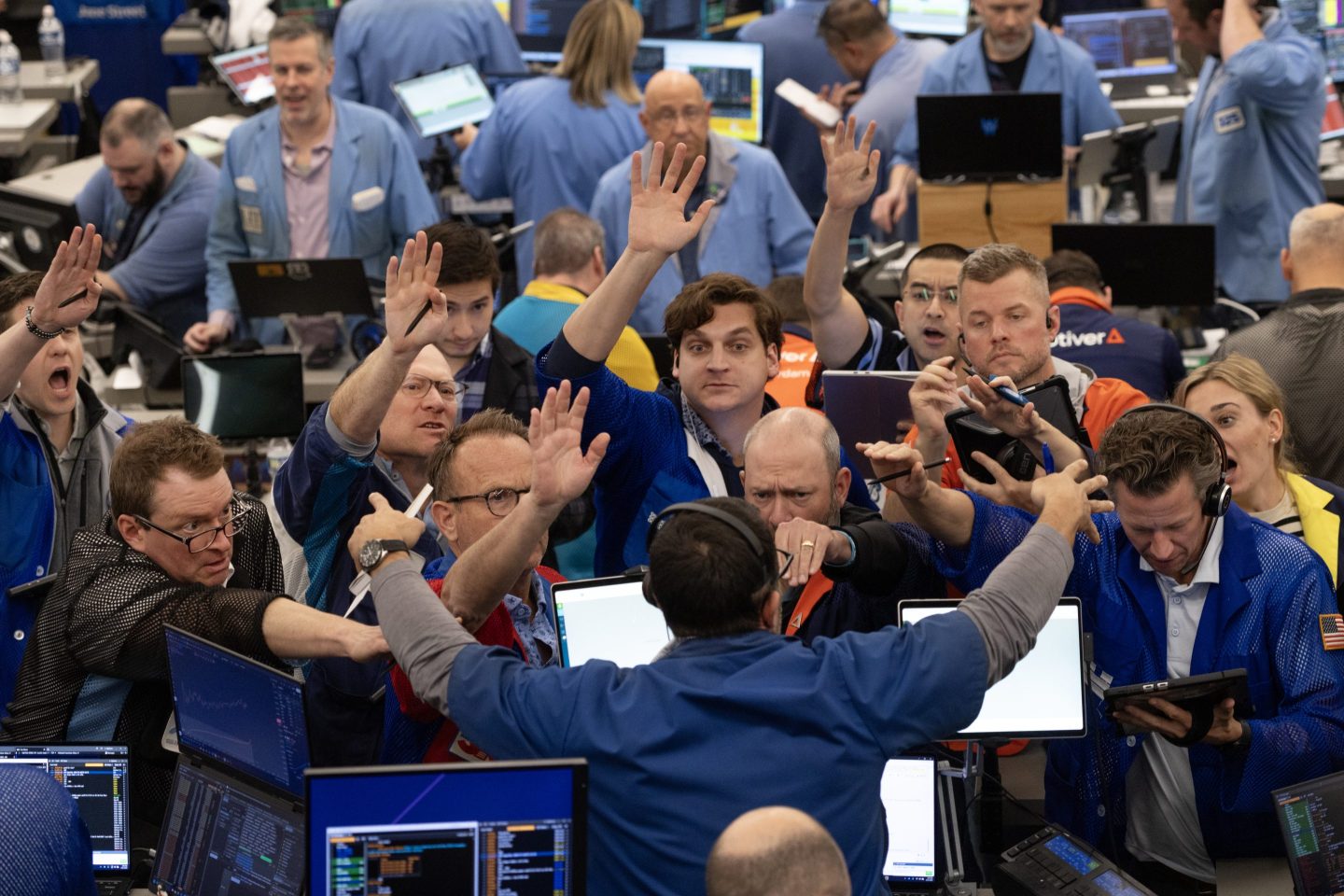
Traders signal offers in the S&P options trading pit at the Cboe Global Markets exchange on March 31, 2026 in Chicago, Illinois.
EnergyIran
Markets rally hard on Iran’s promise to play nice in Hormuz as its leaders pocket billions from the disruption
By Eva RoytburgApril 2, 2026
14 hours ago

Most Popular

Gen Z fled San Francisco for Texas and Florida. Now they’re turning ‘welcomer cities’ into the next big tech towns
Real Estate
Gen Z fled San Francisco for Texas and Florida. Now they’re turning ‘welcomer cities’ into the next big tech towns
By Fortune EditorsApril 2, 2026
23 hours ago
Current price of gold as of April 1, 2026
Personal Finance
Current price of gold as of April 1, 2026
By Fortune EditorsApril 1, 2026
2 days ago
Major 4-day workweek study suggests that when we work 5 days we spend one doing basically nothing
Success
Major 4-day workweek study suggests that when we work 5 days we spend one doing basically nothing
By Fortune EditorsApril 2, 2026
15 hours ago
The tax escape map: Billionaires are bolting for Florida from the West Coast and taking billions in tax revenue with them
Real Estate
The tax escape map: Billionaires are bolting for Florida from the West Coast and taking billions in tax revenue with them
By Fortune EditorsApril 2, 2026
24 hours ago
Paul Krugman smacks down Trump speech with argument that $4 gas is ‘less than half’ of the Hormuz hit. Here’s what he’s talking about
Economy
Paul Krugman smacks down Trump speech with argument that $4 gas is ‘less than half’ of the Hormuz hit. Here’s what he’s talking about
By Fortune EditorsApril 2, 2026
11 hours ago
Current price of oil as of April 2, 2026
Personal Finance
Current price of oil as of April 2, 2026
By Fortune EditorsApril 2, 2026
16 hours ago

© 2026 Fortune Media IP Limited. All Rights Reserved. Use of this site constitutes acceptance of our Terms of Use and Privacy Policy | CA Notice at Collection and Privacy Notice | Do Not Sell/Share My Personal Information
FORTUNE is a trademark of Fortune Media IP Limited, registered in the U.S. and other countries. FORTUNE may receive compensation for some links to products and services on this website. Offers may be subject to change without notice.