• Home
  • Latest
  • Fortune 500
  • Finance
  • Tech
  • Leadership
  • Lifestyle
  • Rankings
  • Multimedia

Trendingnow

1

Despite having a $165 million net worth, Scarlett Johansson says work-life balance doesn’t exist—and the first step to success is admitting that

2

Microsoft AI chief gives it 18 months—for all white-collar work to be automated by AI

3

The Bezos family just donated $100 million to help achieve one of Mayor Zohran Mamdani’s top campaign promises

1

Despite having a $165 million net worth, Scarlett Johansson says work-life balance doesn’t exist—and the first step to success is admitting that

2

Microsoft AI chief gives it 18 months—for all white-collar work to be automated by AI

3

The Bezos family just donated $100 million to help achieve one of Mayor Zohran Mamdani’s top campaign promises
Finance

What the 2015 Merger Boom Means for the 2016 Stock Market

By
Joshua Brown
Joshua Brown
Down Arrow Button Icon
By
Joshua Brown
Joshua Brown
Down Arrow Button Icon
January 4, 2016, 9:00 AM ET
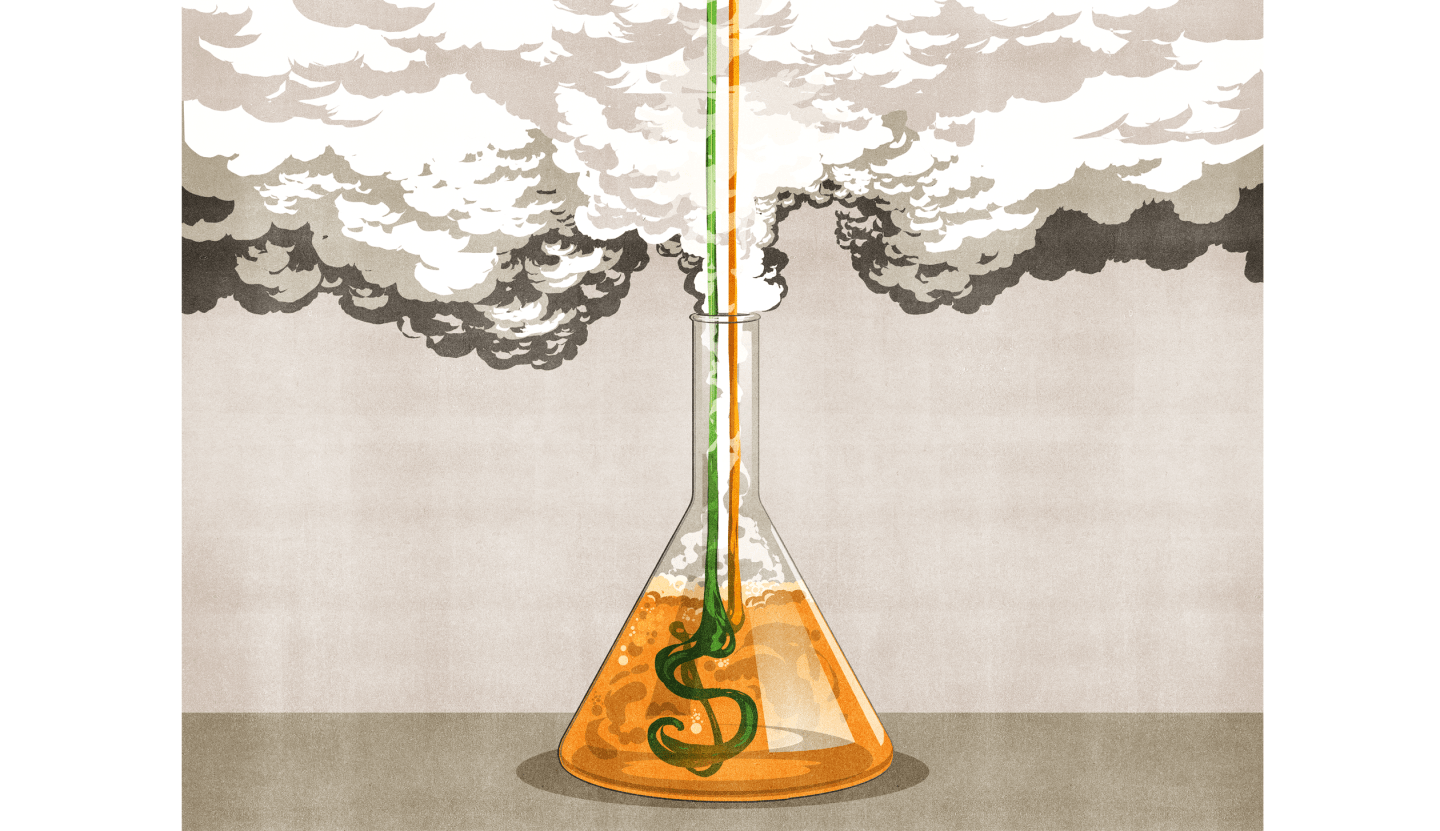
Illustration by SHOUT

We’re wrapping up a record year for mergers and acquisitions. By mid-December the total value of deals involving U.S. acquirers in 2015 had topped $2 trillion for the first time ever, driven by such blockbusters as the Dow Chemical (DOW)–DuPont (DD) merger. Throw in tie-ups of foreign companies like brewing giants Anheuser-Busch InBev (BUD) and SABMiller (SBMRY), and the global total neared $4.7 trillion.

These numbers are red meat for bears. Pessimists look at the merger boom and play connect the dots with similar booms of years past. And they’re correct in pointing out that past M&A peaks have tended to occur at the top of stock market cycles, not long before steep downward slides. But a closer analysis suggests that a more nuanced view is in order. Compared with other booms, today’s feels almost obligatory, rather than euphoric. And while some causes of the surge may give investors reason for concern, it’s premature to declare a market top.

The most recent peaks offer instructive contrasts. In 1999, U.S. acquirers announced $1.475 trillion in mergers and acquisitions, almost triple the total in 1995. The AOL–Time Warner (TWX) deal, announced in 2000, was an emblematic capper to the era. It was an empire-building exercise in which an old-media titan allowed a new-media upstart to take over using little more than an elevated stock price as currency. That price turned out to be representative of a broader tech bubble, which burst soon thereafter.

INV.01.01.16 chart

M&A dollar volumes next topped $1.4 trillion in 2006 and 2007, but this time the bumper crop was fueled almost entirely by debt. Private equity firms and investment banks with nearly unlimited powers to float bond offerings spurred takeover activity in sectors from retail to restaurants to real estate. Every company, no matter its size, was both a potential target and a likely acquirer. That trend, too, was a symptom of a bubble.

In today’s M&A zeitgeist, we see yet another primary consideration: corporate pragmatism. It’s what you might call a reluctant boom. Deals are happening largely because of deflationary forces that practically demand consolidation. From heavy industry to metals and mining, pharmaceuticals to beer, industries are acclimating to a barely growing global economy and a rapidly aging customer base.

With a few exceptions, the empire-building hubris of corporate finance is not in the picture. Today’s near-zero interest rates may enable the M&A activity, but they don’t explain it. Rather, CEOs are entering into marriages of convenience with competitors out of desperation to preserve margins or rationalize costs. Activist hedge fund managers, flush with investor cash and hungry to make their mark, are prompting these marriages with the shotgun of our age, the threat of a proxy battle. No executive is safe, and no company is too large to withstand the pressure.

December’s revelation that Dow Chemical and DuPont had struck a merger agreement is as emblematic of today’s M&A situation as the private equity takeover of Equity Office, the nation’s largest office-building REIT, was in 2007. That deal was about using bonds to create ever larger income streams; this deal features two of the world’s oldest industrial businesses fleeing into each other’s arms after going 10 rounds with the activists. In fact, the proposed combination is an anti-empire. The central premise is that the two companies, once combined, will spend the next two years splitting themselves up into three companies organized by product line. Never has a $100 billion merger felt more defensive!

One data point that Cassandras often cite is the absolute dollar totals of M&A. It’s true that $2 trillion is an order of magnitude above the average over the past 20 years. But absolute numbers never tell the whole story.

To put the M&A total in context, we should observe it as a percentage of stock market capitalization. In 1999 the market cap of the Russell 3000 index of U.S. stocks stood at $14.6 trillion. The M&A total as a percentage of that capitalization was over 10%. It had never reached that level before, and it has not since. The percentage never topped 9% during the 2006–07 boom. And with the Russell 3000’s current market cap of $24.3 trillion, M&A in 2015 represents 8.65%, despite hitting a record high in nominal terms.

More important, the average multiple that acquirers are paying, while slightly elevated, is nothing out of the ordinary. Deals are typically calculated as a ratio of the overall cost (enterprise value) divided by the acquired company’s cash flow (Ebitda). From 1995 through 2014 the average and median multiples for U.S. M&A stood at 11.7. In 2015, deals took place at an average multiple of 12.4. Given today’s low interest rates, lack of global growth, and desperation to create shareholder value, we could argue that these multiples are surprisingly tame.

So, yes, record M&A is more likely to occur toward the end of a bull market. But through a qualitative lens, we’re seeing companies pairing off from a position of weakness, not strength, at prices that don’t seem euphoric. There are a lot of things about this M&A boom that should worry investors, but its size alone isn’t one of them.

Joshua M. Brown is CEO of Ritholtz Wealth Management, a registered investment advisory firm, and writes the Reformed Broker blog.

About the Author
By Joshua Brown
See full bioRight Arrow Button Icon

Latest in Finance

Finance
Lorem ipsum dolor sit amet, consectetur adipiscing elit, sed do eiusmod tempor incididunt ut labore et dolore magna aliqua. Ut enim ad minim veniam
By Fortune Editors
October 20, 2025
Finance
Lorem ipsum dolor sit amet, consectetur adipiscing elit, sed do eiusmod tempor incididunt ut labore et dolore magna aliqua. Ut enim ad minim veniam
By Fortune Editors
October 20, 2025
Finance
Lorem ipsum dolor sit amet, consectetur adipiscing elit, sed do eiusmod tempor incididunt ut labore et dolore magna aliqua. Ut enim ad minim veniam
By Fortune Editors
October 20, 2025
Finance
Lorem ipsum dolor sit amet, consectetur adipiscing elit, sed do eiusmod tempor incididunt ut labore et dolore magna aliqua. Ut enim ad minim veniam
By Fortune Editors
October 20, 2025
Finance
Lorem ipsum dolor sit amet, consectetur adipiscing elit, sed do eiusmod tempor incididunt ut labore et dolore magna aliqua. Ut enim ad minim veniam
By Fortune Editors
October 20, 2025
Finance
Lorem ipsum dolor sit amet, consectetur adipiscing elit, sed do eiusmod tempor incididunt ut labore et dolore magna aliqua. Ut enim ad minim veniam
By Fortune Editors
October 20, 2025

Most Popular

Finance
Lorem ipsum dolor sit amet, consectetur adipiscing elit, sed do eiusmod tempor incididunt ut labore et dolore magna aliqua. Ut enim ad minim veniam
By Fortune Editors
October 20, 2025
Finance
Lorem ipsum dolor sit amet, consectetur adipiscing elit, sed do eiusmod tempor incididunt ut labore et dolore magna aliqua. Ut enim ad minim veniam
By Fortune Editors
October 20, 2025
Finance
Lorem ipsum dolor sit amet, consectetur adipiscing elit, sed do eiusmod tempor incididunt ut labore et dolore magna aliqua. Ut enim ad minim veniam
By Fortune Editors
October 20, 2025
Finance
Lorem ipsum dolor sit amet, consectetur adipiscing elit, sed do eiusmod tempor incididunt ut labore et dolore magna aliqua. Ut enim ad minim veniam
By Fortune Editors
October 20, 2025
Finance
Lorem ipsum dolor sit amet, consectetur adipiscing elit, sed do eiusmod tempor incididunt ut labore et dolore magna aliqua. Ut enim ad minim veniam
By Fortune Editors
October 20, 2025
Finance
Lorem ipsum dolor sit amet, consectetur adipiscing elit, sed do eiusmod tempor incididunt ut labore et dolore magna aliqua. Ut enim ad minim veniam
By Fortune Editors
October 20, 2025
Fortune Secondary Logo
Rankings
  • 100 Best Companies
  • Fortune 500
  • Global 500
  • Fortune 500 Europe
  • Most Powerful Women
  • World's Most Admired Companies
  • See All Rankings
  • Lists Calendar
Sections
  • Finance
  • Fortune Crypto
  • Features
  • Leadership
  • Health
  • Commentary
  • Success
  • Retail
  • Mpw
  • Tech
  • Lifestyle
  • CEO Initiative
  • Asia
  • Politics
  • Conferences
  • Europe
  • Newsletters
  • Personal Finance
  • Environment
  • Magazine
  • Education
Customer Support
  • Frequently Asked Questions
  • Customer Service Portal
  • Privacy Policy
  • Terms Of Use
  • Single Issues For Purchase
  • International Print
Commercial Services
  • Advertising
  • Fortune Brand Studio
  • Fortune Analytics
  • Fortune Conferences
  • Business Development
  • Group Subscriptions
About Us
  • About Us
  • Press Center
  • Work At Fortune
  • Terms And Conditions
  • Site Map
  • About Us
  • Press Center
  • Work At Fortune
  • Terms And Conditions
  • Site Map
  • Facebook icon
  • Twitter icon
  • LinkedIn icon
  • Instagram icon
  • Pinterest icon

Latest in Finance

Oil markets could be a month away from the moment of truth. Brace for a ‘non-linear’ price spike and panic buying, analysts warn
EnergyOil
Oil markets could be a month away from the moment of truth. Brace for a ‘non-linear’ price spike and panic buying, analysts warn
By Jason MaMay 16, 2026
2 hours ago
lirr
EconomyRailroads
Spring Hamptons traffic nightmare as Long Island Rail Road workers go on strike
By Philip Marcelo, Nick Lichtenberg and The Associated PressMay 16, 2026
7 hours ago
delivery
Retailecommerce
Walmart’s upper hand over Amazon in the $1 trillion e-commerce race: 90% of Americans live within 10 miles of a superstore
By Anne D'Innocenzio and The Associated PressMay 16, 2026
7 hours ago
milei
North AmericaInflation
Argentinians wage inflation strike on red meat sending beef consumption to 20-year low
By Clara Preve and The Associated PressMay 16, 2026
7 hours ago
tom
SuccessEntrepreneurs
Top Chef’s Tom Colicchio got a 15x return on a tech company most Americans have never heard of. He thinks his own industry is broken
By Nick LichtenbergMay 16, 2026
10 hours ago
bhaskar
Economydisruption
The prophet of the ‘Wired Belt’ says capitalism is finally eating itself
By Bhaskar ChakravortiMay 16, 2026
11 hours ago

Most Popular

Despite having a $165 million net worth, Scarlett Johansson says work-life balance doesn’t exist—and the first step to success is admitting that
Success
Despite having a $165 million net worth, Scarlett Johansson says work-life balance doesn’t exist—and the first step to success is admitting that
By Preston ForeMay 13, 2026
3 days ago
Microsoft AI chief gives it 18 months—for all white-collar work to be automated by AI
AI
Microsoft AI chief gives it 18 months—for all white-collar work to be automated by AI
By Jake AngeloMay 16, 2026
9 hours ago
The Bezos family just donated $100 million to help achieve one of Mayor Zohran Mamdani’s top campaign promises
Politics
The Bezos family just donated $100 million to help achieve one of Mayor Zohran Mamdani’s top campaign promises
By Jake AngeloMay 12, 2026
4 days ago
Current price of oil as of May 15, 2026
Personal Finance
Current price of oil as of May 15, 2026
By Joseph HostetlerMay 15, 2026
1 day ago
Meet the 20-year-old CEO who launched a company in high school to solve Gen Z's entry-level job crisis
Future of Work
Meet the 20-year-old CEO who launched a company in high school to solve Gen Z's entry-level job crisis
By Jake AngeloMay 16, 2026
12 hours ago
‘You’re not a hero, you’re a liability’: Shark Tank’s Kevin O’Leary warns Gen Z founders to stop glorifying hustle culture
Future of Work
‘You’re not a hero, you’re a liability’: Shark Tank’s Kevin O’Leary warns Gen Z founders to stop glorifying hustle culture
By Jacqueline MunisMay 16, 2026
9 hours ago

© 2026 Fortune Media IP Limited. All Rights Reserved. Use of this site constitutes acceptance of our Terms of Use and Privacy Policy | CA Notice at Collection and Privacy Notice | Do Not Sell/Share My Personal Information
FORTUNE is a trademark of Fortune Media IP Limited, registered in the U.S. and other countries. FORTUNE may receive compensation for some links to products and services on this website. Offers may be subject to change without notice.