• Home
  • Latest
  • Fortune 500
  • Finance
  • Tech
  • Leadership
  • Lifestyle
  • Rankings
  • Multimedia

Trendingnow

1

MacKenzie Scott alone accounted for one-third of America's $19.2 billion in megagifts last year

2

As Big Tech showers employees with perks to win the talent war, Nvidia built a nearly $5 trillion company by making people pay for their own lunch

3

Philanthropy leader at Warren Buffett and Bill Gates’ Giving Pledge says children of billionaires are pushing them to give their wealth away faster

1

MacKenzie Scott alone accounted for one-third of America's $19.2 billion in megagifts last year

2

As Big Tech showers employees with perks to win the talent war, Nvidia built a nearly $5 trillion company by making people pay for their own lunch

3

Philanthropy leader at Warren Buffett and Bill Gates’ Giving Pledge says children of billionaires are pushing them to give their wealth away faster
TechPew

Most People See Connected Devices As a Privacy Problem

By
Stacey Higginbotham
Stacey Higginbotham
Down Arrow Button Icon
By
Stacey Higginbotham
Stacey Higginbotham
Down Arrow Button Icon
January 14, 2016, 8:51 PM ET
US-POLITICS-FTC-RAMIREZ
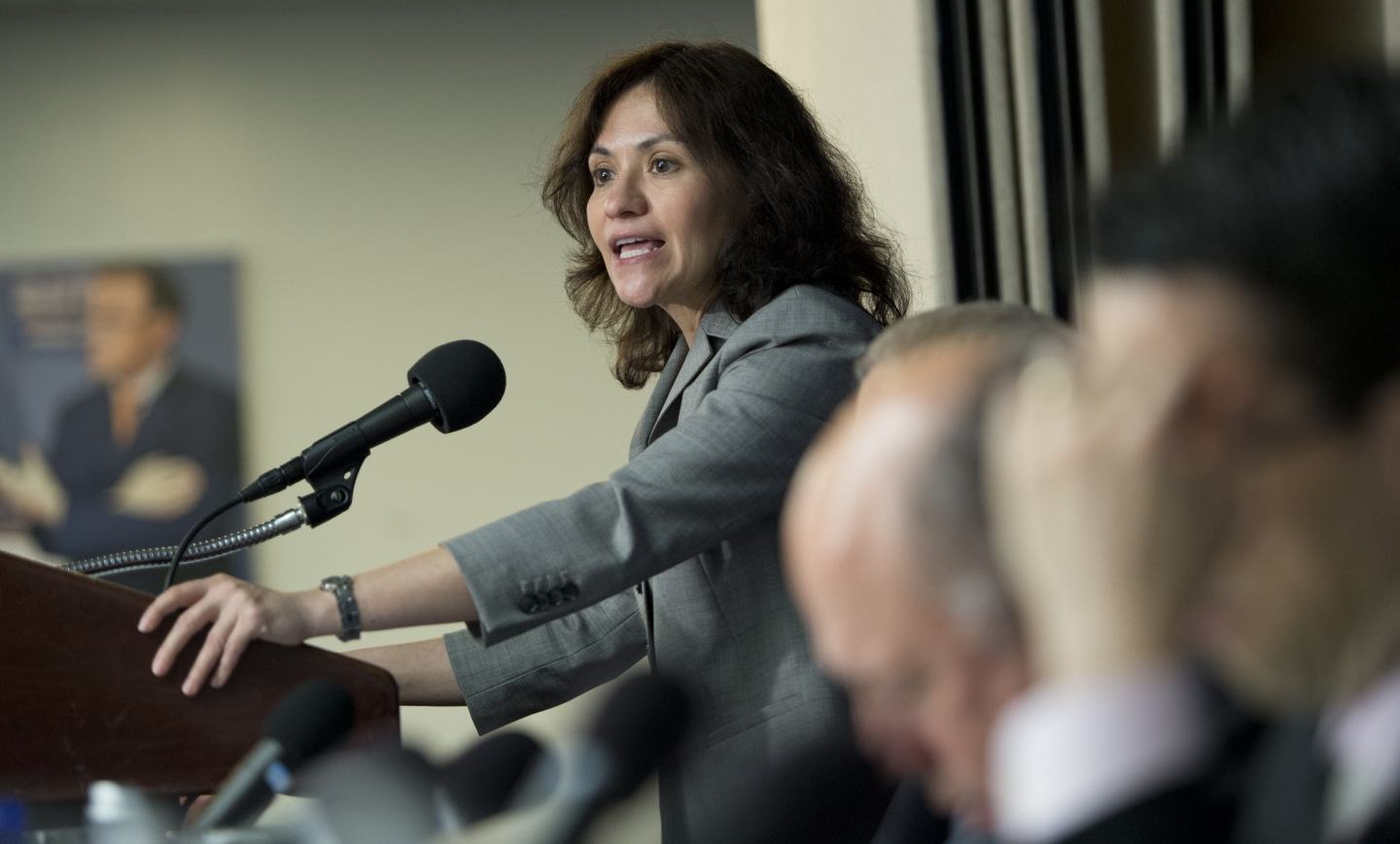
Federal Trade Commission (FTC) Chairwoman Edith Ramirez speaks about patent trolls and anti-trust issues at the National Press Club in Washington, DC, June 20, 2013. AFP PHOTO / Saul LOEB (Photo credit should read SAUL LOEB/AFP/Getty Images)Saul Loeb — AFP/Getty Images
Add Fortune on Google for similar content.

Slightly over half of Americans are cool with connected cameras in their offices that use facial recognition to help prevent theft. However, the number of people who approve falls to merely 27% if the device in question is a connected home thermostat that’s not recording video, but is merely tracking who’s at home and where they are.

These were some of the findings from a Pew study on Thursday that tracked how people feel about scenarios involving privacy in a connected era. They ranged from sharing data about grocery purchases in exchange for discounts to uploading medical records to a secure site that their doctor recommended.

For the most part, consumers were happy to give up data for a discount and for a direct benefit to themselves. But in cases in which the data went to a third-party or involved overt promotions, people started getting uncomfortable. Surprisingly age didn’t matter, nor did gender when it came to evaluating privacy in general.

The findings are based on a survey of 461 U.S. adults and nine online focus groups of 80 people. Based on their responses, it was clear that nearly everyone seemed to have a slightly different opinion about sharing their personal information (although many of those surveyed used the word “creepy.”

For more about privacy, watch:

What’s missing from the privacy conversation, though, is an understanding by consumers about what personal information they are giving up, what it will be used for, and the actual risks. And today, none of this is spelled out in any sort of English that a consumer can understand.

It’s basically hidden in a lengthy user agreement written in legalese that you must click on if you want to use an app or get hired for a job, or get that discount on peas at the grocery store. The real work should come in standardizing a set of tools that shows people what data they are sharing and where it goes, and then also figuring out how far we really want to make such sharing. What rights do people have if they want to keep their privacy and still have the ability to search the web? Or apply for a job? Or walk down a public street without being inadvertently tagged in a stranger’s photo?

Let’s start a bit more simply. Let’s just talk about what companies want when they ask for data. Many of the respondents in the Pew survey seemed confused about motives.

Companies want access to consumer data for two reasons: marketing and product development. But inevitably both companies and consumers open themselves up to a third risk of unintended access involving hackers or governments seeking information. So when people told Pew that they hated sharing information with companies, they meant that they disliked marketing like email spam and irrelevant ads.

An Internet-connected refrigerator may track your milk consumption and offer you a coupon for another brand. Or a connected car may share your daily commute information with local coffee shops along the way so they could send you pitches. Consumers are leery of this sort of privacy invading marketing in their future.

Get Data Sheet, Fortune’s daily technology newsletter

Collecting consumer information to help with product development gets a little more interesting and pernicious. Consumers may have little idea that this is happening because that information may not ever get shared or communicated back to them. It can be as benign as a company like Whirlpool recording all the snafus a customer has with one of its Internet-connected ovens and then sending the data back to be analyzed for flaws in the manufacturing process. But it might also be something like a video camera automatically grabbing images of faces and using them to train a computer to perform better facial recognition. In both of these cases, the advantage of having enormous pools of consumer data is huge, and companies will do anything to collect it. That’s one reason that Google and other technology firms don’t want to let the government prevent them from storing information they gather.

However, as FTC Chairwoman Edith Ramirez pointed out when she spoke at CES, the large consumer electronics show in Las Vegas earlier this month, companies engage in risk by holding on consumer data. The data is a target. Employees, hackers and the government armed with subpoena powers can try to get at it, and consumers are rightly worried about that risk. And like data collection for product development, government demands aren’t something that is clearly spelled out anywhere. But unlike using data for product development, a consumer can clearly imagine the repercussions.

So the Pew survey is a start. It can get companies thinking about how a lack of trust has poisoned the well between themselves and consumers. Business could ignore that and carry on as usual, or they could start building trust by inviting consumers to have more control—or understanding—about how their data is used.

 

About the Author
By Stacey Higginbotham
See full bioRight Arrow Button Icon
Add Fortune on Google for similar content.

Latest in Tech

Finance
Lorem ipsum dolor sit amet, consectetur adipiscing elit, sed do eiusmod tempor incididunt ut labore et dolore magna aliqua. Ut enim ad minim veniam
By Fortune Editors
October 20, 2025
Finance
Lorem ipsum dolor sit amet, consectetur adipiscing elit, sed do eiusmod tempor incididunt ut labore et dolore magna aliqua. Ut enim ad minim veniam
By Fortune Editors
October 20, 2025
Finance
Lorem ipsum dolor sit amet, consectetur adipiscing elit, sed do eiusmod tempor incididunt ut labore et dolore magna aliqua. Ut enim ad minim veniam
By Fortune Editors
October 20, 2025
Finance
Lorem ipsum dolor sit amet, consectetur adipiscing elit, sed do eiusmod tempor incididunt ut labore et dolore magna aliqua. Ut enim ad minim veniam
By Fortune Editors
October 20, 2025
Finance
Lorem ipsum dolor sit amet, consectetur adipiscing elit, sed do eiusmod tempor incididunt ut labore et dolore magna aliqua. Ut enim ad minim veniam
By Fortune Editors
October 20, 2025
Finance
Lorem ipsum dolor sit amet, consectetur adipiscing elit, sed do eiusmod tempor incididunt ut labore et dolore magna aliqua. Ut enim ad minim veniam
By Fortune Editors
October 20, 2025

Most Popular

Finance
Lorem ipsum dolor sit amet, consectetur adipiscing elit, sed do eiusmod tempor incididunt ut labore et dolore magna aliqua. Ut enim ad minim veniam
By Fortune Editors
October 20, 2025
Finance
Lorem ipsum dolor sit amet, consectetur adipiscing elit, sed do eiusmod tempor incididunt ut labore et dolore magna aliqua. Ut enim ad minim veniam
By Fortune Editors
October 20, 2025
Finance
Lorem ipsum dolor sit amet, consectetur adipiscing elit, sed do eiusmod tempor incididunt ut labore et dolore magna aliqua. Ut enim ad minim veniam
By Fortune Editors
October 20, 2025
Finance
Lorem ipsum dolor sit amet, consectetur adipiscing elit, sed do eiusmod tempor incididunt ut labore et dolore magna aliqua. Ut enim ad minim veniam
By Fortune Editors
October 20, 2025
Finance
Lorem ipsum dolor sit amet, consectetur adipiscing elit, sed do eiusmod tempor incididunt ut labore et dolore magna aliqua. Ut enim ad minim veniam
By Fortune Editors
October 20, 2025
Finance
Lorem ipsum dolor sit amet, consectetur adipiscing elit, sed do eiusmod tempor incididunt ut labore et dolore magna aliqua. Ut enim ad minim veniam
By Fortune Editors
October 20, 2025
Fortune Secondary Logo
Rankings
  • 100 Best Companies
  • Fortune 500
  • Global 500
  • Fortune 500 Europe
  • Most Powerful Women
  • World's Most Admired Companies
  • See All Rankings
  • Lists Calendar
Sections
  • Finance
  • Fortune Crypto
  • Features
  • Leadership
  • Health
  • Commentary
  • Success
  • Retail
  • Mpw
  • Tech
  • Lifestyle
  • CEO Initiative
  • Asia
  • Politics
  • Conferences
  • Europe
  • Newsletters
  • Personal Finance
  • Environment
  • Magazine
  • Education
Customer Support
  • Frequently Asked Questions
  • Customer Service Portal
  • Privacy Policy
  • Terms Of Use
  • Single Issues For Purchase
  • International Print
Commercial Services
  • Advertising
  • Fortune Brand Studio
  • Fortune Analytics
  • Fortune Conferences
  • Business Development
  • Group Subscriptions
About Us
  • About Us
  • Press Center
  • Work At Fortune
  • Terms And Conditions
  • Site Map
  • About Us
  • Press Center
  • Work At Fortune
  • Terms And Conditions
  • Site Map
  • Facebook icon
  • Twitter icon
  • LinkedIn icon
  • Instagram icon
  • Pinterest icon

Latest in Tech

How foodservice giant Sodexo is embracing AI and robotics to reshape the kitchen
NewslettersCIO Intelligence
How foodservice giant Sodexo is embracing AI and robotics to reshape the kitchen
By John KellJuly 1, 2026
3 hours ago
Anthropic CEO Dario Amodei
AIAnthropic
Anthropic’s AI models are back online after a two-week government standoff—settling the company and administration into a fragile truce
By Tristan BoveJuly 1, 2026
3 hours ago
Nikesh Arora, chief executive officer at Palo Alto Networks
SuccessJobs
CEO of $248 billion cybersecurity company says workers are about to face a ‘Darwinian moment’ thanks to AI: Evolve or get cut
By Emma BurleighJuly 1, 2026
4 hours ago
Current price of Ethereum for July 1, 2026
Personal FinanceEthereum
Current price of Ethereum for July 1, 2026
By Joseph HostetlerJuly 1, 2026
6 hours ago
In this photo illustration, a Cisco logo is displayed on a smartphone with Artificial Intellingence (AI) symbols in the background.
AICFO Daily
Cisco is rolling out AI agents to every single one of its 90,000 employees
By Sheryl EstradaJuly 1, 2026
7 hours ago
senate
CommentaryCongress
One rare bipartisan AI bill is moving through Congress. Here’s why it deserves to pass
By Neil Björkman and Betsy BrewerJuly 1, 2026
8 hours ago

Most Popular

MacKenzie Scott alone accounted for one-third of America's $19.2 billion in megagifts last year
Success
MacKenzie Scott alone accounted for one-third of America's $19.2 billion in megagifts last year
By Sydney LakeJune 25, 2026
7 days ago
As Big Tech showers employees with perks to win the talent war, Nvidia built a nearly $5 trillion company by making people pay for their own lunch
Big Tech
As Big Tech showers employees with perks to win the talent war, Nvidia built a nearly $5 trillion company by making people pay for their own lunch
By Marco Quiroz-GutierrezJuly 1, 2026
12 hours ago
Philanthropy leader at Warren Buffett and Bill Gates’ Giving Pledge says children of billionaires are pushing them to give their wealth away faster
Success
Philanthropy leader at Warren Buffett and Bill Gates’ Giving Pledge says children of billionaires are pushing them to give their wealth away faster
By Preston ForeJune 27, 2026
4 days ago
Elon Musk on MacKenzie Scott giving away $26 billion of her fortune: 'Sadly,' it makes the world a worse place
Success
Elon Musk on MacKenzie Scott giving away $26 billion of her fortune: 'Sadly,' it makes the world a worse place
By Sydney LakeJune 29, 2026
2 days ago
The Supreme Court's birthright citizenship ruling hands the U.S. economy a $7.7 trillion win
Newsletters
The Supreme Court's birthright citizenship ruling hands the U.S. economy a $7.7 trillion win
By Diane BradyJuly 1, 2026
10 hours ago
The U.S. Army is opening military bases to private billions — here's why that changes everything for the next 250 years
Commentary
The U.S. Army is opening military bases to private billions — here's why that changes everything for the next 250 years
By Marc AndersenJune 30, 2026
1 day ago

© 2026 Fortune Media IP Limited. All Rights Reserved. Use of this site constitutes acceptance of our Terms of Use and Privacy Policy | CA Notice at Collection and Privacy Notice | Do Not Sell/Share My Personal Information
FORTUNE is a trademark of Fortune Media IP Limited, registered in the U.S. and other countries. FORTUNE may receive compensation for some links to products and services on this website. Offers may be subject to change without notice.