• Home
  • Latest
  • Fortune 500
  • Finance
  • Tech
  • Leadership
  • Lifestyle
  • Rankings
  • Multimedia
Commentaryclimate change

Why Pay Wall Street to Fight Global Warming

By
Martin L. Lagod
Martin L. Lagod
Down Arrow Button Icon
By
Martin L. Lagod
Martin L. Lagod
Down Arrow Button Icon
January 17, 2016, 9:00 AM ET
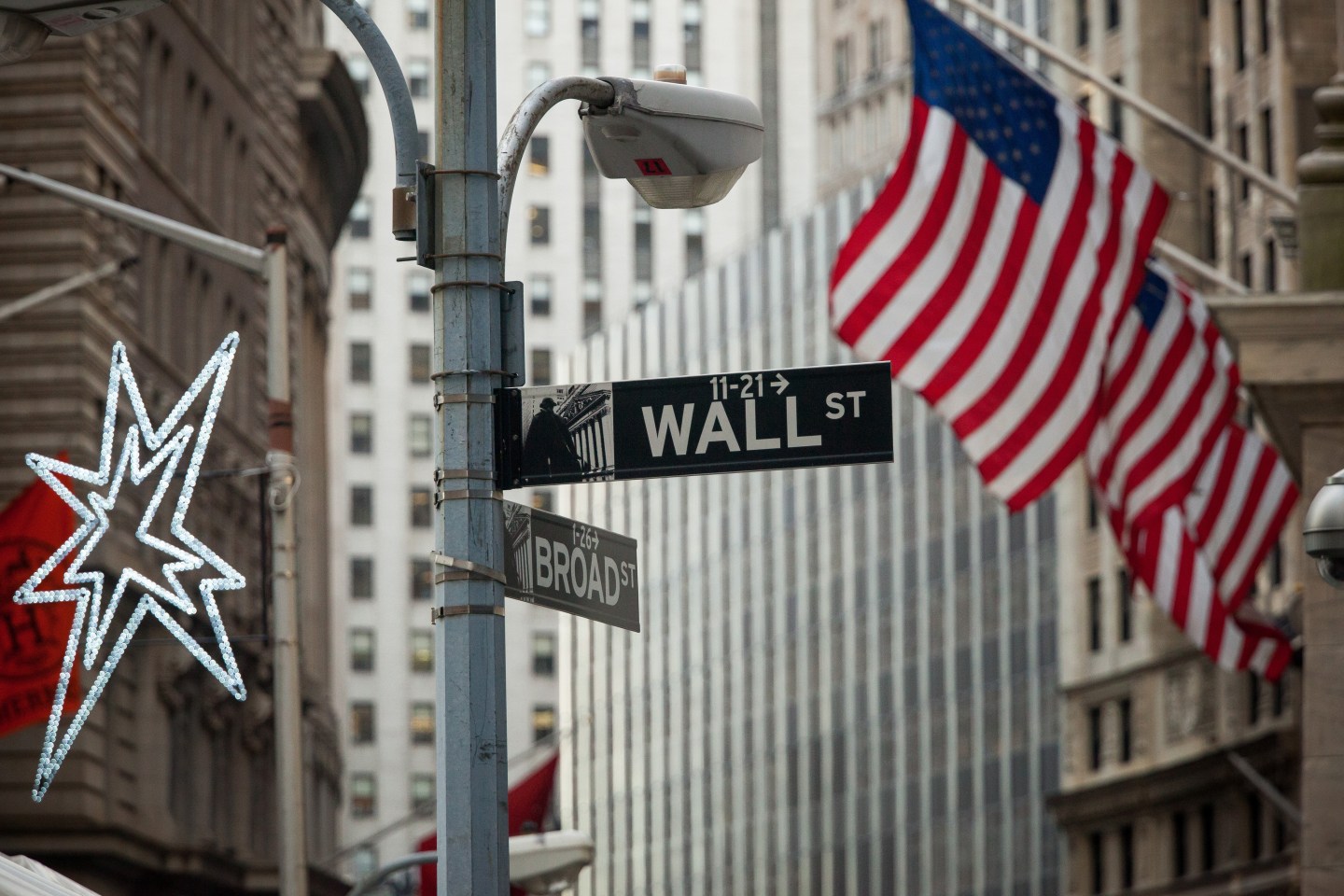
Trading At The NYSE As U.S. Stocks Rise Amid Payroll Gains
A Wall Street sign stands outside the New York Stock Exchange (NYSE) in New York, U.S., on Friday, Jan. 8, 2016. The Standard & Poor's 500 Index fluctuated near a three-month low as energy shares followed a retreat in crude, overshadowing early optimism on China's moves to restore calm to its sinking markets and data that showed U.S. payrolls surged more than expected in December. Photographer: Michael Nagle/Bloomberg via Getty ImagesPhotograph by Bloomberg via Getty Images

By most measures, the Paris climate talks last month were a success. In the end, 195 countries agreed to reduce their carbon emissions enough to limit global warming to 2.0°C. And rich nations agreed to pay poor countries that are vulnerable to climate change $100 billion per year by 2020. Separately, Bill Gates, along with a group of other wealthy individuals, pledged billions of dollars in new clean tech investments; 500 organizations agreed to purge their fossil fuels investments; 114 major companies committed themselves to emissions reduction targets; and 10 major cities announced plans for their own major carbon reductions.

This kind of progress has generated a lot of buzz and excitement, but several significant questions remain: Exactly where and how will this capital be invested? How will the carbon reductions be achieved and measured?

One important answer to these questions is that pension funds, insurance companies, college endowments and other big institutional investors should start to think differently about how to motivate the portfolio managers who run their money. How? By pricing carbon risk into the investment and asset management process and rewarding those who manage their assets for reducing carbon risk. Don’t wait for governmental or regulatory action, just set your own price and reduce your risk—now.

Carbon risk manifests in two forms. The first is the damage to humanity directly caused by greenhouse gas emissions. The second is the risk governments will introduce carbon taxes, cap and trade systems or other measures to prevent a climate catastrophe. Both impact investors, but the second will do so sooner and more dramatically than the first. In particular, the pioneering analyst group Carbon Tracker in London, has pointed out that such measures, if implemented, would have a significant negative impact across any investment portfolio that has not previously priced in this risk.

Investors constantly manage risk and allocate capital. They are paid to account for such things as interest rate risk, currency risk, country risk, and risk of default. They are asked to consider environmental, social and governance risks. But history suggests investors do a poor job of properly pricing systemic risks – such as the sub-prime crisis and carbon risk — into their investment decisions.

Large institutional investors commonly evaluate their portfolio managers based on performance against benchmarks. How those benchmarks are constructed dictates how they look at risk and allocate capital. If you want to incentivize them to invest explicitly in reducing carbon risk, which could include reducing emissions, then you should base some of their compensation on the degree to which their investments achieve that goal.

In the weeks since the global agreement, a growing number of investing institutions has asked the question: just how large is the carbon risk exposure in our investments? That is step one. Step two says, maybe we should assign some value to that risk. And step three becomes, how do I decrease my negative exposure and profit from it?

Virtually every investor and investment pool would do well to go through this process. How? By simply assigning an arbitrary price that reflects how much you value CO2 reductions and include it in your benchmark metrics for paying portfolio managers. To start, you can figure out how much carbon the companies in your portfolio are producing (it doesn¹t have to be perfect). Organizations like the Carbon Disclosure Project can help you figure this out. Then you set a target for how much you’d like to see carbon emissions reduced each year and multiple that by the carbon price you choose.

For example you might assign a price of $10/ton for carbon and at the end of the year for each ton saved you’d credit your managers in a way that treated that $10 exactly as if they had produced $10 more profit from the sale of an investment. Cut a 100,000 tons of carbon out of your portfolio and your managers get an extra $1 million toward their compensation benchmark. If you only see little carbon risk in your portfolio, your carbon price would be low; if you want higher reductions, you could set a higher price. But remember, you get what you pay for.

So what might you compensate your investment managers to do? Pay them to reduce your carbon risk by increasing your exposure to the following three types of investments:

1) Companies that have strong programs to reduce their own carbon exposure.

2) Technologies that directly reduce carbon, whether it’s renewable energy, efficiency, or more sustainable agricultural practices. These investments should increase in value as governments take action.

3) Investments that directly hedge carbon risk such as shorting coal or oil indices.

Such an effort can start small. Both Mr. Gates and other climate-related investment funds can test this idea by allocating a fraction of their venture capital or private equity portfolio to investment managers whose performance fees are based on both financial return and carbon reduction return (also measured in dollars based upon whatever carbon price and metrics the manager assigns). If this test succeeds it could be scaled across entire portfolios.

This opens up a whole new way of looking at investing. On a true risk-adjusted basis that takes carbon into account, investing in unsexy but solid businesses like sustainable palm oil farming or reducing leaking refrigerants (both which are massive contributors to climate change) may be as good as or better than investing, say, in Tesla.

Today, a lot of top investment talent is busy chasing unicorns. Instead, they could be building expertise in maximizing carbon return on investment. If their compensation includes a carbon metric, managers will be driven to uncover opportunities for greenhouse gas reduction while still making a financial return. Ultimately and most importantly, once investors start to voluntarily price their carbon risk, we will get a defacto market price for carbon without the need for government action.

Also, when investors focus on carbon risk, CEOs and management teams will get the message that their cost of capital will be based not only on profits but also on how they manage their carbon exposure. They will search for opportunities for immediate carbon reductions.

We hope the world’s leading investors will take this opportunity to show the market how much they value carbon reduction. It’s a simple step, but one with the potential to do more for climate change than a few billion dollars of new R&D investment ever could.

Martin L. Lagod is a Co-Founder and Managing Director at Firelake Capital. He serves on the board of the Advanced Energy Economy and is also a contributing writer for Resourcient, which promotes scalable investment in resource efficient businesses.


 

About the Author
By Martin L. Lagod
See full bioRight Arrow Button Icon

Latest in Commentary

Finance
Lorem ipsum dolor sit amet, consectetur adipiscing elit, sed do eiusmod tempor incididunt ut labore et dolore magna aliqua. Ut enim ad minim veniam
By Fortune Editors
October 20, 2025
Finance
Lorem ipsum dolor sit amet, consectetur adipiscing elit, sed do eiusmod tempor incididunt ut labore et dolore magna aliqua. Ut enim ad minim veniam
By Fortune Editors
October 20, 2025
Finance
Lorem ipsum dolor sit amet, consectetur adipiscing elit, sed do eiusmod tempor incididunt ut labore et dolore magna aliqua. Ut enim ad minim veniam
By Fortune Editors
October 20, 2025
Finance
Lorem ipsum dolor sit amet, consectetur adipiscing elit, sed do eiusmod tempor incididunt ut labore et dolore magna aliqua. Ut enim ad minim veniam
By Fortune Editors
October 20, 2025
Finance
Lorem ipsum dolor sit amet, consectetur adipiscing elit, sed do eiusmod tempor incididunt ut labore et dolore magna aliqua. Ut enim ad minim veniam
By Fortune Editors
October 20, 2025
Finance
Lorem ipsum dolor sit amet, consectetur adipiscing elit, sed do eiusmod tempor incididunt ut labore et dolore magna aliqua. Ut enim ad minim veniam
By Fortune Editors
October 20, 2025

Most Popular

Finance
Lorem ipsum dolor sit amet, consectetur adipiscing elit, sed do eiusmod tempor incididunt ut labore et dolore magna aliqua. Ut enim ad minim veniam
By Fortune Editors
October 20, 2025
Finance
Lorem ipsum dolor sit amet, consectetur adipiscing elit, sed do eiusmod tempor incididunt ut labore et dolore magna aliqua. Ut enim ad minim veniam
By Fortune Editors
October 20, 2025
Finance
Lorem ipsum dolor sit amet, consectetur adipiscing elit, sed do eiusmod tempor incididunt ut labore et dolore magna aliqua. Ut enim ad minim veniam
By Fortune Editors
October 20, 2025
Finance
Lorem ipsum dolor sit amet, consectetur adipiscing elit, sed do eiusmod tempor incididunt ut labore et dolore magna aliqua. Ut enim ad minim veniam
By Fortune Editors
October 20, 2025
Finance
Lorem ipsum dolor sit amet, consectetur adipiscing elit, sed do eiusmod tempor incididunt ut labore et dolore magna aliqua. Ut enim ad minim veniam
By Fortune Editors
October 20, 2025
Finance
Lorem ipsum dolor sit amet, consectetur adipiscing elit, sed do eiusmod tempor incididunt ut labore et dolore magna aliqua. Ut enim ad minim veniam
By Fortune Editors
October 20, 2025
Fortune Secondary Logo
Rankings
  • 100 Best Companies
  • Fortune 500
  • Global 500
  • Fortune 500 Europe
  • Most Powerful Women
  • Future 50
  • World’s Most Admired Companies
  • See All Rankings
Sections
  • Finance
  • Fortune Crypto
  • Features
  • Leadership
  • Health
  • Commentary
  • Success
  • Retail
  • Mpw
  • Tech
  • Lifestyle
  • CEO Initiative
  • Asia
  • Politics
  • Conferences
  • Europe
  • Newsletters
  • Personal Finance
  • Environment
  • Magazine
  • Education
Customer Support
  • Frequently Asked Questions
  • Customer Service Portal
  • Privacy Policy
  • Terms Of Use
  • Single Issues For Purchase
  • International Print
Commercial Services
  • Advertising
  • Fortune Brand Studio
  • Fortune Analytics
  • Fortune Conferences
  • Business Development
  • Group Subscriptions
About Us
  • About Us
  • Editorial Calendar
  • Press Center
  • Work At Fortune
  • Diversity And Inclusion
  • Terms And Conditions
  • Site Map
  • About Us
  • Editorial Calendar
  • Press Center
  • Work At Fortune
  • Diversity And Inclusion
  • Terms And Conditions
  • Site Map
  • Facebook icon
  • Twitter icon
  • LinkedIn icon
  • Instagram icon
  • Pinterest icon

Latest in Commentary

messi
CommentaryFlorida
Apollo and FC Barcelona just proved legacy markets are losing their grip on business
By Mike SimasApril 2, 2026
2 hours ago
kroenke
CommentarySoccer
Why American billionaires are abandoning Wall Street for English soccer clubs
By Andrés MartinezApril 2, 2026
4 hours ago
wyle
CommentaryTV
What HBO’s ‘The Pitt’ gets right—and wrong—about treating alcohol use disorder
By Jonathan Hunt-GlassmanApril 2, 2026
8 hours ago
nic
CommentaryInsider trading
Prediction markets caught insider traders in real time. Congress wants to shut them down anyway
By Nic PuckrinApril 2, 2026
9 hours ago
elon
CommentarySpaceX
The SpaceX IPO is great — but it won’t deliver 100x returns 
By Jeffrey StewartApril 1, 2026
23 hours ago
gary
Commentaryregulation
The biggest mistake CEOs make with AI has nothing to do with the technology
By Gary ShapiroApril 1, 2026
1 day ago

Most Popular

Gen Z fled San Francisco for Texas and Florida. Now they’re turning ‘welcomer cities’ into the next big tech towns
Real Estate
Gen Z fled San Francisco for Texas and Florida. Now they’re turning ‘welcomer cities’ into the next big tech towns
By Fortune EditorsApril 2, 2026
14 hours ago
Current price of gold as of April 1, 2026
Personal Finance
Current price of gold as of April 1, 2026
By Fortune EditorsApril 1, 2026
1 day ago
Two-thirds of parents say their adult Gen Z kids still rely on them financially  for support—even though it's putting them under strain
Success
Two-thirds of parents say their adult Gen Z kids still rely on them financially  for support—even though it's putting them under strain
By Fortune EditorsMarch 31, 2026
2 days ago
Current price of oil as of April 1, 2026
Personal Finance
Current price of oil as of April 1, 2026
By Fortune EditorsApril 1, 2026
1 day ago
The tax escape map: Billionaires are bolting for Florida from the West Coast and taking billions in tax revenue with them
Real Estate
The tax escape map: Billionaires are bolting for Florida from the West Coast and taking billions in tax revenue with them
By Fortune EditorsApril 2, 2026
15 hours ago
Deutsche Bank asked AI if it’s true that AI will solve the economy’s inflation problems. The robots answered
Economy
Deutsche Bank asked AI if it’s true that AI will solve the economy’s inflation problems. The robots answered
By Fortune EditorsApril 1, 2026
1 day ago

© 2026 Fortune Media IP Limited. All Rights Reserved. Use of this site constitutes acceptance of our Terms of Use and Privacy Policy | CA Notice at Collection and Privacy Notice | Do Not Sell/Share My Personal Information
FORTUNE is a trademark of Fortune Media IP Limited, registered in the U.S. and other countries. FORTUNE may receive compensation for some links to products and services on this website. Offers may be subject to change without notice.