• Home
  • Latest
  • Fortune 500
  • Finance
  • Tech
  • Leadership
  • Lifestyle
  • Rankings
  • Multimedia

Trendingnow

1

As Big Tech showers employees with perks to win the talent war, Nvidia built a nearly $5 trillion company by making people pay for their own lunch

2

MacKenzie Scott alone accounted for one-third of America's $19.2 billion in megagifts last year

3

Current price of oil as of July 1, 2026

1

As Big Tech showers employees with perks to win the talent war, Nvidia built a nearly $5 trillion company by making people pay for their own lunch

2

MacKenzie Scott alone accounted for one-third of America's $19.2 billion in megagifts last year

3

Current price of oil as of July 1, 2026
CommentaryDonald Trump

Why You’ve Already Made Up Your Mind About Donald Trump

By
Moran Cerf
Moran Cerf
Down Arrow Button Icon
By
Moran Cerf
Moran Cerf
Down Arrow Button Icon
January 28, 2016, 12:00 PM ET
US-VOTE-REPUBLICANS-DEBATE
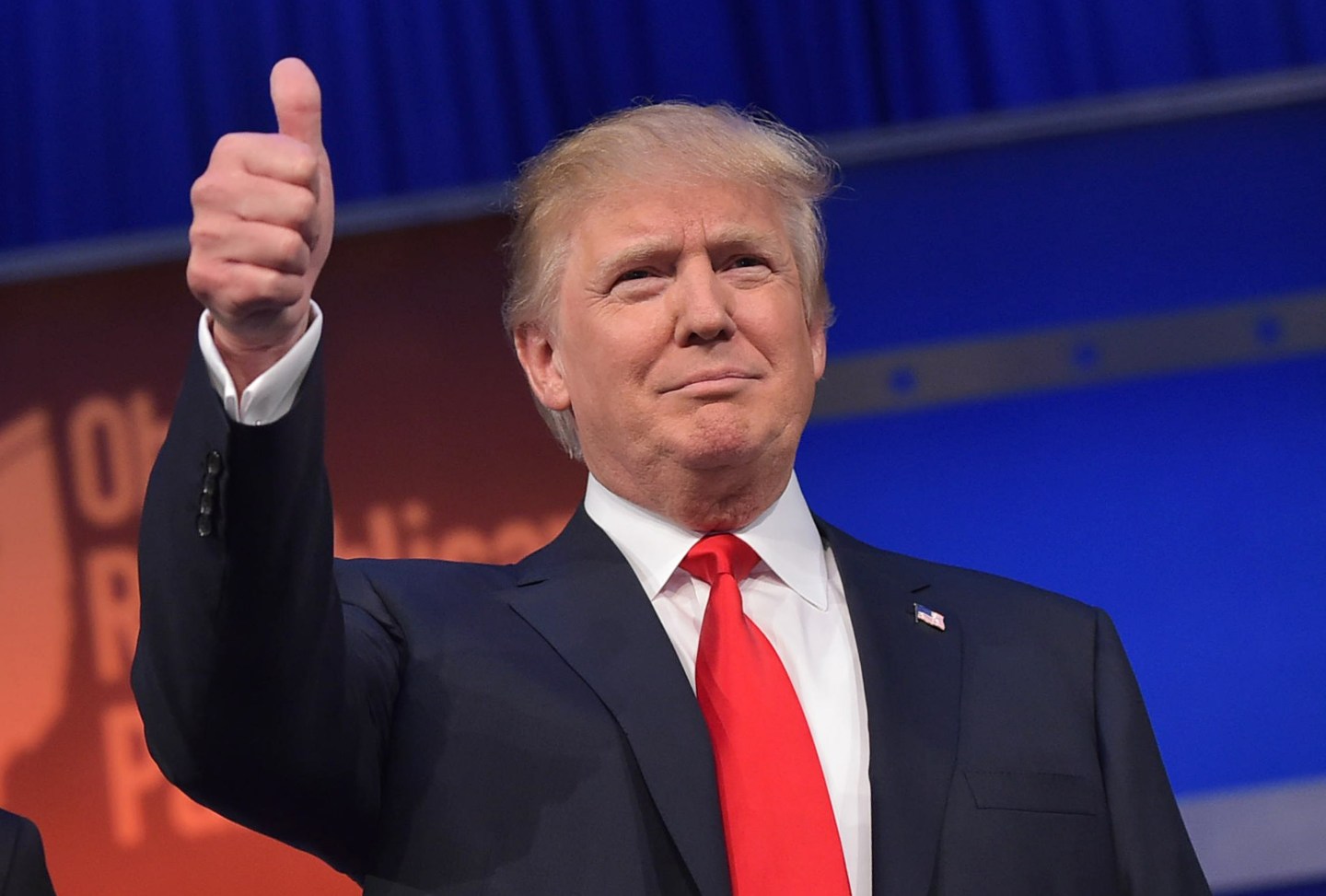
Real estate tycoon Donald Trump flashes the thumbs-up as he arrives on stage for the start of the prime time Republican presidential debate on August 6, 2015 at the Quicken Loans Arena in Cleveland, Ohio. AFP PHOTO/MANDEL NGAN (Photo credit should read MANDEL NGAN/AFP/Getty Images)Photograph by Mandel Ngan — AFP/Getty Images
Add Fortune on Google for similar content.

Millions of dollars pour into the political arena every week in an attempt to change people’s opinions and move them closer to one side or the other. But given that most voters make up their minds relatively early, they are largely unmoved by ongoing content, thanks to the way our brains filter what we hear — and it happens automatically. For tonight’s GOP debate, the brain’s “auto-correct” means that Republican presidential candidate Donald Trump could boycott the event and not change any minds one way or the other.

Here’s why: a recent neuroscience study shows that when people hear their favorite candidate speak, their brains will find a way to explain why everything he or she says is more engaging. At times, people must spend a lot more mental energy processing the content to align it with their views. But if a candidate they don’t like says the same thing, their brains filter that content through a different lens, to find that same message disturbing and alienating.

As a result, while polls, focus groups, surveys, and other sophisticated analytics may give clues as to whether anything nudges the voters, neuroscience can give candidates (and other “marketers”) clues about the types of content that are perceived to be acceptable or offensive. Needless to say, this does not end with politics. It is essentially true for many other situations in which we are confronted with opposing views or complex content.

This is backed by a neuroscience field study graduate students in business, neuroscience and engineering at Northwestern University’s Kellogg School of Management recently conducted involving brain reaction to messaging and content. Gathered together in one room to watch the televised Republican and Democratic presidential candidate debates earlier this month, 20 research participants wore special headgear to record their brain responses. As the candidates debated, neural data was collected to show how engaged the research participants’ brains were with the content and the effectiveness of some of the messages. Throughout the debate, another 40 participants in the same room were polled by researchers to rank who was winning. (Participants in the study were chosen following a survey identifying their political affinity to make sure they cover the full spectrum of political views)

Brain engagement (meaning how “active” brain waves were in certain areas, as well as how similar one brain was to another, when a favorite candidate spoke to his/her constituents) from research participants watching the Democratic debate on January 17 showed Hilary Clinton and Bernie Sanders to be tied (that is, in terms of the level of neural effort they conjured from Democrats’ brains). Martin O’Malley was a distant third. These results differed significantly from polling of the research participants—gathering their opinions after their subjective minds and brain filters weighed in—which showed Clinton as the clear winner, followed by Sanders and O’Malley. (This contrasts further with the pundits and media which called Sanders the winner.). Simply put, when Democrats listened to Clinton or Sanders speak their brains looked similar. At times, the content required more effort (in the form of increased focus, attention or engagement) to process. One interpretation is that the content might have sparked some internal debate within individuals, so that their brains worked harder to align with their conscious desire to rank Clinton and Sanders high.

For Republican candidates in the January 14 debate, the research results were even more surprising. Brain engagement data put Ted Cruz in first place, compared to fourth in the more subjective opinion polling of the research participants.

The same opinion polls ranked John Kasich first, followed by Jeb Bush, Ben Carson, and Ted Cruz. Trump, who did not show up in the top four in opinion polling, still ranked third in terms of how well he engaged the participants’ brains. (Trump was called the winner of the debate by the media, followed by Cruz.)


In looking at the issues, rather than individual candidates, in the Democratic debate, brain engagement was highest for immigration and terrorism, followed by elections and politics. Healthcare reform, which had sparked arguments between Clinton and Sanders in the debate, did not make the top four of the most brain-engaged topics. In the Republican debate, brain engagement sparked the most for the economy, terrorism, immigration, and guns, in that order.

Interestingly, terrorism and immigration had strong effects on participants’ brains for each party’s debate — which may very well reflect how emotionally charged these topics are for people, no matter what their opinions are on the subject.

The research was not meant to be predictive of the election. Rather, the purpose was to show the difference between neurological responses that show brain engagement (but before the brain “filter”) and subjective feedback from opinion polls (after the brain filter).

Admittedly, gathering and analyzing brain activity, as we have in other research using movie trailers and commercials, is expensive and requires neuroscience expertise. However, it’s easy to see why brain data might be especially insightful, compared to polling people’s subjective opinions. Brain data could show those moments and messages when people are most engaged. That, in turn, could inform candidates, marketers, or others trying to influence voters or other consumers how to best present information and positions for the most impact and engagement.

For any “campaign,” political or commercial, in which the stakes are high and the investment is large (for example on an ad in the upcoming Super Bowl, where every extra second increases the price by millions of dollars), brain data could prove far more insightful than traditional polling of consumers for their subjective opinions.

Moran Cerf is a professor of neuroscience and business at Kellogg School of Management at Northwestern University.


About the Author
By Moran Cerf
See full bioRight Arrow Button Icon
Add Fortune on Google for similar content.

Latest in Commentary

Finance
Lorem ipsum dolor sit amet, consectetur adipiscing elit, sed do eiusmod tempor incididunt ut labore et dolore magna aliqua. Ut enim ad minim veniam
By Fortune Editors
October 20, 2025
Finance
Lorem ipsum dolor sit amet, consectetur adipiscing elit, sed do eiusmod tempor incididunt ut labore et dolore magna aliqua. Ut enim ad minim veniam
By Fortune Editors
October 20, 2025
Finance
Lorem ipsum dolor sit amet, consectetur adipiscing elit, sed do eiusmod tempor incididunt ut labore et dolore magna aliqua. Ut enim ad minim veniam
By Fortune Editors
October 20, 2025
Finance
Lorem ipsum dolor sit amet, consectetur adipiscing elit, sed do eiusmod tempor incididunt ut labore et dolore magna aliqua. Ut enim ad minim veniam
By Fortune Editors
October 20, 2025
Finance
Lorem ipsum dolor sit amet, consectetur adipiscing elit, sed do eiusmod tempor incididunt ut labore et dolore magna aliqua. Ut enim ad minim veniam
By Fortune Editors
October 20, 2025
Finance
Lorem ipsum dolor sit amet, consectetur adipiscing elit, sed do eiusmod tempor incididunt ut labore et dolore magna aliqua. Ut enim ad minim veniam
By Fortune Editors
October 20, 2025

Most Popular

Finance
Lorem ipsum dolor sit amet, consectetur adipiscing elit, sed do eiusmod tempor incididunt ut labore et dolore magna aliqua. Ut enim ad minim veniam
By Fortune Editors
October 20, 2025
Finance
Lorem ipsum dolor sit amet, consectetur adipiscing elit, sed do eiusmod tempor incididunt ut labore et dolore magna aliqua. Ut enim ad minim veniam
By Fortune Editors
October 20, 2025
Finance
Lorem ipsum dolor sit amet, consectetur adipiscing elit, sed do eiusmod tempor incididunt ut labore et dolore magna aliqua. Ut enim ad minim veniam
By Fortune Editors
October 20, 2025
Finance
Lorem ipsum dolor sit amet, consectetur adipiscing elit, sed do eiusmod tempor incididunt ut labore et dolore magna aliqua. Ut enim ad minim veniam
By Fortune Editors
October 20, 2025
Finance
Lorem ipsum dolor sit amet, consectetur adipiscing elit, sed do eiusmod tempor incididunt ut labore et dolore magna aliqua. Ut enim ad minim veniam
By Fortune Editors
October 20, 2025
Finance
Lorem ipsum dolor sit amet, consectetur adipiscing elit, sed do eiusmod tempor incididunt ut labore et dolore magna aliqua. Ut enim ad minim veniam
By Fortune Editors
October 20, 2025
Fortune Secondary Logo
Rankings
  • 100 Best Companies
  • Fortune 500
  • Global 500
  • Fortune 500 Europe
  • Most Powerful Women
  • World's Most Admired Companies
  • See All Rankings
  • Lists Calendar
Sections
  • Finance
  • Fortune Crypto
  • Features
  • Leadership
  • Health
  • Commentary
  • Success
  • Retail
  • Mpw
  • Tech
  • Lifestyle
  • CEO Initiative
  • Asia
  • Politics
  • Conferences
  • Europe
  • Newsletters
  • Personal Finance
  • Environment
  • Magazine
  • Education
Customer Support
  • Frequently Asked Questions
  • Customer Service Portal
  • Privacy Policy
  • Terms Of Use
  • Single Issues For Purchase
  • International Print
Commercial Services
  • Advertising
  • Fortune Brand Studio
  • Fortune Analytics
  • Fortune Conferences
  • Business Development
  • Group Subscriptions
About Us
  • About Us
  • Press Center
  • Work At Fortune
  • Terms And Conditions
  • Site Map
  • About Us
  • Press Center
  • Work At Fortune
  • Terms And Conditions
  • Site Map
  • Facebook icon
  • Twitter icon
  • LinkedIn icon
  • Instagram icon
  • Pinterest icon

Latest in Commentary

rn
CommentaryCryptocurrency
Former Iran director at NSC: Crypto legislation is a ticket to sanctions evasion
By Richard NephewJuly 2, 2026
10 hours ago
m
Commentary250 Years of Innovation
McKinsey chairs: Building a more resilient industrial base may require $2 trillion in investment
By Eric Kutcher and Shubham SinghalJuly 2, 2026
10 hours ago
em
Commentary250 Years of Innovation
America’s 250th birthday has Elon Musk and a record IPO. Its 15th had Alexander Hamilton — and a stock market bubble
By Owen LamontJuly 2, 2026
14 hours ago
paramount
CommentaryAntitrust
How Paramount’s theater commitments could boost local economies across the nation
By Ike BrannonJuly 2, 2026
14 hours ago
elon
CommentaryChina
China has 400 private space companies. The West is barely paying attention
By Rainer ZitelmannJuly 2, 2026
16 hours ago
senate
CommentaryCongress
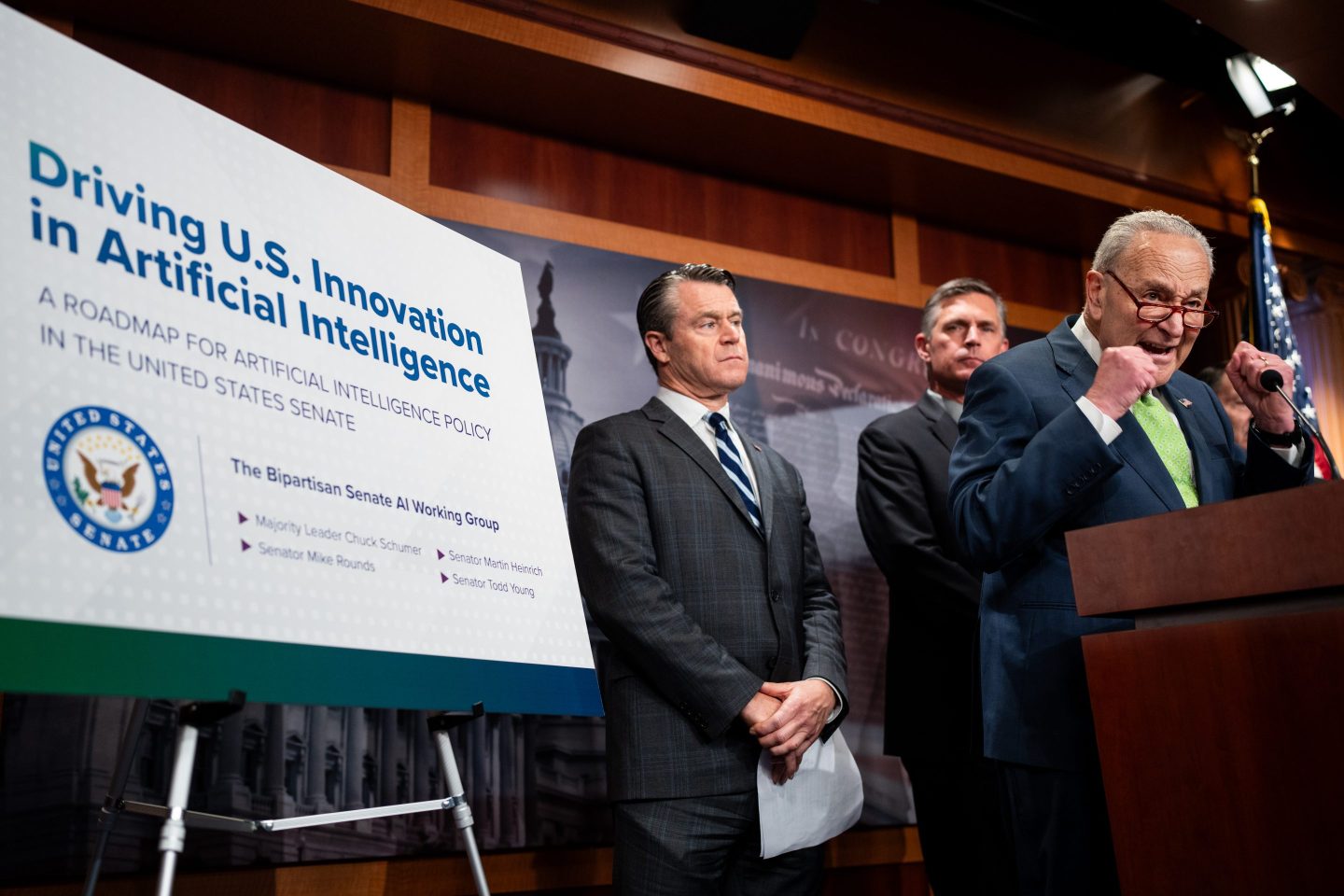
One rare bipartisan AI bill is moving through Congress. Here’s why it deserves to pass
By Neil Björkman and Betsy BrewerJuly 1, 2026
2 days ago

Most Popular

As Big Tech showers employees with perks to win the talent war, Nvidia built a nearly $5 trillion company by making people pay for their own lunch
Big Tech
As Big Tech showers employees with perks to win the talent war, Nvidia built a nearly $5 trillion company by making people pay for their own lunch
By Marco Quiroz-GutierrezJuly 1, 2026
2 days ago
MacKenzie Scott alone accounted for one-third of America's $19.2 billion in megagifts last year
Success
MacKenzie Scott alone accounted for one-third of America's $19.2 billion in megagifts last year
By Sydney LakeJune 25, 2026
8 days ago
Current price of oil as of July 1, 2026
Personal Finance
Current price of oil as of July 1, 2026
By Joseph HostetlerJuly 1, 2026
2 days ago
Today, Emily Blunt is worth $80 million thanks to her Hollywood career—but she actually wanted to be a UN Spanish translator on $80K
Success
Today, Emily Blunt is worth $80 million thanks to her Hollywood career—but she actually wanted to be a UN Spanish translator on $80K
By Orianna Rosa RoyleJuly 2, 2026
18 hours ago
Trump got a $78K pension from the Screen Actors Guild in 2025 because he appeared in Home Alone 2 in 1992
Politics
Trump got a $78K pension from the Screen Actors Guild in 2025 because he appeared in Home Alone 2 in 1992
By Sasha RogelbergJuly 1, 2026
1 day ago
Philanthropy leader at Warren Buffett and Bill Gates’ Giving Pledge says children of billionaires are pushing them to give their wealth away faster
Success
Philanthropy leader at Warren Buffett and Bill Gates’ Giving Pledge says children of billionaires are pushing them to give their wealth away faster
By Preston ForeJune 27, 2026
6 days ago

© 2026 Fortune Media IP Limited. All Rights Reserved. Use of this site constitutes acceptance of our Terms of Use and Privacy Policy | CA Notice at Collection and Privacy Notice | Do Not Sell/Share My Personal Information
FORTUNE is a trademark of Fortune Media IP Limited, registered in the U.S. and other countries. FORTUNE may receive compensation for some links to products and services on this website. Offers may be subject to change without notice.