• Home
  • Latest
  • Fortune 500
  • Finance
  • Tech
  • Leadership
  • Lifestyle
  • Rankings
  • Multimedia

Trendingnow

1

The U.S. spent $30 billion to ditch textbooks for laptops and tablets: The result is the first generation less cognitively capable than their parents

2

Current price of oil as of July 13, 2026

3

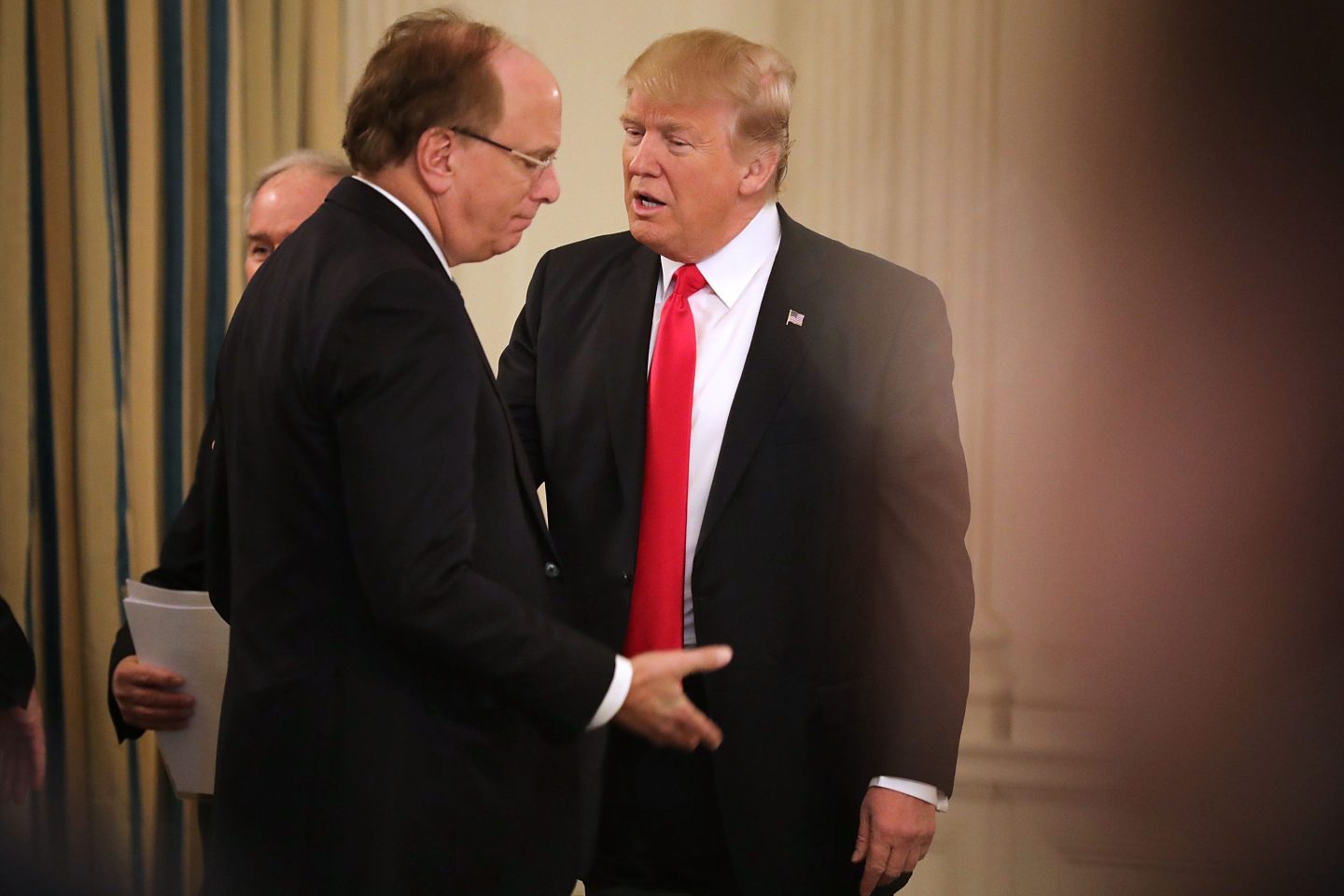
Trump embraces Australian retirement system backed by Larry Fink

1

The U.S. spent $30 billion to ditch textbooks for laptops and tablets: The result is the first generation less cognitively capable than their parents

2

Current price of oil as of July 13, 2026

3

Trump embraces Australian retirement system backed by Larry Fink
Commentary

Business Loses on Super Tuesday

By
Jeffrey E. Garten
Jeffrey E. Garten
Down Arrow Button Icon
By
Jeffrey E. Garten
Jeffrey E. Garten
Down Arrow Button Icon
March 2, 2016, 6:30 AM ET
Add Fortune on Google for similar content.

Tuesday’s big victories for Donald Trump and Hillary Clinton are just the start of an election year that will transform the Presidency, Congress, and, ultimately, the Supreme Court. Here’s an early prediction: no matter the final outcome, America’s largest companies will find themselves in troubled waters.

The winds of populism, protectionism and, in some cases xenophobia, are blowing in ways that we have not experienced in our lifetimes. The candidates are not just fanning these pernicious flames; indeed, they are also reflecting deep-seated forces in America today. Large swaths of the American electorate believe that the political establishment and almost all affiliated institutions, including big business, have failed them. Widening income inequalities, disillusionment with globalization, weariness about the costs of US leadership in the global arena, and a sense that the future no longer includes the upward mobility of the American Dream – all of these feelings won’t go away. All are also likely to negatively impact the environment in which big corporations have thrived.

It would be an error of historic proportions for big business to assume that it can control whoever is elected, or that it can limit the damage, or that any new president will tack towards the center. To think that way would be grossly underestimating the degree of anger and frustration in America today. Without an new grand strategy, based on a re-examination of many fundamental assumptions, America’s leading global companies could find themselves facing a world that is dramatically different from the one in which they have successfully operated.

Read more: Marco Rubio’s Super Tuesday Nightmare is Unfolding in Real-Time

Without confident US leadership, the global marketplace could become balkanized. Trade and financial treaties could come undone. State run enterprises could play a much bigger role than they do now. More fundamentally, without a strong and confident America at the helm, an open, liberal multilateral global economic system, supported by the rule of law and institutions such as the International Monetary Fund and World Trade Organization, will survive. After all, who would lead it – an authoritarian, state-capitalist China?

It would be challenging enough for US companies even if a new administration and congress were not inclined to jettison a policy framework that has worked very well for big business. Lets face it: the world economy has slowed down dramatically and could remain comatose for many years. The trajectory of international trade and financial flows is flattening out, trade negotiations have become problematic, and there is good reason to anticipate an era of competitive currency depreciations. Central banks are losing their credibility to stabilize economies, let alone to stimulate growth. The GDP of most emerging markets has gone into reverse gear. Sovereign debt is piling up everywhere. The bloom is off the China rose, at best, and at worst the Middle Kingdom may be on the edge of a serious crisis. The EU may not fall apart, but it could well be a shadow of itself just several years ago. Theft of intellectual property rights are still rampant and cybercrime is soaring. Global financial markets remain volatile and fragile, highly susceptible to a major debacle. This is hardly the time for the US to pull in its horns, allow the global framework for commerce to atrophy and open the door to centrifugal political forces.

In normal times, the agenda for big business in America is to focus on a relatively narrow agenda, such as certain tax concessions, certain provisions in trade agreements, and certain actions for regulatory relief, for example. Top companies would push for these policies on their own and through trade associations. The basic premise would be that the American capitalist system is intact, and that changes should be attempted within that system. But what if the premise is wrong? What if the very system we have assumed as a given is itself under attack by our own politicians?

Read more: Donald Trump Threatens House Speaker Paul Ryan

I believe that business should be planning for the worst political outcome. A new grand strategy is required that goes way beyond the usual lobbying. It has to be longer term and more extensive than the business community has undertaken since the early 1950s, when the business-dominated Committee on Economic Development devised a far reaching strategy to cooperate with the Truman and Eisenhower administrations. It can’t be just a rearguard action to maintain the status quo, but must incorporate some big changes from what now exists.

Here are some starting points:

It should figure out how to educate the American public on the benefits of an open multilateral global economy. This is a long-term process, but must begin now.

It should get behind political candidates for congress and for governorships that will pursue the most business-friendly policies toward the US in the world economy.

It should decide to support policies it can enact on its own to build a stronger, more entrepreneurial and more resilient U.S. economy including mitigating income disparities, such as the unilateral efforts of companies like Wal*Mart (WMT) and Aetna (AET) to raise wages of their employees. Big business should more constructively and pro-actively deal with other issues that the public is deeply concerned about, including major initiatives relating to challenges such as infrastructure and climate change.

There is a special opportunity when it comes to the all-important issue of trade. It is no longer enough to push for new trade agreements, such as the Trans Pacific Partnership (TPP.) The country needs an innovative domestic legislative counterpart that greatly enhances the ability of American workers to adjust to the impact of imports and outsourcing. This has to consist of bold new training and education initiatives, new forms of wage insurance, new investments in regional economic initiatives. Why can’t an organization such as the Business Roundtable be out front on such a broad –based plan?

Finally, big business should identify several dynamic CEOs –active or recently retired — who can lead this charge.

The signals are blinking red. Without a new manifesto and a new agenda, big business could be in big trouble.

Jeffrey E. Garten is dean emeritus at the Yale School of Management and former undersecretary of commerce for international trade. He is author of From Silk to Silicon: The Story of Globalization Through Ten Extraordinary Lives.


 

About the Author
By Jeffrey E. Garten
See full bioRight Arrow Button Icon
Add Fortune on Google for similar content.

Latest in Commentary

Finance
Lorem ipsum dolor sit amet, consectetur adipiscing elit, sed do eiusmod tempor incididunt ut labore et dolore magna aliqua. Ut enim ad minim veniam
By Fortune Editors
October 20, 2025
Finance
Lorem ipsum dolor sit amet, consectetur adipiscing elit, sed do eiusmod tempor incididunt ut labore et dolore magna aliqua. Ut enim ad minim veniam
By Fortune Editors
October 20, 2025
Finance
Lorem ipsum dolor sit amet, consectetur adipiscing elit, sed do eiusmod tempor incididunt ut labore et dolore magna aliqua. Ut enim ad minim veniam
By Fortune Editors
October 20, 2025
Finance
Lorem ipsum dolor sit amet, consectetur adipiscing elit, sed do eiusmod tempor incididunt ut labore et dolore magna aliqua. Ut enim ad minim veniam
By Fortune Editors
October 20, 2025
Finance
Lorem ipsum dolor sit amet, consectetur adipiscing elit, sed do eiusmod tempor incididunt ut labore et dolore magna aliqua. Ut enim ad minim veniam
By Fortune Editors
October 20, 2025
Finance
Lorem ipsum dolor sit amet, consectetur adipiscing elit, sed do eiusmod tempor incididunt ut labore et dolore magna aliqua. Ut enim ad minim veniam
By Fortune Editors
October 20, 2025

Most Popular

Finance
Lorem ipsum dolor sit amet, consectetur adipiscing elit, sed do eiusmod tempor incididunt ut labore et dolore magna aliqua. Ut enim ad minim veniam
By Fortune Editors
October 20, 2025
Finance
Lorem ipsum dolor sit amet, consectetur adipiscing elit, sed do eiusmod tempor incididunt ut labore et dolore magna aliqua. Ut enim ad minim veniam
By Fortune Editors
October 20, 2025
Finance
Lorem ipsum dolor sit amet, consectetur adipiscing elit, sed do eiusmod tempor incididunt ut labore et dolore magna aliqua. Ut enim ad minim veniam
By Fortune Editors
October 20, 2025
Finance
Lorem ipsum dolor sit amet, consectetur adipiscing elit, sed do eiusmod tempor incididunt ut labore et dolore magna aliqua. Ut enim ad minim veniam
By Fortune Editors
October 20, 2025
Finance
Lorem ipsum dolor sit amet, consectetur adipiscing elit, sed do eiusmod tempor incididunt ut labore et dolore magna aliqua. Ut enim ad minim veniam
By Fortune Editors
October 20, 2025
Finance
Lorem ipsum dolor sit amet, consectetur adipiscing elit, sed do eiusmod tempor incididunt ut labore et dolore magna aliqua. Ut enim ad minim veniam
By Fortune Editors
October 20, 2025
Fortune Secondary Logo
Rankings
  • 100 Best Companies
  • Fortune 500
  • Global 500
  • Fortune 500 Europe
  • Most Powerful Women
  • World's Most Admired Companies
  • See All Rankings
  • Lists Calendar
Sections
  • Finance
  • Fortune Crypto
  • Features
  • Leadership
  • Health
  • Commentary
  • Success
  • Retail
  • Mpw
  • Tech
  • Lifestyle
  • CEO Initiative
  • Asia
  • Politics
  • Conferences
  • Europe
  • Newsletters
  • Personal Finance
  • Environment
  • Magazine
  • Education
Customer Support
  • Frequently Asked Questions
  • Customer Service Portal
  • Privacy Policy
  • Terms Of Use
  • Single Issues For Purchase
  • International Print
Commercial Services
  • Advertising
  • Fortune Brand Studio
  • Fortune Analytics
  • Fortune Conferences
  • Business Development
  • Group Subscriptions
About Us
  • About Us
  • Press Center
  • Work At Fortune
  • Terms And Conditions
  • Site Map
  • About Us
  • Press Center
  • Work At Fortune
  • Terms And Conditions
  • Site Map
  • Facebook icon
  • Twitter icon
  • LinkedIn icon
  • Instagram icon
  • Pinterest icon

Latest in Commentary

b
CommentaryWorld Cup
Columbia Business School professors: What the Balogun red card can teach us about AI and judgment
By Oded Netzer, Christopher Frank and Paul MagnoneJuly 13, 2026
9 hours ago
usa
Commentary250 Years of Innovation
For 250 years, work defined American identity. That era Is ending
By Keith Ferrazzi and Wendy SmithJuly 11, 2026
3 days ago
m
Commentarymedicine
America’s bone health is quietly headed for a $19 billion crisis
By Matthew T. DrakeJuly 9, 2026
5 days ago
t
CommentaryEducation
AI is about to disrupt millions of jobs. A century ago, America’s answer was to build a new high school
By Tim KnowlesJuly 8, 2026
6 days ago
amit
CommentaryVenture Capital
Physical AI’s $50 trillion opportunity requires long-term conviction, but the payoff is huge 
By Amit ChaturvedyJuly 8, 2026
6 days ago
heat
Commentaryclimate change
McKinsey Global Institute: Climate planning has prioritized floods. Heat demands equal attention
By Sylvain Johansson, Mekala Krishnan, Kanmani Chockalingam and Annabel FarrJuly 7, 2026
7 days ago

Most Popular

The U.S. spent $30 billion to ditch textbooks for laptops and tablets: The result is the first generation less cognitively capable than their parents
Innovation
The U.S. spent $30 billion to ditch textbooks for laptops and tablets: The result is the first generation less cognitively capable than their parents
By Sasha RogelbergJuly 12, 2026
2 days ago
Current price of oil as of July 13, 2026
Personal Finance
Current price of oil as of July 13, 2026
By Joseph HostetlerJuly 13, 2026
14 hours ago
Trump embraces Australian retirement system backed by Larry Fink
Personal Finance
Trump embraces Australian retirement system backed by Larry Fink
By Brianna Sosa and BloombergJuly 12, 2026
1 day ago
Peter Thiel and other tech billionaires are publicly shielding their children from the products that made them rich
Big Tech
Peter Thiel and other tech billionaires are publicly shielding their children from the products that made them rich
By Marco Quiroz-GutierrezJuly 12, 2026
2 days ago
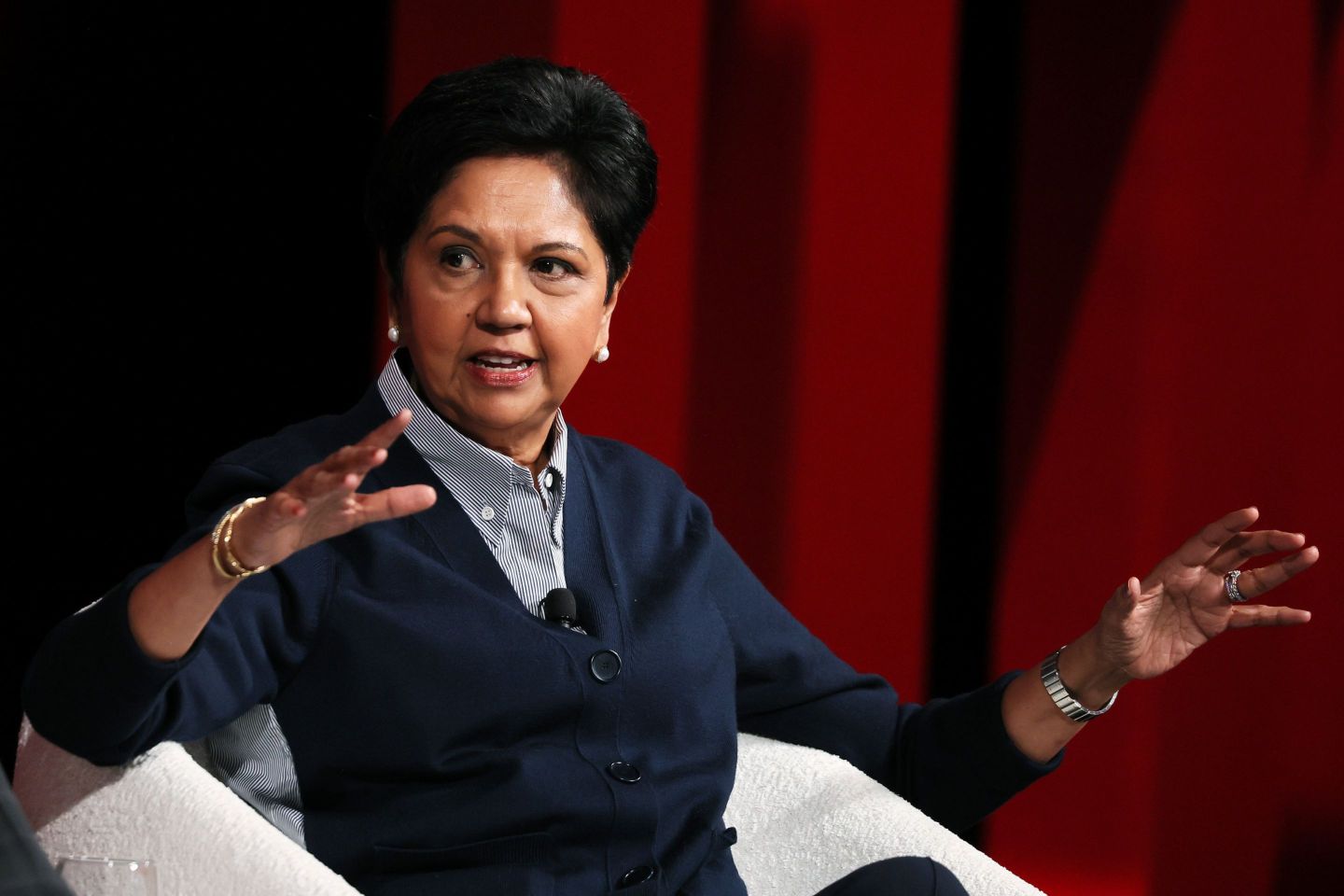
Ex-PepsiCo CEO Indra Nooyi worked from midnight until 5 a.m. as a receptionist to pay for her Yale degree—and she says ‘respect went up’ because of it
Success
Ex-PepsiCo CEO Indra Nooyi worked from midnight until 5 a.m. as a receptionist to pay for her Yale degree—and she says ‘respect went up’ because of it
By Preston ForeJuly 6, 2026
7 days ago
The U.S. and Iran can't agree on fully reopening the Strait of Hormuz. The solution could be straight out of the Old Testament
Middle East
The U.S. and Iran can't agree on fully reopening the Strait of Hormuz. The solution could be straight out of the Old Testament
By Jason MaJuly 11, 2026
2 days ago

© 2026 Fortune Media IP Limited. All Rights Reserved. Use of this site constitutes acceptance of our Terms of Use and Privacy Policy | CA Notice at Collection and Privacy Notice | Do Not Sell/Share My Personal Information
FORTUNE is a trademark of Fortune Media IP Limited, registered in the U.S. and other countries. FORTUNE may receive compensation for some links to products and services on this website. Offers may be subject to change without notice.