• Home
  • Latest
  • Fortune 500
  • Finance
  • Tech
  • Leadership
  • Lifestyle
  • Rankings
  • Multimedia

Trendingnow

1

The Bezos family just donated $100 million to help achieve one of Mayor Zohran Mamdani’s top campaign promises

2

Despite having a $165 million net worth, Scarlett Johansson says work-life balance doesn’t exist—and the first step to success is admitting that

3

Current price of oil as of May 15, 2026

1

The Bezos family just donated $100 million to help achieve one of Mayor Zohran Mamdani’s top campaign promises

2

Despite having a $165 million net worth, Scarlett Johansson says work-life balance doesn’t exist—and the first step to success is admitting that

3

Current price of oil as of May 15, 2026
Leadershipfracking

Aubrey McClendon Attracted Controversy, Outrage, and Lots of Natural Gas

By
Cyrus Sanati
Cyrus Sanati
Down Arrow Button Icon
By
Cyrus Sanati
Cyrus Sanati
Down Arrow Button Icon
March 3, 2016, 5:49 PM ET
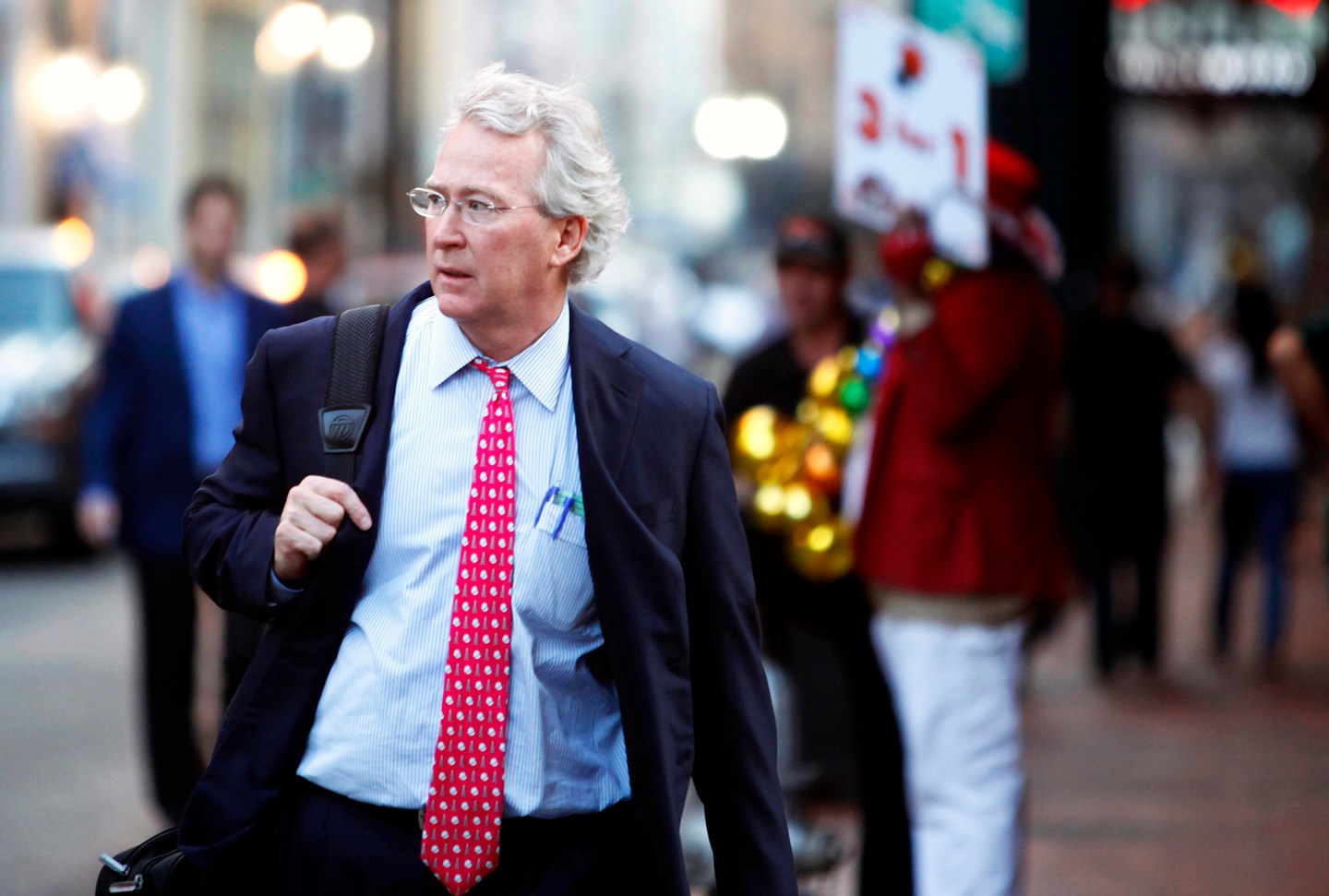
CEO, Chairman, and Co-founder of Chesapeake Energy Corporation McClendon walks through the French Quarter in New Orleans, Louisiana
Chief Executive Officer, Chairman, and Co-founder of Chesapeake Energy Corporation Aubrey McClendon walks through the French Quarter in New Orleans, Louisiana March 26, 2012. McClendon visited New Orleans while attending the Howard Weil Annual Energy Conference. REUTERS/Sean Gardner (UNITED STATES - Tags: BUSINESS ENERGY) - RTR2ZZ5RPhotograph by Sean Gardner — Reuters

Aubrey McClendon wasn’t an oil man—he wasn’t even a gas guy. No, McClendon was a numbers guy, an accountant, who, together with Wall Street bankers and investors, helped finance and drive one of the biggest booms (and busts) ever seen in the U.S. energy industry.

His death on Wednesday in a fiery car crash near his home in Oklahoma City at the age of 56 came just one day after the government indicted McClendon, accusing the energy magnate of bid rigging during the gas boom.

At the time, McClendon was chief executive of Chesapeake Energy (CHK), the company he helped found and later took public in the 1990s. It is unclear as of now if the two events are related or if it is just simply a tragic coincidence. But it would be unlike McClendon to sneak out in the middle of a fight. He vigorously defended himself on Monday, saying that the charges filed against him were “wrong and unprecedented.”

“Anyone who knows me, my business record and the industry in which I have worked for 35 years, knows that I could not be guilty of violating any antitrust laws,” McClendon said in a statement. “I am proud of my track record in this industry, and I will fight to prove my innocence and to clear my name.”

One thing you can say about McClendon was that he was a fighter. He had come under fire many times, by the government and by his own shareholders, over the years for various wrongdoings, but he never backed down. He always confronted the issue head on, walking away relatively unscathed after the battle. He was the Teflon CEO, nothing could stick to him, even when it was plain as day that he had acted inappropriately.

But contrary to McClendon’s assertion, few in the energy business were surprised to learn that he had been indicted. Whenever his name comes up in conversation down in Houston, for example, you usually get rolled eyes followed by a nasty comment about how he is a “crook,” or a “demagogue,” or some derivation of “self-absorbed narcissist.” He effectively replaced Ken Lay and Jeff Skilling, the former heads of Enron, as the slimiest of hucksters in the energy business.

But it wasn’t always that way. Before the financial crisis, McClendon was the energy industry’s Mark Zuckerberg. He was known as “Mr. Gas” and was praised for rebuilding America’s natural gas industry after years of neglect. But the crisis unveiled McClendon’s dark side, something he desperately wanted to keep under wraps.

In 2008, at the height of the market panic, McClendon received a margin call from Wall Street that shook his world. He apparently had been buying millions of dollars of Chesapeake stock over the years on margin from various brokers. When Chesapeake’s shares unexpectedly dropped, he was left totally exposed. To meet the margin call, McClendon had to sell 94% of his Chesapeake shares, which at one point was estimated to be worth around $3 billion, in a fire sale for around $600 million. Selling such a large chunk of stock into a weak market caused Chesapeake’s already distressed shares to fall an additional 40%.

Chesapeake’s shareholders got hosed when McClendon dumped his stock. But McClendon ended up alright. Chesapeake awarded McClendon with a $75 million bonus in 2008 for a job well done. Along with his salary, McClendon took home a total of $112.5 million that year, making him the highest paid CEO in the country in 2008, a year the company’s stock fell 60%. Oh, and the company also graciously bought his antique map collection that year for $12.1 million because, as the company said in a regulatory filing, the maps complemented “the interior design features of our campus buildings” and contributed “to our workplace culture.”

Shareholders eventually sued, forcing McClendon to pay back the $12.1 million (he also got his maps back). The settlement with shareholders also restricted senior management from holding company stock in margin accounts or engaging in any sort of speculative trades using Chesapeake shares. That’s a pretty good rule, especially for executives who have inside knowledge of the company’s operations.

McClendon’s name was tarnished, but it wasn’t totally sullied at that point. Nevertheless, he made some serious enemies in Washington. Senator Bernie Sanders of Vermont, who is seeking the Democratic nomination for president this year, was probably his biggest nemesis. In 2011, Sanders revealed confidential data given to him by the Commodity Futures Trading Commission showing that McClendon and his business partner held huge positions in natural gas futures in June 2008, when natural gas prices were at their peak.

It was later revealed in a damning Reuters expose that from 2004 to 2008, when natural gas prices had exploded to record highs, McClendon was running a $200 million natural gas hedge fund on the side which, apparently, he never officially disclosed to his board or to Chesapeake investors. The fact that McClendon was making bets on the price of natural gas while he was also the chief executive of the second-largest natural gas producer in the country raised some serious questions of conflict-of-interest.

But McClendon’s biggest faux pas happened after 2008. Energy prices had crashed during the financial crisis, especially natural gas, which went from trading around $10 to $12 per MMbtu (one million British Thermal Units) in 2007 and 2008 to around $2 to $3 per MMbtu in 2009. Unlike oil prices, which quickly recovered, natural gas prices remained depressed through the year. There was, as it turned out, a major oversupply problem in the gas markets.

The amount of natural gas in storage continued to build and build throughout 2009 and 2010. But instead of cutting back on production, McClendon just kept on pumping at full blast. This was his worst mistake. In an earnings call with analysts in August 2009, McClendon assured Wall Street that gas prices would rise to between $6 and $8 per MMbtu by the summer of 2010.

That didn’t happen. Natural gas continues to trade at around $2 to $3 per MMbtu to this day—seven years later. It is unclear why McClendon or other Chesapeake executives didn’t see the writing on the wall. By 2009, and certainly by 2010, it was fairly clear that the market was going to remain oversupplied for a while. Pioneer Natural Resources, for example, realized as early as 2007 that there was too much supply hitting the market and chose to diversify its holding away from gas into oil.

To be sure, there was nothing criminal about McClendon’s bullish view on natural gas—it was just wrong, very wrong. Indeed, he believed it so much that from 2009 to 2012, he “borrowed” between $1.1 billion and $1.3 billion from shell companies linked to Chesapeake to buy personal stakes in various natural gas wells. These “loans” were apparently an executive perk called the Founders Well Participation Program, which was not disclosed to shareholders. The fact that he was borrowing against the same wells that he was using as collateral for undisclosed “loans” from Chesapeake was the final straw for Chesapeake’s beleaguered shareholders.

In 2013, Chesapeake announced that McClendon would step down. Later that year, he started up a new gas venture on his own called American Energy Partners. Despite the weak natural gas prices and all his previous shenanigans, by 2014, McClendon had managed to raise $14 billion in private funding to acquire thousands of acres of land in the gas-heavy Marcellus and Utica shale. It’s too bad he won’t be around to see if those investments pay off. But love him or hate him, McClendon helped put the U.S. on the road to energy independence by getting investors excited about natural gas again. The U.S. now has so much gas it has started to export it. It is hard to see how that could have happened if it weren’t for McClendon’s aggressive drilling and pro-gas agenda.

About the Author
By Cyrus Sanati
See full bioRight Arrow Button Icon

Latest in Leadership

Finance
Lorem ipsum dolor sit amet, consectetur adipiscing elit, sed do eiusmod tempor incididunt ut labore et dolore magna aliqua. Ut enim ad minim veniam
By Fortune Editors
October 20, 2025
Finance
Lorem ipsum dolor sit amet, consectetur adipiscing elit, sed do eiusmod tempor incididunt ut labore et dolore magna aliqua. Ut enim ad minim veniam
By Fortune Editors
October 20, 2025
Finance
Lorem ipsum dolor sit amet, consectetur adipiscing elit, sed do eiusmod tempor incididunt ut labore et dolore magna aliqua. Ut enim ad minim veniam
By Fortune Editors
October 20, 2025
Finance
Lorem ipsum dolor sit amet, consectetur adipiscing elit, sed do eiusmod tempor incididunt ut labore et dolore magna aliqua. Ut enim ad minim veniam
By Fortune Editors
October 20, 2025
Finance
Lorem ipsum dolor sit amet, consectetur adipiscing elit, sed do eiusmod tempor incididunt ut labore et dolore magna aliqua. Ut enim ad minim veniam
By Fortune Editors
October 20, 2025
Finance
Lorem ipsum dolor sit amet, consectetur adipiscing elit, sed do eiusmod tempor incididunt ut labore et dolore magna aliqua. Ut enim ad minim veniam
By Fortune Editors
October 20, 2025

Most Popular

Finance
Lorem ipsum dolor sit amet, consectetur adipiscing elit, sed do eiusmod tempor incididunt ut labore et dolore magna aliqua. Ut enim ad minim veniam
By Fortune Editors
October 20, 2025
Finance
Lorem ipsum dolor sit amet, consectetur adipiscing elit, sed do eiusmod tempor incididunt ut labore et dolore magna aliqua. Ut enim ad minim veniam
By Fortune Editors
October 20, 2025
Finance
Lorem ipsum dolor sit amet, consectetur adipiscing elit, sed do eiusmod tempor incididunt ut labore et dolore magna aliqua. Ut enim ad minim veniam
By Fortune Editors
October 20, 2025
Finance
Lorem ipsum dolor sit amet, consectetur adipiscing elit, sed do eiusmod tempor incididunt ut labore et dolore magna aliqua. Ut enim ad minim veniam
By Fortune Editors
October 20, 2025
Finance
Lorem ipsum dolor sit amet, consectetur adipiscing elit, sed do eiusmod tempor incididunt ut labore et dolore magna aliqua. Ut enim ad minim veniam
By Fortune Editors
October 20, 2025
Finance
Lorem ipsum dolor sit amet, consectetur adipiscing elit, sed do eiusmod tempor incididunt ut labore et dolore magna aliqua. Ut enim ad minim veniam
By Fortune Editors
October 20, 2025
Fortune Secondary Logo
Rankings
  • 100 Best Companies
  • Fortune 500
  • Global 500
  • Fortune 500 Europe
  • Most Powerful Women
  • World's Most Admired Companies
  • See All Rankings
  • Lists Calendar
Sections
  • Finance
  • Fortune Crypto
  • Features
  • Leadership
  • Health
  • Commentary
  • Success
  • Retail
  • Mpw
  • Tech
  • Lifestyle
  • CEO Initiative
  • Asia
  • Politics
  • Conferences
  • Europe
  • Newsletters
  • Personal Finance
  • Environment
  • Magazine
  • Education
Customer Support
  • Frequently Asked Questions
  • Customer Service Portal
  • Privacy Policy
  • Terms Of Use
  • Single Issues For Purchase
  • International Print
Commercial Services
  • Advertising
  • Fortune Brand Studio
  • Fortune Analytics
  • Fortune Conferences
  • Business Development
  • Group Subscriptions
About Us
  • About Us
  • Press Center
  • Work At Fortune
  • Terms And Conditions
  • Site Map
  • About Us
  • Press Center
  • Work At Fortune
  • Terms And Conditions
  • Site Map
  • Facebook icon
  • Twitter icon
  • LinkedIn icon
  • Instagram icon
  • Pinterest icon

Latest in Leadership

cyborg
Future of WorkProductivity
AI’s cyborg problem: you have to embrace it to really succeed but 90% of people can’t or don’t want to
By Nick LichtenbergMay 16, 2026
26 minutes ago
connor vukelich
Future of WorkGen Z
Meet the 20-year-old CEO who launched a company in high school to solve Gen Z’s entry-level job crisis
By Jake AngeloMay 16, 2026
1 hour ago
IDEO invented ‘human-centered design.’ Can it survive an AI world where everything looks the same?
Asiadesign thinking
IDEO invented ‘human-centered design.’ Can it survive an AI world where everything looks the same?
By Nicholas GordonMay 16, 2026
3 hours ago
alex
Future of WorkGen Z
Leaders, stop with the Gen Z generalizations 
By Alex CooperMay 16, 2026
3 hours ago
America’s productivity boom started before AI, and a Stanford economist who decoded the Great Resignation says working from home is the reason why
Future of Workremote work
America’s productivity boom started before AI, and a Stanford economist who decoded the Great Resignation says working from home is the reason why
By Marco Quiroz-GutierrezMay 15, 2026
13 hours ago
texas
North AmericaHousing
The new American Dream doesn’t live in a big city. It lives in Celina, Texas
By Nick LichtenbergMay 15, 2026
17 hours ago

Most Popular

The Bezos family just donated $100 million to help achieve one of Mayor Zohran Mamdani’s top campaign promises
Politics
The Bezos family just donated $100 million to help achieve one of Mayor Zohran Mamdani’s top campaign promises
By Jake AngeloMay 12, 2026
4 days ago
Despite having a $165 million net worth, Scarlett Johansson says work-life balance doesn’t exist—and the first step to success is admitting that
Success
Despite having a $165 million net worth, Scarlett Johansson says work-life balance doesn’t exist—and the first step to success is admitting that
By Preston ForeMay 13, 2026
3 days ago
Current price of oil as of May 15, 2026
Personal Finance
Current price of oil as of May 15, 2026
By Joseph HostetlerMay 15, 2026
21 hours ago
Nearly 50,000 Lake Tahoe residents have to find a new power source after their energy source looks to redirect lines to data centers
Travel & Leisure
Nearly 50,000 Lake Tahoe residents have to find a new power source after their energy source looks to redirect lines to data centers
By Catherina GioinoMay 12, 2026
4 days ago
The airplane fuel shortage is a myth propagated by airlines who want to cancel unprofitable flights, says private jet CEO
Energy
The airplane fuel shortage is a myth propagated by airlines who want to cancel unprofitable flights, says private jet CEO
By Jim EdwardsMay 14, 2026
2 days ago
Top economist says $39 trillion national debt leaves government worse prepared for recession than ever
Economy
Top economist says $39 trillion national debt leaves government worse prepared for recession than ever
By Eva RoytburgMay 14, 2026
2 days ago

© 2026 Fortune Media IP Limited. All Rights Reserved. Use of this site constitutes acceptance of our Terms of Use and Privacy Policy | CA Notice at Collection and Privacy Notice | Do Not Sell/Share My Personal Information
FORTUNE is a trademark of Fortune Media IP Limited, registered in the U.S. and other countries. FORTUNE may receive compensation for some links to products and services on this website. Offers may be subject to change without notice.