• Home
  • Latest
  • Fortune 500
  • Finance
  • Tech
  • Leadership
  • Lifestyle
  • Rankings
  • Multimedia

Trendingnow

1

Microsoft AI chief gives it 18 months—for all white-collar work to be automated by AI

2

Despite having a $165 million net worth, Scarlett Johansson says work-life balance doesn’t exist—and the first step to success is admitting that

3

The Bezos family just donated $100 million to help achieve one of Mayor Zohran Mamdani’s top campaign promises

1

Microsoft AI chief gives it 18 months—for all white-collar work to be automated by AI

2

Despite having a $165 million net worth, Scarlett Johansson says work-life balance doesn’t exist—and the first step to success is admitting that

3

The Bezos family just donated $100 million to help achieve one of Mayor Zohran Mamdani’s top campaign promises
Leadership

How Wisconsin’s New Voter ID Law Might Affect Tuesday’s Primary

By
Liz Olson
Liz Olson
Down Arrow Button Icon
By
Liz Olson
Liz Olson
Down Arrow Button Icon
April 4, 2016, 3:07 PM ET
US-VOTE-ELECTION
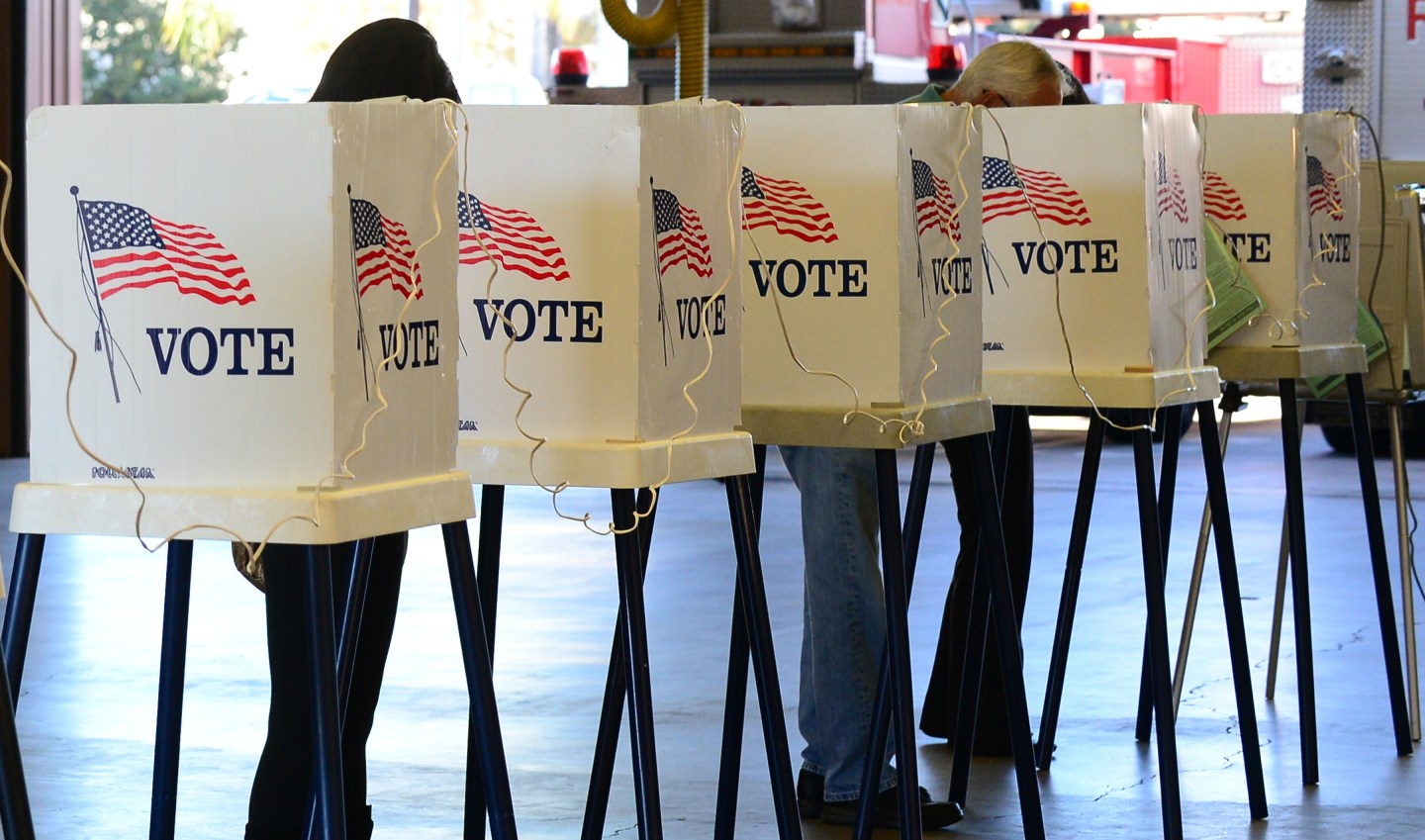
Citizens vote on Election Day at Fire Station #71 in Alhambra, Los Angeles County, on November 6, 2012 in California, as Americans flock to the polls nationwide to decide between President Barack Obama, his Rebuplican challenger Mitt Romney, and a wide range of other issues. Alhambra is one of 6 cities in California's 49th Assembly District, the state's first legislative district where Asian-Americans make up the majority of the population. AFP PHOTO / Frederic J. BROWN (Photo credit should read FREDERIC J. BROWN/AFP/Getty Images)Photograph by Frederic J. Brown—AFP/Getty Images

One of the most cherished and hard-won aspects of American democracy has been the right of individuals to vote. While it wasn’t always easy or even possible for every voting-age citizen to cast a ballot, laws like the Voting Rights Act of 1965 helped level the playing field—seemingly forever. But the current primary season is testing the fundamental right in a way that has been little seen in recent decades.

A major test is in Wisconsin, where citizens are set to cast their ballots in Tuesday’s Republican and Democratic presidential primaries. For the first time, its 4.5 million voting-age citizens will face strict new photo identification requirements that, according to critics, could limit or even nullify the ability to cast a vote. Making the issue of enfranchisement more fraught, there had been a lack of state funds for a public service announcement campaign meant to educate voters about the new requirement.

Five years ago, Wisconsin lawmakers invoked worries about fraudulent voting to justify passing legislation that requires citizens to show official identification before they can enter the polling booth. Since then, the law has been tied up in years of legal challenges—reaching as far as the U.S. Supreme Court—which has delayed its implementation until now.

Once known as a bastion of progressive government, Wisconsin was among several states that cracked down on poll access after the 2008 election, where an unexpected surge in turnout among African-Americans and young voters undercut the white, middle-class core voting demographic.

Well over half the states weighed adding more voter restrictions, inspiring criticism that—in the absence of provable cases of widespread fraud—states were simply trying to reshape the voting pool.

Such efforts have been criticized by civil liberties groups as being modern-day equivalents of the poll taxes and literacy tests that in the past singled out poor, mostly African-American citizens, particularly in southern states. In the era of the country’s founding fathers, the right to vote was restricted to white, property-owning men. Since then, ensuring that voting became and remained a basic constitutional right has been hailed as one of the country’s signature accomplishments.

For many years, a number of states have required voters to present some kind of identification, but the required documents have often been as basic as a current utility bill or a bank statement. Sometimes people showed a driver’s license. But it was not until 10 years ago that Indiana became the first state to require government-issued photo identification—a law that was upheld by the U.S. Supreme Court in 2008.

That judicial seal of approval opened the floodgates for other states to erect new voting parameters. Wisconsin and seven other states—Indiana, Georgia, Kansas, Mississippi, North Dakota, Tennessee, Virginia, and Texas—adopted the most stringent curbs.

Wisconsin’s measure, signed into law by Republican governor Scott Walker in 2011, requires voters to show valid photo identification before they can cast a ballot. The identification must be a current or recently expired Wisconsin driver’s license; a U.S. passport; a photo identification issued by the military, Indian tribe, or certain state colleges; or a recent certificate of naturalization.


While the majority of citizens have a form of identification, many on the lower-income rungs—especially those who do not drive—cannot easily obtain such credentials. The Brennan Center for Justice at New York University, which studies voting rights, has estimated that some 11% of the country’s voting age citizens do not have qualifying photo identification.

How that will reshape the current primary election campaign is hard to gauge.

Despite the talk of voter fraud, there have been few prosecutions of it. But allowing relatively unfettered voting has had undeniable effects, especially in 2008 when minority and youth voters flocked to the voting booth in unexpected numbers. This helped Barack Obama win North Carolina’s cache of electoral votes and become the first Democrat to carry the state in more than three decades.

In 2013, North Carolina’s legislature passed new voter identification regulations. Today they are being fought in federal court, and the presiding federal judge declined to block them during the recent March 25 presidential primaries. In order to cast a ballot, voters had to show one of six types of identification or file a provisional ballot, which requires a level voter follow-up that decreases the likelihood that such votes will be counted as valid.

The larger question is whether voting identification requirements will discourage young, poor and marginalized citizens from voting. Wisconsin will serve as a representative petri dish in this regard. The state’s statistics, according to the U.S. Census Bureau, roughly mirror the country. In Wisconsin, slightly more than 86% of its eligible voters are white, and 11% are either African-American or Hispanic. Wisconsin’s poverty rate is a little over 11%, household income around $53,000, and one-third of voting-age residents have a college degree, all on par with the rest of the country.

During the 2012 trial challenging the law, experts disagreed over the number of voters who would be affected by Wisconsin’s stringent requirements, in part because there is so little past data to go on. How much the new laws will curb or reshape voter turnout is unknown, Richard L. Hasen, a professor at University of California’s Irvine School of Law, recently told Pacific Standard.

“But there’s no question that in a very close election, they could be enough to make a difference in the outcome,” said Hansen, who has written several election-related books, including, The Voting Wars: From Florida 2000 to the Next Election Meltdown.

Wisconsin voters will soon get an opportunity to see how voting limits shape the state’s primary outcomes. And many more voters will be confronted with the same issue as soon as November’s general election. The turnouts will be higher and the stakes greater—and the limits perhaps more measurable—in key states like Texas.
About the Author
By Liz Olson
See full bioRight Arrow Button Icon

Latest in Leadership

Finance
Lorem ipsum dolor sit amet, consectetur adipiscing elit, sed do eiusmod tempor incididunt ut labore et dolore magna aliqua. Ut enim ad minim veniam
By Fortune Editors
October 20, 2025
Finance
Lorem ipsum dolor sit amet, consectetur adipiscing elit, sed do eiusmod tempor incididunt ut labore et dolore magna aliqua. Ut enim ad minim veniam
By Fortune Editors
October 20, 2025
Finance
Lorem ipsum dolor sit amet, consectetur adipiscing elit, sed do eiusmod tempor incididunt ut labore et dolore magna aliqua. Ut enim ad minim veniam
By Fortune Editors
October 20, 2025
Finance
Lorem ipsum dolor sit amet, consectetur adipiscing elit, sed do eiusmod tempor incididunt ut labore et dolore magna aliqua. Ut enim ad minim veniam
By Fortune Editors
October 20, 2025
Finance
Lorem ipsum dolor sit amet, consectetur adipiscing elit, sed do eiusmod tempor incididunt ut labore et dolore magna aliqua. Ut enim ad minim veniam
By Fortune Editors
October 20, 2025
Finance
Lorem ipsum dolor sit amet, consectetur adipiscing elit, sed do eiusmod tempor incididunt ut labore et dolore magna aliqua. Ut enim ad minim veniam
By Fortune Editors
October 20, 2025

Most Popular

Finance
Lorem ipsum dolor sit amet, consectetur adipiscing elit, sed do eiusmod tempor incididunt ut labore et dolore magna aliqua. Ut enim ad minim veniam
By Fortune Editors
October 20, 2025
Finance
Lorem ipsum dolor sit amet, consectetur adipiscing elit, sed do eiusmod tempor incididunt ut labore et dolore magna aliqua. Ut enim ad minim veniam
By Fortune Editors
October 20, 2025
Finance
Lorem ipsum dolor sit amet, consectetur adipiscing elit, sed do eiusmod tempor incididunt ut labore et dolore magna aliqua. Ut enim ad minim veniam
By Fortune Editors
October 20, 2025
Finance
Lorem ipsum dolor sit amet, consectetur adipiscing elit, sed do eiusmod tempor incididunt ut labore et dolore magna aliqua. Ut enim ad minim veniam
By Fortune Editors
October 20, 2025
Finance
Lorem ipsum dolor sit amet, consectetur adipiscing elit, sed do eiusmod tempor incididunt ut labore et dolore magna aliqua. Ut enim ad minim veniam
By Fortune Editors
October 20, 2025
Finance
Lorem ipsum dolor sit amet, consectetur adipiscing elit, sed do eiusmod tempor incididunt ut labore et dolore magna aliqua. Ut enim ad minim veniam
By Fortune Editors
October 20, 2025
Fortune Secondary Logo
Rankings
  • 100 Best Companies
  • Fortune 500
  • Global 500
  • Fortune 500 Europe
  • Most Powerful Women
  • World's Most Admired Companies
  • See All Rankings
  • Lists Calendar
Sections
  • Finance
  • Fortune Crypto
  • Features
  • Leadership
  • Health
  • Commentary
  • Success
  • Retail
  • Mpw
  • Tech
  • Lifestyle
  • CEO Initiative
  • Asia
  • Politics
  • Conferences
  • Europe
  • Newsletters
  • Personal Finance
  • Environment
  • Magazine
  • Education
Customer Support
  • Frequently Asked Questions
  • Customer Service Portal
  • Privacy Policy
  • Terms Of Use
  • Single Issues For Purchase
  • International Print
Commercial Services
  • Advertising
  • Fortune Brand Studio
  • Fortune Analytics
  • Fortune Conferences
  • Business Development
  • Group Subscriptions
About Us
  • About Us
  • Press Center
  • Work At Fortune
  • Terms And Conditions
  • Site Map
  • About Us
  • Press Center
  • Work At Fortune
  • Terms And Conditions
  • Site Map
  • Facebook icon
  • Twitter icon
  • LinkedIn icon
  • Instagram icon
  • Pinterest icon

Latest in Leadership

tarot
AICulture
We talked to 12 tarot card readers who are using AI. They split in 2 camps, with big implications for the technology
By Ziv Epstein, Farnaz Jahanbakhsh, Vana Goblot and The ConversationMay 16, 2026
8 hours ago
mustafa suleyman
AIMicrosoft
Microsoft AI chief gives it 18 months—for all white-collar work to be automated by AI
By Jake AngeloMay 16, 2026
11 hours ago
Kevin O'Leary wears a suit and gestures
Future of Workwork-life balance
‘You’re not a hero, you’re a liability’: Shark Tank’s Kevin O’Leary warns Gen Z founders to stop glorifying hustle culture
By Jacqueline MunisMay 16, 2026
11 hours ago
tom
SuccessEntrepreneurs
Top Chef’s Tom Colicchio got a 15x return on a tech company most Americans have never heard of. He thinks his own industry is broken
By Nick LichtenbergMay 16, 2026
12 hours ago
bhaskar
Economydisruption
The prophet of the ‘Wired Belt’ says capitalism is finally eating itself
By Bhaskar ChakravortiMay 16, 2026
13 hours ago
Kurt Alexander, president of Omni Hotels & Resorts
SuccessCareers
Gen Z wants AI-proof jobs. The president of a 50-property hotel chain says hospitality is hiding in plain sight
By Preston ForeMay 16, 2026
13 hours ago

Most Popular

Microsoft AI chief gives it 18 months—for all white-collar work to be automated by AI
AI
Microsoft AI chief gives it 18 months—for all white-collar work to be automated by AI
By Jake AngeloMay 16, 2026
11 hours ago
Despite having a $165 million net worth, Scarlett Johansson says work-life balance doesn’t exist—and the first step to success is admitting that
Success
Despite having a $165 million net worth, Scarlett Johansson says work-life balance doesn’t exist—and the first step to success is admitting that
By Preston ForeMay 13, 2026
3 days ago
The Bezos family just donated $100 million to help achieve one of Mayor Zohran Mamdani’s top campaign promises
Politics
The Bezos family just donated $100 million to help achieve one of Mayor Zohran Mamdani’s top campaign promises
By Jake AngeloMay 12, 2026
4 days ago
Meet the 20-year-old CEO who launched a company in high school to solve Gen Z's entry-level job crisis
Future of Work
Meet the 20-year-old CEO who launched a company in high school to solve Gen Z's entry-level job crisis
By Jake AngeloMay 16, 2026
14 hours ago
Current price of oil as of May 15, 2026
Personal Finance
Current price of oil as of May 15, 2026
By Joseph HostetlerMay 15, 2026
1 day ago
‘You’re not a hero, you’re a liability’: Shark Tank’s Kevin O’Leary warns Gen Z founders to stop glorifying hustle culture
Future of Work
‘You’re not a hero, you’re a liability’: Shark Tank’s Kevin O’Leary warns Gen Z founders to stop glorifying hustle culture
By Jacqueline MunisMay 16, 2026
11 hours ago

© 2026 Fortune Media IP Limited. All Rights Reserved. Use of this site constitutes acceptance of our Terms of Use and Privacy Policy | CA Notice at Collection and Privacy Notice | Do Not Sell/Share My Personal Information
FORTUNE is a trademark of Fortune Media IP Limited, registered in the U.S. and other countries. FORTUNE may receive compensation for some links to products and services on this website. Offers may be subject to change without notice.