• Home
  • Latest
  • Fortune 500
  • Finance
  • Tech
  • Leadership
  • Lifestyle
  • Rankings
  • Multimedia
TechCloud

U.S. Multinationals Have a Huge Privacy Problem in Europe

By
David Meyer
David Meyer
Down Arrow Button Icon
By
David Meyer
David Meyer
Down Arrow Button Icon
April 13, 2016, 8:30 AM ET
Isabelle Falque-Pierrotin, the head of the Article 29 Working Party, which represents the EU's data protection authorities.
Isabelle Falque-Pierrotin, the head of the Article 29 Working Party, which represents the EU's data protection authorities.European Commission

Europe’s privacy regulators have urged EU lawmakers to resume negotiations with the U.S. administration over the “Privacy Shield” data-sharing deal, saying the agreement announced in February isn’t good enough.

U.S. multinationals therefore remain in legal limbo when it comes to importing the personal data of Europeans, such as emails, files, and even names and birth dates. That applies to corporations wanting to process the information of employees in Europe, as well as web firms providing cloud services to European customers.

There used to be a simple way for companies to import this data without the threat of legal action—an agreement called Safe Harbor, which let firms self-certify that they abide by EU-strength privacy rules. However, that deal got nixed by Europe’s top court because firms couldn’t guarantee the data wouldn’t be sucked up by U.S. intelligence agencies, and because Europeans didn’t have adequate ways in which to complain about their data being misused.

Guess what? The same problems are (as predicted) holding back the approval of the new Privacy Shield deal, Safe Harbor’s replacement.

Get Data Sheet, Fortune’s technology newsletter.

“The possibility that is left in the Shield…for bulk collection, which is massive and indiscriminate, is not acceptable,” said Isabelle Falque-Pierrotin, the head of French data protection authority CNIL and the frontwoman for all of Europe’s privacy watchdogs, on Wednesday.

Under the terms of the Privacy Shield deal, U.S. agencies agreed to limit their bulk surveillance of Europeans’ personal data to occasions when they’re investigating terrorism, espionage, or cybersecurity. However, the EU’s regulators pointed out that these conditions apply only to the use of collected data, not the collection itself, which is still indiscriminate, and that even then the exceptions were unacceptably broad.

That’s against EU law, which demands targeted surveillance, at the collection stage. The whole point of Privacy Shield is to ensure that the U.S. gives equivalent protections to Europeans’ data as they get back home.

The other major problem is the role of the new “ombudsperson” mechanism, described in Privacy Shield, that would supposedly give Europeans a straightforward way to complain about data misuses in the U.S. The regulators said the idea was good, but the complaint system was still too awkward — and crucially, it doesn’t look like the ombudsperson wouldn’t have enough power to actually deal with complaints as EU law demands.

Falque-Pierrotin said the regulators had gotten a lot of verbal assurances from the U.S. administration and others about their concerns, but even if these were in writing, they wouldn’t be enough to fully put their minds at rest.

So what now?

The European Commission, the EU’s executive branch, was hoping to officially sign off on the Privacy Shield deal in June. However, that road map was based on negotiations with the U.S. being over. The privacy regulators want to see more negotiations, and revisions to the current text of the agreement.

The Commission doesn’t technically need to listen to what the regulators say, but the watchdogs have the right to investigate and suspend data transfers if they don’t think Europeans’ rights are being protected—regardless of what deals have been struck across the Atlantic. That makes listening to them a good idea.

Vera Jourová, the commissioner in charge of the deal, said the Commission would “work to swiftly include” the regulators’ recommendations in the final Privacy Shield text. However, there is only so much the Commission can do on its own — the main problems need concessions on the American side.

Max Schrems, the plaintiff in the case that brought down Safe Harbor, said he expected the commission to push on despite the regulators’ opinion.

“I personally doubt that the European Commission will change its plans much,” he said. “There will be some political wording, but I think they will still push it through. Given the negative opinion, a challenge to the Privacy Shield at the courts is even more promising. Privacy Shield is a total failure, that is kept alive because of extensive pressure by the U.S. government and some sectors of the industry.”

For more on privacy and national security, watch:

As for the companies caught in the middle, they are in a tricky position.

Those who are still relying only on Safe Harbor (which doesn’t exist anymore) are liable for fines and could even be told to stop transferring data to the U.S. As things stand, they can only legally send data off to U.S. servers if they have drawn up legal tools called binding corporate rules and model clauses. These are a pain to set up, as the process can take well over a year.

Larger companies, such as Facebook, have long ago set up these mechanisms as a fallback position, which means the striking down of Safe Harbor didn’t suddenly make their activities illegal.

However, these tools theoretically suffer from the same flaws as Safe Harbor and—the regulators say—Privacy Shield. That means if the U.S. doesn’t agree to further change its surveillance practices, even binding corporate rules and model clauses could be invalidated.

If all that comes to pass, U.S. companies dealing with the EU face a whole world of pain. For now, there’s no long-term solution in sight.

“Given the pressure and the non-binding nature of the [regulators’] opinion, it is highly likely that Privacy Shield will continue to press forward,” said Aaron Tantleff, a lawyer in the privacy practise at Foley & Lardner. “However, by doing so it will be open to significant attacks by the public, and a court challenge is all but guaranteed. Rejection of the Privacy Shield is problematic for many organizations.”

This article was updated as more information came in.

About the Author
By David Meyer
LinkedIn icon
See full bioRight Arrow Button Icon

Latest in Tech

Finance
Lorem ipsum dolor sit amet, consectetur adipiscing elit, sed do eiusmod tempor incididunt ut labore et dolore magna aliqua. Ut enim ad minim veniam
By Fortune Editors
October 20, 2025
Finance
Lorem ipsum dolor sit amet, consectetur adipiscing elit, sed do eiusmod tempor incididunt ut labore et dolore magna aliqua. Ut enim ad minim veniam
By Fortune Editors
October 20, 2025
Finance
Lorem ipsum dolor sit amet, consectetur adipiscing elit, sed do eiusmod tempor incididunt ut labore et dolore magna aliqua. Ut enim ad minim veniam
By Fortune Editors
October 20, 2025
Finance
Lorem ipsum dolor sit amet, consectetur adipiscing elit, sed do eiusmod tempor incididunt ut labore et dolore magna aliqua. Ut enim ad minim veniam
By Fortune Editors
October 20, 2025
Finance
Lorem ipsum dolor sit amet, consectetur adipiscing elit, sed do eiusmod tempor incididunt ut labore et dolore magna aliqua. Ut enim ad minim veniam
By Fortune Editors
October 20, 2025
Finance
Lorem ipsum dolor sit amet, consectetur adipiscing elit, sed do eiusmod tempor incididunt ut labore et dolore magna aliqua. Ut enim ad minim veniam
By Fortune Editors
October 20, 2025

Most Popular

Finance
Lorem ipsum dolor sit amet, consectetur adipiscing elit, sed do eiusmod tempor incididunt ut labore et dolore magna aliqua. Ut enim ad minim veniam
By Fortune Editors
October 20, 2025
Finance
Lorem ipsum dolor sit amet, consectetur adipiscing elit, sed do eiusmod tempor incididunt ut labore et dolore magna aliqua. Ut enim ad minim veniam
By Fortune Editors
October 20, 2025
Finance
Lorem ipsum dolor sit amet, consectetur adipiscing elit, sed do eiusmod tempor incididunt ut labore et dolore magna aliqua. Ut enim ad minim veniam
By Fortune Editors
October 20, 2025
Finance
Lorem ipsum dolor sit amet, consectetur adipiscing elit, sed do eiusmod tempor incididunt ut labore et dolore magna aliqua. Ut enim ad minim veniam
By Fortune Editors
October 20, 2025
Finance
Lorem ipsum dolor sit amet, consectetur adipiscing elit, sed do eiusmod tempor incididunt ut labore et dolore magna aliqua. Ut enim ad minim veniam
By Fortune Editors
October 20, 2025
Finance
Lorem ipsum dolor sit amet, consectetur adipiscing elit, sed do eiusmod tempor incididunt ut labore et dolore magna aliqua. Ut enim ad minim veniam
By Fortune Editors
October 20, 2025
Fortune Secondary Logo
Rankings
  • 100 Best Companies
  • Fortune 500
  • Global 500
  • Fortune 500 Europe
  • Most Powerful Women
  • Future 50
  • World’s Most Admired Companies
  • See All Rankings
Sections
  • Finance
  • Fortune Crypto
  • Features
  • Leadership
  • Health
  • Commentary
  • Success
  • Retail
  • Mpw
  • Tech
  • Lifestyle
  • CEO Initiative
  • Asia
  • Politics
  • Conferences
  • Europe
  • Newsletters
  • Personal Finance
  • Environment
  • Magazine
  • Education
Customer Support
  • Frequently Asked Questions
  • Customer Service Portal
  • Privacy Policy
  • Terms Of Use
  • Single Issues For Purchase
  • International Print
Commercial Services
  • Advertising
  • Fortune Brand Studio
  • Fortune Analytics
  • Fortune Conferences
  • Business Development
  • Group Subscriptions
About Us
  • About Us
  • Editorial Calendar
  • Press Center
  • Work At Fortune
  • Diversity And Inclusion
  • Terms And Conditions
  • Site Map
  • About Us
  • Editorial Calendar
  • Press Center
  • Work At Fortune
  • Diversity And Inclusion
  • Terms And Conditions
  • Site Map
  • Facebook icon
  • Twitter icon
  • LinkedIn icon
  • Instagram icon
  • Pinterest icon

Latest in Tech

A SpaceX Falcon 9 rocket is displayed outside a Space Exploration Technologies Corp. facility in Hawthorne, California.
Startups & VentureElon Musk
SpaceX has filed confidentially for IPO ahead of AI rivals
By Bailey Lipschultz, Edward Ludlow and BloombergApril 1, 2026
10 hours ago
AI ‘slop’ is flooding YouTube Kids—and more than 200 groups and experts are calling for a ban
CybersecurityYouTube
AI ‘slop’ is flooding YouTube Kids—and more than 200 groups and experts are calling for a ban
By Catherina GioinoApril 1, 2026
10 hours ago
Deutsche Bank asked AI if it’s true that AI will solve the economy’s inflation problems. The robots answered
Economydisruption
Deutsche Bank asked AI if it’s true that AI will solve the economy’s inflation problems. The robots answered
By Nick LichtenbergApril 1, 2026
10 hours ago
ntsb
LawAutos
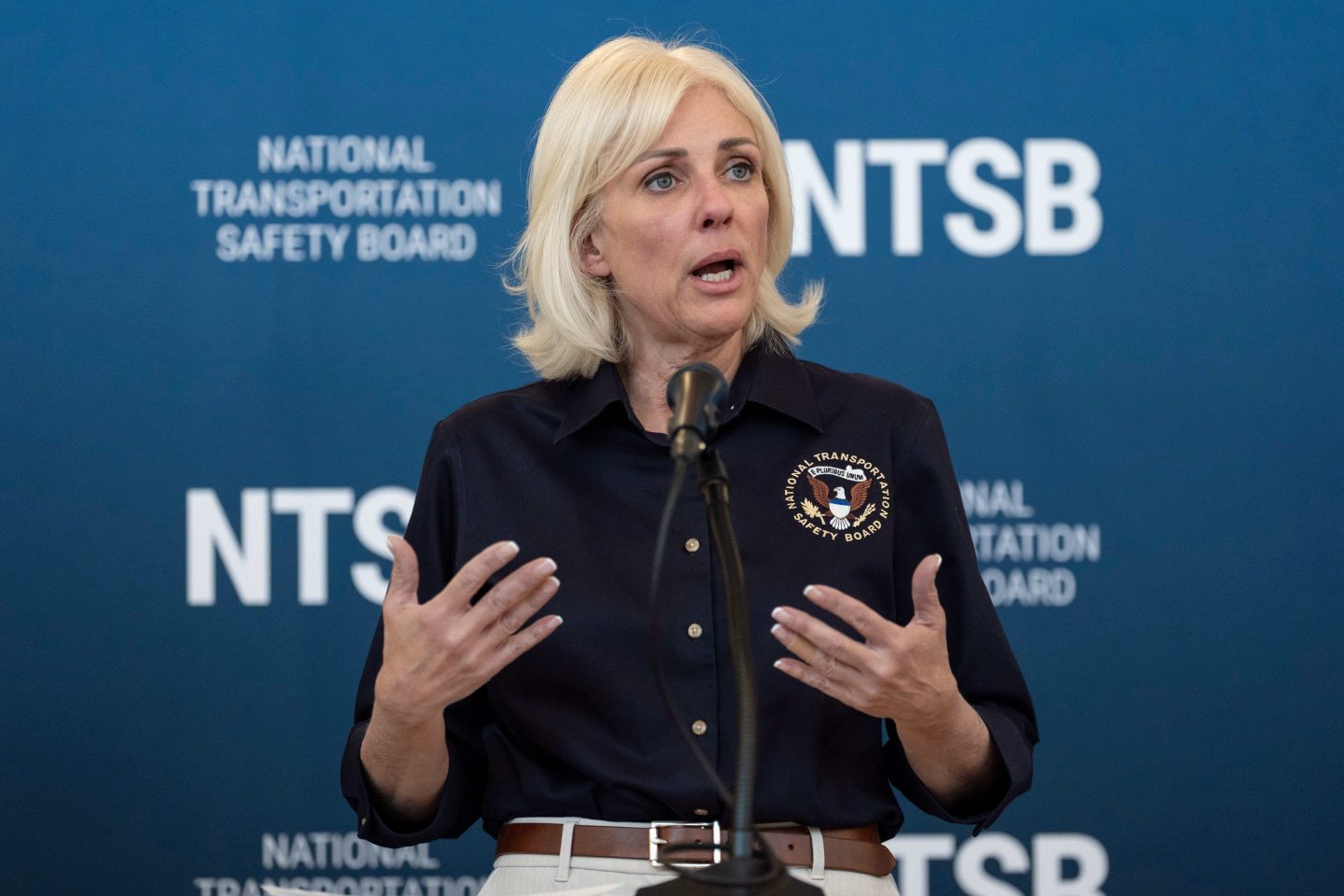
Why hands-free systems in self-driving cars aren’t actually safer, according to the NTSB
By Josh Funk and The Associated PressApril 1, 2026
11 hours ago
Mike Wirth, chief executive officer of Chevron.
EnergyData centers
Microsoft and Chevron enter exclusivity deal on powering West Texas AI data center complex
By Jordan BlumApril 1, 2026
11 hours ago
A chip research center site operations manager stands next to a window overlooking the facility.
EnvironmentData centers
Data centers are so hot their ‘heat island’ effect is raising temperatures up to 6 miles away and impacting 343 million people worldwide, study finds
By Sasha RogelbergApril 1, 2026
13 hours ago

Most Popular

Two-thirds of parents say their adult Gen Z kids still rely on them financially  for support—even though it's putting them under strain
Success
Two-thirds of parents say their adult Gen Z kids still rely on them financially  for support—even though it's putting them under strain
By Fortune EditorsMarch 31, 2026
2 days ago
Jerome Powell says the $39 trillion national debt is ‘not unsustainable,’ but warns the trajectory ‘will not end well’
Economy
Jerome Powell says the $39 trillion national debt is ‘not unsustainable,’ but warns the trajectory ‘will not end well’
By Fortune EditorsMarch 30, 2026
2 days ago
Current price of gold as of April 1, 2026
Personal Finance
Current price of gold as of April 1, 2026
By Fortune EditorsApril 1, 2026
17 hours ago
A man used AI to call 3,000 Irish bartenders to track the cost of Guinness. Now pubs are lowering their prices to compete
AI
A man used AI to call 3,000 Irish bartenders to track the cost of Guinness. Now pubs are lowering their prices to compete
By Fortune EditorsMarch 30, 2026
3 days ago
Current price of oil as of April 1, 2026
Personal Finance
Current price of oil as of April 1, 2026
By Fortune EditorsApril 1, 2026
18 hours ago
Hiring just hit a level not seen since the economy was ‘closed down literally’ during COVID, top economist says
Economy
Hiring just hit a level not seen since the economy was ‘closed down literally’ during COVID, top economist says
By Fortune EditorsMarch 31, 2026
1 day ago

© 2026 Fortune Media IP Limited. All Rights Reserved. Use of this site constitutes acceptance of our Terms of Use and Privacy Policy | CA Notice at Collection and Privacy Notice | Do Not Sell/Share My Personal Information
FORTUNE is a trademark of Fortune Media IP Limited, registered in the U.S. and other countries. FORTUNE may receive compensation for some links to products and services on this website. Offers may be subject to change without notice.