• Home
  • Latest
  • Fortune 500
  • Finance
  • Tech
  • Leadership
  • Lifestyle
  • Rankings
  • Multimedia

Exclusive

An hour in the Oval Office with President Trump Fortune Editor-in-Chief: Alyson Shontell sat down with President Trump in the Oval Office for an hour. Tariffs, Intel, AI, Boeing, Iran—and the question every CEO eventually has to answer: who's next?

An hour in the Oval Office with President Trump Fortune Editor-in-Chief: Alyson Shontell sat down with President Trump in the Oval Office for an hour. Tariffs, Intel, AI, Boeing, Iran—and the question every CEO eventually has to answer: who's next?

An hour in the Oval Office with President Trump Fortune Editor-in-Chief: Alyson Shontell sat down with President Trump in the Oval Office for an hour. Tariffs, Intel, AI, Boeing, Iran—and the question every CEO eventually has to answer: who's next?

An hour in the Oval Office with President Trump Fortune Editor-in-Chief: Alyson Shontell sat down with President Trump in the Oval Office for an hour. Tariffs, Intel, AI, Boeing, Iran—and the question every CEO eventually has to answer: who's next?

An hour in the Oval Office with President Trump Fortune Editor-in-Chief: Alyson Shontell sat down with President Trump in the Oval Office for an hour. Tariffs, Intel, AI, Boeing, Iran—and the question every CEO eventually has to answer: who's next?

An hour in the Oval Office with President Trump Fortune Editor-in-Chief: Alyson Shontell sat down with President Trump in the Oval Office for an hour. Tariffs, Intel, AI, Boeing, Iran—and the question every CEO eventually has to answer: who's next?

An hour in the Oval Office with President Trump Fortune Editor-in-Chief: Alyson Shontell sat down with President Trump in the Oval Office for an hour. Tariffs, Intel, AI, Boeing, Iran—and the question every CEO eventually has to answer: who's next?

An hour in the Oval Office with President Trump Fortune Editor-in-Chief: Alyson Shontell sat down with President Trump in the Oval Office for an hour. Tariffs, Intel, AI, Boeing, Iran—and the question every CEO eventually has to answer: who's next?

An hour in the Oval Office with President Trump Fortune Editor-in-Chief: Alyson Shontell sat down with President Trump in the Oval Office for an hour. Tariffs, Intel, AI, Boeing, Iran—and the question every CEO eventually has to answer: who's next?

An hour in the Oval Office with President Trump Fortune Editor-in-Chief: Alyson Shontell sat down with President Trump in the Oval Office for an hour. Tariffs, Intel, AI, Boeing, Iran—and the question every CEO eventually has to answer: who's next?

CommentaryChina

What China’s Foreign NGO Restrictions Mean for U.S. Businesses

By
Howard Yu
Howard Yu
and
Bethany Cianciolo
Bethany Cianciolo
Down Arrow Button Icon
By
Howard Yu
Howard Yu
and
Bethany Cianciolo
Bethany Cianciolo
Down Arrow Button Icon
May 5, 2016, 1:00 AM ET
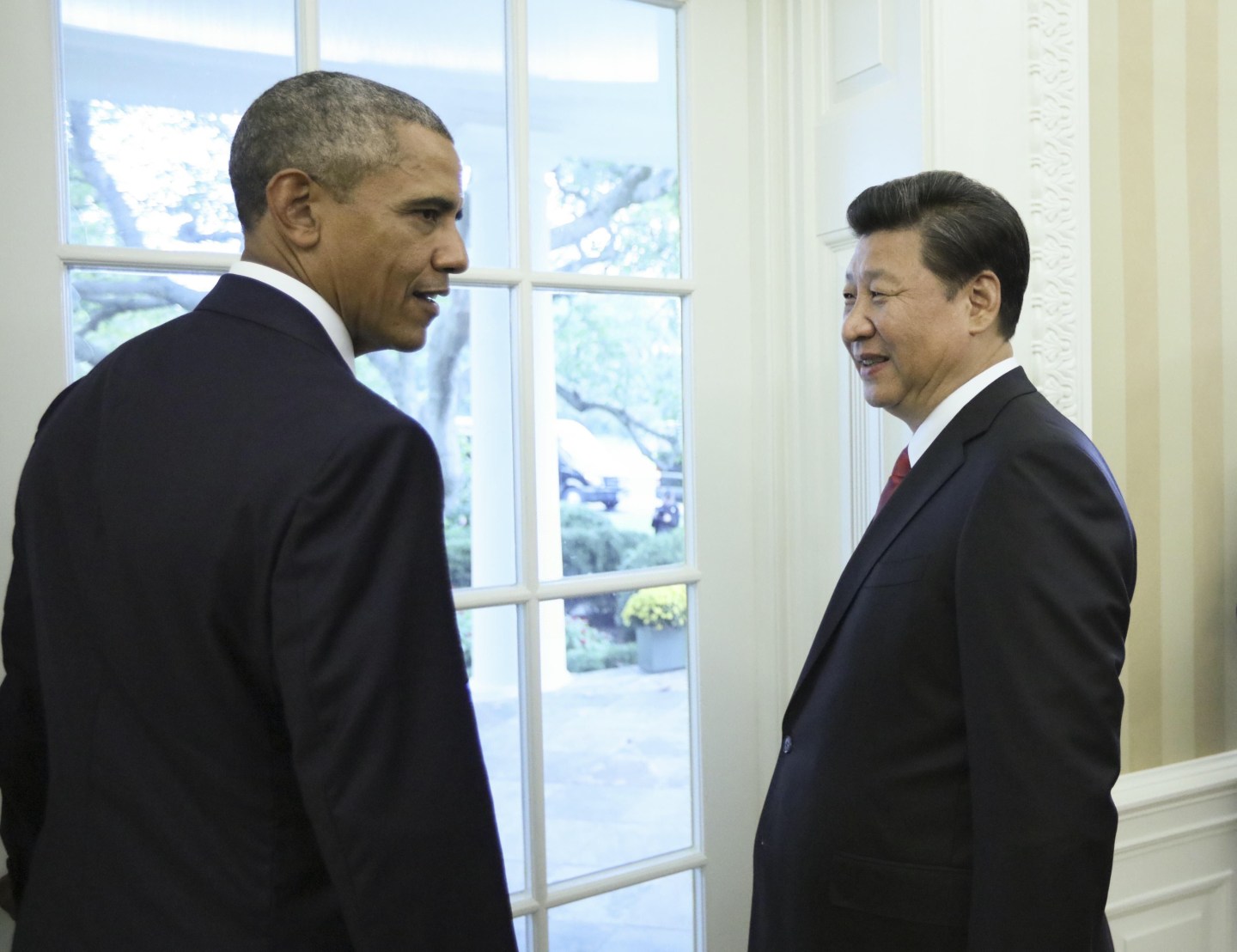
U.S.-WASHINGTON D.C.-CHINA-XI JINPING-BARACK OBAMA-PRESS
WASHINGTON D.C., Sept. 25, 2015-- Chinese President Xi Jinping, left, and U.S. President Barack Obama prepare to meet the press after their talks in Washington D.C., the United States, Sept. 25, 2015. (Xinhua/Lan Hongguang via Getty Images)Photograph by Lan Hongguang — Xinhua News Agency via Getty Images

General Electric CEO Jeffrey Immelt once described China as big, but hard. Compared to other growth regions, such as Peru, Mongolia, and Australia, Immelt conceded, “These places are equally big, but they are not quite as hard.” There is no disputing that the golden age of foreign companies doing business in China is over.

Last week saw the most sweeping crackdown on foreign non-governmental organizations (NGOs) in China yet. The new law, to be effective by January 2017, requires all foreign NGOs to have an official Chinese sponsor. None would be allowed to raise funds in China nor conduct any political activities. A staggering 7,000 foreign groups will be affected, including some of the most venerable names: Greenpeace, the Carnegie-Tsinghua Center for Global Policy, The Bethel Foundation, The Bill & Melinda Gates Foundation, and others. Many programs will soon be curtailed, and others simply sent home packing.

Since the 1980s, foreign NGOs have been contributing money, technology, and expertise to address China’s development needs. For a long while, Beijing exhibited mixed responses to this, from suspicion to tolerance. That led many observers to believe that societal progress was inevitable. As the world becomes evermore interconnected, it will become flatter, the thinking goes. Yet, the latest toughened stance on foreign NGOs is a good reminder that the exact opposite might be happening. For business leaders and heads of multinationals, it is a call to reassess their China strategy.

With the latest clampdown on NGOs added into the mix, no CEO wants to have to explain his or her company’s policies about corporate dealings with unsympathetic Chinese authorities. Rising labor costs have caused many a company to flock to Southeast Asia—from Vietnam to Cambodia or Bangladesh—for a simple reason: They want to limit their overwhelming reliance on factories in China. At times, foreign brands find themselves under fire by belligerent local consumers: Walmart China was accused of selling donkey meat, KFC chicken was laden with excessive antibiotics, and Toyota sales tumbled when anti-Japan sentiment flared up over the Diaoyu Islands in the East China Sea. A survey by the American Chamber of Commerce this year showed that 75% of member companies in China felt that they were less welcome now.

To be sure, China’s growth rate of 6% to 7% is still very high, even when compared to its heady era between 2002 to 2008, which averaged 12%. Few places offer the same level of infrastructure, talent, and growth potential all at the same time; and no Fortune 500 company can afford to ignore the Middle Kingdom quite yet. But with so many strings attached, companies’ go-to-market approach must be more nuanced than a naïve hunt for big fortune in China.

It is a known fact that the overall cost of China is getting higher, and the demand for attention from top management there is becoming evermore taxing. Immelt, for example, goes to China at least twice a year, spending a few days at GE’s (GE) research center, mingling with government leaders, understanding China’s latest do’s and don’ts, and aligning GE’s agenda with China’s ambition. These efforts don’t come cheap. They require time and money. Companies’ efforts to access the Chinese market must therefore make sense in the country, but also be relevant for other markets.


Already, we have seen companies frame their efforts in China as part of wider strategy focused on emerging markets in general. Novartis (NVS), GlaxoSmithKline (GSK), and Johnson & Johnson (JNJ), for example, have all set up advanced research laboratories in China. The conventional advantages—like the abundance of biology and chemistry PhDs and generous tax concessions—still apply, but these centers are focusing on diseases commonly found in developing nations. Because of the climate, dietary habits, living standards, and lifestyle, diseases vary across regions, and China is particularly suitable for developing treatment for hepatitis and tuberculosis, as well as gastric and liver cancer.

GE Healthcare went further. Using China as a base, it developed a compact ultrasound machine about the size of a mobile phone. Priced at $15,000—less than 15% of GE’s high-end ultrasound machines—the pocket-size device proves highly useful in rural medical centers where it was deployed by doctors for straightforward application, such as detecting enlarged livers, gallbladders, and stomach abnormalities. The handheld device has since found new applications in its home market back in the U.S.—not to cannibalize existing sales of high-end equipment in large hospitals, but to capture new applications among general practitioners and paramedics when providing pre-screening services.

The ability to extract the very best all over the world is in fact the true advantage of being a multinational.

Winning in China makes sense, but only if it also helps win elsewhere.

Howard Yu is professor of strategic management and innovation at IMD. He specializes in technological innovation, strategic transformation and change management. In 2015 Professor Yu was featured in Poets & Quants as one of the Best 40 Under 40 Professors. He received his doctoral degree at Harvard Business School.
About the Authors
By Howard Yu
See full bioRight Arrow Button Icon
By Bethany Cianciolo
See full bioRight Arrow Button Icon

Latest in Commentary

Finance
Lorem ipsum dolor sit amet, consectetur adipiscing elit, sed do eiusmod tempor incididunt ut labore et dolore magna aliqua. Ut enim ad minim veniam
By Fortune Editors
October 20, 2025
Finance
Lorem ipsum dolor sit amet, consectetur adipiscing elit, sed do eiusmod tempor incididunt ut labore et dolore magna aliqua. Ut enim ad minim veniam
By Fortune Editors
October 20, 2025
Finance
Lorem ipsum dolor sit amet, consectetur adipiscing elit, sed do eiusmod tempor incididunt ut labore et dolore magna aliqua. Ut enim ad minim veniam
By Fortune Editors
October 20, 2025
Finance
Lorem ipsum dolor sit amet, consectetur adipiscing elit, sed do eiusmod tempor incididunt ut labore et dolore magna aliqua. Ut enim ad minim veniam
By Fortune Editors
October 20, 2025
Finance
Lorem ipsum dolor sit amet, consectetur adipiscing elit, sed do eiusmod tempor incididunt ut labore et dolore magna aliqua. Ut enim ad minim veniam
By Fortune Editors
October 20, 2025
Finance
Lorem ipsum dolor sit amet, consectetur adipiscing elit, sed do eiusmod tempor incididunt ut labore et dolore magna aliqua. Ut enim ad minim veniam
By Fortune Editors
October 20, 2025

Most Popular

Finance
Lorem ipsum dolor sit amet, consectetur adipiscing elit, sed do eiusmod tempor incididunt ut labore et dolore magna aliqua. Ut enim ad minim veniam
By Fortune Editors
October 20, 2025
Finance
Lorem ipsum dolor sit amet, consectetur adipiscing elit, sed do eiusmod tempor incididunt ut labore et dolore magna aliqua. Ut enim ad minim veniam
By Fortune Editors
October 20, 2025
Finance
Lorem ipsum dolor sit amet, consectetur adipiscing elit, sed do eiusmod tempor incididunt ut labore et dolore magna aliqua. Ut enim ad minim veniam
By Fortune Editors
October 20, 2025
Finance
Lorem ipsum dolor sit amet, consectetur adipiscing elit, sed do eiusmod tempor incididunt ut labore et dolore magna aliqua. Ut enim ad minim veniam
By Fortune Editors
October 20, 2025
Finance
Lorem ipsum dolor sit amet, consectetur adipiscing elit, sed do eiusmod tempor incididunt ut labore et dolore magna aliqua. Ut enim ad minim veniam
By Fortune Editors
October 20, 2025
Finance
Lorem ipsum dolor sit amet, consectetur adipiscing elit, sed do eiusmod tempor incididunt ut labore et dolore magna aliqua. Ut enim ad minim veniam
By Fortune Editors
October 20, 2025
Fortune Secondary Logo
Rankings
  • 100 Best Companies
  • Fortune 500
  • Global 500
  • Fortune 500 Europe
  • Most Powerful Women
  • World's Most Admired Companies
  • See All Rankings
  • Lists Calendar
Sections
  • Finance
  • Fortune Crypto
  • Features
  • Leadership
  • Health
  • Commentary
  • Success
  • Retail
  • Mpw
  • Tech
  • Lifestyle
  • CEO Initiative
  • Asia
  • Politics
  • Conferences
  • Europe
  • Newsletters
  • Personal Finance
  • Environment
  • Magazine
  • Education
Customer Support
  • Frequently Asked Questions
  • Customer Service Portal
  • Privacy Policy
  • Terms Of Use
  • Single Issues For Purchase
  • International Print
Commercial Services
  • Advertising
  • Fortune Brand Studio
  • Fortune Analytics
  • Fortune Conferences
  • Business Development
  • Group Subscriptions
About Us
  • About Us
  • Press Center
  • Work At Fortune
  • Terms And Conditions
  • Site Map
  • About Us
  • Press Center
  • Work At Fortune
  • Terms And Conditions
  • Site Map
  • Facebook icon
  • Twitter icon
  • LinkedIn icon
  • Instagram icon
  • Pinterest icon

Latest in Commentary

altman
CommentarySam Altman
Musk vs. Altman: AI safety cannot be one man’s job
By Stavros GadinisMay 18, 2026
2 hours ago
charlie
CommentarySoftware
Anaplan CEO: AI isn’t eating software. It’s sorting it
By Charlie GottdienerMay 18, 2026
12 hours ago
shyam
CommentaryHealth
World Economic Forum: women’s health gets only 20% of R&D funding. We must seize this $1 trillion opportunity
By Shyam BishenMay 18, 2026
20 hours ago
murdochs
CommentaryMedia
OpenAI paid $100 million for a talk show. James Murdoch is eyeing an even bigger deal. The hot new asset class is humanity
By Lin CherryMay 17, 2026
1 day ago
dennis
CommentaryAI agents
Freshworks CEO: why agile enterprises are winning the AI race — and what they did differently
By Dennis WoodsideMay 17, 2026
1 day ago
Mary Moreland-Abbott Executive Vice President of Human Resources.
CommentaryRetirement
Gen X is the most indebted generation in America. Their employers can fix that
By Mary MorelandMay 17, 2026
2 days ago

Most Popular

The Bezos family just donated $100 million to help achieve one of Mayor Zohran Mamdani’s top campaign promises
Politics
The Bezos family just donated $100 million to help achieve one of Mayor Zohran Mamdani’s top campaign promises
By Jake AngeloMay 12, 2026
6 days ago
Microsoft AI chief gives it 18 months—for all white-collar work to be automated by AI
AI
Microsoft AI chief gives it 18 months—for all white-collar work to be automated by AI
By Jake AngeloMay 16, 2026
2 days ago
The top foreign holders of U.S. debt may soon dump Treasury bonds and bring their money back home, potentially spiking borrowing costs
Economy
The top foreign holders of U.S. debt may soon dump Treasury bonds and bring their money back home, potentially spiking borrowing costs
By Jason MaMay 17, 2026
1 day ago
SpaceX heads into a record-shattering IPO with the 'deepest moat that exists today' as investors vow to 'never bet against Elon'
Innovation
SpaceX heads into a record-shattering IPO with the 'deepest moat that exists today' as investors vow to 'never bet against Elon'
By Jason MaMay 16, 2026
2 days ago
Mamdani's New York is coming to tax your private jet. Here's how to prepare
Personal Finance
Mamdani's New York is coming to tax your private jet. Here's how to prepare
By Greg RaiffMay 16, 2026
3 days ago
'No one was coming to save me': How Reese Witherspoon built a $900 million company from a problem Hollywood wouldn't fix
Success
'No one was coming to save me': How Reese Witherspoon built a $900 million company from a problem Hollywood wouldn't fix
By Sydney LakeMay 17, 2026
2 days ago

© 2026 Fortune Media IP Limited. All Rights Reserved. Use of this site constitutes acceptance of our Terms of Use and Privacy Policy | CA Notice at Collection and Privacy Notice | Do Not Sell/Share My Personal Information
FORTUNE is a trademark of Fortune Media IP Limited, registered in the U.S. and other countries. FORTUNE may receive compensation for some links to products and services on this website. Offers may be subject to change without notice.