• Home
  • Latest
  • Fortune 500
  • Finance
  • Tech
  • Leadership
  • Lifestyle
  • Rankings
  • Multimedia

Exclusive

An hour in the Oval Office with President Trump Fortune Editor-in-Chief: Alyson Shontell sat down with President Trump in the Oval Office for an hour. Tariffs, Intel, AI, Boeing, Iran—and the question every CEO eventually has to answer: who's next?

An hour in the Oval Office with President Trump Fortune Editor-in-Chief: Alyson Shontell sat down with President Trump in the Oval Office for an hour. Tariffs, Intel, AI, Boeing, Iran—and the question every CEO eventually has to answer: who's next?

An hour in the Oval Office with President Trump Fortune Editor-in-Chief: Alyson Shontell sat down with President Trump in the Oval Office for an hour. Tariffs, Intel, AI, Boeing, Iran—and the question every CEO eventually has to answer: who's next?

An hour in the Oval Office with President Trump Fortune Editor-in-Chief: Alyson Shontell sat down with President Trump in the Oval Office for an hour. Tariffs, Intel, AI, Boeing, Iran—and the question every CEO eventually has to answer: who's next?

An hour in the Oval Office with President Trump Fortune Editor-in-Chief: Alyson Shontell sat down with President Trump in the Oval Office for an hour. Tariffs, Intel, AI, Boeing, Iran—and the question every CEO eventually has to answer: who's next?

An hour in the Oval Office with President Trump Fortune Editor-in-Chief: Alyson Shontell sat down with President Trump in the Oval Office for an hour. Tariffs, Intel, AI, Boeing, Iran—and the question every CEO eventually has to answer: who's next?

An hour in the Oval Office with President Trump Fortune Editor-in-Chief: Alyson Shontell sat down with President Trump in the Oval Office for an hour. Tariffs, Intel, AI, Boeing, Iran—and the question every CEO eventually has to answer: who's next?

An hour in the Oval Office with President Trump Fortune Editor-in-Chief: Alyson Shontell sat down with President Trump in the Oval Office for an hour. Tariffs, Intel, AI, Boeing, Iran—and the question every CEO eventually has to answer: who's next?

An hour in the Oval Office with President Trump Fortune Editor-in-Chief: Alyson Shontell sat down with President Trump in the Oval Office for an hour. Tariffs, Intel, AI, Boeing, Iran—and the question every CEO eventually has to answer: who's next?

An hour in the Oval Office with President Trump Fortune Editor-in-Chief: Alyson Shontell sat down with President Trump in the Oval Office for an hour. Tariffs, Intel, AI, Boeing, Iran—and the question every CEO eventually has to answer: who's next?

CommentaryChina

The Dangerous March of China’s Tech Companies

By
Michael Wade
Michael Wade
and
Bethany Cianciolo
Bethany Cianciolo
Down Arrow Button Icon
By
Michael Wade
Michael Wade
and
Bethany Cianciolo
Bethany Cianciolo
Down Arrow Button Icon
May 18, 2016, 1:00 AM ET
2016 Boao Forum For Asia
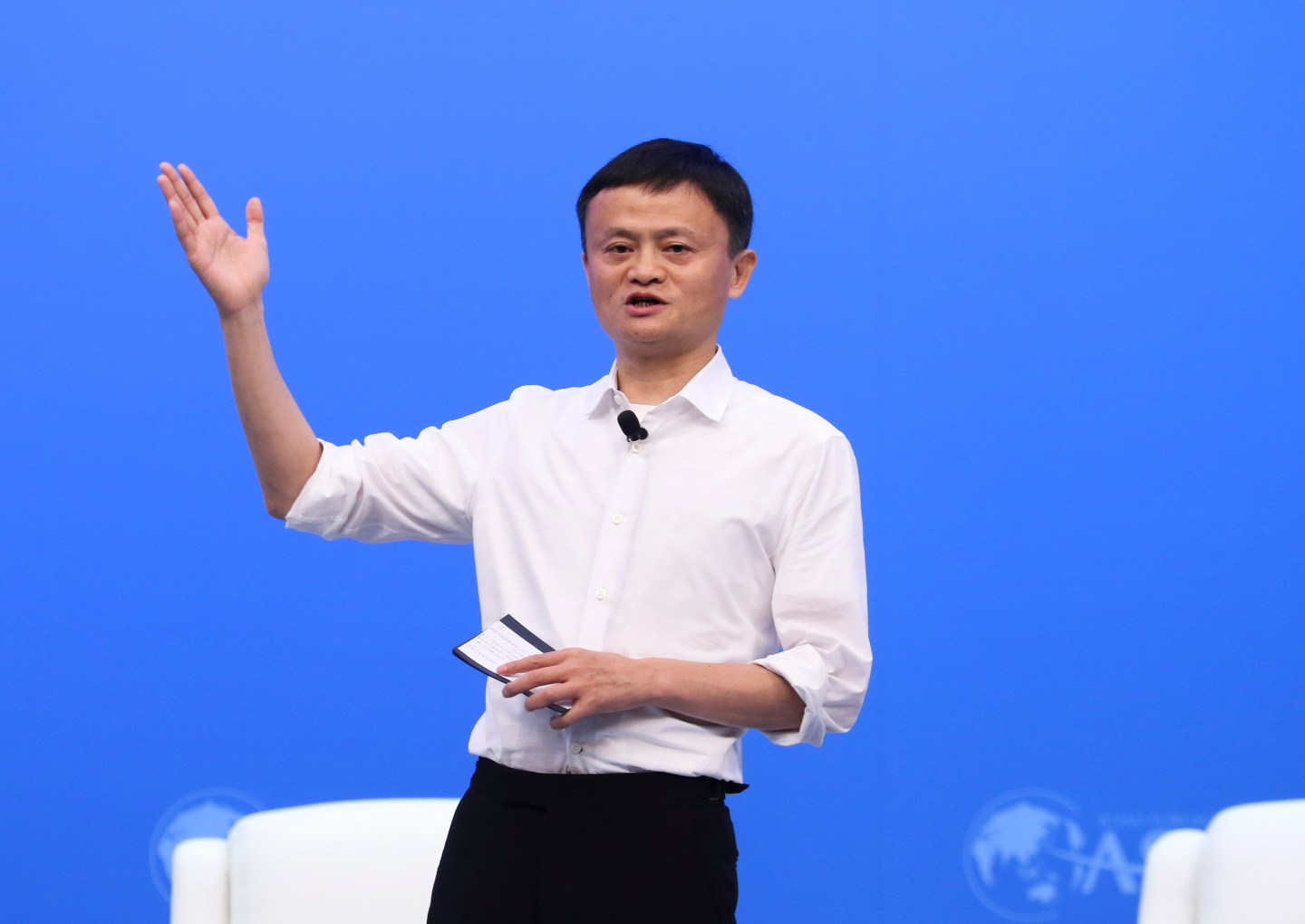
QIONGHAI, CHINA - MARCH 23: (CHINA OUT) Alibaba Group Chairman Jack Ma speaks during the Boao Forum For Asia Annual Conference on March 23, 2016 in Qionghai, Hainan Province of China. Jack Ma firstly proposed on the forum that there should be building an Electronic World Trade Platform (eWTP) to guide the minor enterprises, women and young entrepreneurs into global market. (Photo by VCG/VCG via Getty Images)Photograph by VCG via Getty Images

I recently spent a week visiting companies in China, trying to learn as much as I could about the digital transformation and trends in the world’s second-largest economy. I suspected that there were major differences between how digitization was viewed in China vs. the West, and I was right.

As I visited large corporations like Didi Chuxing (the Chinese competitor to Uber that just received a billion-dollar funding injection from Apple (AAPL)), as well as mid-size companies and startups, I learned that only two things matter to Chinese digital executives: scale and speed. All else is secondary. Simply put, they want to get really big, really fast.

Scale and speed make life interesting in China. Yet, in the race for space, many traditional aspects of business are being sacrificed, like revenues, profits, and operational rigor. Cheap money, massive organic growth, and friendly government policies are hiding a multitude of operational sins.

Unfortunately, Chinese firms are not alone in this. Plenty of Western unicorns are following a similar strategy: get scale first; worry about revenues and profits later. Facebook (FB) and Google have spectacularly shown how this business approach can work. Both companies have shown steady growth in users and revenue. And while this revenue comes largely from a single source—advertising—at least it has translated into growing profits. But, these are the exceptions. Companies such as Snapchat, Twitter (TWTR), and LinkedIn (LNKD) have gained scale, but are still struggling to build revenues and profits. Many others have failed or will fail.

Recall the dot-com bubble of the late ‘90s and its subsequent collapse, and the 2008 financial crisis. These failures are hard to overlook, and Western tech investors are (thankfully) starting to look much more closely at business model sustainability today.

By contrast, Chinese companies have only known growth and success. Modern Chinese digital firms are too young to recall the dark days of the 1997 Asian financial crisis; after all, the average age of Alibaba employees is 27. There was no dot-com collapse in China, and the 2008 financial crisis was barely a blip on the Western horizon. Chinese growth continued unabated. Operating under a business-friendly Communist government, the growth of private Chinese businesses is still quite a new phenomenon; many have yet to experience the stings of failure. This is great for innovation, and make no mistake, there is massive innovation happening in China today, but it can lead to economic recklessness.

The role models do not help. In China, successful digital giants cast a long shadow. Alibaba and its founder Jack Ma, for instance, are revered in China, which was clearly evident when I visited the company’s headquarters in Hangzhou—a city half a step behind Shanghai, Beijing, and Shenzhen in the Chinese urban hierarchy.

Alibaba (BABA) is impressive, to be sure. It embodies both the speed and scale that Chinese businesses aspire to reach. The company grew by providing great services at no cost. It vanquished eBay (EBAY) in China by not charging the buyer or the seller to conduct business on its Taobao marketplace. Free services are hard to compete against. Even today, Alibaba makes relatively little revenue ($3.7 billion in the most recent quarter vs. $29 billion for Amazon (AMZN) and $18 billion for Google (GOOG)), considering the gross merchandise volumes of goods and services sold across its various marketplaces ($113 billion in the most recent quarter).


The Chinese businesses and entrepreneurs I met consistently cited Alibaba as their model for success. Alibaba is big, fast, and profitable. The problem is that it is only profitable because it is big. Alibaba, Tencent, and Baidu (the Chinese BAT digital giants) are winning the speed-scale battle in China. Scale benefits matter, but not everyone can be so big. The BATs are succeeding because they can take razor-thin margins on very large numbers of transactions, or because they can subsidize free services in one area with paid services in another. However, as Chinese consumers get more and more accustomed to very low prices, free services, and huge discounts, it makes it more difficult for others to compete.

This situation cannot last forever—or can it? I have called for a correction in Western digital markets, and one might expect the same to happen in China. But there is one important difference in China that argues against it. The government is unabashedly pumping money into the commercial sector. During my recent visit, I heard multiple stories of local, regional, and national government agencies subsidizing labor, rent, and providing cheap business loans. These agencies are also skewing the playing field in favor of local Chinese businesses against foreign competitors, as Uber has found to its detriment. Very few of the companies I visited were making a profit. Some even seemed confused by the question. As long as the government props these companies up through subsidies, cheap loans, and protectionist policies, they will continue to exist.

A cavalier attitude to commerce, combined with attractive incentives and a so-so grasp of business fundamentals is a dangerous mix. The Chinese digitization growth story is impressive, to be sure, but it is not sustainable without generous and persistent government intervention.

Michael Wade is the Cisco Chair in digital business transformation, and professor of innovation and strategic information management at IMD. His interests lie at the intersection of strategy, innovation, and digital transformation. He is director of the Global Center for Digital Business Transformation and codirector of IMD’s new Leading Digital Business Transformation program (LDBT).


About the Authors
By Michael Wade
See full bioRight Arrow Button Icon
By Bethany Cianciolo
See full bioRight Arrow Button Icon

Latest in Commentary

Finance
Lorem ipsum dolor sit amet, consectetur adipiscing elit, sed do eiusmod tempor incididunt ut labore et dolore magna aliqua. Ut enim ad minim veniam
By Fortune Editors
October 20, 2025
Finance
Lorem ipsum dolor sit amet, consectetur adipiscing elit, sed do eiusmod tempor incididunt ut labore et dolore magna aliqua. Ut enim ad minim veniam
By Fortune Editors
October 20, 2025
Finance
Lorem ipsum dolor sit amet, consectetur adipiscing elit, sed do eiusmod tempor incididunt ut labore et dolore magna aliqua. Ut enim ad minim veniam
By Fortune Editors
October 20, 2025
Finance
Lorem ipsum dolor sit amet, consectetur adipiscing elit, sed do eiusmod tempor incididunt ut labore et dolore magna aliqua. Ut enim ad minim veniam
By Fortune Editors
October 20, 2025
Finance
Lorem ipsum dolor sit amet, consectetur adipiscing elit, sed do eiusmod tempor incididunt ut labore et dolore magna aliqua. Ut enim ad minim veniam
By Fortune Editors
October 20, 2025
Finance
Lorem ipsum dolor sit amet, consectetur adipiscing elit, sed do eiusmod tempor incididunt ut labore et dolore magna aliqua. Ut enim ad minim veniam
By Fortune Editors
October 20, 2025

Most Popular

Finance
Lorem ipsum dolor sit amet, consectetur adipiscing elit, sed do eiusmod tempor incididunt ut labore et dolore magna aliqua. Ut enim ad minim veniam
By Fortune Editors
October 20, 2025
Finance
Lorem ipsum dolor sit amet, consectetur adipiscing elit, sed do eiusmod tempor incididunt ut labore et dolore magna aliqua. Ut enim ad minim veniam
By Fortune Editors
October 20, 2025
Finance
Lorem ipsum dolor sit amet, consectetur adipiscing elit, sed do eiusmod tempor incididunt ut labore et dolore magna aliqua. Ut enim ad minim veniam
By Fortune Editors
October 20, 2025
Finance
Lorem ipsum dolor sit amet, consectetur adipiscing elit, sed do eiusmod tempor incididunt ut labore et dolore magna aliqua. Ut enim ad minim veniam
By Fortune Editors
October 20, 2025
Finance
Lorem ipsum dolor sit amet, consectetur adipiscing elit, sed do eiusmod tempor incididunt ut labore et dolore magna aliqua. Ut enim ad minim veniam
By Fortune Editors
October 20, 2025
Finance
Lorem ipsum dolor sit amet, consectetur adipiscing elit, sed do eiusmod tempor incididunt ut labore et dolore magna aliqua. Ut enim ad minim veniam
By Fortune Editors
October 20, 2025
Fortune Secondary Logo
Rankings
  • 100 Best Companies
  • Fortune 500
  • Global 500
  • Fortune 500 Europe
  • Most Powerful Women
  • World's Most Admired Companies
  • See All Rankings
  • Lists Calendar
Sections
  • Finance
  • Fortune Crypto
  • Features
  • Leadership
  • Health
  • Commentary
  • Success
  • Retail
  • Mpw
  • Tech
  • Lifestyle
  • CEO Initiative
  • Asia
  • Politics
  • Conferences
  • Europe
  • Newsletters
  • Personal Finance
  • Environment
  • Magazine
  • Education
Customer Support
  • Frequently Asked Questions
  • Customer Service Portal
  • Privacy Policy
  • Terms Of Use
  • Single Issues For Purchase
  • International Print
Commercial Services
  • Advertising
  • Fortune Brand Studio
  • Fortune Analytics
  • Fortune Conferences
  • Business Development
  • Group Subscriptions
About Us
  • About Us
  • Press Center
  • Work At Fortune
  • Terms And Conditions
  • Site Map
  • About Us
  • Press Center
  • Work At Fortune
  • Terms And Conditions
  • Site Map
  • Facebook icon
  • Twitter icon
  • LinkedIn icon
  • Instagram icon
  • Pinterest icon

Latest in Commentary

altman
CommentarySam Altman
Musk vs. Altman: AI safety cannot be one man’s job
By Stavros GadinisMay 18, 2026
4 hours ago
charlie
CommentarySoftware
Anaplan CEO: AI isn’t eating software. It’s sorting it
By Charlie GottdienerMay 18, 2026
14 hours ago
shyam
CommentaryHealth
World Economic Forum: women’s health gets only 20% of R&D funding. We must seize this $1 trillion opportunity
By Shyam BishenMay 18, 2026
22 hours ago
murdochs
CommentaryMedia
OpenAI paid $100 million for a talk show. James Murdoch is eyeing an even bigger deal. The hot new asset class is humanity
By Lin CherryMay 17, 2026
2 days ago
dennis
CommentaryAI agents
Freshworks CEO: why agile enterprises are winning the AI race — and what they did differently
By Dennis WoodsideMay 17, 2026
2 days ago
Mary Moreland-Abbott Executive Vice President of Human Resources.
CommentaryRetirement
Gen X is the most indebted generation in America. Their employers can fix that
By Mary MorelandMay 17, 2026
2 days ago

Most Popular

The Bezos family just donated $100 million to help achieve one of Mayor Zohran Mamdani’s top campaign promises
Politics
The Bezos family just donated $100 million to help achieve one of Mayor Zohran Mamdani’s top campaign promises
By Jake AngeloMay 12, 2026
6 days ago
Microsoft AI chief gives it 18 months—for all white-collar work to be automated by AI
AI
Microsoft AI chief gives it 18 months—for all white-collar work to be automated by AI
By Jake AngeloMay 16, 2026
3 days ago
The top foreign holders of U.S. debt may soon dump Treasury bonds and bring their money back home, potentially spiking borrowing costs
Economy
The top foreign holders of U.S. debt may soon dump Treasury bonds and bring their money back home, potentially spiking borrowing costs
By Jason MaMay 17, 2026
1 day ago
SpaceX heads into a record-shattering IPO with the 'deepest moat that exists today' as investors vow to 'never bet against Elon'
Innovation
SpaceX heads into a record-shattering IPO with the 'deepest moat that exists today' as investors vow to 'never bet against Elon'
By Jason MaMay 16, 2026
2 days ago
While Trump insisted the Iran war would end ‘soon,’ an account in his name was buying millions in oil, defense and gold
Economy
While Trump insisted the Iran war would end ‘soon,’ an account in his name was buying millions in oil, defense and gold
By Eva RoytburgMay 18, 2026
7 hours ago
Current price of oil as of May 18, 2026
Personal Finance
Current price of oil as of May 18, 2026
By Joseph HostetlerMay 18, 2026
13 hours ago

© 2026 Fortune Media IP Limited. All Rights Reserved. Use of this site constitutes acceptance of our Terms of Use and Privacy Policy | CA Notice at Collection and Privacy Notice | Do Not Sell/Share My Personal Information
FORTUNE is a trademark of Fortune Media IP Limited, registered in the U.S. and other countries. FORTUNE may receive compensation for some links to products and services on this website. Offers may be subject to change without notice.