• Home
  • Latest
  • Fortune 500
  • Finance
  • Tech
  • Leadership
  • Lifestyle
  • Rankings
  • Multimedia

Trendingnow

1

Microsoft AI chief gives it 18 months—for all white-collar work to be automated by AI

2

Former top Russian official admits the country is over Putin and can 'imagine a future without him' — even elites bail as Kremlin seizes their assets 

3

The Bezos family just donated $100 million to help achieve one of Mayor Zohran Mamdani’s top campaign promises

1

Microsoft AI chief gives it 18 months—for all white-collar work to be automated by AI

2

Former top Russian official admits the country is over Putin and can 'imagine a future without him' — even elites bail as Kremlin seizes their assets 

3

The Bezos family just donated $100 million to help achieve one of Mayor Zohran Mamdani’s top campaign promises
Commentary

This Is the Best Major For Every Wannabe CEO

By
Kenneth R. Lutchen
Kenneth R. Lutchen
Down Arrow Button Icon
By
Kenneth R. Lutchen
Kenneth R. Lutchen
Down Arrow Button Icon
May 22, 2016, 7:28 PM ET
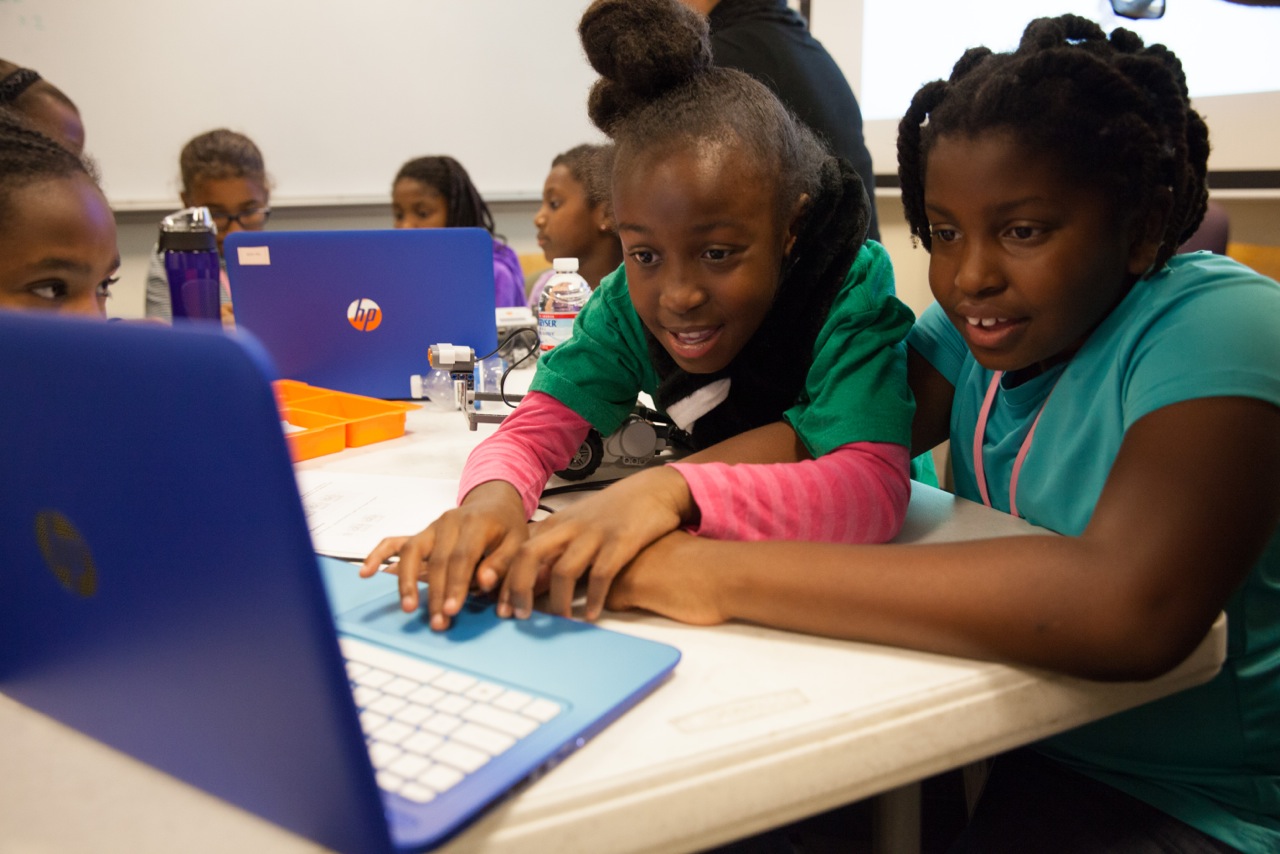
Courtesy of Black Girls CODE

“I want to be an engineer when I grow up. . .”

That was the heartening sentiment in a thank you note I received from a fifth-grader after I spoke at my daughter’s class about engineering and the stories behind America’s most dynamic inventions. Once they learned what an engineer did, they wanted to join the innovators of tomorrow in creating real value for society—to launch satellites, design virtual reality, build components for wind turbines, invent nanosized devices for detecting biological hazards, make life-saving biomedical breakthroughs, and more.

It is heartening because at a time when the US faces a shortage of students seeking an engineering degrees, it suggests that if we reach students early enough about what engineers actually do and how they improve our quality of life more young people might choose a career in technology innovation.

As we approach graduation season, it’s worth noting that the number of engineering graduates has been rising in recent years and is likely to do so again this year. But a large percentage of this increase is driven by students who do not reside in the US and can return home after they complete their studies. This is a problem for U.S. innovation, particularly since engineer draws fewer women and almost no underrepresented minorities, such as Hispanics and African-Americans.

The percentage of women earning bachelor’s degrees has stayed at 19% to 20% for a decade, according to the American Society for Engineering Education (ASEE). In 2014, foreign-born U.S. residents earned 8.5% of bachelor’s degrees in engineering, 47.4% of master’s degrees, and 54.8% of doctoral degrees. Moreover, the ASEE reports that since 2008 the number of US citizens receiving a bachelor’s degree in engineering has increased only 33% compared with an increase of 74% for international students. That is good news for the home countries of these international students. And while the US certainly wants to attract the world’s best talent to its universities, it might not bode so well for U.S. competitiveness and innovation in the long-term, especially in industries like defense that require US citizenship.

To stay competitive, we not only need more US citizens to aspire to pursue engineering, we need far more diversity among them— more women, African-Americans, Hispanics, and others who are greatly under-represented in undergraduate and graduate engineering programs today.

There many reasons diversity matters in the world of engineering, especially given demographic trends. The Census Bureau predicts that by 2043 the United States will become a “majority-minority” country, in which no racial group makes up more than half of the population. If, as in recent years, only a modest number of under-represented groups continue to study engineering at U.S. universities, then the shortage of home-grown engineers relative to the size of the population will only grow more acute. Equally important, recent research has shown that diversity unlocks innovation—the heart of technology and engineering. If we are to ensure that we maintain our innovative edge in the coming decades, we need to do three things:

Get kids excited about engineering early on

This needs to be done nationwide, and engineering schools can go a long way toward solving the challenge of scalability. At Boston University’s College of Engineering, our Technology Innovation Scholars Program (TISP) sends diverse teams of undergraduates into elementary, middle, and high schools around the country to show kids the exciting ways that engineers can improve people’s lives and address society’s challenges. Since the founding of the program five years ago, these “Technology Inspiration Ambassadors,” as we call them, have reached over 13,000 K-12 students in 23 states. And the K-12 students the program has touched are twice as diverse as current engineering colleges: 25% of them are under-represented minorities and about 50% are female.

The University of Michigan and Georgia Tech conduct similar outreach to K-12 students. With a steady stream of new undergraduates year after year—and some financial support—such programs are easily sustainable.

Get more K-12 teachers to teach engineering

Since President Obama’s State of the Union address in 2011 addressed the need to recruit and prepare 100,000 STEM teachers over the next decade, a number of promising initiatives have been underway. For example, 100Kin10 is a nonprofit founded in 2011 that has trained some 28,000 STEM teachers nationwide through a network of more than 230 corporations, foundations, universities, school districts, and museums.

But amid the general discussion of STEM, these groups and their partners must not let the unique innovative function of engineering and technology get lost. They must commit to creating STEM teachers not just to teach more science and math but that can and want to inform and inspire students as to how science and math can be used to innovate technologies to solve the world’s problems. Engineers are not a sub-category of scientists. Scientists explore the natural world and show us how and why it is as it is. Discovery is the essence of science.

Engineers innovate solutions to real-world challenges in society. While it is true that engineering without science might be haphazard; without engineering, scientific discovery would be a merely an academic pursuit. One novel concept is to try to attract more teachers with engineering degrees, pair current math and science teachers with engineering professionals and educators who can coach them (as some of 100Kin10’s partners do), and make sure that certification requirements and educational programs do not shortchange engineering. Boston University has just created a program in partnership with our School of Education that provides students a bachelors in engineering and masters in education with full certification to teach math and science in middle and high school throughout the country.

Change the narrative about the place of engineering in our society.

The K-12 students that Boston University’s TISP program reaches seem stunned to learn that engineers do not spend their days doing math and science isolated in cubicles, but rather work in teams of diverse professionals and community leaders creating exciting new technologies that improve healthcare, enable alternative energy, make us safer, improve communication, enhance our infrastructure, and so on. They are also surprised to learn that even if they do not remain practicing engineers for life, an engineering education can prepare them for leadership roles in organizations where they can make equally valuable contributions.

Engineering has long ranked as the most common undergraduate degree among CEOs. According to a 2011 study by executive search firm Spencer Stuart, 33% of S&P 500 CEOs held engineering degrees.

That’s the real story of engineering: the inestimable value of its innovations to our lives and our nation’s competitiveness. And if we tell the story right, we can keep that value flowing far into the future.

Kenneth R. Lutchen is dean of the College of Engineering at Boston University.

About the Author
By Kenneth R. Lutchen
See full bioRight Arrow Button Icon

Latest in Commentary

Finance
Lorem ipsum dolor sit amet, consectetur adipiscing elit, sed do eiusmod tempor incididunt ut labore et dolore magna aliqua. Ut enim ad minim veniam
By Fortune Editors
October 20, 2025
Finance
Lorem ipsum dolor sit amet, consectetur adipiscing elit, sed do eiusmod tempor incididunt ut labore et dolore magna aliqua. Ut enim ad minim veniam
By Fortune Editors
October 20, 2025
Finance
Lorem ipsum dolor sit amet, consectetur adipiscing elit, sed do eiusmod tempor incididunt ut labore et dolore magna aliqua. Ut enim ad minim veniam
By Fortune Editors
October 20, 2025
Finance
Lorem ipsum dolor sit amet, consectetur adipiscing elit, sed do eiusmod tempor incididunt ut labore et dolore magna aliqua. Ut enim ad minim veniam
By Fortune Editors
October 20, 2025
Finance
Lorem ipsum dolor sit amet, consectetur adipiscing elit, sed do eiusmod tempor incididunt ut labore et dolore magna aliqua. Ut enim ad minim veniam
By Fortune Editors
October 20, 2025
Finance
Lorem ipsum dolor sit amet, consectetur adipiscing elit, sed do eiusmod tempor incididunt ut labore et dolore magna aliqua. Ut enim ad minim veniam
By Fortune Editors
October 20, 2025

Most Popular

Finance
Lorem ipsum dolor sit amet, consectetur adipiscing elit, sed do eiusmod tempor incididunt ut labore et dolore magna aliqua. Ut enim ad minim veniam
By Fortune Editors
October 20, 2025
Finance
Lorem ipsum dolor sit amet, consectetur adipiscing elit, sed do eiusmod tempor incididunt ut labore et dolore magna aliqua. Ut enim ad minim veniam
By Fortune Editors
October 20, 2025
Finance
Lorem ipsum dolor sit amet, consectetur adipiscing elit, sed do eiusmod tempor incididunt ut labore et dolore magna aliqua. Ut enim ad minim veniam
By Fortune Editors
October 20, 2025
Finance
Lorem ipsum dolor sit amet, consectetur adipiscing elit, sed do eiusmod tempor incididunt ut labore et dolore magna aliqua. Ut enim ad minim veniam
By Fortune Editors
October 20, 2025
Finance
Lorem ipsum dolor sit amet, consectetur adipiscing elit, sed do eiusmod tempor incididunt ut labore et dolore magna aliqua. Ut enim ad minim veniam
By Fortune Editors
October 20, 2025
Finance
Lorem ipsum dolor sit amet, consectetur adipiscing elit, sed do eiusmod tempor incididunt ut labore et dolore magna aliqua. Ut enim ad minim veniam
By Fortune Editors
October 20, 2025
Fortune Secondary Logo
Rankings
  • 100 Best Companies
  • Fortune 500
  • Global 500
  • Fortune 500 Europe
  • Most Powerful Women
  • World's Most Admired Companies
  • See All Rankings
  • Lists Calendar
Sections
  • Finance
  • Fortune Crypto
  • Features
  • Leadership
  • Health
  • Commentary
  • Success
  • Retail
  • Mpw
  • Tech
  • Lifestyle
  • CEO Initiative
  • Asia
  • Politics
  • Conferences
  • Europe
  • Newsletters
  • Personal Finance
  • Environment
  • Magazine
  • Education
Customer Support
  • Frequently Asked Questions
  • Customer Service Portal
  • Privacy Policy
  • Terms Of Use
  • Single Issues For Purchase
  • International Print
Commercial Services
  • Advertising
  • Fortune Brand Studio
  • Fortune Analytics
  • Fortune Conferences
  • Business Development
  • Group Subscriptions
About Us
  • About Us
  • Press Center
  • Work At Fortune
  • Terms And Conditions
  • Site Map
  • About Us
  • Press Center
  • Work At Fortune
  • Terms And Conditions
  • Site Map
  • Facebook icon
  • Twitter icon
  • LinkedIn icon
  • Instagram icon
  • Pinterest icon

Latest in Commentary

murdochs
CommentaryMedia
OpenAI paid $100 million for a talk show. James Murdoch is eyeing an even bigger deal. The hot new asset class is humanity
By Lin CherryMay 17, 2026
6 hours ago
dennis
CommentaryAI agents
Freshworks CEO: why agile enterprises are winning the AI race — and what they did differently
By Dennis WoodsideMay 17, 2026
6 hours ago
Mary Moreland-Abbott Executive Vice President of Human Resources.
CommentaryRetirement
Gen X is the most indebted generation in America. Their employers can fix that
By Mary MorelandMay 17, 2026
8 hours ago
liberman
Commentarystart-ups
We watched social media concentrate. The same thing is happening in AI, only at a deeper layer
By David Liberman and Daniil LibermanMay 16, 2026
1 day ago
olivier
CommentaryAnthropic
I’ve been studying Big Tech for a long time. What just happened with Anthropic and the Pentagon terrifies me
By Olivier SylvainMay 16, 2026
1 day ago
lawyer
CommentaryLaw
Would you hire the lawyer who just got sanctioned for using AI?
By Alexandra SmythMay 16, 2026
1 day ago

Most Popular

Microsoft AI chief gives it 18 months—for all white-collar work to be automated by AI
AI
Microsoft AI chief gives it 18 months—for all white-collar work to be automated by AI
By Jake AngeloMay 16, 2026
1 day ago
Former top Russian official admits the country is over Putin and can 'imagine a future without him' — even elites bail as Kremlin seizes their assets 
Politics
Former top Russian official admits the country is over Putin and can 'imagine a future without him' — even elites bail as Kremlin seizes their assets 
By Jason MaMay 16, 2026
21 hours ago
The Bezos family just donated $100 million to help achieve one of Mayor Zohran Mamdani’s top campaign promises
Politics
The Bezos family just donated $100 million to help achieve one of Mayor Zohran Mamdani’s top campaign promises
By Jake AngeloMay 12, 2026
5 days ago
SpaceX heads into a record-shattering IPO with the 'deepest moat that exists today' as investors vow to 'never bet against Elon'
Innovation
SpaceX heads into a record-shattering IPO with the 'deepest moat that exists today' as investors vow to 'never bet against Elon'
By Jason MaMay 16, 2026
1 day ago
Oil markets could be a month away from the moment of truth. Brace for a 'non-linear' price spike and panic buying, analysts warn
Energy
Oil markets could be a month away from the moment of truth. Brace for a 'non-linear' price spike and panic buying, analysts warn
By Jason MaMay 16, 2026
24 hours ago
Meet the 20-year-old CEO who launched a company in high school to solve Gen Z's entry-level job crisis
Future of Work
Meet the 20-year-old CEO who launched a company in high school to solve Gen Z's entry-level job crisis
By Jake AngeloMay 16, 2026
1 day ago

© 2026 Fortune Media IP Limited. All Rights Reserved. Use of this site constitutes acceptance of our Terms of Use and Privacy Policy | CA Notice at Collection and Privacy Notice | Do Not Sell/Share My Personal Information
FORTUNE is a trademark of Fortune Media IP Limited, registered in the U.S. and other countries. FORTUNE may receive compensation for some links to products and services on this website. Offers may be subject to change without notice.