• Home
  • Latest
  • Fortune 500
  • Finance
  • Tech
  • Leadership
  • Lifestyle
  • Rankings
  • Multimedia
CommentaryFuture of Work

What America’s Aging Workers Mean For the Future Of Work

By
Rick Wartzman
Rick Wartzman
Down Arrow Button Icon
By
Rick Wartzman
Rick Wartzman
Down Arrow Button Icon
June 22, 2016, 2:13 PM ET
Helen H. Richardson Denver Post — Getty Images

Rick Wartzman is senior advisor to the Drucker Institute at Claremont Graduate University.

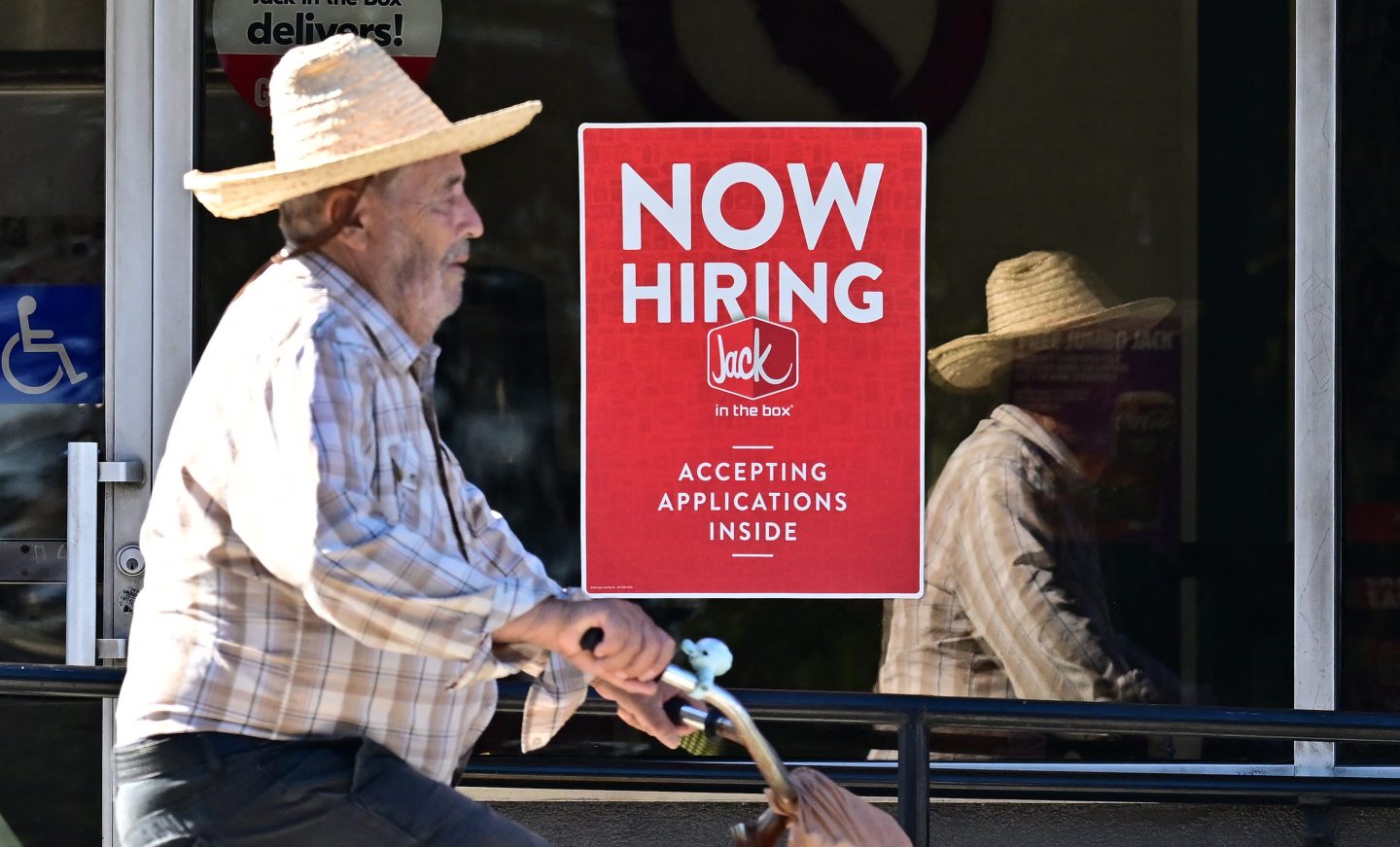
For all of their sharp differences when it comes to politics and policy, style and substance, Donald Trump and Hillary Clinton share at least one thing in common: They’re both well over the traditional retirement age of 65. At 70 and 68 years old, respectively, the two candidates are emblematic of the growing number of people who are looking to keep on working in their later years.

In fact, in a 2015 Gallup poll, 37% of non-retired Americans said they don’t expect to stop working until after age 65. That was way up from the 14% who said this in 1995.

Meanwhile, the segments of the U.S. labor force that are expected to grow the fastest between now and 2024 are those 65 to 74 and 75 and older.

Much of this is being driven by long-term demographic trends affecting not only this country but many developed nations: steadily expanding life expectancies, thanks to improvements in health and medicine, coupled with low fertility rates.

Of course, some folks want to work as septuagenarians—and even beyond that—because it gives them purpose and pleasure. Others will continue to punch the clock because they have no choice; financial savings for many is woefully inadequate, quashing dreams of a leisurely retirement.

Either way, for employers and employees alike, the underlying question is the same: What’s the best way to accommodate this inevitable graying of the factory, shop, and office?

Without a doubt, the companies that have most successfully utilized the experiences and skills of older workers have demonstrated one essential trait: flexibility.

This can manifest in all sorts of ways. “In some cases, it’s modifying the workplace,” notes Lori Trawinski, a director at the AARP Public Policy Institute. BMW, for example, has reconfigured its auto plants with older employees in mind, setting up easier-to-read computer screens and allowing workers to sit instead of stand.

Others have focused on the psychological rather than just the physical. The tire maker Michelin, for one, encourages older employees to ease into retirement, reducing their hours over time, instead of exiting all at once. This not only helps them adjust, but it facilitates their ability to impart knowledge to younger workers and, in so doing, underscores the great value they bring to the organization.

“Older workers tend to stay longer, work more productively, and have better health and wellbeing when their work is appreciated,” says Axel Börsch-Supan, director of the Munich Center for the Economics of Aging.

At other businesses, flexible scheduling has become a key to retaining older workers. CVS Caremark for years offered a “snowbird” program in which several hundred pharmacists and other employees from northern states would be transferred each winter to warmer climates. (That initiative has since morphed into a set of broader arrangements, including telecommuting, job sharing, and compressed workweeks.) Westpac, the Australian banking company, introduced a special leave program for grandparents.

Flexibility also means recognizing that what’s a boon for some workers may be a bane for others. For instance, certain older employees might love telecommuting because it’s less taxing on them. Yet they may have peers who prefer coming into work on a regular basis because they otherwise feel isolated and crave social interaction.

“It’s not clear that everyone wants to be working alone at home,” says Nicole Maestas, an associate professor of health care policy at Harvard Medical School, who is completing a major survey on working conditions for older employees. “These pathways aren’t so linear.”

If all of this sounds obvious and easy to put into place, it isn’t.

Myths abound that older workers aren’t sufficiently productive and block younger workers from advancing their own careers. Age discrimination remains a problem at many businesses. Some also worry that older workers carry inordinately high compensation and benefit costs—though this, too, is a misperception.

But perhaps the biggest stumbling block is in providing older workers with the flexibility that they require.

Earlier research by the Sloan Center on Aging & Work at Boston College found that the odds an employee has access to the flexible options that he or she needs are 74% higher for those between the ages of 27 and 35 than for those who are 53 and older.

“A multi-stage life” where people work long hours at one point, balance job and family at another, and make a strong social contribution at still another could well be “a gift for humanity,” Lynda Gratton and Andrew Scott, colleagues at the London Business School, write in their new book, The 100-Year Life: Living and Working in an Age of Longevity. “However, for corporations, and especially their HR departments, all this sounds like a nightmare; companies like conformity, and simple, predictable systems are easy to run and implement. So don’t be surprised if large numbers of institutions resist these changes.

“Most won’t be as flexible as we as individuals would like them to be,” Gratton and Scott continue. “This promises to be a battleground akin to the battles about the length of the working week and working conditions that marked the Industrial Revolution.”

It is shaping up, that is, as a fight for the ages.

About the Author
By Rick Wartzman
See full bioRight Arrow Button Icon

Latest in Commentary

Finance
Lorem ipsum dolor sit amet, consectetur adipiscing elit, sed do eiusmod tempor incididunt ut labore et dolore magna aliqua. Ut enim ad minim veniam
By Fortune Editors
October 20, 2025
Finance
Lorem ipsum dolor sit amet, consectetur adipiscing elit, sed do eiusmod tempor incididunt ut labore et dolore magna aliqua. Ut enim ad minim veniam
By Fortune Editors
October 20, 2025
Finance
Lorem ipsum dolor sit amet, consectetur adipiscing elit, sed do eiusmod tempor incididunt ut labore et dolore magna aliqua. Ut enim ad minim veniam
By Fortune Editors
October 20, 2025
Finance
Lorem ipsum dolor sit amet, consectetur adipiscing elit, sed do eiusmod tempor incididunt ut labore et dolore magna aliqua. Ut enim ad minim veniam
By Fortune Editors
October 20, 2025
Finance
Lorem ipsum dolor sit amet, consectetur adipiscing elit, sed do eiusmod tempor incididunt ut labore et dolore magna aliqua. Ut enim ad minim veniam
By Fortune Editors
October 20, 2025
Finance
Lorem ipsum dolor sit amet, consectetur adipiscing elit, sed do eiusmod tempor incididunt ut labore et dolore magna aliqua. Ut enim ad minim veniam
By Fortune Editors
October 20, 2025

Most Popular

Finance
Lorem ipsum dolor sit amet, consectetur adipiscing elit, sed do eiusmod tempor incididunt ut labore et dolore magna aliqua. Ut enim ad minim veniam
By Fortune Editors
October 20, 2025
Finance
Lorem ipsum dolor sit amet, consectetur adipiscing elit, sed do eiusmod tempor incididunt ut labore et dolore magna aliqua. Ut enim ad minim veniam
By Fortune Editors
October 20, 2025
Finance
Lorem ipsum dolor sit amet, consectetur adipiscing elit, sed do eiusmod tempor incididunt ut labore et dolore magna aliqua. Ut enim ad minim veniam
By Fortune Editors
October 20, 2025
Finance
Lorem ipsum dolor sit amet, consectetur adipiscing elit, sed do eiusmod tempor incididunt ut labore et dolore magna aliqua. Ut enim ad minim veniam
By Fortune Editors
October 20, 2025
Finance
Lorem ipsum dolor sit amet, consectetur adipiscing elit, sed do eiusmod tempor incididunt ut labore et dolore magna aliqua. Ut enim ad minim veniam
By Fortune Editors
October 20, 2025
Finance
Lorem ipsum dolor sit amet, consectetur adipiscing elit, sed do eiusmod tempor incididunt ut labore et dolore magna aliqua. Ut enim ad minim veniam
By Fortune Editors
October 20, 2025
Fortune Secondary Logo
Rankings
  • 100 Best Companies
  • Fortune 500
  • Global 500
  • Fortune 500 Europe
  • Most Powerful Women
  • Future 50
  • World’s Most Admired Companies
  • See All Rankings
Sections
  • Finance
  • Fortune Crypto
  • Features
  • Leadership
  • Health
  • Commentary
  • Success
  • Retail
  • Mpw
  • Tech
  • Lifestyle
  • CEO Initiative
  • Asia
  • Politics
  • Conferences
  • Europe
  • Newsletters
  • Personal Finance
  • Environment
  • Magazine
  • Education
Customer Support
  • Frequently Asked Questions
  • Customer Service Portal
  • Privacy Policy
  • Terms Of Use
  • Single Issues For Purchase
  • International Print
Commercial Services
  • Advertising
  • Fortune Brand Studio
  • Fortune Analytics
  • Fortune Conferences
  • Business Development
  • Group Subscriptions
About Us
  • About Us
  • Editorial Calendar
  • Press Center
  • Work At Fortune
  • Diversity And Inclusion
  • Terms And Conditions
  • Site Map
  • About Us
  • Editorial Calendar
  • Press Center
  • Work At Fortune
  • Diversity And Inclusion
  • Terms And Conditions
  • Site Map
  • Facebook icon
  • Twitter icon
  • LinkedIn icon
  • Instagram icon
  • Pinterest icon

Latest in Commentary

elon
CommentarySpaceX
The SpaceX IPO is great — but it won’t deliver 100x returns 
By Jeffrey StewartApril 1, 2026
7 minutes ago
gary
Commentaryregulation
The biggest mistake CEOs make with AI has nothing to do with the technology
By Gary ShapiroApril 1, 2026
9 hours ago
trump
CommentaryEPA
The EPA just valued a human life at $0. That’s not just a moral crisis — it’s a market crisis
By Andrew BeharApril 1, 2026
10 hours ago
dressel
Commentaryhistory
AI can’t remember what your company learned the hard way 
By Jason DresselApril 1, 2026
11 hours ago
pelosi
CommentaryElections
Congress has a lower approval rating than Hitler in some polls. And we just keep voting for the same 2 parties
By Stu StrumwasserApril 1, 2026
13 hours ago
gen z
CommentaryGen Z
Gen Z is engineering an analog future — and it’s at least a $5 billion opportunity
By Luba KassovaApril 1, 2026
14 hours ago

Most Popular

Jerome Powell says the $39 trillion national debt is ‘not unsustainable,’ but warns the trajectory ‘will not end well’
Economy
Jerome Powell says the $39 trillion national debt is ‘not unsustainable,’ but warns the trajectory ‘will not end well’
By Fortune EditorsMarch 30, 2026
2 days ago
Two-thirds of parents say their adult Gen Z kids still rely on them financially  for support—even though it's putting them under strain
Success
Two-thirds of parents say their adult Gen Z kids still rely on them financially  for support—even though it's putting them under strain
By Fortune EditorsMarch 31, 2026
1 day ago
Kevin O'Leary says if you earn $68,000 a year and follow this rule, you'll retire a millionaire
Personal Finance
Kevin O'Leary says if you earn $68,000 a year and follow this rule, you'll retire a millionaire
By Fortune EditorsMarch 31, 2026
1 day ago
A man used AI to call 3,000 Irish bartenders to track the cost of Guinness. Now pubs are lowering their prices to compete
AI
A man used AI to call 3,000 Irish bartenders to track the cost of Guinness. Now pubs are lowering their prices to compete
By Fortune EditorsMarch 30, 2026
2 days ago
Hiring just hit a level not seen since the economy was ‘closed down literally’ during COVID, top economist says
Economy
Hiring just hit a level not seen since the economy was ‘closed down literally’ during COVID, top economist says
By Fortune EditorsMarch 31, 2026
1 day ago
Markets cheer as Trump threatens to abandon Iran war, but Jamie Dimon sides with allies: ‘Win this thing and clean up the straits’
Energy
Markets cheer as Trump threatens to abandon Iran war, but Jamie Dimon sides with allies: ‘Win this thing and clean up the straits’
By Fortune EditorsMarch 31, 2026
1 day ago

© 2026 Fortune Media IP Limited. All Rights Reserved. Use of this site constitutes acceptance of our Terms of Use and Privacy Policy | CA Notice at Collection and Privacy Notice | Do Not Sell/Share My Personal Information
FORTUNE is a trademark of Fortune Media IP Limited, registered in the U.S. and other countries. FORTUNE may receive compensation for some links to products and services on this website. Offers may be subject to change without notice.