• Home
  • Latest
  • Fortune 500
  • Finance
  • Tech
  • Leadership
  • Lifestyle
  • Rankings
  • Multimedia

Trendingnow

1

Microsoft AI chief gives it 18 months—for all white-collar work to be automated by AI

2

Former top Russian official admits the country is over Putin and can 'imagine a future without him' — even elites bail as Kremlin seizes their assets 

3

The Bezos family just donated $100 million to help achieve one of Mayor Zohran Mamdani’s top campaign promises

1

Microsoft AI chief gives it 18 months—for all white-collar work to be automated by AI

2

Former top Russian official admits the country is over Putin and can 'imagine a future without him' — even elites bail as Kremlin seizes their assets 

3

The Bezos family just donated $100 million to help achieve one of Mayor Zohran Mamdani’s top campaign promises
Commentary

Brexit Won’t Be So Bad If the U.S. Strikes This Trade Deal

By
Alan Wolff
Alan Wolff
Down Arrow Button Icon
By
Alan Wolff
Alan Wolff
Down Arrow Button Icon
September 20, 2016, 1:00 AM ET
European Commission Campaigns For TTIP Trade Agreement
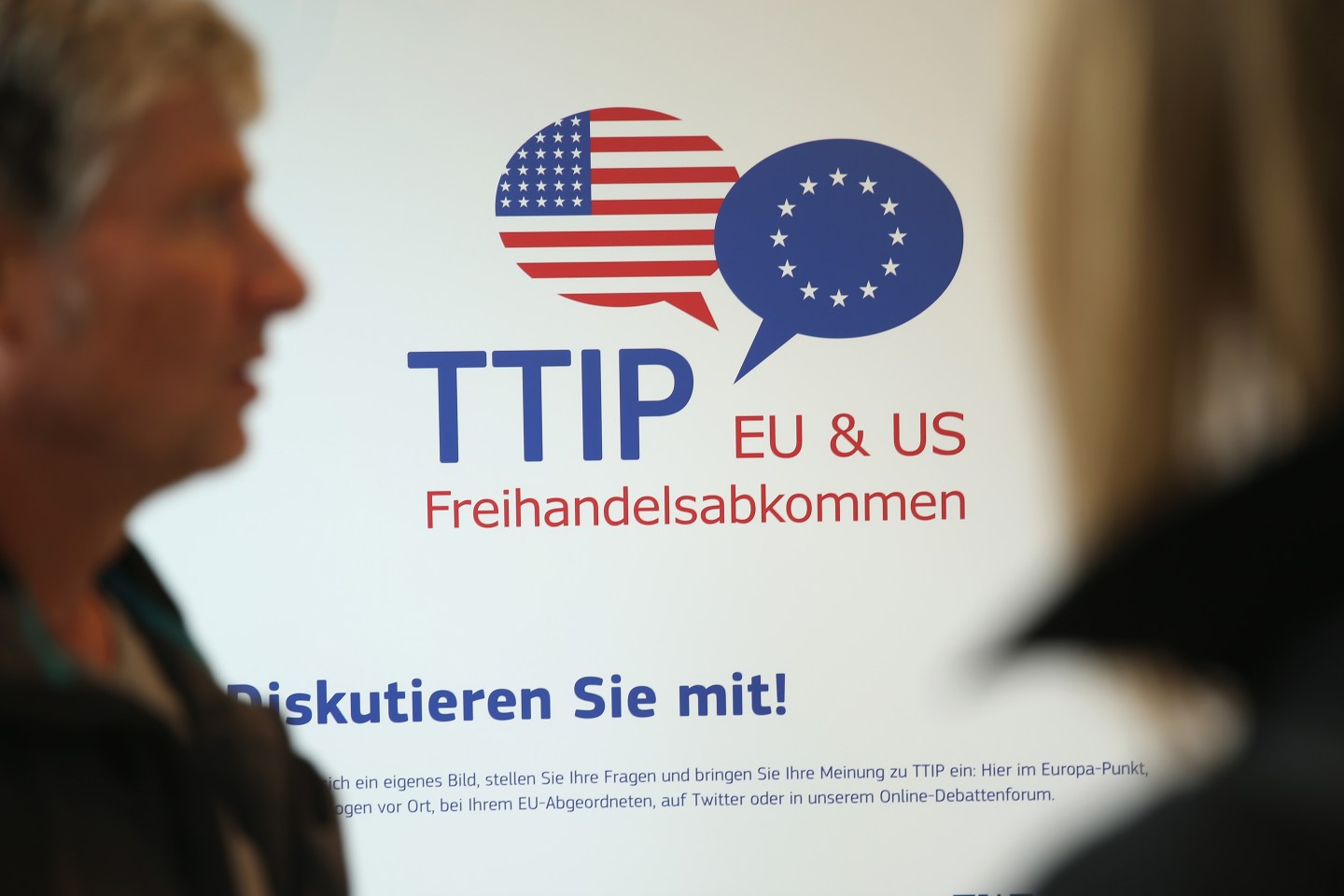
BERLIN, GERMANY - JULY 10: Visitors chat in the public information representation of the European Commission near a sign promoting the TTIP free trade agreement between the U.S. and the European Union on July 10, 2015 in Berlin, Germany. TTIP, which is still being negotiated by the two sides, has come under a hail of popular criticism in Germany. (Photo by Sean Gallup/Getty Images)Sean Gallup—Getty Images

The Trans-Pacific Partnership (TPP) has been in the news of late, with President Barack Obama pushing for its approval and both presidential candidates distancing themselves from the pact. But meanwhile, the European Union (EU) and U.S. are negotiating another less-noticed trade deal: the Transatlantic Trade and Investment Partnership (TTIP).

The pact has the potential to draw Europe and the U.S. closer together through regulatory cooperation and the elimination of existing trade barriers. With two-way trade in goods and services between the U.S. and EU at over $1 trillion each year, both sides have a large stake in reaching an agreement. In addition, the United Kingdom’s decision to leave the EU, known popularly as Brexit, has created uncertainty for American businesses’ future access to the EU market and for American investments in the UK that depend upon access to other European markets. The UK and EU have not yet begun negotiating the terms under which future trade in goods and services—free until now—will operate.

This Friday, EU trade ministers are meeting in Bratislava, Slovakia, to discuss the trade negotiation agenda of the union, including the future of trans-Atlantic trade talks. The top EU and U.S. negotiators last Thursday pledged to do their best to make major progress on the agreement by year-end.

Though TTIP discussions are now into their third year, there is still a ways to go. The UK, traditionally a strong voice for trade liberalization, is no longer in a position to make the affirmative case due to Brexit. Will another EU member state pick up the cause? Right now, the outlook is not good. The French trade minister said in August that TTIP talks ought to be suspended. And surprisingly, the economic affairs minister of Germany, by far one of the largest beneficiaries of open international trade, declared around that time that the free trade talks have failed. Other EU member states have expressed various issues with the partnership, but have not called for a suspension of talks.

While positive leadership could push the deal forward, European leaders are instead reaching for the pause button, blaming the U.S. for not offering enough concessions. For example, the German government lamented U.S. resistance to a provision requiring American states and cities to allow competitive bidding by European suppliers. The French and Germans have also cited U.S. resistance to geographical indications, which would dictate that U.S. dairy producers allow European producers to retain exclusive rights to the names of certain names of food products. This would mean that no future Wisconsin farmer could produce and market feta or parmesan cheese, as those names would be reserved for cheese made in Greece and Italy, respectively.

Ironing out all of these details will be a time-consuming process that could only be reasonably expected at the very end of a negotiating process. So are these the real reasons Germany and France are calling for suspension of the trade talks? The more likely explanation is that they are bowing to vocal domestic groups that oppose trade liberalization. As TTIP would be the largest regional trade agreement ever negotiated, it has become a prime target of Europe’s anti-trade forces. But failure to consummate a deal would be a mistake, as the TTIP will benefit all involved.

A blueprint for improving global trade

The current World Trade Organization (WTO) rules were adopted two decades ago. The agreements negotiated at that time were a major advance for trade, but the global economy has changed a lot since then. At the time, there was little e-commerce, which requires the free flow of cross-border data over the Internet. In addition, state-owned enterprises were less of a factor in world trade and did not elicit the same concerns about unfair government-backed commercial competition that they do today. The WTO rules do not address either of these issues. The TTIP will put into place rules both for assuring the free flow of data across borders and setting standards for commercial competition from state-owned companies.

The best chance for substantial progress lies with the world’s two largest free-market-oriented trading partners: the EU and the U.S. Whatever the two can agree to, together with the potential TPP provisions, is likely to become the basis for a global trading system free of unnecessary border tariffs, customs procedures, and product standards. While a global agreement is not yet possible to achieve this objective, the TTIP would be an indispensable first step. What’s more, the TTIP is designed with an open architecture, meaning that other countries can join later on.

Improved market access

Significant obstacles inhibit trade between the U.S. and EU, in particular with regard to tariffs and product standards. For example, American-made cars face a 10% tariff going into Europe, and European cars face a 2.5% tariff entering the U.S. A greater barrier lies in the two sides’ differing safety standards. Standards and approval processes also stand in the way of trade in pharmaceuticals, cosmetics, medical devices, and a host of other products.

The same is true for services. Two-way trade in services related to software, intellectual property, finances, travel, professional and management consulting, and transportation runs at about $400 billion per year, but is restrained by differing standards and certification procedures. The TTIP would set up cooperative mechanisms for U.S. and EU regulators to communicate as they develop new standards, making it far more likely that their regulations could become compatible.

Additionally, e-commerce will be boosted by guaranteed freedom of cross-border data flows. These benefits wouldn’t be limited to multinational companies. For example, most of the sellers on eBay are in fact exporters—they sell to anyone, anywhere. Small- and medium-scale enterprises will benefit from digital access to other markets, as well as access to more information on regulatory processes and customs procedures.


A path forward beyond Brexit

Improving trans-Atlantic economic relations should not be put on hold while the EU and UK resolve their future economic arrangement after Brexit. In fact, the reverse is true. The TTIP can be part of the solution, providing greater openness not only for trans-Atlantic trade and investment, but trade and investment across the English Channel as well. The TTIP can also provide a template for post-Brexit trade relations among the U.S., UK and EU. Lastly, a high-quality TTIP agreement can help provide stability in an uncertain investment climate.

The TTIP is unlikely to be terminated at the Bratislava meeting. Regardless, political leaders would be much wiser to express support for the deal than to join the chorus of doubters.

Alan Wm. Wolff served as a senior trade negotiator in Republican and Democratic administrations, is chairman of the National Foreign Trade Council, and is a senior counsel with the Washington DC office of Dentons.

About the Author
By Alan Wolff
See full bioRight Arrow Button Icon

Latest in Commentary

Finance
Lorem ipsum dolor sit amet, consectetur adipiscing elit, sed do eiusmod tempor incididunt ut labore et dolore magna aliqua. Ut enim ad minim veniam
By Fortune Editors
October 20, 2025
Finance
Lorem ipsum dolor sit amet, consectetur adipiscing elit, sed do eiusmod tempor incididunt ut labore et dolore magna aliqua. Ut enim ad minim veniam
By Fortune Editors
October 20, 2025
Finance
Lorem ipsum dolor sit amet, consectetur adipiscing elit, sed do eiusmod tempor incididunt ut labore et dolore magna aliqua. Ut enim ad minim veniam
By Fortune Editors
October 20, 2025
Finance
Lorem ipsum dolor sit amet, consectetur adipiscing elit, sed do eiusmod tempor incididunt ut labore et dolore magna aliqua. Ut enim ad minim veniam
By Fortune Editors
October 20, 2025
Finance
Lorem ipsum dolor sit amet, consectetur adipiscing elit, sed do eiusmod tempor incididunt ut labore et dolore magna aliqua. Ut enim ad minim veniam
By Fortune Editors
October 20, 2025
Finance
Lorem ipsum dolor sit amet, consectetur adipiscing elit, sed do eiusmod tempor incididunt ut labore et dolore magna aliqua. Ut enim ad minim veniam
By Fortune Editors
October 20, 2025

Most Popular

Finance
Lorem ipsum dolor sit amet, consectetur adipiscing elit, sed do eiusmod tempor incididunt ut labore et dolore magna aliqua. Ut enim ad minim veniam
By Fortune Editors
October 20, 2025
Finance
Lorem ipsum dolor sit amet, consectetur adipiscing elit, sed do eiusmod tempor incididunt ut labore et dolore magna aliqua. Ut enim ad minim veniam
By Fortune Editors
October 20, 2025
Finance
Lorem ipsum dolor sit amet, consectetur adipiscing elit, sed do eiusmod tempor incididunt ut labore et dolore magna aliqua. Ut enim ad minim veniam
By Fortune Editors
October 20, 2025
Finance
Lorem ipsum dolor sit amet, consectetur adipiscing elit, sed do eiusmod tempor incididunt ut labore et dolore magna aliqua. Ut enim ad minim veniam
By Fortune Editors
October 20, 2025
Finance
Lorem ipsum dolor sit amet, consectetur adipiscing elit, sed do eiusmod tempor incididunt ut labore et dolore magna aliqua. Ut enim ad minim veniam
By Fortune Editors
October 20, 2025
Finance
Lorem ipsum dolor sit amet, consectetur adipiscing elit, sed do eiusmod tempor incididunt ut labore et dolore magna aliqua. Ut enim ad minim veniam
By Fortune Editors
October 20, 2025
Fortune Secondary Logo
Rankings
  • 100 Best Companies
  • Fortune 500
  • Global 500
  • Fortune 500 Europe
  • Most Powerful Women
  • World's Most Admired Companies
  • See All Rankings
  • Lists Calendar
Sections
  • Finance
  • Fortune Crypto
  • Features
  • Leadership
  • Health
  • Commentary
  • Success
  • Retail
  • Mpw
  • Tech
  • Lifestyle
  • CEO Initiative
  • Asia
  • Politics
  • Conferences
  • Europe
  • Newsletters
  • Personal Finance
  • Environment
  • Magazine
  • Education
Customer Support
  • Frequently Asked Questions
  • Customer Service Portal
  • Privacy Policy
  • Terms Of Use
  • Single Issues For Purchase
  • International Print
Commercial Services
  • Advertising
  • Fortune Brand Studio
  • Fortune Analytics
  • Fortune Conferences
  • Business Development
  • Group Subscriptions
About Us
  • About Us
  • Press Center
  • Work At Fortune
  • Terms And Conditions
  • Site Map
  • About Us
  • Press Center
  • Work At Fortune
  • Terms And Conditions
  • Site Map
  • Facebook icon
  • Twitter icon
  • LinkedIn icon
  • Instagram icon
  • Pinterest icon

Latest in Commentary

murdochs
CommentaryMedia
OpenAI paid $100 million for a talk show. James Murdoch is eyeing an even bigger deal. The hot new asset class is humanity
By Lin CherryMay 17, 2026
13 hours ago
dennis
CommentaryAI agents
Freshworks CEO: why agile enterprises are winning the AI race — and what they did differently
By Dennis WoodsideMay 17, 2026
13 hours ago
Mary Moreland-Abbott Executive Vice President of Human Resources.
CommentaryRetirement
Gen X is the most indebted generation in America. Their employers can fix that
By Mary MorelandMay 17, 2026
15 hours ago
liberman
Commentarystart-ups
We watched social media concentrate. The same thing is happening in AI, only at a deeper layer
By David Liberman and Daniil LibermanMay 16, 2026
1 day ago
olivier
CommentaryAnthropic
I’ve been studying Big Tech for a long time. What just happened with Anthropic and the Pentagon terrifies me
By Olivier SylvainMay 16, 2026
2 days ago
lawyer
CommentaryLaw
Would you hire the lawyer who just got sanctioned for using AI?
By Alexandra SmythMay 16, 2026
2 days ago

Most Popular

Microsoft AI chief gives it 18 months—for all white-collar work to be automated by AI
AI
Microsoft AI chief gives it 18 months—for all white-collar work to be automated by AI
By Jake AngeloMay 16, 2026
2 days ago
Former top Russian official admits the country is over Putin and can 'imagine a future without him' — even elites bail as Kremlin seizes their assets 
Politics
Former top Russian official admits the country is over Putin and can 'imagine a future without him' — even elites bail as Kremlin seizes their assets 
By Jason MaMay 16, 2026
1 day ago
The Bezos family just donated $100 million to help achieve one of Mayor Zohran Mamdani’s top campaign promises
Politics
The Bezos family just donated $100 million to help achieve one of Mayor Zohran Mamdani’s top campaign promises
By Jake AngeloMay 12, 2026
5 days ago
SpaceX heads into a record-shattering IPO with the 'deepest moat that exists today' as investors vow to 'never bet against Elon'
Innovation
SpaceX heads into a record-shattering IPO with the 'deepest moat that exists today' as investors vow to 'never bet against Elon'
By Jason MaMay 16, 2026
1 day ago
'No one was coming to save me': How Reese Witherspoon built a $900 million company from a problem Hollywood wouldn't fix
Success
'No one was coming to save me': How Reese Witherspoon built a $900 million company from a problem Hollywood wouldn't fix
By Sydney LakeMay 17, 2026
14 hours ago
The top foreign holders of U.S. debt may soon dump Treasury bonds and bring their money back home, potentially spiking borrowing costs
Economy
The top foreign holders of U.S. debt may soon dump Treasury bonds and bring their money back home, potentially spiking borrowing costs
By Jason MaMay 17, 2026
8 hours ago

© 2026 Fortune Media IP Limited. All Rights Reserved. Use of this site constitutes acceptance of our Terms of Use and Privacy Policy | CA Notice at Collection and Privacy Notice | Do Not Sell/Share My Personal Information
FORTUNE is a trademark of Fortune Media IP Limited, registered in the U.S. and other countries. FORTUNE may receive compensation for some links to products and services on this website. Offers may be subject to change without notice.