• Home
  • Latest
  • Fortune 500
  • Finance
  • Tech
  • Leadership
  • Lifestyle
  • Rankings
  • Multimedia

Trendingnow

1

MacKenzie Scott alone accounted for one-third of America's $19.2 billion in megagifts last year

2

Elon Musk on MacKenzie Scott giving away $26 billion of her fortune: 'Sadly,' it makes the world a worse place

3

Philanthropy leader at Warren Buffett and Bill Gates’ Giving Pledge says children of billionaires are pushing them to give their wealth away faster

1

MacKenzie Scott alone accounted for one-third of America's $19.2 billion in megagifts last year

2

Elon Musk on MacKenzie Scott giving away $26 billion of her fortune: 'Sadly,' it makes the world a worse place

3

Philanthropy leader at Warren Buffett and Bill Gates’ Giving Pledge says children of billionaires are pushing them to give their wealth away faster
FinanceFortune 500

How Fortune 500 Companies Avoided Paying Taxes on $2.5 Trillion

By
Chris Matthews
Chris Matthews
Down Arrow Button Icon
By
Chris Matthews
Chris Matthews
Down Arrow Button Icon
October 6, 2016, 10:30 AM ET
Houses near the sea
John Greim—LightRocket
Add Fortune on Google for similar content.

Judging by the financial statements of Fortune 500 companies, it appears they’d rather do business just about anywhere but America. And it’s not because they don’t like selling Americans goods and services, but rather because they think tax rates in the U.S. are just too high.

According to a new report from the progressive group Citizens for Tax Justice (CTJ), America’s largest companies by revenue are stashing a record $2.5 trillion in overseas “tax havens,” up $400 million from last year’s count. As long as that money remains offshore, these companies can avoid paying U.S. corporate tax on those profits, a dynamic that CTJ argues disadvantages smaller American companies without foreign subsidiaries; domestic-only firms often have to pay the full 35% corporate tax rate—among the highest in the world—in addition to state corporate taxes.

The solution, according to Citizens for Tax Justice, is for the U.S. to tax all profits of American corporations regardless of where the money is earned, while allowing those firms to deduct foreign taxes paid in order to avoid double taxation. What CTJ and other advocates for this strategy don’t consider is why multinational firms wouldn’t just decide to move their headquarters to countries with lower corporate tax rates, costing America valuable jobs, regardless of how much business they do in the States.

The risk of more companies moving abroad explains why President Obama has proposed ending the option of deferring taxes on profits earned abroad, and instituting a 19% global minimum tax. That means if a foreign subsidiary of an American company pays 19% or more in foreign taxes on earnings, they can bring that money home without paying taxes to the U.S. Treasury. But if they pay less than that rate, they will automatically owe the difference to the American taxman. The president has also proposed lowering the corporate tax rate to 28% to bring it more in line with the effective OECD average, which the Congressional Research Service estimated in 2015 to be 27.7%. President Obama would pay for that reduction by removing loopholes that have made the effective tax rate in the United States much lower than the headline rate for many big U.S. multinationals, like limiting the extent to which interest on debt is deductible.

It’s difficult to tell, however, whether this 19% global minimum would be low enough to encourage multinationals to stick around. And it certainly wouldn’t do anything to stop the competitive lowering of corporate tax rates as countries compete with each other to win corporate headquarters and the lucrative jobs they bring. Regardless, the President’s proposal is viewed as having little or no chance of getting passed by the Republican-controlled Congress.

Republicans in general, and the Donald Trump campaign in particular, want to significantly reduce the corporate tax rate for businesses. Trump wants to lower the corporate tax rate to 15%, while applying a one-time 10% tax on income held abroad. This low rate would theoretically reduce the incentive to keep money in tax havens.

The Clinton campaign, on the other hand, would maintain the current corporate tax rate, but discourage companies from leaving for lower-tax jurisdictions by imposing an “exit tax” on companies that leave. Clinton’s plan would also make it more difficult for companies to shift their earnings to subsidiaries in tax havens by banning practices like earnings stripping, whereby foreign subsidiaries lend money to U.S.-based operations so that the U.S. company can deduct interest payments on earnings while the foreign subsidiary racks up interest income that is taxed at a lower rate.

But another strategy, put forward by some economists like Kimberly Clausing of Reed College is a radically new tax framework known as formulary apportionment. This system, which is used by American states that institute corporate income tax, taxes companies based on how much they sells to residents of a specific country. For instance if Company A sells 30% of its widgets to American-based consumers, 30% of its profit would be subject to the U.S. tax rate. This sort of system would relieve firms from the temptation to use complicated maneuvers to shift profits between jurisdictions, because it would base taxes off of documentable sales, which aren’t as easily manipulated as the location of income.

The U.S. could adopt this formulary apportionment system unilaterally even if it wasn’t able to get cooperation from other wealthy countries. Switching to such a system would immediately incentivize firms to report their income in the U.S., because the U.S. would not be taxing based on reported income, just on a portion of sales. This would draw revenue away from countries who use a territorial system, and encourage those countries to adopt formulary apportionment.

That said, advocates of formulary apportionment think it would be better to shift to the system in concert with other wealthy nations to avoid conflict and the possibility of double taxation. Such a system, however, might reduce tax competition between states, angering small-government activists who see this as a necessary force to check the desire of states to over tax. At the same time, it would be an idea worth floating in Congress, and raising in international contexts, before committing to some other form of corporate tax reform.


About the Author
By Chris Matthews
See full bioRight Arrow Button Icon
Add Fortune on Google for similar content.

Latest in Finance

Finance
Lorem ipsum dolor sit amet, consectetur adipiscing elit, sed do eiusmod tempor incididunt ut labore et dolore magna aliqua. Ut enim ad minim veniam
By Fortune Editors
October 20, 2025
Finance
Lorem ipsum dolor sit amet, consectetur adipiscing elit, sed do eiusmod tempor incididunt ut labore et dolore magna aliqua. Ut enim ad minim veniam
By Fortune Editors
October 20, 2025
Finance
Lorem ipsum dolor sit amet, consectetur adipiscing elit, sed do eiusmod tempor incididunt ut labore et dolore magna aliqua. Ut enim ad minim veniam
By Fortune Editors
October 20, 2025
Finance
Lorem ipsum dolor sit amet, consectetur adipiscing elit, sed do eiusmod tempor incididunt ut labore et dolore magna aliqua. Ut enim ad minim veniam
By Fortune Editors
October 20, 2025
Finance
Lorem ipsum dolor sit amet, consectetur adipiscing elit, sed do eiusmod tempor incididunt ut labore et dolore magna aliqua. Ut enim ad minim veniam
By Fortune Editors
October 20, 2025
Finance
Lorem ipsum dolor sit amet, consectetur adipiscing elit, sed do eiusmod tempor incididunt ut labore et dolore magna aliqua. Ut enim ad minim veniam
By Fortune Editors
October 20, 2025

Most Popular

Finance
Lorem ipsum dolor sit amet, consectetur adipiscing elit, sed do eiusmod tempor incididunt ut labore et dolore magna aliqua. Ut enim ad minim veniam
By Fortune Editors
October 20, 2025
Finance
Lorem ipsum dolor sit amet, consectetur adipiscing elit, sed do eiusmod tempor incididunt ut labore et dolore magna aliqua. Ut enim ad minim veniam
By Fortune Editors
October 20, 2025
Finance
Lorem ipsum dolor sit amet, consectetur adipiscing elit, sed do eiusmod tempor incididunt ut labore et dolore magna aliqua. Ut enim ad minim veniam
By Fortune Editors
October 20, 2025
Finance
Lorem ipsum dolor sit amet, consectetur adipiscing elit, sed do eiusmod tempor incididunt ut labore et dolore magna aliqua. Ut enim ad minim veniam
By Fortune Editors
October 20, 2025
Finance
Lorem ipsum dolor sit amet, consectetur adipiscing elit, sed do eiusmod tempor incididunt ut labore et dolore magna aliqua. Ut enim ad minim veniam
By Fortune Editors
October 20, 2025
Finance
Lorem ipsum dolor sit amet, consectetur adipiscing elit, sed do eiusmod tempor incididunt ut labore et dolore magna aliqua. Ut enim ad minim veniam
By Fortune Editors
October 20, 2025
Fortune Secondary Logo
Rankings
  • 100 Best Companies
  • Fortune 500
  • Global 500
  • Fortune 500 Europe
  • Most Powerful Women
  • World's Most Admired Companies
  • See All Rankings
  • Lists Calendar
Sections
  • Finance
  • Fortune Crypto
  • Features
  • Leadership
  • Health
  • Commentary
  • Success
  • Retail
  • Mpw
  • Tech
  • Lifestyle
  • CEO Initiative
  • Asia
  • Politics
  • Conferences
  • Europe
  • Newsletters
  • Personal Finance
  • Environment
  • Magazine
  • Education
Customer Support
  • Frequently Asked Questions
  • Customer Service Portal
  • Privacy Policy
  • Terms Of Use
  • Single Issues For Purchase
  • International Print
Commercial Services
  • Advertising
  • Fortune Brand Studio
  • Fortune Analytics
  • Fortune Conferences
  • Business Development
  • Group Subscriptions
About Us
  • About Us
  • Press Center
  • Work At Fortune
  • Terms And Conditions
  • Site Map
  • About Us
  • Press Center
  • Work At Fortune
  • Terms And Conditions
  • Site Map
  • Facebook icon
  • Twitter icon
  • LinkedIn icon
  • Instagram icon
  • Pinterest icon

Latest in Finance

Nike’s earning numbers exceeded Wall Street’s expectations. But CEO Elliott Hill’s next test is the World Cup
RetailNike
Nike’s earning numbers exceeded Wall Street’s expectations. But CEO Elliott Hill’s next test is the World Cup
By Mia OsmonbekovJune 30, 2026
11 hours ago
Young couple looking sad in front of a home with a for sale sign
Real EstateHousing
Gen Z and millennials aren’t convinced the American Dream exists anymore: Only 40% of them can afford to buy a home
By Tristan BoveJune 30, 2026
13 hours ago
Russian President Vladimir Putin
EconomyRussia
It started with one viral influencer complaining about Russia’s economy. Now a record 60% of Russians are pessimistic about their country’s outlook
By Tristan BoveJune 30, 2026
14 hours ago
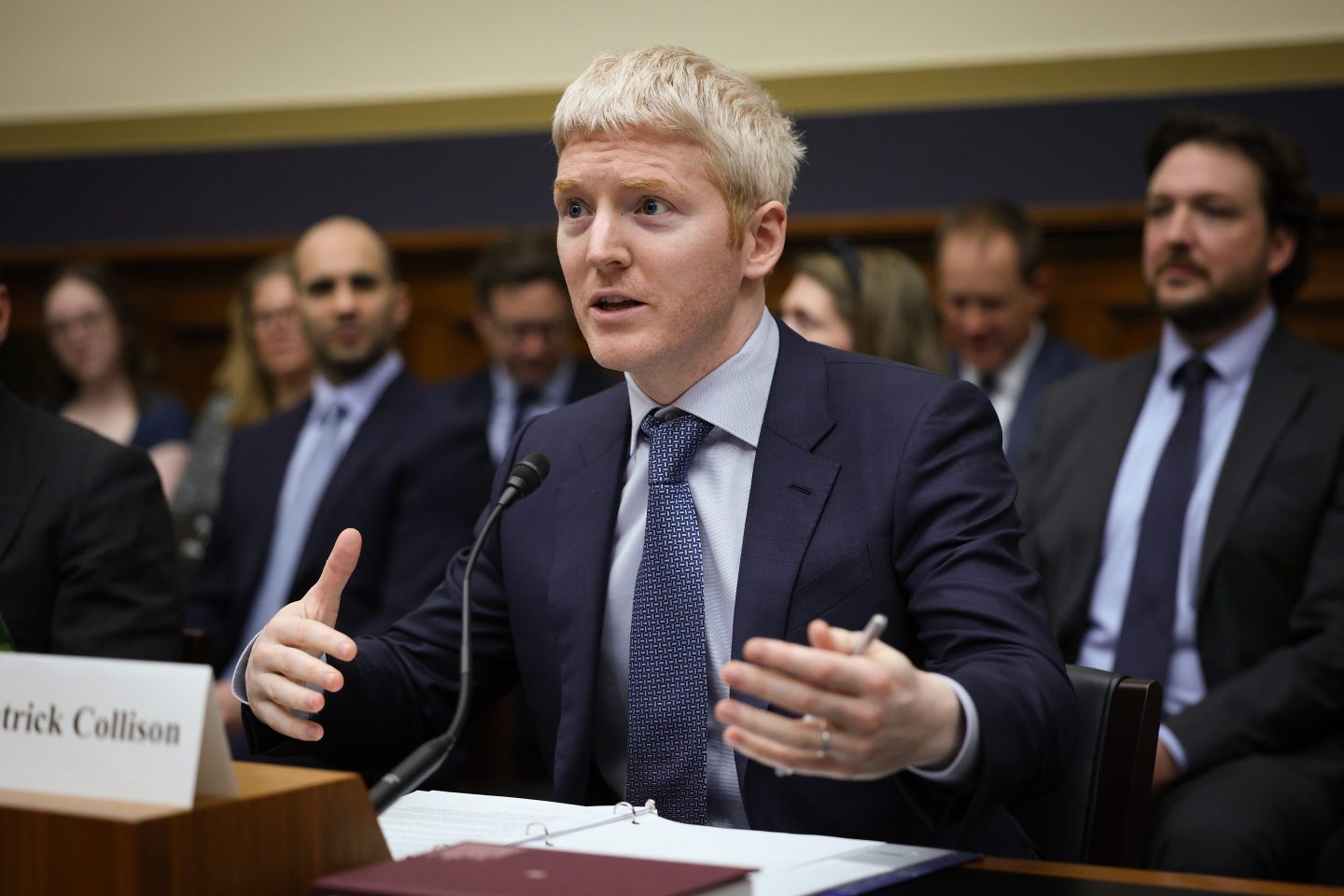
Stripe CEO Patrick Collison gestures with his hands as he speaks into a microphone before a congressional committee hearing.
Cryptostablecoins
Stripe, Visa and over 140 other businesses to launch stablecoin to rival Tether and Circle
By Camila Grigera NaónJune 30, 2026
15 hours ago
A woman types into a kiosk at an airport.
Travel & LeisureAviation
‘You can expect prices to be high and stay high’: Domestic airfare is skyrocketing faster than international flight costs, despite using less jet fuel
By Sasha RogelbergJune 30, 2026
16 hours ago
Young worker at desk
SuccessGen Z
Remote-first fintech giant Revolut is making the office compulsory for new Gen Z grads—and they’ll earn flexibility like their peers after one year
By Emma BurleighJune 30, 2026
16 hours ago

Most Popular

MacKenzie Scott alone accounted for one-third of America's $19.2 billion in megagifts last year
Success
MacKenzie Scott alone accounted for one-third of America's $19.2 billion in megagifts last year
By Sydney LakeJune 25, 2026
6 days ago
Elon Musk on MacKenzie Scott giving away $26 billion of her fortune: 'Sadly,' it makes the world a worse place
Success
Elon Musk on MacKenzie Scott giving away $26 billion of her fortune: 'Sadly,' it makes the world a worse place
By Sydney LakeJune 29, 2026
2 days ago
Philanthropy leader at Warren Buffett and Bill Gates’ Giving Pledge says children of billionaires are pushing them to give their wealth away faster
Success
Philanthropy leader at Warren Buffett and Bill Gates’ Giving Pledge says children of billionaires are pushing them to give their wealth away faster
By Preston ForeJune 27, 2026
4 days ago
'Humanity has chosen to become idiots': This Brown professor switched to take-home exams after a mass shooting and discovered mass cheating
AI
'Humanity has chosen to become idiots': This Brown professor switched to take-home exams after a mass shooting and discovered mass cheating
By Catherina GioinoJune 29, 2026
1 day ago
The U.S. Army is opening military bases to private billions — here's why that changes everything for the next 250 years
Commentary
The U.S. Army is opening military bases to private billions — here's why that changes everything for the next 250 years
By Marc AndersenJune 30, 2026
20 hours ago
The retired college professor fighting a $313 trespassing ticket in Wisconsin thinks he's part of a national struggle
Environment
The retired college professor fighting a $313 trespassing ticket in Wisconsin thinks he's part of a national struggle
By Catherina GioinoJune 28, 2026
3 days ago

© 2026 Fortune Media IP Limited. All Rights Reserved. Use of this site constitutes acceptance of our Terms of Use and Privacy Policy | CA Notice at Collection and Privacy Notice | Do Not Sell/Share My Personal Information
FORTUNE is a trademark of Fortune Media IP Limited, registered in the U.S. and other countries. FORTUNE may receive compensation for some links to products and services on this website. Offers may be subject to change without notice.