• Home
  • Latest
  • Fortune 500
  • Finance
  • Tech
  • Leadership
  • Lifestyle
  • Rankings
  • Multimedia

Trendingnow

1

Even as Elon Musk calls philanthropy ‘very hard,’ everyday Americans gave a record $617 billion—despite feeling the squeeze over the cost of living

2

Egg companies made $1.22 billion in profit off a $6 carton — now they’re buying their way out of a price-fixing case with 53 million donated eggs

3

Meet the Zillennials: The luckiest micro-generation in the workforce, born between 1993 and 1998

1

Even as Elon Musk calls philanthropy ‘very hard,’ everyday Americans gave a record $617 billion—despite feeling the squeeze over the cost of living

2

Egg companies made $1.22 billion in profit off a $6 carton — now they’re buying their way out of a price-fixing case with 53 million donated eggs

3

Meet the Zillennials: The luckiest micro-generation in the workforce, born between 1993 and 1998
FinanceGlobalization

This Is How to Fix Globalization

By
Diane Coyle
Diane Coyle
and
World Economic Forum
Down Arrow Button Icon
By
Diane Coyle
Diane Coyle
and
World Economic Forum
Down Arrow Button Icon
January 8, 2017, 8:00 PM ET
Globe Focus on France
Globe with shallow focus on Paris, France on black bacgroundEHStock—iStockphoto/Getty Images
Add Fortune on Google for similar content.

This article originally appeared on World Economic Forum.

It’s recently become fashionable to worry that the fabric of democracy is being undermined as people feel left behind by globalization and automation. I think these fears are to some extent well founded. But this isn’t a new problem: it goes back at least as far as the 1980s. Our failure to recognize it then, and act on it since, is why it has now reached crisis proportions.

Are there lessons we could learn from those decades-long failures of policy? Yes. Will we learn them? Perhaps not, although there are a few promising signs.

The most fundamental lesson is that to address a problem, you first need to notice it. One of the striking features of the Brexit vote, and the response in some other places to various manifestations of rising populism, has been the surprise of many voters in wealthy, cosmopolitan cities at discovering how differently some of their fellow citizens are thinking.

These tend to be people living in towns and smaller cities where traditional jobs began to disappear a generation ago and have never been adequately replaced. Whole communities have experienced their real incomes stagnating or falling since well before the financial crisis.

A decade ago, Benjamin Friedman made the case in The Moral Consequences of Economic Growth that democracy requires a growing economy to lubricate the necessary give and take. When people see their own lives improving, they tend to be sanguine about others’ lives improving more quickly. However, when their own living standards have declined, and they expect their children’s to be even worse, resentment against others who are doing better is inevitable.

For at least three decades, since automation and globalization started radically changing industry, whole swathes of geography have been struggling even as economies have grown overall. For the most part, this has barely registered on policy-makers’ radars.

Statistics existed that could have alerted us to the brewing crisis—but nobody was looking. It took Thomas Piketty, in his 2014 work Capital, to put in the huge amount of effort necessary to make the data clearly tell the story of how many workers were being left behind.

But all Piketty has done is start the conversation: we still need to develop a serious policy response. It’s not too late to start doing what we should have been doing since the 1980s—essentially, taking regional policy much more seriously. I see three main elements to this:

Infrastructure

Large cities will always be the best incubators of economic growth, because the more people you have in one place, the easier it is for their knowledge to spread to each other. But we can narrow the natural disadvantage of smaller cities and towns by improving the infrastructure that connects them to each other.

This recommendation implies making fast broadband universal, but it also points to the need for better transport, like high-speed rail, because virtual and physical communication are complements, not substitutes.

Click to enlarge.Eurostat | World Economic Forum
Eurostat | World Economic Forum

Education

I claim no expertise in how we should be educating our children for the technological state of the world they will face when they graduate, but I am fairly certain we’re currently getting it wrong. Most schools still resemble factories for turning children into expensive and not very good computers.

One obvious and much discussed improvement would be teaching more coding—something we struggle with, partly because we don’t have enough teachers with the necessary skills. Another improvement would be to help children develop the human skills that machines seem furthest away from mastering, such as creativity in problem solving.

Devolved power

Every region is different in terms of what jobs it could create, and the kind of education it needs, which brings me to the final priority: giving local levels of government more power. If education policy is being set by a bureaucrat in a distant city, it can’t reasonably be expected to equip students with the appropriate skills for the local economy.

The same is true of other policy areas. One clear lesson of last year’s electoral shocks is how many people felt a lack of agency. They see decisions that shape their lives being taken by people who aren’t like them, in places that feel far away, whether in central banks, multinational boardrooms or booming capital cities, and seem disconnected from their hinterlands. During the UK referendum campaign the slogan that resonated most was the promise to “take back control”.

If part of what’s undermining democracy is people feeling disconnected from power, part of the answer must be looking for ways to return power closer to people.

Public sector investment and political will

All of this is easier said than done. It would require a very serious redirection of resources to create opportunities in the regions or towns that have been left behind—high quality education and infrastructure do not come cheap. In addition, the initiative needs to come from the public sector, because public capital is the only kind of capital people in left-behind regions can access.

Some may see this as unrealistic given current fiscal challenges, but the problem is less about resources than political will. Get serious about ending tax breaks for corporations and wealthy individuals and the money for investment could be found.

The Fourth Industrial Revolution can improve everyone’s lives, if we govern it wisely. —Diane Coyle, Professor of Economics, University of Manchester

Technological change also presents opportunities to ameliorate the societal disruptions it is creating. The Fourth Industrial Revolution can improve everyone’s lives, if we govern it wisely.

There are some, tentative signs—in the UK, at least—that politicians may be starting to understand. It is encouraging to hear the phrase “industrial policy” being mentioned again. A new acronym is gaining currency, the “JAMs”, describing people who are “just about managing”. It may sound inelegant, but at least it helps to name the problem.

History shows that when a significant proportion of people feel pessimistic about the future, crises that might otherwise be manageable can quickly spiral out of control. We can’t afford to take several more decades to get policy right.


About the Authors
By Diane Coyle
See full bioRight Arrow Button Icon
By World Economic Forum
See full bioRight Arrow Button Icon
Add Fortune on Google for similar content.

Latest in Finance

Finance
Lorem ipsum dolor sit amet, consectetur adipiscing elit, sed do eiusmod tempor incididunt ut labore et dolore magna aliqua. Ut enim ad minim veniam
By Fortune Editors
October 20, 2025
Finance
Lorem ipsum dolor sit amet, consectetur adipiscing elit, sed do eiusmod tempor incididunt ut labore et dolore magna aliqua. Ut enim ad minim veniam
By Fortune Editors
October 20, 2025
Finance
Lorem ipsum dolor sit amet, consectetur adipiscing elit, sed do eiusmod tempor incididunt ut labore et dolore magna aliqua. Ut enim ad minim veniam
By Fortune Editors
October 20, 2025
Finance
Lorem ipsum dolor sit amet, consectetur adipiscing elit, sed do eiusmod tempor incididunt ut labore et dolore magna aliqua. Ut enim ad minim veniam
By Fortune Editors
October 20, 2025
Finance
Lorem ipsum dolor sit amet, consectetur adipiscing elit, sed do eiusmod tempor incididunt ut labore et dolore magna aliqua. Ut enim ad minim veniam
By Fortune Editors
October 20, 2025
Finance
Lorem ipsum dolor sit amet, consectetur adipiscing elit, sed do eiusmod tempor incididunt ut labore et dolore magna aliqua. Ut enim ad minim veniam
By Fortune Editors
October 20, 2025

Most Popular

Finance
Lorem ipsum dolor sit amet, consectetur adipiscing elit, sed do eiusmod tempor incididunt ut labore et dolore magna aliqua. Ut enim ad minim veniam
By Fortune Editors
October 20, 2025
Finance
Lorem ipsum dolor sit amet, consectetur adipiscing elit, sed do eiusmod tempor incididunt ut labore et dolore magna aliqua. Ut enim ad minim veniam
By Fortune Editors
October 20, 2025
Finance
Lorem ipsum dolor sit amet, consectetur adipiscing elit, sed do eiusmod tempor incididunt ut labore et dolore magna aliqua. Ut enim ad minim veniam
By Fortune Editors
October 20, 2025
Finance
Lorem ipsum dolor sit amet, consectetur adipiscing elit, sed do eiusmod tempor incididunt ut labore et dolore magna aliqua. Ut enim ad minim veniam
By Fortune Editors
October 20, 2025
Finance
Lorem ipsum dolor sit amet, consectetur adipiscing elit, sed do eiusmod tempor incididunt ut labore et dolore magna aliqua. Ut enim ad minim veniam
By Fortune Editors
October 20, 2025
Finance
Lorem ipsum dolor sit amet, consectetur adipiscing elit, sed do eiusmod tempor incididunt ut labore et dolore magna aliqua. Ut enim ad minim veniam
By Fortune Editors
October 20, 2025
Fortune Secondary Logo
Rankings
  • 100 Best Companies
  • Fortune 500
  • Global 500
  • Fortune 500 Europe
  • Most Powerful Women
  • World's Most Admired Companies
  • See All Rankings
  • Lists Calendar
Sections
  • Finance
  • Fortune Crypto
  • Features
  • Leadership
  • Health
  • Commentary
  • Success
  • Retail
  • Mpw
  • Tech
  • Lifestyle
  • CEO Initiative
  • Asia
  • Politics
  • Conferences
  • Europe
  • Newsletters
  • Personal Finance
  • Environment
  • Magazine
  • Education
Customer Support
  • Frequently Asked Questions
  • Customer Service Portal
  • Privacy Policy
  • Terms Of Use
  • Single Issues For Purchase
  • International Print
Commercial Services
  • Advertising
  • Fortune Brand Studio
  • Fortune Analytics
  • Fortune Conferences
  • Business Development
  • Group Subscriptions
About Us
  • About Us
  • Press Center
  • Work At Fortune
  • Terms And Conditions
  • Site Map
  • About Us
  • Press Center
  • Work At Fortune
  • Terms And Conditions
  • Site Map
  • Facebook icon
  • Twitter icon
  • LinkedIn icon
  • Instagram icon
  • Pinterest icon

Latest in Finance

Russia’s fuel crisis is so bad that a mom and her baby waited in line for 18 hours to get gas — ‘Are we in the Soviet Union?’
EnergyRussia
Russia’s fuel crisis is so bad that a mom and her baby waited in line for 18 hours to get gas — ‘Are we in the Soviet Union?’
By Jason MaJuly 4, 2026
5 hours ago
U.S. debt is a looming crisis today but was once its own revolutionary masterstroke that helped launch a global financial superpower
EconomyDebt
U.S. debt is a looming crisis today but was once its own revolutionary masterstroke that helped launch a global financial superpower
By Jason MaJuly 4, 2026
7 hours ago
Trump Accounts are now available for kids. Here’s where the money will be invested in the stock market—in line with Warren Buffett’s advice
InvestingStock
Trump Accounts are now available for kids. Here’s where the money will be invested in the stock market—in line with Warren Buffett’s advice
By Jason MaJuly 4, 2026
10 hours ago
Iran’s envoy to China says Beijing to get Hormuz concessions
EnergyOil
Iran’s envoy to China says Beijing to get Hormuz concessions
By BloombergJuly 4, 2026
11 hours ago
Ukrainian drones target more Russian oil infrastructure as fuel crisis adds political pressure on Putin, who shrugs off attacks as ‘not critical’
EnergyUkraine invasion
Ukrainian drones target more Russian oil infrastructure as fuel crisis adds political pressure on Putin, who shrugs off attacks as ‘not critical’
By The Associated PressJuly 4, 2026
12 hours ago
Costco CEO promises the $1.50 hot dog isn’t going away: ‘The price will not change as long as I’m around’
RetailCostco
Costco CEO promises the $1.50 hot dog isn’t going away: ‘The price will not change as long as I’m around’
By Sydney LakeJuly 4, 2026
13 hours ago

Most Popular

Even as Elon Musk calls philanthropy ‘very hard,’ everyday Americans gave a record $617 billion—despite feeling the squeeze over the cost of living
Success
Even as Elon Musk calls philanthropy ‘very hard,’ everyday Americans gave a record $617 billion—despite feeling the squeeze over the cost of living
By Preston ForeJuly 4, 2026
19 hours ago
Egg companies made $1.22 billion in profit off a $6 carton — now they’re buying their way out of a price-fixing case with 53 million donated eggs
Law
Egg companies made $1.22 billion in profit off a $6 carton — now they’re buying their way out of a price-fixing case with 53 million donated eggs
By Wyatte Grantham-Philips and The Associated PressJuly 2, 2026
2 days ago
Meet the Zillennials: The luckiest micro-generation in the workforce, born between 1993 and 1998
AI
Meet the Zillennials: The luckiest micro-generation in the workforce, born between 1993 and 1998
By Nick LichtenbergJuly 3, 2026
2 days ago
Economists have found an answer to slowing cognitive decline: Avoid retiring early, study finds
Economy
Economists have found an answer to slowing cognitive decline: Avoid retiring early, study finds
By Sasha RogelbergJuly 2, 2026
2 days ago
$25 billion CEO says one-hour interviews are a waste of time—he puts candidates through six hours of tests and wants them to order wine at lunch
Success
$25 billion CEO says one-hour interviews are a waste of time—he puts candidates through six hours of tests and wants them to order wine at lunch
By Orianna Rosa RoyleJuly 3, 2026
2 days ago
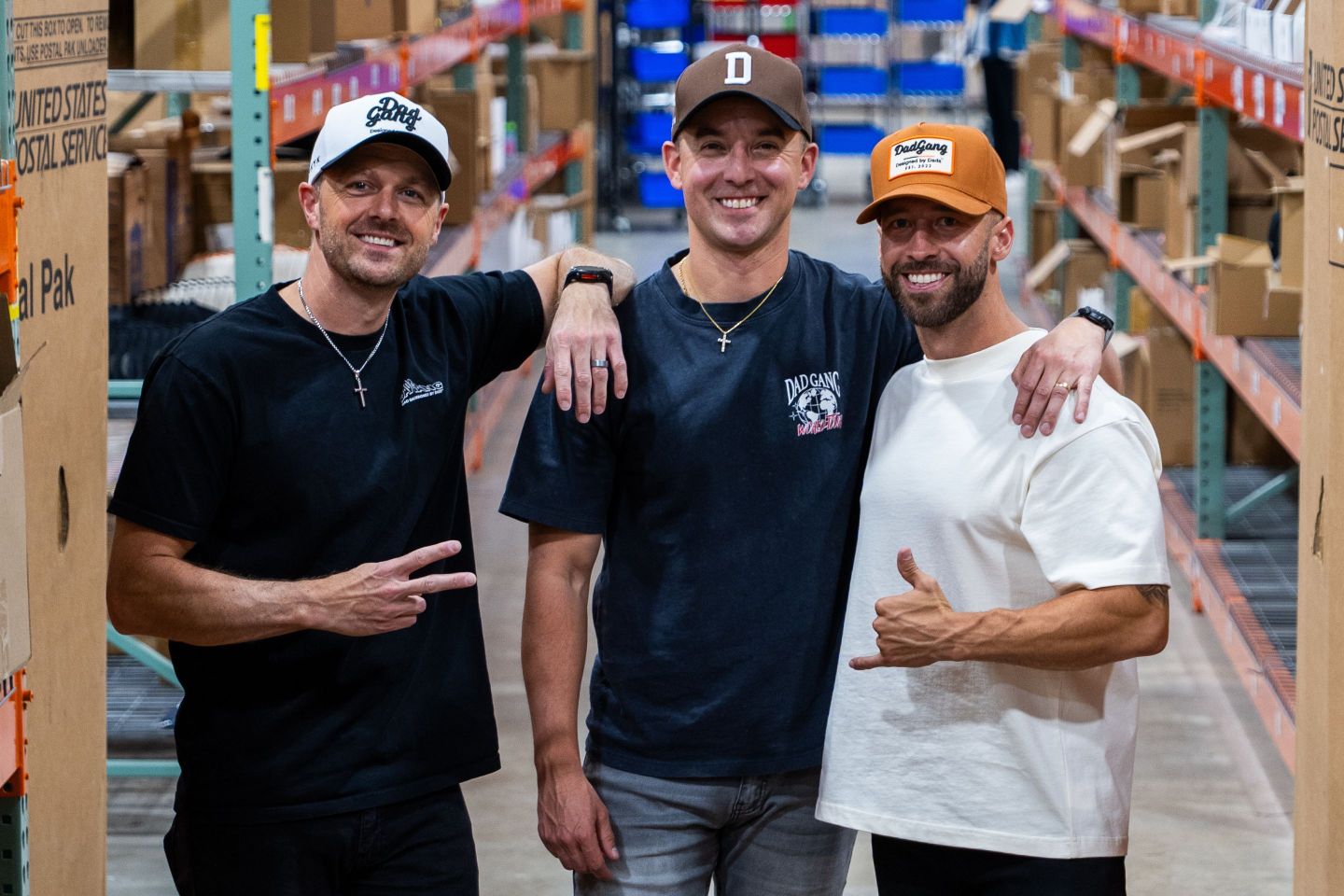
Three dads started selling hats from a garage with $750—now they’ve sold $35 million worth, partnered with Gary Vee, and grown a community of fathers
Success
Three dads started selling hats from a garage with $750—now they’ve sold $35 million worth, partnered with Gary Vee, and grown a community of fathers
By Preston ForeJuly 4, 2026
16 hours ago

© 2026 Fortune Media IP Limited. All Rights Reserved. Use of this site constitutes acceptance of our Terms of Use and Privacy Policy | CA Notice at Collection and Privacy Notice | Do Not Sell/Share My Personal Information
FORTUNE is a trademark of Fortune Media IP Limited, registered in the U.S. and other countries. FORTUNE may receive compensation for some links to products and services on this website. Offers may be subject to change without notice.