• Home
  • Latest
  • Fortune 500
  • Finance
  • Tech
  • Leadership
  • Lifestyle
  • Rankings
  • Multimedia

Trendingnow

1

Microsoft AI chief gives it 18 months—for all white-collar work to be automated by AI

2

Former top Russian official admits the country is over Putin and can 'imagine a future without him' — even elites bail as Kremlin seizes their assets 

3

Meet the 20-year-old CEO who launched a company in high school to solve Gen Z's entry-level job crisis

1

Microsoft AI chief gives it 18 months—for all white-collar work to be automated by AI

2

Former top Russian official admits the country is over Putin and can 'imagine a future without him' — even elites bail as Kremlin seizes their assets 

3

Meet the 20-year-old CEO who launched a company in high school to solve Gen Z's entry-level job crisis
CommentaryDonald Trump

How Silicon Valley and Washington Can Be Friends Again

By
Alex Grigsby
Alex Grigsby
and
Adam Segal
Adam Segal
Down Arrow Button Icon
By
Alex Grigsby
Alex Grigsby
and
Adam Segal
Adam Segal
Down Arrow Button Icon
February 2, 2017, 2:00 PM ET

Edward Snowden changed everything. It’s a common refrain heard in the halls of power of Washington DC and office parks of Silicon Valley. A once mutually beneficial relationship between both coasts came to a screeching halt after Snowden revealed that U.S. intelligence agencies were actively looking to undermine the security of some of Silicon Valley’s offerings.

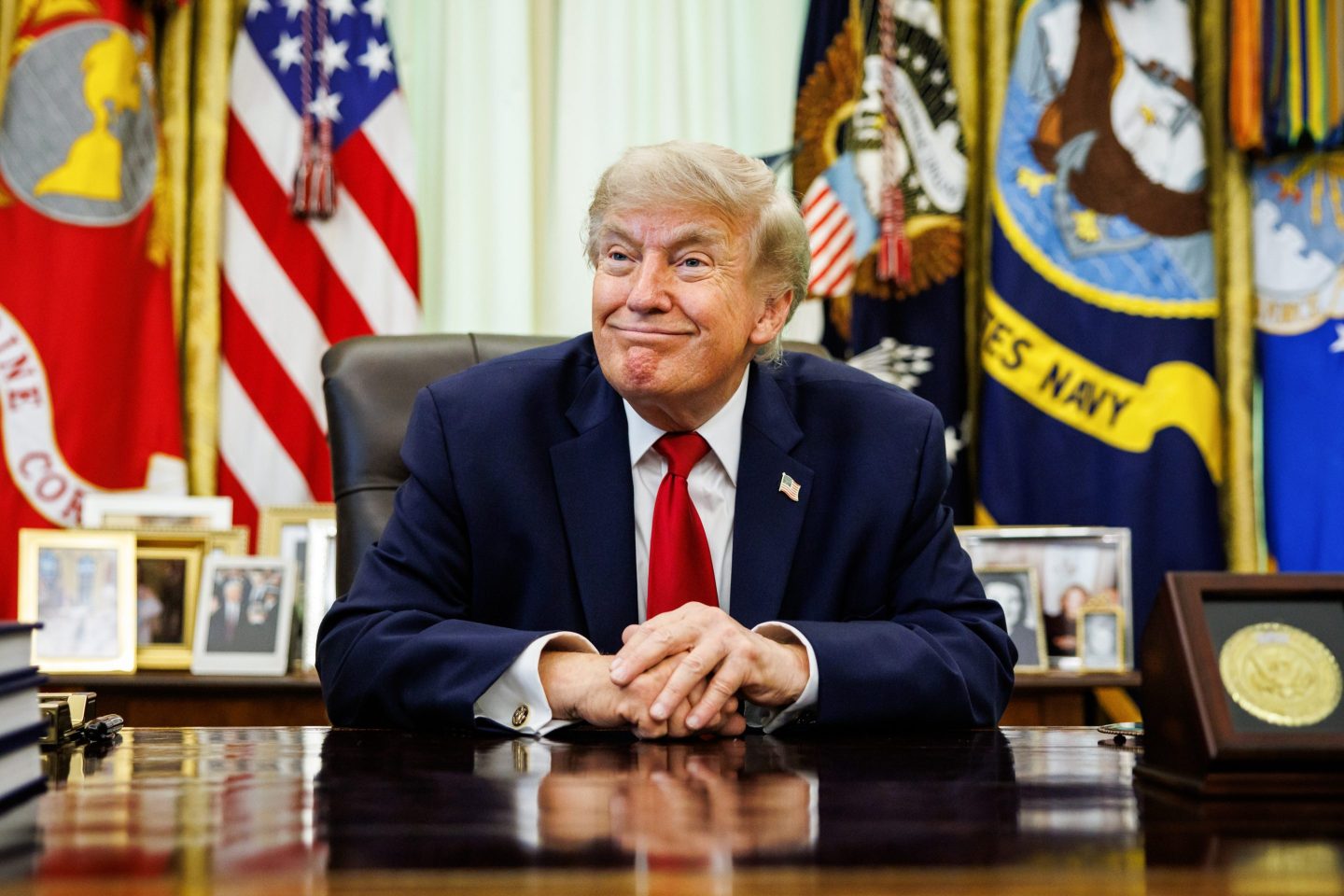
Time has not healed the wound. Over the course of the next four years, President Donald Trump’s administration will likely have to contend with Russian influence operations, Chinese cyber espionage, Iranian subterfuge, fights over appropriate use of encryption, data localization, and attracting technical talent to protect U.S. networks. Successfully meeting these challenges will require policy changes and deft maneuvering.

Most importantly, it will require that the Trump administration bridge the divide between Silicon Valley and Washington. As Trump prepares to meet with major business CEOs—including from Uber and IBM—on Friday, he’ll face a tech community increasingly disturbed by his decisions since taking office, such as an executive orders denying entry to travelers from seven Muslim-majority countries and directing the construction of a wall along the U.S.-Mexico border.

The U.S. is the country most reliant on information and communication technology in the world, given the centrality of the Internet to commerce, military operations, and everyday government services. Having its tech community and government working at cross purposes undermines U.S. security and foreign policy interests.

For example, America cannot expect to develop global standards on privacy or to shape the regulation of artificial intelligence, self-driving vehicles, or other cutting-edge technologies without close public-private partnership. Similarly, the complexity of the tech ecosystem is growing so rapidly that it is becoming next to impossible to retrofit products to meet policymakers’ desires.

Rebuilding the relationship will not be easy. In some cases, U.S. tech companies have a vested interest in keeping the U.S. government at arm’s length given that tech giants like Intel and Apple derive more than 60% of their revenue from overseas, where suspicion of the U.S. is already high. Nevertheless, there are three ways that Silicon Valley and Washington can close the gap.

First, the U.S. government can make it easier for tech companies to respond to foreign requests of user data. Currently, U.S. law prohibits an American company from handing over foreign users’ communications or data to a foreign country unless approved by a U.S. judge. In other words, if a Brazilian citizen uses Facebook to plan a bank robbery in Brazil, Brazilian cops would need to go through a U.S. court to obtain their Facebook chat logs, a process that can take up to 10 months. In some cases, foreign judges have grown frustrated with the process and threatened local employees with jail time.

As a result, many countries are passing laws that require user data to be stored within their borders. For a tech company, complying with these laws increases costs and wipes out efficiencies gained by having data stored in the cloud. Failure to comply can get a company banned—Russian regulators recently blocked access to LinkedIn for failing to keep its data about its Russian users in the country. The Trump administration should work with Congress to amend U.S. law to make it easier for U.S. service providers to comply with foreign law enforcement requests, subject to human rights protections.

Second, the U.S. government needs to quickly attribute state-sponsored cyber operations and impose costs on the attackers. So far, the U.S. has a spotty record in protecting the private sector from industrial espionage or disruptive incidents. The U.S.-China deal on economic cyber espionage was a bright spot; the slow and limited response to Russia’s election interference was not.

Although U.S. firms must beef up their own defenses, they can’t be expected to fend off foreign intelligence agencies and their proxies. Washington should be more willing to call out state-sponsored activity, confirm data released by cybersecurity companies, and target assets valuable to the attackers and their superiors. These actions will give the private sector greater confidence that the U.S. government is taking clear steps to counter state-backed cyber threats.


Third, the U.S. government must recognize that requiring tech firms to maintain the capability to decrypt user data is a non-starter, while addressing the concerns of law enforcement through other means. Strong encryption is essential to improving cybersecurity for individuals, corporations, and the government. Maintaining a decryption capability, known as exceptional access or a backdoor, is tantamount to purposely creating a vulnerability that criminals and state actors can exploit, putting customers at risk of data breaches. Moreover, the U.S. does not have a monopoly on encryption technology. Requiring a decryption capability here can easily be circumvented by using the more than 500 encryption tools built elsewhere.

The Trump administration faces an uphill battle to rebuild trust. Much of Silicon Valley—with the exception of Trump confidant Peter Thiel—backed Hillary Clinton, and many openly mocked then-candidate Trump’s Luddite tendencies, desire to have Bill Gates “close up” the Internet, and boasting of his youngest son’s tech proficiency.

President Trump has, however, signaled he will make cybersecurity a priority and wants to take a hard stance to deter foreign actors. That, along with pushing Congress to allow tech firms to provide foreign users’ data to foreign governments when requested, would go a long way toward rebuilding trust. Finding consensus on encryption is arguably the hardest nut to crack, but offers the best way to quickly heal the discord.

Washington cannot expect to successfully meet the myriad of cyber challenges facing the country without Silicon Valley’s help, nor can Silicon Valley prosper without a favorable policy environment set in Washington. It is in both of their interests to be friends again.

Alex Grigsby is the assistant director and Adam Segal is the Ira A. Lipman chair and director of the digital and cyberspace policy program at the Council on Foreign Relations. Segal is the author of new CFR report, “Rebuilding Trust Between Silicon Valley and Washington.”


About the Authors
By Alex Grigsby
See full bioRight Arrow Button Icon
By Adam Segal
See full bioRight Arrow Button Icon

Latest in Commentary

Finance
Lorem ipsum dolor sit amet, consectetur adipiscing elit, sed do eiusmod tempor incididunt ut labore et dolore magna aliqua. Ut enim ad minim veniam
By Fortune Editors
October 20, 2025
Finance
Lorem ipsum dolor sit amet, consectetur adipiscing elit, sed do eiusmod tempor incididunt ut labore et dolore magna aliqua. Ut enim ad minim veniam
By Fortune Editors
October 20, 2025
Finance
Lorem ipsum dolor sit amet, consectetur adipiscing elit, sed do eiusmod tempor incididunt ut labore et dolore magna aliqua. Ut enim ad minim veniam
By Fortune Editors
October 20, 2025
Finance
Lorem ipsum dolor sit amet, consectetur adipiscing elit, sed do eiusmod tempor incididunt ut labore et dolore magna aliqua. Ut enim ad minim veniam
By Fortune Editors
October 20, 2025
Finance
Lorem ipsum dolor sit amet, consectetur adipiscing elit, sed do eiusmod tempor incididunt ut labore et dolore magna aliqua. Ut enim ad minim veniam
By Fortune Editors
October 20, 2025
Finance
Lorem ipsum dolor sit amet, consectetur adipiscing elit, sed do eiusmod tempor incididunt ut labore et dolore magna aliqua. Ut enim ad minim veniam
By Fortune Editors
October 20, 2025

Most Popular

Finance
Lorem ipsum dolor sit amet, consectetur adipiscing elit, sed do eiusmod tempor incididunt ut labore et dolore magna aliqua. Ut enim ad minim veniam
By Fortune Editors
October 20, 2025
Finance
Lorem ipsum dolor sit amet, consectetur adipiscing elit, sed do eiusmod tempor incididunt ut labore et dolore magna aliqua. Ut enim ad minim veniam
By Fortune Editors
October 20, 2025
Finance
Lorem ipsum dolor sit amet, consectetur adipiscing elit, sed do eiusmod tempor incididunt ut labore et dolore magna aliqua. Ut enim ad minim veniam
By Fortune Editors
October 20, 2025
Finance
Lorem ipsum dolor sit amet, consectetur adipiscing elit, sed do eiusmod tempor incididunt ut labore et dolore magna aliqua. Ut enim ad minim veniam
By Fortune Editors
October 20, 2025
Finance
Lorem ipsum dolor sit amet, consectetur adipiscing elit, sed do eiusmod tempor incididunt ut labore et dolore magna aliqua. Ut enim ad minim veniam
By Fortune Editors
October 20, 2025
Finance
Lorem ipsum dolor sit amet, consectetur adipiscing elit, sed do eiusmod tempor incididunt ut labore et dolore magna aliqua. Ut enim ad minim veniam
By Fortune Editors
October 20, 2025
Fortune Secondary Logo
Rankings
  • 100 Best Companies
  • Fortune 500
  • Global 500
  • Fortune 500 Europe
  • Most Powerful Women
  • World's Most Admired Companies
  • See All Rankings
  • Lists Calendar
Sections
  • Finance
  • Fortune Crypto
  • Features
  • Leadership
  • Health
  • Commentary
  • Success
  • Retail
  • Mpw
  • Tech
  • Lifestyle
  • CEO Initiative
  • Asia
  • Politics
  • Conferences
  • Europe
  • Newsletters
  • Personal Finance
  • Environment
  • Magazine
  • Education
Customer Support
  • Frequently Asked Questions
  • Customer Service Portal
  • Privacy Policy
  • Terms Of Use
  • Single Issues For Purchase
  • International Print
Commercial Services
  • Advertising
  • Fortune Brand Studio
  • Fortune Analytics
  • Fortune Conferences
  • Business Development
  • Group Subscriptions
About Us
  • About Us
  • Press Center
  • Work At Fortune
  • Terms And Conditions
  • Site Map
  • About Us
  • Press Center
  • Work At Fortune
  • Terms And Conditions
  • Site Map
  • Facebook icon
  • Twitter icon
  • LinkedIn icon
  • Instagram icon
  • Pinterest icon

Latest in Commentary

liberman
Commentarystart-ups
We watched social media concentrate. The same thing is happening in AI, only at a deeper layer
By David Liberman and Daniil LibermanMay 16, 2026
21 hours ago
olivier
CommentaryAnthropic
I’ve been studying Big Tech for a long time. What just happened with Anthropic and the Pentagon terrifies me
By Olivier SylvainMay 16, 2026
22 hours ago
lawyer
CommentaryLaw
Would you hire the lawyer who just got sanctioned for using AI?
By Alexandra SmythMay 16, 2026
24 hours ago
greg
Personal FinanceAviation
Mamdani’s New York is coming to tax your private jet. Here’s how to prepare
By Greg RaiffMay 16, 2026
1 day ago
chase
CommentaryCities
San Francisco has $2 trillion in AI wealth and can’t fix its own city. That’s every city’s problem
By Chase GarbarinoMay 15, 2026
2 days ago
lori
Commentarymental health
I run Valvoline Instant Oil Change and work with young people every day. They’re in crisis—and we all have to try to help
By Lori FleesMay 15, 2026
2 days ago

Most Popular

Microsoft AI chief gives it 18 months—for all white-collar work to be automated by AI
AI
Microsoft AI chief gives it 18 months—for all white-collar work to be automated by AI
By Jake AngeloMay 16, 2026
22 hours ago
Former top Russian official admits the country is over Putin and can 'imagine a future without him' — even elites bail as Kremlin seizes their assets 
Politics
Former top Russian official admits the country is over Putin and can 'imagine a future without him' — even elites bail as Kremlin seizes their assets 
By Jason MaMay 16, 2026
12 hours ago
Meet the 20-year-old CEO who launched a company in high school to solve Gen Z's entry-level job crisis
Future of Work
Meet the 20-year-old CEO who launched a company in high school to solve Gen Z's entry-level job crisis
By Jake AngeloMay 16, 2026
1 day ago
The Bezos family just donated $100 million to help achieve one of Mayor Zohran Mamdani’s top campaign promises
Politics
The Bezos family just donated $100 million to help achieve one of Mayor Zohran Mamdani’s top campaign promises
By Jake AngeloMay 12, 2026
5 days ago
‘You’re not a hero, you’re a liability’: Shark Tank’s Kevin O’Leary warns Gen Z founders to stop glorifying hustle culture
Future of Work
‘You’re not a hero, you’re a liability’: Shark Tank’s Kevin O’Leary warns Gen Z founders to stop glorifying hustle culture
By Jacqueline MunisMay 16, 2026
22 hours ago
Oil markets could be a month away from the moment of truth. Brace for a 'non-linear' price spike and panic buying, analysts warn
Energy
Oil markets could be a month away from the moment of truth. Brace for a 'non-linear' price spike and panic buying, analysts warn
By Jason MaMay 16, 2026
15 hours ago

© 2026 Fortune Media IP Limited. All Rights Reserved. Use of this site constitutes acceptance of our Terms of Use and Privacy Policy | CA Notice at Collection and Privacy Notice | Do Not Sell/Share My Personal Information
FORTUNE is a trademark of Fortune Media IP Limited, registered in the U.S. and other countries. FORTUNE may receive compensation for some links to products and services on this website. Offers may be subject to change without notice.