• Home
  • Latest
  • Fortune 500
  • Finance
  • Tech
  • Leadership
  • Lifestyle
  • Rankings
  • Multimedia

Exclusive

An hour in the Oval Office with President Trump Fortune Editor-in-Chief Alyson Shontell sat down with President Trump in the Oval Office for an hour. Tariffs, Intel, AI, Boeing, Iran—and the question every CEO eventually has to answer: who's next?

An hour in the Oval Office with President Trump Fortune Editor-in-Chief Alyson Shontell sat down with President Trump in the Oval Office for an hour. Tariffs, Intel, AI, Boeing, Iran—and the question every CEO eventually has to answer: who's next?

An hour in the Oval Office with President Trump Fortune Editor-in-Chief Alyson Shontell sat down with President Trump in the Oval Office for an hour. Tariffs, Intel, AI, Boeing, Iran—and the question every CEO eventually has to answer: who's next?

An hour in the Oval Office with President Trump Fortune Editor-in-Chief Alyson Shontell sat down with President Trump in the Oval Office for an hour. Tariffs, Intel, AI, Boeing, Iran—and the question every CEO eventually has to answer: who's next?

An hour in the Oval Office with President Trump Fortune Editor-in-Chief Alyson Shontell sat down with President Trump in the Oval Office for an hour. Tariffs, Intel, AI, Boeing, Iran—and the question every CEO eventually has to answer: who's next?

An hour in the Oval Office with President Trump Fortune Editor-in-Chief Alyson Shontell sat down with President Trump in the Oval Office for an hour. Tariffs, Intel, AI, Boeing, Iran—and the question every CEO eventually has to answer: who's next?

An hour in the Oval Office with President Trump Fortune Editor-in-Chief Alyson Shontell sat down with President Trump in the Oval Office for an hour. Tariffs, Intel, AI, Boeing, Iran—and the question every CEO eventually has to answer: who's next?

An hour in the Oval Office with President Trump Fortune Editor-in-Chief Alyson Shontell sat down with President Trump in the Oval Office for an hour. Tariffs, Intel, AI, Boeing, Iran—and the question every CEO eventually has to answer: who's next?

An hour in the Oval Office with President Trump Fortune Editor-in-Chief Alyson Shontell sat down with President Trump in the Oval Office for an hour. Tariffs, Intel, AI, Boeing, Iran—and the question every CEO eventually has to answer: who's next?

An hour in the Oval Office with President Trump Fortune Editor-in-Chief Alyson Shontell sat down with President Trump in the Oval Office for an hour. Tariffs, Intel, AI, Boeing, Iran—and the question every CEO eventually has to answer: who's next?

CommentaryDonald Trump

Why Trump’s Military Buildup Is Not As Big As He Promises

By
Paul Scharre
Paul Scharre
Down Arrow Button Icon
By
Paul Scharre
Paul Scharre
Down Arrow Button Icon
March 2, 2017, 3:00 PM ET
Romania-U.S. NATO Defense
U.S. Army personnel offload military equipment at the Mihail Kogalniceanu Air Base near Constanta in Romania on February 14, 2017.DANIEL MIHAILESCU/AFP/Getty Images

Earlier this week the Trump administration announced it would seek a $54 billion increase in defense spending in an effort to make good on the president’s campaign promise to restore American military dominance. This additional funding is sorely needed to repair military readiness and fund critical modernization initiatives, both of which have suffered under spending cuts imposed by the Budget Control Act (BCA) of 2011.

Yet this defense buildup, while necessary, is hardly the “historic” increase Trump has claimed.

Administration officials touted their request as a 10% increase above BCA spending limits. While true, this is a misleading baseline. Trump’s request of $603 billion for fiscal year 2018 is only 3% above the Obama administration’s fiscal year 2017 request of $583 billion. And Trump’s request is significantly below the $640 billion that Sen. John McCain and Rep. Mac Thornberry have argued is necessary. The Trump budget is also only modestly higher than what Congress authorized for the Defense Department last year.

Congress has routinely used the overseas contingency operations (OCO) account, which is intended to fund wartime activities, as an escape valve for skirting BCA spending caps. Including OCO funding, Congress passed and President Barack Obama signed into law last December a bill authorizing $618.7 billion for defense. Even accounting for the $30 billion in supplemental funding that Trump administration officials have said they will seek for fiscal year 2017, the total Trump budget request is only 2% above what was signed into law last year. When accounting for the current 2% rate of inflation, Trump’s request simply matches existing spending; it isn’t an increase at all.

Trump claimed in his Tuesday night speech to Congress that he was calling for “one of the largest increases in national defense spending in American history.” That’s manifestly false. In fact, the Trump budget request is remarkably consistent with recent defense budgets. What should we make of this disconnect between rhetoric and reality? Trump will make grandiose claims, but the actual substance of policy—at least on this issue—is fairly sober. This is an encouraging sign from an administration that has stumbled repeatedly in its first month in office. If Trump’s grandstanding is simply that and he leaves the actual drafting and execution of policy to level-headed subordinates, then he may be in for a successful presidency.

Unfortunately, this hopeful sign was undercut by news that the administration would seek to pay for the $54 billion in defense spending above BCA caps by equal cuts in non-defense discretionary spending, including reportedly a 30% cut in the State Department. While this may play well with Trump’s supporters, if true this suggests a naiveté about foreign relations not befitting a president. If diplomacy is cut, U.S. troops will be stuck with more responsibility for handling international issues.


This isn’t merely hypothetical. When the U.S. shortchanged the political and economic rebuilding of Iraq and Afghanistan following the invasion of those countries, it was U.S. troops who suffered as they became enmeshed in multi-year quagmires, doing development and reconstruction as a pick-up game in a warzone. In his speech to Congress, Trump said the U.S. has spent approximately $6 trillion in the Middle East, presumably a reference to the wars in Iraq and Afghanistan. The figure is slightly misleading, as it includes future costs such as long-term medical care for wounded veterans, but it is true that the cost of war is immense in both dollars and lives.

Diplomacy helps avoid future wars. Cutting diplomacy is seriously shortsighted. U.S. military leaders understand this dynamic. In reaction to the planned cuts, 120 retired generals and admirals signed an open letter this week arguing, “The State Department, USAID, Millennium Challenge Corporation, Peace Corps and other development agencies are critical to preventing conflict and reducing the need to put our men and women in uniform in harm’s way.” The ever-quotable Defense Secretary James Mattis said it more succinctly while serving as a general: “If you don’t fund the State Department fully, then I need to buy more ammunition ultimately.”

The Trump administration’s budget request is only the opening move in a negotiation with Congress. While the State Department is a favorite political target, numerous Republican members of Congress have spoken out against the foolishness of the proposed 30% cut. Senate Majority Leader Mitch McConnell said cuts of that magnitude would “probably not” survive Congress. Still, the fact that the Trump administration balanced defense increases with cuts elsewhere in the government, rather than relying on deficit spending, is an encouraging sign that the president’s team is thinking through the practicalities of working with conservatives in Congress.

This is a marked improvement over the fumbled rollout of earlier policies and suggests that Trump’s administration is learning. Ultimately, on the defense budget and other issues, Trump will need to work with Congress if he wants to move his agenda forward.

Paul Scharre is a senior fellow in the defense strategies and assessments program at the Center for a New American Security. He is a former infantryman in the Army’s 75th Ranger Regiment who served in Iraq and Afghanistan.
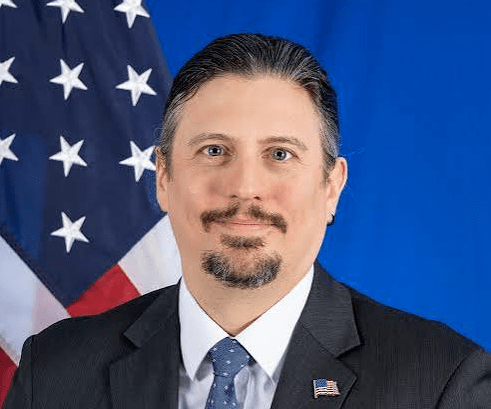

About the Author
By Paul Scharre
See full bioRight Arrow Button Icon

Latest in Commentary

Finance
Lorem ipsum dolor sit amet, consectetur adipiscing elit, sed do eiusmod tempor incididunt ut labore et dolore magna aliqua. Ut enim ad minim veniam
By Fortune Editors
October 20, 2025
Finance
Lorem ipsum dolor sit amet, consectetur adipiscing elit, sed do eiusmod tempor incididunt ut labore et dolore magna aliqua. Ut enim ad minim veniam
By Fortune Editors
October 20, 2025
Finance
Lorem ipsum dolor sit amet, consectetur adipiscing elit, sed do eiusmod tempor incididunt ut labore et dolore magna aliqua. Ut enim ad minim veniam
By Fortune Editors
October 20, 2025
Finance
Lorem ipsum dolor sit amet, consectetur adipiscing elit, sed do eiusmod tempor incididunt ut labore et dolore magna aliqua. Ut enim ad minim veniam
By Fortune Editors
October 20, 2025
Finance
Lorem ipsum dolor sit amet, consectetur adipiscing elit, sed do eiusmod tempor incididunt ut labore et dolore magna aliqua. Ut enim ad minim veniam
By Fortune Editors
October 20, 2025
Finance
Lorem ipsum dolor sit amet, consectetur adipiscing elit, sed do eiusmod tempor incididunt ut labore et dolore magna aliqua. Ut enim ad minim veniam
By Fortune Editors
October 20, 2025

Most Popular

Finance
Lorem ipsum dolor sit amet, consectetur adipiscing elit, sed do eiusmod tempor incididunt ut labore et dolore magna aliqua. Ut enim ad minim veniam
By Fortune Editors
October 20, 2025
Finance
Lorem ipsum dolor sit amet, consectetur adipiscing elit, sed do eiusmod tempor incididunt ut labore et dolore magna aliqua. Ut enim ad minim veniam
By Fortune Editors
October 20, 2025
Finance
Lorem ipsum dolor sit amet, consectetur adipiscing elit, sed do eiusmod tempor incididunt ut labore et dolore magna aliqua. Ut enim ad minim veniam
By Fortune Editors
October 20, 2025
Finance
Lorem ipsum dolor sit amet, consectetur adipiscing elit, sed do eiusmod tempor incididunt ut labore et dolore magna aliqua. Ut enim ad minim veniam
By Fortune Editors
October 20, 2025
Finance
Lorem ipsum dolor sit amet, consectetur adipiscing elit, sed do eiusmod tempor incididunt ut labore et dolore magna aliqua. Ut enim ad minim veniam
By Fortune Editors
October 20, 2025
Finance
Lorem ipsum dolor sit amet, consectetur adipiscing elit, sed do eiusmod tempor incididunt ut labore et dolore magna aliqua. Ut enim ad minim veniam
By Fortune Editors
October 20, 2025
Fortune Secondary Logo
Rankings
  • 100 Best Companies
  • Fortune 500
  • Global 500
  • Fortune 500 Europe
  • Most Powerful Women
  • World's Most Admired Companies
  • See All Rankings
  • Lists Calendar
Sections
  • Finance
  • Fortune Crypto
  • Features
  • Leadership
  • Health
  • Commentary
  • Success
  • Retail
  • Mpw
  • Tech
  • Lifestyle
  • CEO Initiative
  • Asia
  • Politics
  • Conferences
  • Europe
  • Newsletters
  • Personal Finance
  • Environment
  • Magazine
  • Education
Customer Support
  • Frequently Asked Questions
  • Customer Service Portal
  • Privacy Policy
  • Terms Of Use
  • Single Issues For Purchase
  • International Print
Commercial Services
  • Advertising
  • Fortune Brand Studio
  • Fortune Analytics
  • Fortune Conferences
  • Business Development
  • Group Subscriptions
About Us
  • About Us
  • Press Center
  • Work At Fortune
  • Terms And Conditions
  • Site Map
  • About Us
  • Press Center
  • Work At Fortune
  • Terms And Conditions
  • Site Map
  • Facebook icon
  • Twitter icon
  • LinkedIn icon
  • Instagram icon
  • Pinterest icon

Latest in Commentary

charlie
CommentarySoftware
Anaplan CEO: AI isn’t eating software. It’s sorting it
By Charlie GottdienerMay 18, 2026
3 hours ago
shyam
CommentaryHealth
World Economic Forum: women’s health gets only 20% of R&D funding. We must seize this $1 trillion opportunity
By Shyam BishenMay 18, 2026
11 hours ago
murdochs
CommentaryMedia
OpenAI paid $100 million for a talk show. James Murdoch is eyeing an even bigger deal. The hot new asset class is humanity
By Lin CherryMay 17, 2026
1 day ago
dennis
CommentaryAI agents
Freshworks CEO: why agile enterprises are winning the AI race — and what they did differently
By Dennis WoodsideMay 17, 2026
1 day ago
Mary Moreland-Abbott Executive Vice President of Human Resources.
CommentaryRetirement
Gen X is the most indebted generation in America. Their employers can fix that
By Mary MorelandMay 17, 2026
1 day ago
liberman
Commentarystart-ups
We watched social media concentrate. The same thing is happening in AI, only at a deeper layer
By David Liberman and Daniil LibermanMay 16, 2026
2 days ago

Most Popular

Microsoft AI chief gives it 18 months—for all white-collar work to be automated by AI
AI
Microsoft AI chief gives it 18 months—for all white-collar work to be automated by AI
By Jake AngeloMay 16, 2026
2 days ago
The top foreign holders of U.S. debt may soon dump Treasury bonds and bring their money back home, potentially spiking borrowing costs
Economy
The top foreign holders of U.S. debt may soon dump Treasury bonds and bring their money back home, potentially spiking borrowing costs
By Jason MaMay 17, 2026
21 hours ago
The Bezos family just donated $100 million to help achieve one of Mayor Zohran Mamdani’s top campaign promises
Politics
The Bezos family just donated $100 million to help achieve one of Mayor Zohran Mamdani’s top campaign promises
By Jake AngeloMay 12, 2026
6 days ago
'No one was coming to save me': How Reese Witherspoon built a $900 million company from a problem Hollywood wouldn't fix
Success
'No one was coming to save me': How Reese Witherspoon built a $900 million company from a problem Hollywood wouldn't fix
By Sydney LakeMay 17, 2026
1 day ago
SpaceX heads into a record-shattering IPO with the 'deepest moat that exists today' as investors vow to 'never bet against Elon'
Innovation
SpaceX heads into a record-shattering IPO with the 'deepest moat that exists today' as investors vow to 'never bet against Elon'
By Jason MaMay 16, 2026
2 days ago
Gen X is the most indebted generation in America. Their employers can fix that
Commentary
Gen X is the most indebted generation in America. Their employers can fix that
By Mary MorelandMay 17, 2026
1 day ago

© 2026 Fortune Media IP Limited. All Rights Reserved. Use of this site constitutes acceptance of our Terms of Use and Privacy Policy | CA Notice at Collection and Privacy Notice | Do Not Sell/Share My Personal Information
FORTUNE is a trademark of Fortune Media IP Limited, registered in the U.S. and other countries. FORTUNE may receive compensation for some links to products and services on this website. Offers may be subject to change without notice.