• Home
  • Latest
  • Fortune 500
  • Finance
  • Tech
  • Leadership
  • Lifestyle
  • Rankings
  • Multimedia

Trendingnow

1

As Big Tech showers employees with perks to win the talent war, Nvidia built a nearly $5 trillion company by making people pay for their own lunch

2

MacKenzie Scott alone accounted for one-third of America's $19.2 billion in megagifts last year

3

Current price of oil as of July 1, 2026

1

As Big Tech showers employees with perks to win the talent war, Nvidia built a nearly $5 trillion company by making people pay for their own lunch

2

MacKenzie Scott alone accounted for one-third of America's $19.2 billion in megagifts last year

3

Current price of oil as of July 1, 2026
CommentaryDonald Trump

Donald Trump’s Definition of Democracy Is Dangerous

By
Cynthia Hooper
Cynthia Hooper
Down Arrow Button Icon
By
Cynthia Hooper
Cynthia Hooper
Down Arrow Button Icon
March 7, 2017, 3:00 PM ET
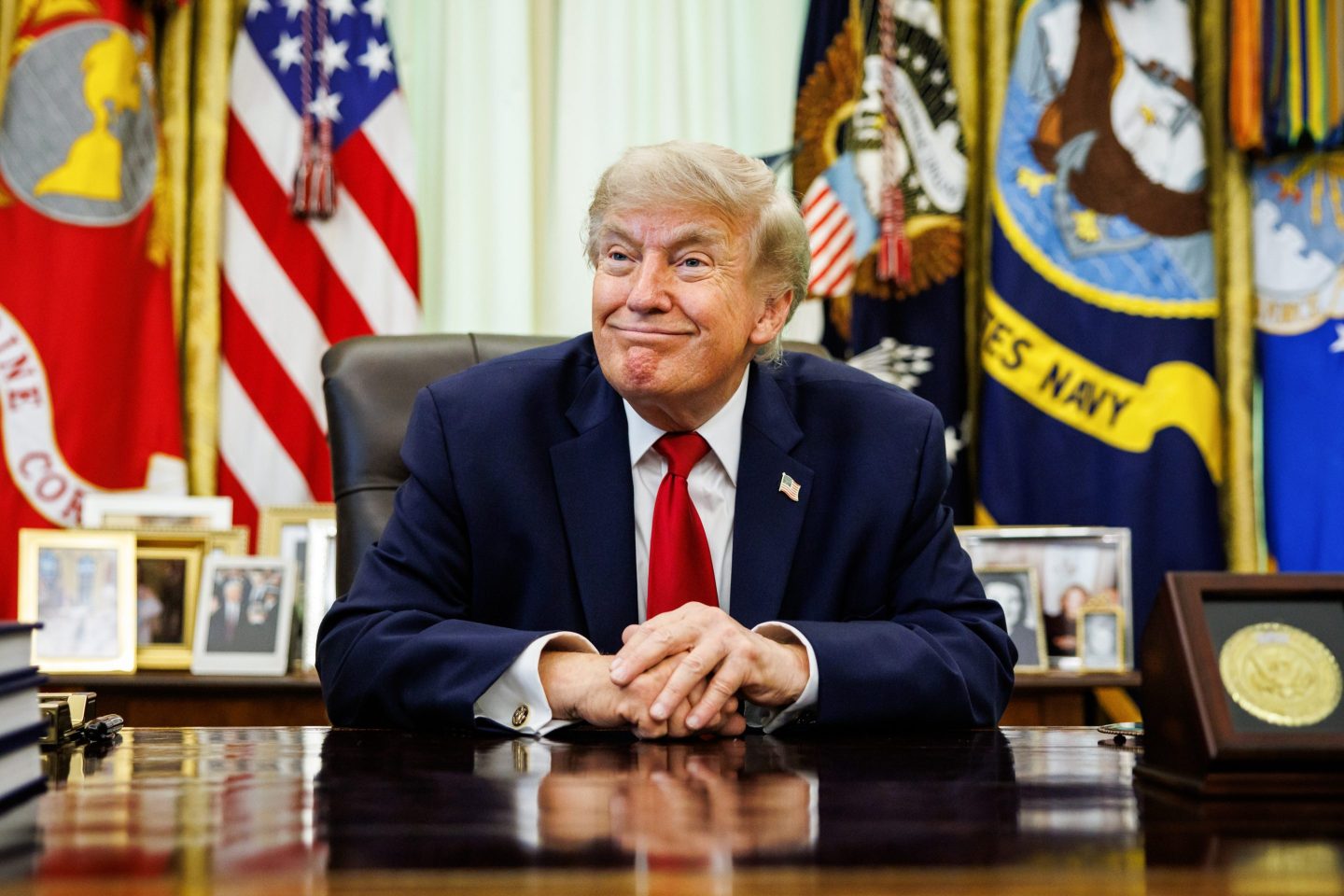
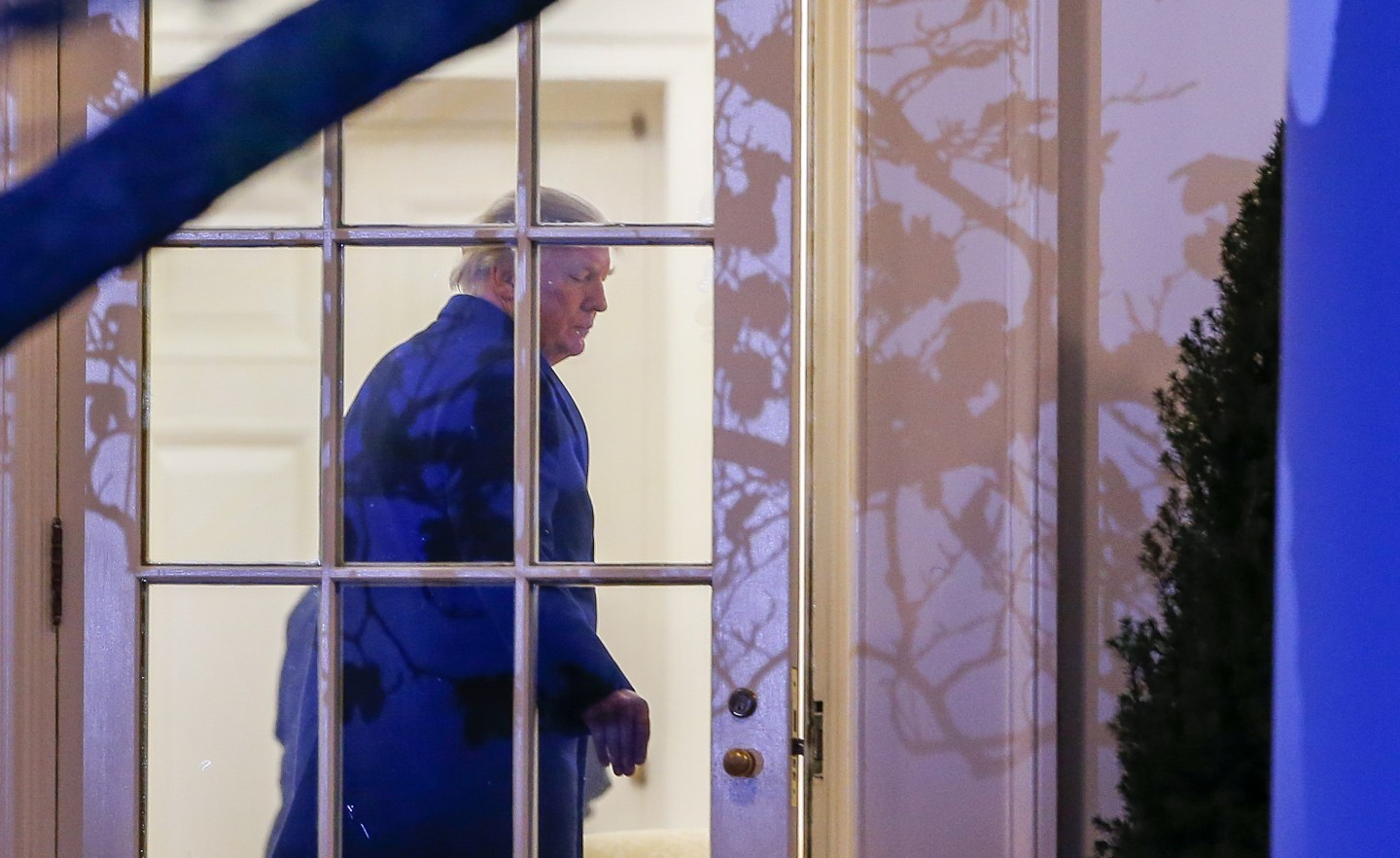
President Trump at the White House in Washington, DC
President Donald J. Trump enters the Oval Office on March 5, 2017 in Washington, DC.Erik S. Lesser-Pool/Getty Images
Add Fortune on Google for similar content.

President Donald Trump and his advisors are all about “the American people.” But their continual invocation of these “people” reveals how the language of democracy—particularly when accompanied by colorful pictures of cheering crowds—can become a powerful tool in the consolidation of profoundly undemocratic political processes and ideas.

When, for instance, Trump calls the press the “enemy of the people,” he is possibly not even aware of the history behind the phrase as a rallying cry for the Soviet Union’s Stalin-era witch hunts for hidden traitors. Such attacks are not intended only for journalists critical of him, but broadly apply to the entire edifice of public servants—career diplomats, policy experts, analysts, and press—that the White House portrays as a drag on U.S. democracy. This appears to be one small piece of a larger administration effort to develop a division in the U.S. public imagination, with the public servant class on one hand, and Trump—the chosen emissary of America’s no-longer-silent majority—on the other.

Since the election of Jimmy Carter, almost every president, Democrat and Republican alike, has come to power by positioning himself as an outsider, assailing politics as usual and threatening to shake up the Washington establishment. But Trump chief strategist Stephen Bannon’s promises to launch a “deconstruction” of the U.S. “administrative state” go beyond such standard critiques of the status quo. Instead, the Bannon camp is suggesting that a host of agencies and organizations long considered central to good governance are full of inefficient and unreliable schemers, catering to their own interests rather than to “the people’s” real needs.

Trump presents himself as the opposite—an instrument of “direct democracy” with an unfiltered connection to the ordinary American and a determination to defy all cowardly intermediaries who might wish to hamstring the bold words and actions that he claims reflect the people’s will. (“You think it, I say it,” was a standard campaign phrase.) In truth, Trump favors stadium rallies over face-to-face meetings with small groups of constituents. During the New Hampshire primaries, he marveled at how slow the process of actual connection could be. “People would go and have dinner with the voters … like, five people, a family … and they’d sit there and have dinner for two and a half hours … If I did that people would lose respect for me.” Instead, he prolifically tweets to his over 26 million followers, manufacturing a sense of uncensored immediacy.

We should care about this rhetorical strategy because Trump advisors are starting to redefine the very meaning of democracy, in much the same way they have already succeeded in transforming the meaning of “fake news.” The figure of the president, keeping his promises to the American people, is being upheld as fundamentally rival to a system of checks and balances designed to contain the executive branch and another system of expertise intended to advise it.

In continually allying himself with “the people” in opposition to institutional power, Trump is doing several things. First, he is undermining the role of deep knowledge in government decision-making and removing opportunities for experts to air their views, particularly when those views might diverge from a predetermined political line. Scientists at the Environmental Protection Agency, Department of Health and Human Services, and other government-funded agencies have been forbidden to publish or speak publicly about their work without White House approval. The State Department, which employs nearly 70,000 people worldwide, is facing a 37% budget cut, and the administration has given short shrift to much of the analysis the department puts out. Meanwhile, Trump is the first president since World War II to eschew a daily security briefing. The reports, he has stated publicly, are repetitive, and since he is “a smart person,” he doesn’t “have to be told the same thing in the same words every single day for the next eight years.”

At the same time, the president is encouraging the splintering of authority in the civic sphere, among those voices outside government that cannot be so easily controlled. He is doing so by proclaiming a large segment of the mainstream media to be not simply biased but deliberately fake and aimed at discrediting the “true” American polity. Those journalists, Trump warned a crowd in Melbourne, Fla., “have an agenda, and their agenda is not your agenda.”

But Trump and his advisors are also praising the increasing fragmentation of America’s information landscape as yet another laudable manifestation of direct democracy. Applauding the fact that “people get their news now from literally hundreds and thousands of sites,” the president of the American Conservative Union termed this historical moment a time of “great democratization” in journalism.


Encouraging the proliferation of a multiplicity of media voices may not seem like an authoritarian strategy. It certainly diverges sharply from the media policy of a more textbook type of top-down regime like Russia’s. There, the three major television channels are unified around positive coverage of President Vladimir Putin, and a background apparatus of censorship is in place to portray him not only as a man of the people, but also as an uncontested leader above the fray and backed by a hegemonic state apparatus.

Trump’s people, in contrast, encourage chatter—the emergence of a relativized world where every opinion can be of equal value. As described in a recent Foreign Affairs article, “How America Lost Faith in Expertise,” the current social climate is one where any guy on the street is entitled to know as much about any issue as, say, a Nobel Prize winner. “These days,” author Tom Nichols writes, “members of the public search for expert errors and revel in finding them—not to improve understanding but rather to give themselves license to disregard all expert advice they don’t like.”

In such a corrupted environment, where even the most straightforward of facts can find a challenger, Trump can shine as the loudest, brashest voice of self-proclaimed authority. It’s not about truth, as much as power. As he himself puts it: “The era of empty talk is over, it’s over. Now is the time for action.”

Cynthia Hooper is an associate professor of history and director of Russian and Eastern European studies at the College of the Holy Cross.


About the Author
By Cynthia Hooper
See full bioRight Arrow Button Icon
Add Fortune on Google for similar content.

Latest in Commentary

Finance
Lorem ipsum dolor sit amet, consectetur adipiscing elit, sed do eiusmod tempor incididunt ut labore et dolore magna aliqua. Ut enim ad minim veniam
By Fortune Editors
October 20, 2025
Finance
Lorem ipsum dolor sit amet, consectetur adipiscing elit, sed do eiusmod tempor incididunt ut labore et dolore magna aliqua. Ut enim ad minim veniam
By Fortune Editors
October 20, 2025
Finance
Lorem ipsum dolor sit amet, consectetur adipiscing elit, sed do eiusmod tempor incididunt ut labore et dolore magna aliqua. Ut enim ad minim veniam
By Fortune Editors
October 20, 2025
Finance
Lorem ipsum dolor sit amet, consectetur adipiscing elit, sed do eiusmod tempor incididunt ut labore et dolore magna aliqua. Ut enim ad minim veniam
By Fortune Editors
October 20, 2025
Finance
Lorem ipsum dolor sit amet, consectetur adipiscing elit, sed do eiusmod tempor incididunt ut labore et dolore magna aliqua. Ut enim ad minim veniam
By Fortune Editors
October 20, 2025
Finance
Lorem ipsum dolor sit amet, consectetur adipiscing elit, sed do eiusmod tempor incididunt ut labore et dolore magna aliqua. Ut enim ad minim veniam
By Fortune Editors
October 20, 2025

Most Popular

Finance
Lorem ipsum dolor sit amet, consectetur adipiscing elit, sed do eiusmod tempor incididunt ut labore et dolore magna aliqua. Ut enim ad minim veniam
By Fortune Editors
October 20, 2025
Finance
Lorem ipsum dolor sit amet, consectetur adipiscing elit, sed do eiusmod tempor incididunt ut labore et dolore magna aliqua. Ut enim ad minim veniam
By Fortune Editors
October 20, 2025
Finance
Lorem ipsum dolor sit amet, consectetur adipiscing elit, sed do eiusmod tempor incididunt ut labore et dolore magna aliqua. Ut enim ad minim veniam
By Fortune Editors
October 20, 2025
Finance
Lorem ipsum dolor sit amet, consectetur adipiscing elit, sed do eiusmod tempor incididunt ut labore et dolore magna aliqua. Ut enim ad minim veniam
By Fortune Editors
October 20, 2025
Finance
Lorem ipsum dolor sit amet, consectetur adipiscing elit, sed do eiusmod tempor incididunt ut labore et dolore magna aliqua. Ut enim ad minim veniam
By Fortune Editors
October 20, 2025
Finance
Lorem ipsum dolor sit amet, consectetur adipiscing elit, sed do eiusmod tempor incididunt ut labore et dolore magna aliqua. Ut enim ad minim veniam
By Fortune Editors
October 20, 2025
Fortune Secondary Logo
Rankings
  • 100 Best Companies
  • Fortune 500
  • Global 500
  • Fortune 500 Europe
  • Most Powerful Women
  • World's Most Admired Companies
  • See All Rankings
  • Lists Calendar
Sections
  • Finance
  • Fortune Crypto
  • Features
  • Leadership
  • Health
  • Commentary
  • Success
  • Retail
  • Mpw
  • Tech
  • Lifestyle
  • CEO Initiative
  • Asia
  • Politics
  • Conferences
  • Europe
  • Newsletters
  • Personal Finance
  • Environment
  • Magazine
  • Education
Customer Support
  • Frequently Asked Questions
  • Customer Service Portal
  • Privacy Policy
  • Terms Of Use
  • Single Issues For Purchase
  • International Print
Commercial Services
  • Advertising
  • Fortune Brand Studio
  • Fortune Analytics
  • Fortune Conferences
  • Business Development
  • Group Subscriptions
About Us
  • About Us
  • Press Center
  • Work At Fortune
  • Terms And Conditions
  • Site Map
  • About Us
  • Press Center
  • Work At Fortune
  • Terms And Conditions
  • Site Map
  • Facebook icon
  • Twitter icon
  • LinkedIn icon
  • Instagram icon
  • Pinterest icon

Latest in Commentary

rn
CommentaryCryptocurrency
Former Iran director at NSC: Crypto legislation is a ticket to sanctions evasion
By Richard NephewJuly 2, 2026
7 hours ago
m
Commentary250 Years of Innovation
McKinsey chairs: Building a more resilient industrial base may require $2 trillion in investment
By Eric Kutcher and Shubham SinghalJuly 2, 2026
7 hours ago
em
Commentary250 Years of Innovation
America’s 250th birthday has Elon Musk and a record IPO. Its 15th had Alexander Hamilton — and a stock market bubble
By Owen LamontJuly 2, 2026
11 hours ago
paramount
CommentaryAntitrust
How Paramount’s theater commitments could boost local economies across the nation
By Ike BrannonJuly 2, 2026
11 hours ago
elon
CommentaryChina
China has 400 private space companies. The West is barely paying attention
By Rainer ZitelmannJuly 2, 2026
12 hours ago
senate
CommentaryCongress
One rare bipartisan AI bill is moving through Congress. Here’s why it deserves to pass
By Neil Björkman and Betsy BrewerJuly 1, 2026
1 day ago

Most Popular

As Big Tech showers employees with perks to win the talent war, Nvidia built a nearly $5 trillion company by making people pay for their own lunch
Big Tech
As Big Tech showers employees with perks to win the talent war, Nvidia built a nearly $5 trillion company by making people pay for their own lunch
By Marco Quiroz-GutierrezJuly 1, 2026
2 days ago
MacKenzie Scott alone accounted for one-third of America's $19.2 billion in megagifts last year
Success
MacKenzie Scott alone accounted for one-third of America's $19.2 billion in megagifts last year
By Sydney LakeJune 25, 2026
8 days ago
Current price of oil as of July 1, 2026
Personal Finance
Current price of oil as of July 1, 2026
By Joseph HostetlerJuly 1, 2026
1 day ago
Trump got a $78K pension from the Screen Actors Guild in 2025 because he appeared in Home Alone 2 in 1992
Politics
Trump got a $78K pension from the Screen Actors Guild in 2025 because he appeared in Home Alone 2 in 1992
By Sasha RogelbergJuly 1, 2026
1 day ago
CEO of $248 billion cybersecurity company says workers are about to face a ‘Darwinian moment’ thanks to AI: Evolve or get cut
Success
CEO of $248 billion cybersecurity company says workers are about to face a ‘Darwinian moment’ thanks to AI: Evolve or get cut
By Emma BurleighJuly 1, 2026
1 day ago
Philanthropy leader at Warren Buffett and Bill Gates’ Giving Pledge says children of billionaires are pushing them to give their wealth away faster
Success
Philanthropy leader at Warren Buffett and Bill Gates’ Giving Pledge says children of billionaires are pushing them to give their wealth away faster
By Preston ForeJune 27, 2026
5 days ago

© 2026 Fortune Media IP Limited. All Rights Reserved. Use of this site constitutes acceptance of our Terms of Use and Privacy Policy | CA Notice at Collection and Privacy Notice | Do Not Sell/Share My Personal Information
FORTUNE is a trademark of Fortune Media IP Limited, registered in the U.S. and other countries. FORTUNE may receive compensation for some links to products and services on this website. Offers may be subject to change without notice.