• Home
  • Latest
  • Fortune 500
  • Finance
  • Tech
  • Leadership
  • Lifestyle
  • Rankings
  • Multimedia

Exclusive

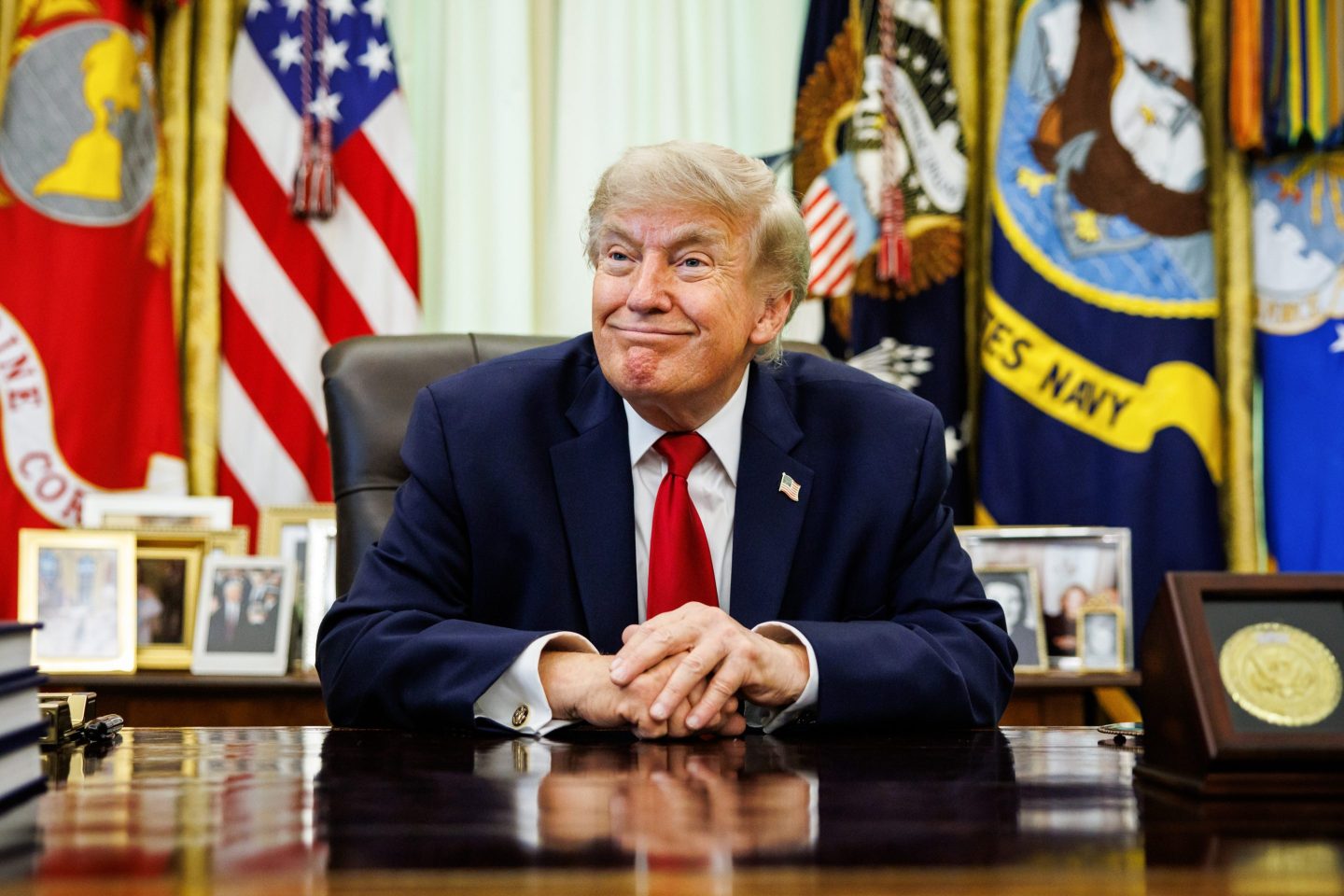
An hour in the Oval Office with President Trump.

An hour in the Oval Office with President Trump.

An hour in the Oval Office with President Trump.

An hour in the Oval Office with President Trump.

An hour in the Oval Office with President Trump.

An hour in the Oval Office with President Trump.

An hour in the Oval Office with President Trump.

An hour in the Oval Office with President Trump.

An hour in the Oval Office with President Trump.

An hour in the Oval Office with President Trump.

FinanceConspiracy Theories

This Is Why Everybody Loves Conspiracy Theories

By
Roger Lowenstein
Roger Lowenstein
Down Arrow Button Icon
By
Roger Lowenstein
Roger Lowenstein
Down Arrow Button Icon
March 16, 2017, 8:00 AM ET
Illustration by Sinelab

I know an investor who anthropomorphizes the stock market, as if the Dow were a living beast. “Wouldn’t it be just like the market to draw us in with a rally, then deliver a sucker punch?” he will say, as if “the market” were a canny three-card monte player, entrapping tourists in Times Square.

Irrational as that may sound, it’s no more so than the ever-popular investing method known as “technical analysis.” This is a branch of astrology—­chart ­interpretation—that purportedly “reads” the market, even though it tells you nothing about the under­lying companies. You see a chart of zigs and zags and impute to it a story—the market is “exhausted,” or “bottoming,” or whatever.

Many investors are addicted to such fruitless techniques. Behavioral economics, which studies the impact of psychology on financial decision-making, explains why. It reflects what author Nassim Nicholas Taleb called the “narrative fallacy.” It’s the human tendency, actually the human need, to impose order on random events and to make events we didn’t anticipate seem “predictable” after the fact.

The narrative fallacy explains many common financial errors. The news is that it’s equally useful for understanding today’s conspiracy politics. It’s why, rather than accept that John F. Kennedy was killed by a lone, random gunman, we invented conspiracy theories—to spare us the ontological despair of acknowledging that chaos, not order, rules the universe.

Taleb’s The Black Swan, published in 2007, became a handbook for market traders—a reminder that random, extreme events like economic crashes overtake the best of plans. They also overtake individuals—those who happened to be in the wrong place during a natural disaster or who worked in a once-healthy industry, such as journalism, that was undercut by a new technology.

Randomness has a subtler significance for ordinary business. It delivers extreme results for some firms and human endeavors but not for others. Life insurance and pensions are predictable businesses because the randomness is contained—average life spans aren’t going to suddenly change by much. But given the unpredictability of hurricanes, a property and casualty insurer concentrated in South Florida should prepare for the possibility of very big variations in claims.

People have a tough time accepting that many realms are beyond the power to forecast. Even retrospectively, many occurrences cannot be explained. In general, news events and historical developments are less predictable than people suppose. No one could have forecast Sept. 11, 2001, with any useful specificity—nor could economists foresee in 1970 that wealth distribution was about to skew, the rich were about to get richer, and middle America was going to stagnate. The number of variables is simply too great. The important variables (say, the potential of a new industry called software) might not even be recognized.


It’s possible to avoid falling for the narrative fallacy. If you’re an economist, this means trying not to superimpose, say, a pattern from the last economic cycle on the future. If you’re in business, assessing diffuse data to figure out whether to go ahead with an investment, it means resisting the temptation to see a coherent story in that data. Reality is messy. If the investment works, it will have to work in a future that abides a wide range of ­environments—recessions, new competitors, wars.

Investors, in particular, should be wary of falling in love with a stock’s story, after which every data point is seen as confirmation. Securities analysis is not an exercise in metaphysical truth seeking. It’s a prosaic business of buying stocks at a discount. But judgments can be wrong, or random stuff can make them wrong.

In the broader world, refusing to accept that stuff can go randomly wrong can lead to frustration, then to blame. A reason is sought.

Consider a pair of benign examples. The first is from The Black Swan. Taleb offers the sentence “The king died, and the queen died.” It is unmemorable. Then a slight refinement: “The king died, and then the queen died of grief.” Voilà! We have narrative; what’s more, we have the satisfaction of causation. No need to wonder why the queen died—it was from grief.

The second is from Michael Lewis’s new book, The Undoing Project. Lewis describes an experiment conducted by the Israeli psychologists Daniel Kahneman and Amos Tversky, pioneers in behavioral economics. For the purpose of quizzing unknowing test subjects, the two invented ­“Linda.” They cast her as a type: “31 years old, single, outspoken and very bright … deeply concerned with issues of social justice.”

They then asked subjects which was more likely—(a) “Linda is a bank teller” or (b) “Linda is a bank teller and is active in the feminist movement.” Since feminist bank-teller Lindas are a subset of all bank-teller Lindas, the correct answer is (a). But 85% of the subjects said (b)! People find it easier to engage with a feminist Linda who cares about social justice. This Linda adheres to a preconceived type; she bows to the narrative fallacy.

Kahneman and Tversky, in Lewis’s words, were asking how “a person’s understanding of what he sees change(s) with the context in which he sees it.” Taleb supplies an answer, also anticipated by the psychologists: People need narrative.

It’s striking how similar this is to the language of paranoia and conspiracy. The idea of “paranoia” as a political tendency was introduced by historian Richard Hofstadter. In “The Paranoid Style in American Politics,” an essay that appeared in Harper’s Magazine a year after the Kennedy assassination, Hofstadter traced the history of conspiracy theory in American life. A politically paranoid person, Hofstadter wrote, “is always manning the barricades of civilization,” engaged (so he believes) in a life-and-death struggle against an “amoral superman” endowed with magical, malevolent powers: “He makes crises, starts runs on banks, causes depressions, manufactures disasters.”

Although Hofstadter was writing about McCarthyism, his words apply equally to contemporary Newtown school-shooting deniers, vaccine paranoids, and the sundry confabulations (birtherism, millions of illegal voters) echoed in Donald Trump’s speeches. From the distance of half a century, one phrase leaps off the page: “The paranoid mind is far more coherent than the real world.”

The Boston Globe recently talked to a supporter of the President in Bellevue, Ohio, who lamented the disappearance of mom-and-pop stores. “You can thank the government for that,” he said. Notice how his chosen culprit supplies coherence: a simple explanation for a numbingly complex issue.

Hofstadter’s “coherence” is the narrative fallacy, harnessed to the saddle of political anxiety. Behavioral economists have shown us why we’re prone to think that way. Their insights go far beyond economics, to politics and ordinary life. Narrative fulfills and satisfies. It answers a human need. The queen died of grief. If only we knew it.

A version of this article appears in the March 15, 2017 issue of Fortune with the headline “The Stories We Fall For.”

We’ve included affiliate links in this article. Click here to learn what those are.
About the Author
By Roger Lowenstein
See full bioRight Arrow Button Icon

Latest in Finance

Finance
Lorem ipsum dolor sit amet, consectetur adipiscing elit, sed do eiusmod tempor incididunt ut labore et dolore magna aliqua. Ut enim ad minim veniam
By Fortune Editors
October 20, 2025
Finance
Lorem ipsum dolor sit amet, consectetur adipiscing elit, sed do eiusmod tempor incididunt ut labore et dolore magna aliqua. Ut enim ad minim veniam
By Fortune Editors
October 20, 2025
Finance
Lorem ipsum dolor sit amet, consectetur adipiscing elit, sed do eiusmod tempor incididunt ut labore et dolore magna aliqua. Ut enim ad minim veniam
By Fortune Editors
October 20, 2025
Finance
Lorem ipsum dolor sit amet, consectetur adipiscing elit, sed do eiusmod tempor incididunt ut labore et dolore magna aliqua. Ut enim ad minim veniam
By Fortune Editors
October 20, 2025
Finance
Lorem ipsum dolor sit amet, consectetur adipiscing elit, sed do eiusmod tempor incididunt ut labore et dolore magna aliqua. Ut enim ad minim veniam
By Fortune Editors
October 20, 2025
Finance
Lorem ipsum dolor sit amet, consectetur adipiscing elit, sed do eiusmod tempor incididunt ut labore et dolore magna aliqua. Ut enim ad minim veniam
By Fortune Editors
October 20, 2025

Most Popular

Finance
Lorem ipsum dolor sit amet, consectetur adipiscing elit, sed do eiusmod tempor incididunt ut labore et dolore magna aliqua. Ut enim ad minim veniam
By Fortune Editors
October 20, 2025
Finance
Lorem ipsum dolor sit amet, consectetur adipiscing elit, sed do eiusmod tempor incididunt ut labore et dolore magna aliqua. Ut enim ad minim veniam
By Fortune Editors
October 20, 2025
Finance
Lorem ipsum dolor sit amet, consectetur adipiscing elit, sed do eiusmod tempor incididunt ut labore et dolore magna aliqua. Ut enim ad minim veniam
By Fortune Editors
October 20, 2025
Finance
Lorem ipsum dolor sit amet, consectetur adipiscing elit, sed do eiusmod tempor incididunt ut labore et dolore magna aliqua. Ut enim ad minim veniam
By Fortune Editors
October 20, 2025
Finance
Lorem ipsum dolor sit amet, consectetur adipiscing elit, sed do eiusmod tempor incididunt ut labore et dolore magna aliqua. Ut enim ad minim veniam
By Fortune Editors
October 20, 2025
Finance
Lorem ipsum dolor sit amet, consectetur adipiscing elit, sed do eiusmod tempor incididunt ut labore et dolore magna aliqua. Ut enim ad minim veniam
By Fortune Editors
October 20, 2025
Fortune Secondary Logo
Rankings
  • 100 Best Companies
  • Fortune 500
  • Global 500
  • Fortune 500 Europe
  • Most Powerful Women
  • World's Most Admired Companies
  • See All Rankings
  • Lists Calendar
Sections
  • Finance
  • Fortune Crypto
  • Features
  • Leadership
  • Health
  • Commentary
  • Success
  • Retail
  • Mpw
  • Tech
  • Lifestyle
  • CEO Initiative
  • Asia
  • Politics
  • Conferences
  • Europe
  • Newsletters
  • Personal Finance
  • Environment
  • Magazine
  • Education
Customer Support
  • Frequently Asked Questions
  • Customer Service Portal
  • Privacy Policy
  • Terms Of Use
  • Single Issues For Purchase
  • International Print
Commercial Services
  • Advertising
  • Fortune Brand Studio
  • Fortune Analytics
  • Fortune Conferences
  • Business Development
  • Group Subscriptions
About Us
  • About Us
  • Press Center
  • Work At Fortune
  • Terms And Conditions
  • Site Map
  • About Us
  • Press Center
  • Work At Fortune
  • Terms And Conditions
  • Site Map
  • Facebook icon
  • Twitter icon
  • LinkedIn icon
  • Instagram icon
  • Pinterest icon

Latest in Finance

Markets are jittery as the global oil crisis bleeds into a global debt selloff, while Trump weighs new military options on Iran
EnergyOil
Markets are jittery as the global oil crisis bleeds into a global debt selloff, while Trump weighs new military options on Iran
By Jason MaMay 17, 2026
6 hours ago
Gundlach says it’s ‘just not possible’ for the Fed to cut rates
EconomyFederal Reserve
Gundlach says it’s ‘just not possible’ for the Fed to cut rates
By Jordan Fitzgerald, Sam Kim and BloombergMay 17, 2026
9 hours ago
Supply shocks weren’t random. They were strategic—and should be seen as ‘supply coercion’ instead, former Fed official says 
Economysupply chains
Supply shocks weren’t random. They were strategic—and should be seen as ‘supply coercion’ instead, former Fed official says 
By Jason MaMay 17, 2026
9 hours ago
U.S. says China to buy $17 billion of agricultural goods annually
EconomyChina
U.S. says China to buy $17 billion of agricultural goods annually
By Yash Roy and BloombergMay 17, 2026
11 hours ago
The top foreign holders of U.S. debt may soon dump Treasury bonds and bring their money back home, potentially spiking borrowing costs
EconomyDebt
The top foreign holders of U.S. debt may soon dump Treasury bonds and bring their money back home, potentially spiking borrowing costs
By Jason MaMay 17, 2026
12 hours ago
BlackRock private credit fund’s valuations are probed by DOJ
InvestingDepartment of Justice
BlackRock private credit fund’s valuations are probed by DOJ
By Olivia Fishlow, Ava Benny-Morrison and BloombergMay 17, 2026
14 hours ago

Most Popular

Microsoft AI chief gives it 18 months—for all white-collar work to be automated by AI
AI
Microsoft AI chief gives it 18 months—for all white-collar work to be automated by AI
By Jake AngeloMay 16, 2026
2 days ago
The Bezos family just donated $100 million to help achieve one of Mayor Zohran Mamdani’s top campaign promises
Politics
The Bezos family just donated $100 million to help achieve one of Mayor Zohran Mamdani’s top campaign promises
By Jake AngeloMay 12, 2026
5 days ago
The top foreign holders of U.S. debt may soon dump Treasury bonds and bring their money back home, potentially spiking borrowing costs
Economy
The top foreign holders of U.S. debt may soon dump Treasury bonds and bring their money back home, potentially spiking borrowing costs
By Jason MaMay 17, 2026
12 hours ago
'No one was coming to save me': How Reese Witherspoon built a $900 million company from a problem Hollywood wouldn't fix
Success
'No one was coming to save me': How Reese Witherspoon built a $900 million company from a problem Hollywood wouldn't fix
By Sydney LakeMay 17, 2026
19 hours ago
Former top Russian official admits the country is over Putin and can 'imagine a future without him' — even elites bail as Kremlin seizes their assets 
Politics
Former top Russian official admits the country is over Putin and can 'imagine a future without him' — even elites bail as Kremlin seizes their assets 
By Jason MaMay 16, 2026
1 day ago
SpaceX heads into a record-shattering IPO with the 'deepest moat that exists today' as investors vow to 'never bet against Elon'
Innovation
SpaceX heads into a record-shattering IPO with the 'deepest moat that exists today' as investors vow to 'never bet against Elon'
By Jason MaMay 16, 2026
2 days ago

© 2026 Fortune Media IP Limited. All Rights Reserved. Use of this site constitutes acceptance of our Terms of Use and Privacy Policy | CA Notice at Collection and Privacy Notice | Do Not Sell/Share My Personal Information
FORTUNE is a trademark of Fortune Media IP Limited, registered in the U.S. and other countries. FORTUNE may receive compensation for some links to products and services on this website. Offers may be subject to change without notice.