• Home
  • Latest
  • Fortune 500
  • Finance
  • Tech
  • Leadership
  • Lifestyle
  • Rankings
  • Multimedia

Trendingnow

1

As Big Tech showers employees with perks to win the talent war, Nvidia built a nearly $5 trillion company by making people pay for their own lunch

2

MacKenzie Scott alone accounted for one-third of America's $19.2 billion in megagifts last year

3

The Supreme Court's birthright citizenship ruling hands the U.S. economy a $7.7 trillion win

1

As Big Tech showers employees with perks to win the talent war, Nvidia built a nearly $5 trillion company by making people pay for their own lunch

2

MacKenzie Scott alone accounted for one-third of America's $19.2 billion in megagifts last year

3

The Supreme Court's birthright citizenship ruling hands the U.S. economy a $7.7 trillion win
Commentary

This Trade Deal May Not Be Entirely Dead Under President Trump

By
Alan Wolff
Alan Wolff
Down Arrow Button Icon
By
Alan Wolff
Alan Wolff
Down Arrow Button Icon
March 21, 2017, 5:38 PM ET
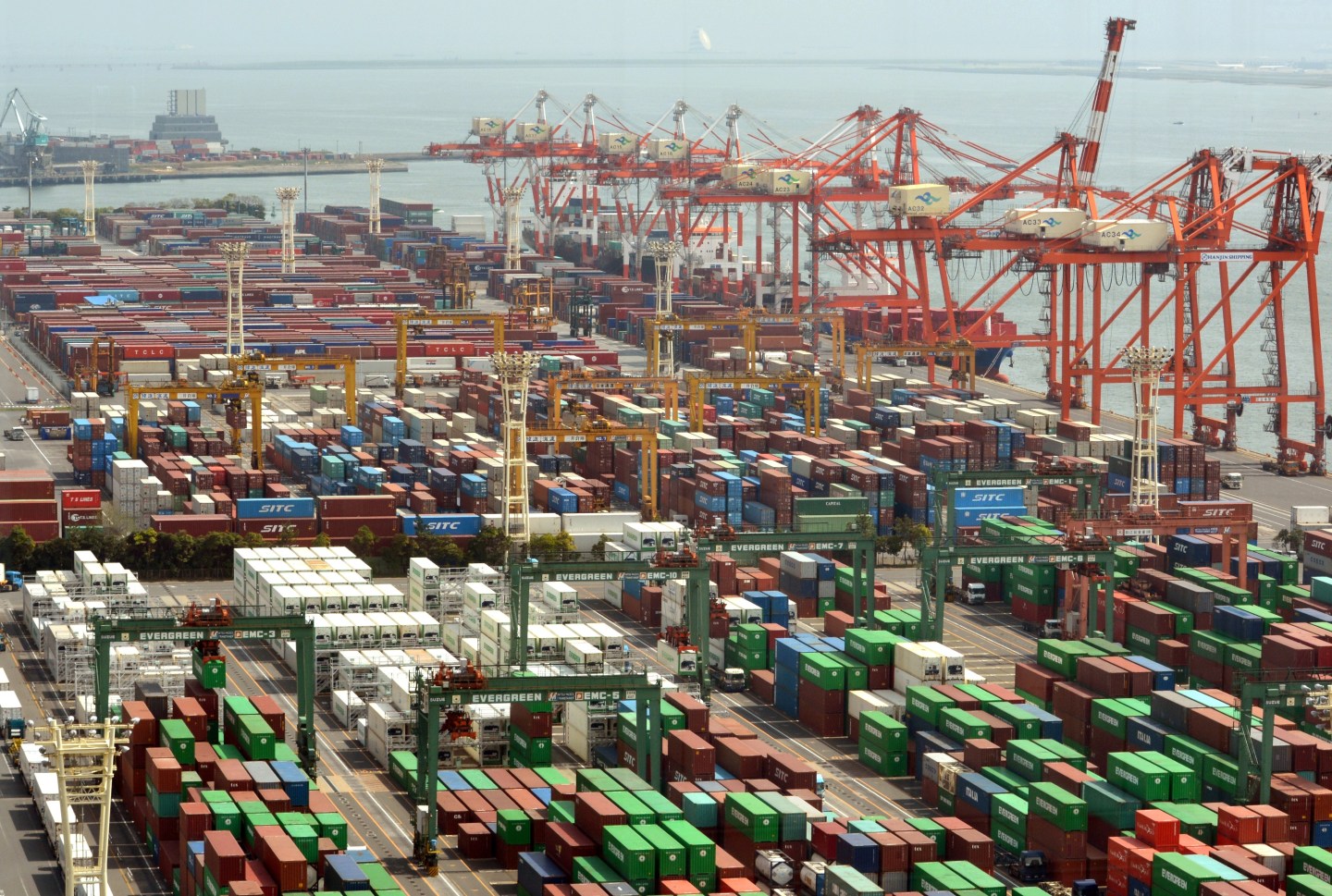
JAPAN-ECONOMY-TRADE
General view shows a container wharf in Tokyo port on April 22, 2015. Japan posted its first trade surplus in almost three years as exports to North America soared and energy bills fell, giving an important psychological boost to Tokyo's bid to revive the flagging economy. AFP PHOTO / KAZUHIRO NOGI (Photo credit should read KAZUHIRO NOGI/AFP/Getty Images)KAZUHIRO NOGI/ AFP/ Getty Images
Add Fortune on Google for similar content.

During Donald Trump’s first 100 days as U.S. president, one of his first moves was to withdraw from what was poised to be a landmark trade deal with 11 other countries across the Pacific Rim. Now the president’s nominee to be U.S. Trade Representative, Robert Lighthizer, says the U.S. may not be pulling away from leadership in the region, suggesting that some of the promises of the Trans-Pacific Partnership (TPP) may still be realized. The first trade action taken by the Trump Administration was to withdraw American participation in the 12-nation Trans Pacific Partnership (TPP).

The President’s nominee to be the U.S. Trade Representative, Robert Lighthizer, in written answers to questions from Senate Finance Committee members, stated that the United States is not abdicating leadership in the region:”The Trump Administration intends to play a strong leadership role in the Asia Pacific, including through active negotiation of bilateral agreements and other initiatives,” Lighthizer wrote, answering questions from the Senate Finance Committee.

His remarks bring a sigh of relief for anyone who still believes in free trade, but the question is how is that best done?

There were 12 countries that negotiated TPP, and six others expressed an interest in joining – Indonesia, Korea, Taiwan, Thailand, Malaysia, and Colombia. TPP was to have an open architecture, and still others might have eventually joined.

Pursuing bilateral agreements is a course that has distinct limits. One reason is that the ultimate objective of trade negotiations is to set the rules for world trade. Bilateral agreements are an extraordinarily inefficient way to do this. Each of America’s partners in a series of separate bilateral agreements will have at least some specific ideas on how to craft rules. Accumulating a stack of agreements with differing rules is very unlikely to achieve a coherent outcome for global trade.

Secondly, as a practical matter, getting any trade agreement approved by Congress is a heavy lift. It would be optimistic to think that it would be possible to get more than one agreement approved by Congress in each two-year session of Congress. This has in fact been the average – 15 free trade agreements over the last 32 years.

Third, negotiators need trade-offs that come from having more than one other country at the table. It is like a poker game. If there are only two players, the pot is not large enough. The game may not be worth it. Smaller, developing countries often have high tariff rates and trade-restrictive regulations. America has export interests with these countries, but has a low tariff rate. America by itself may not have enough to offer to attract these countries to the table.

Fourth, bilateral agreements need to avoid free riders, so they include a requirement that to qualify the benefits of the agreement, a product must originate in a signatory country, meaning it must have a minimum amount of content from the two parties to the agreement. This requires businesses to engage in substantial record keeping and customs officials to require proof that these “rules of origin” are lived up to.

The burden of paperwork will often outweigh the tariff saving from qualifying products for duty-free treatment under an agreement. But add a lot of paper work and the trade agreements simply get ignored. This is especially true for small and medium sized companies. With growing e-commerce over the web supported by express delivery, this is will be an increasing share of world trade.

To avoid these shortcoming, regional agreements are considered as the most practical path forward. That is, however, not an option if the President says it is not. Under the U.S. constitution, the President has the foreign affairs power and he is free to choose the way he wants to structure trade negotiations, unless Congress requires a broader approach, and it has not done so. So until the President decides otherwise, bilateral negotiations are going to be the primary tool of the new Administration. Faced with this reality, it is time to think creatively about how U.S. negotiators should proceed. This is especially urgent because there are a large number of international trade negotiations underway, none of which include the United States. These agreements have one common element — they will discriminate against American goods and possibly services. There is already one very large 16-country negotiation led by China with a target of wrapping up this fall.

Were it not for the Trump “bilateral agreements only” doctrine, the logical path forward would be for U.S. negotiators to take the parts of TPP that the Administration is willing to acknowledge are good, add some further provisions that it and the Congress want, and invite not only the original TPP parties back to the table and invite others that expressed an interest in joining TPP to come in as well. It would be a Trump Pacific Partnership (new TPP). While this might be an approach a majority in Congress and the private sector might support, it is distinctly not something the Administration appears to be willing to contemplate.

There is a logical alternative. Japan was a strong partner of the United States in crafting the rules contained in TPP. Japan Prime Minister Shinzo Abe’s government might be sounded out as to its willingness to enter into a bilateral agreement meeting the criteria stated above – a bilateral agreement with the best of TPP with suggested upgrades arrived at in consultation with the Congress and interested domestic parties. A U.S.-Japan bilateral could be designed as the core agreement that other nations would be invited to join. Any additional country wishing to join would have to agree to the core agreement plus, as warranted, agreeing to additional elements that might be required in individual cases. These could be separate bilateral agreements. In approving the core agreement, Congress could stipulate conditions for additional countries seeking to join the deal, so as to make a series of accessions more feasible.

Japan and the United States account for 20% of the world economy. If the renegotiation of NAFTA is undertaken with the idea of joining it to a U.S.-Japan bilateral agreement, this would bring in another 3.5% of global production. Australia and New Zealand would bring the total up to a quarter of the world economy. Other countries would no doubt come along. Not a bad start toward creating better rules and better than any China-led alternative.

One thing is for sure: If America stands on the sidelines, it is going to see its trade interests seriously damaged. America needs to have a positive negotiating agenda. It also needs to get its lead trade negotiators in place. The Congress needs to act as soon as possible to confirm Robert Lighthizer as U.S. Trade Representative, the nation’s chief negotiator under law. In addition, the key subcabinet positions in his agency as well as at Commerce, State, Agriculture, and Treasury need to be filled.

Alan Wolff is a senior counsel with Dentons. He is chairman of the National Foreign Trade Council and served as a senior trade negotiator in prior Republican and Democratic administrations.

 

About the Author
By Alan Wolff
See full bioRight Arrow Button Icon
Add Fortune on Google for similar content.

Latest in Commentary

Finance
Lorem ipsum dolor sit amet, consectetur adipiscing elit, sed do eiusmod tempor incididunt ut labore et dolore magna aliqua. Ut enim ad minim veniam
By Fortune Editors
October 20, 2025
Finance
Lorem ipsum dolor sit amet, consectetur adipiscing elit, sed do eiusmod tempor incididunt ut labore et dolore magna aliqua. Ut enim ad minim veniam
By Fortune Editors
October 20, 2025
Finance
Lorem ipsum dolor sit amet, consectetur adipiscing elit, sed do eiusmod tempor incididunt ut labore et dolore magna aliqua. Ut enim ad minim veniam
By Fortune Editors
October 20, 2025
Finance
Lorem ipsum dolor sit amet, consectetur adipiscing elit, sed do eiusmod tempor incididunt ut labore et dolore magna aliqua. Ut enim ad minim veniam
By Fortune Editors
October 20, 2025
Finance
Lorem ipsum dolor sit amet, consectetur adipiscing elit, sed do eiusmod tempor incididunt ut labore et dolore magna aliqua. Ut enim ad minim veniam
By Fortune Editors
October 20, 2025
Finance
Lorem ipsum dolor sit amet, consectetur adipiscing elit, sed do eiusmod tempor incididunt ut labore et dolore magna aliqua. Ut enim ad minim veniam
By Fortune Editors
October 20, 2025

Most Popular

Finance
Lorem ipsum dolor sit amet, consectetur adipiscing elit, sed do eiusmod tempor incididunt ut labore et dolore magna aliqua. Ut enim ad minim veniam
By Fortune Editors
October 20, 2025
Finance
Lorem ipsum dolor sit amet, consectetur adipiscing elit, sed do eiusmod tempor incididunt ut labore et dolore magna aliqua. Ut enim ad minim veniam
By Fortune Editors
October 20, 2025
Finance
Lorem ipsum dolor sit amet, consectetur adipiscing elit, sed do eiusmod tempor incididunt ut labore et dolore magna aliqua. Ut enim ad minim veniam
By Fortune Editors
October 20, 2025
Finance
Lorem ipsum dolor sit amet, consectetur adipiscing elit, sed do eiusmod tempor incididunt ut labore et dolore magna aliqua. Ut enim ad minim veniam
By Fortune Editors
October 20, 2025
Finance
Lorem ipsum dolor sit amet, consectetur adipiscing elit, sed do eiusmod tempor incididunt ut labore et dolore magna aliqua. Ut enim ad minim veniam
By Fortune Editors
October 20, 2025
Finance
Lorem ipsum dolor sit amet, consectetur adipiscing elit, sed do eiusmod tempor incididunt ut labore et dolore magna aliqua. Ut enim ad minim veniam
By Fortune Editors
October 20, 2025
Fortune Secondary Logo
Rankings
  • 100 Best Companies
  • Fortune 500
  • Global 500
  • Fortune 500 Europe
  • Most Powerful Women
  • World's Most Admired Companies
  • See All Rankings
  • Lists Calendar
Sections
  • Finance
  • Fortune Crypto
  • Features
  • Leadership
  • Health
  • Commentary
  • Success
  • Retail
  • Mpw
  • Tech
  • Lifestyle
  • CEO Initiative
  • Asia
  • Politics
  • Conferences
  • Europe
  • Newsletters
  • Personal Finance
  • Environment
  • Magazine
  • Education
Customer Support
  • Frequently Asked Questions
  • Customer Service Portal
  • Privacy Policy
  • Terms Of Use
  • Single Issues For Purchase
  • International Print
Commercial Services
  • Advertising
  • Fortune Brand Studio
  • Fortune Analytics
  • Fortune Conferences
  • Business Development
  • Group Subscriptions
About Us
  • About Us
  • Press Center
  • Work At Fortune
  • Terms And Conditions
  • Site Map
  • About Us
  • Press Center
  • Work At Fortune
  • Terms And Conditions
  • Site Map
  • Facebook icon
  • Twitter icon
  • LinkedIn icon
  • Instagram icon
  • Pinterest icon

Latest in Commentary

senate
CommentaryCongress
One rare bipartisan AI bill is moving through Congress. Here’s why it deserves to pass
By Neil Björkman and Betsy BrewerJuly 1, 2026
16 hours ago
I know how Gen Z can survive the ‘jobpocalypse’ because I built an AI company — in 2015
CommentaryCareers
I know how Gen Z can survive the ‘jobpocalypse’ because I built an AI company — in 2015
By Jeremy FainJuly 1, 2026
17 hours ago
mr
Commentary250 Years of Innovation
America needs 3.8 million manufacturing workers. This CEO has a blueprint to find them
By Mark RayfieldJuly 1, 2026
17 hours ago
usa
Commentary250 Years of Innovation
America at 250: why the Constitution was built to restrain government, not celebrate majority rule
By Steve H. HankeJuly 1, 2026
17 hours ago
t
CommentaryMedia
Netflix could turn NBC into its biggest bet yet — and this time, the math actually works
By Jeffrey Sonnenfeld and Steven TianJune 30, 2026
1 day ago
wb
CommentaryLeadership
I grew BDO from $600 million to $3.4 billion. Here’s the 3-part formula that made it possible
By Wayne BersonJune 30, 2026
2 days ago

Most Popular

As Big Tech showers employees with perks to win the talent war, Nvidia built a nearly $5 trillion company by making people pay for their own lunch
Big Tech
As Big Tech showers employees with perks to win the talent war, Nvidia built a nearly $5 trillion company by making people pay for their own lunch
By Marco Quiroz-GutierrezJuly 1, 2026
20 hours ago
MacKenzie Scott alone accounted for one-third of America's $19.2 billion in megagifts last year
Success
MacKenzie Scott alone accounted for one-third of America's $19.2 billion in megagifts last year
By Sydney LakeJune 25, 2026
7 days ago
The Supreme Court's birthright citizenship ruling hands the U.S. economy a $7.7 trillion win
Newsletters
The Supreme Court's birthright citizenship ruling hands the U.S. economy a $7.7 trillion win
By Diane BradyJuly 1, 2026
18 hours ago
Philanthropy leader at Warren Buffett and Bill Gates’ Giving Pledge says children of billionaires are pushing them to give their wealth away faster
Success
Philanthropy leader at Warren Buffett and Bill Gates’ Giving Pledge says children of billionaires are pushing them to give their wealth away faster
By Preston ForeJune 27, 2026
5 days ago
Elon Musk on MacKenzie Scott giving away $26 billion of her fortune: 'Sadly,' it makes the world a worse place
Success
Elon Musk on MacKenzie Scott giving away $26 billion of her fortune: 'Sadly,' it makes the world a worse place
By Sydney LakeJune 29, 2026
3 days ago
Current price of oil as of July 1, 2026
Personal Finance
Current price of oil as of July 1, 2026
By Joseph HostetlerJuly 1, 2026
15 hours ago

© 2026 Fortune Media IP Limited. All Rights Reserved. Use of this site constitutes acceptance of our Terms of Use and Privacy Policy | CA Notice at Collection and Privacy Notice | Do Not Sell/Share My Personal Information
FORTUNE is a trademark of Fortune Media IP Limited, registered in the U.S. and other countries. FORTUNE may receive compensation for some links to products and services on this website. Offers may be subject to change without notice.