• Home
  • Latest
  • Fortune 500
  • Finance
  • Tech
  • Leadership
  • Lifestyle
  • Rankings
  • Multimedia

Trendingnow

1

As Big Tech showers employees with perks to win the talent war, Nvidia built a nearly $5 trillion company by making people pay for their own lunch

2

Mark Zuckerberg feeds his cows macadamia nuts and beer to create the 'highest-quality beef in the world' on his $300 million estate in Hawaii

3

Today, Emily Blunt is worth $80 million thanks to her Hollywood career—but she actually wanted to be a UN Spanish translator on $80K

1

As Big Tech showers employees with perks to win the talent war, Nvidia built a nearly $5 trillion company by making people pay for their own lunch

2

Mark Zuckerberg feeds his cows macadamia nuts and beer to create the 'highest-quality beef in the world' on his $300 million estate in Hawaii

3

Today, Emily Blunt is worth $80 million thanks to her Hollywood career—but she actually wanted to be a UN Spanish translator on $80K
Commentary

Why Animal Cruelty Is Bad Business

By
Matthew Prescott
Matthew Prescott
Down Arrow Button Icon
By
Matthew Prescott
Matthew Prescott
Down Arrow Button Icon
June 23, 2017, 3:16 PM ET
Michael S. Williamson/The Washington Post via Getty Images
Add Fortune on Google for similar content.

From how we feed and clothe ourselves to how we entertain ourselves, animals have long been at the center of human enterprise. And thus, ever since the advent of corporations, the relationship between company and creature has been complicated.

As individuals, we care for and connect with our furry, feathered, and finned friends; but when animals are at the center of our industries, historically, that connection has collapsed. We cage them. We abuse them. We force them to perform for us. Now, as more consumers look to engage with brands that align with their own values, industry is finding that considering animals’ interests—rather than merely considering our interest in using them—can pay off. Indeed, though once reserved for niche companies catering to chiefly conscientious crowds, animal welfare has broken through the mainstream. The result? The free market is literally freeing animals.

Take YOOX Net-a-Porter, the $2 billion online retailer for luxury brands like Michael Kors, Prada, Gucci, and Burberry. The purveyor of posh has pledged to forbid fur from its entire portfolio—and not necessarily out of the goodness of its heart. As the New York Times reported, in Net-a-Porter’s own survey of over 25,000 clients, including those who spend over $1 million per year on its websites, a majority of respondents urged the company to forgo fur.

With numbers like that, the decision to embrace animal welfare became an easy one. And Net-a-Porter is not alone: Other big-ticket brands that have also recently announced fur-free policies include Armani, HUGO BOSS, and VF Corporation, the owner of The North Face, Nautica, and Timberland.

Similar changes are afoot in the food industry. The U.S. Department of Agriculture recently released new statistics showing that American egg producers are housing nearly 30 million more hens in cage-free settings than they were just seven years ago, increasingly relegating cage confinement to the dustbins of history. Do industrial egg producers have a newfound fondness for their flocks? Not likely. According to research conducted by Walmart and reported by the Associated Press, 77% of the retail giant’s customers said they’d increase their trust of, and 66 percent would increase their likelihood to shop at, a company that improves its animal welfare standards. So it makes sense that Walmart—along with Kroger, McDonald’s, Burger King, and hundreds more—have commanded the cage-free conversion, announcing policies to switch 100% of the eggs they sell to cage-free within the next few years.

Others are taking steps to diversify their businesses by offering products that appeal to the increasing number of consumers opting for plant-based fare. Tyson Foods—one of the world’s largest meatpackers—recently announced a $150 million venture capital firm with a goal of diversifying the company’s protein production by investing more in plant-based products. Why? Because “plant-based protein is growing almost, at this point, a little faster than animal-based,” admits Tyson’s CEO.

As the Wall Street Journal put it, “Anchoring a plate with a massive hunk of animal protein is so last century.”

It’s not just Tyson: Burger King’s former board chairman has launched a plant-based meat company whose website includes a counter showing how many chickens, pigs, and cows its products have saved. And McDonald’s’ former CEO has joined the board of Beyond Meat, which makes plant-based chicken and burgers and other vegan products.

It’s simple economics: rather than denying change and crying “Let them eat meat!” these industry giants and veterans are accommodating changing demands. That’s the free market freeing animals—and it reaches more than just food and clothing.

SeaWorld, for example, has announced plans to stop using orcas at its theme parks. Though its icon and once its biggest draw, orcas—or at least, SeaWorld’s treatment of them—began causing major problems for the company following the 2013 film Blackfish, which alleged animal mistreatment. After the backlash and under new leadership, the company has not only shifted away from the theatrical orca shows and agreed to no longer breed them, but has increased its commitment to marine animal rescue, and begun to source the food served in the park from more humane sources.

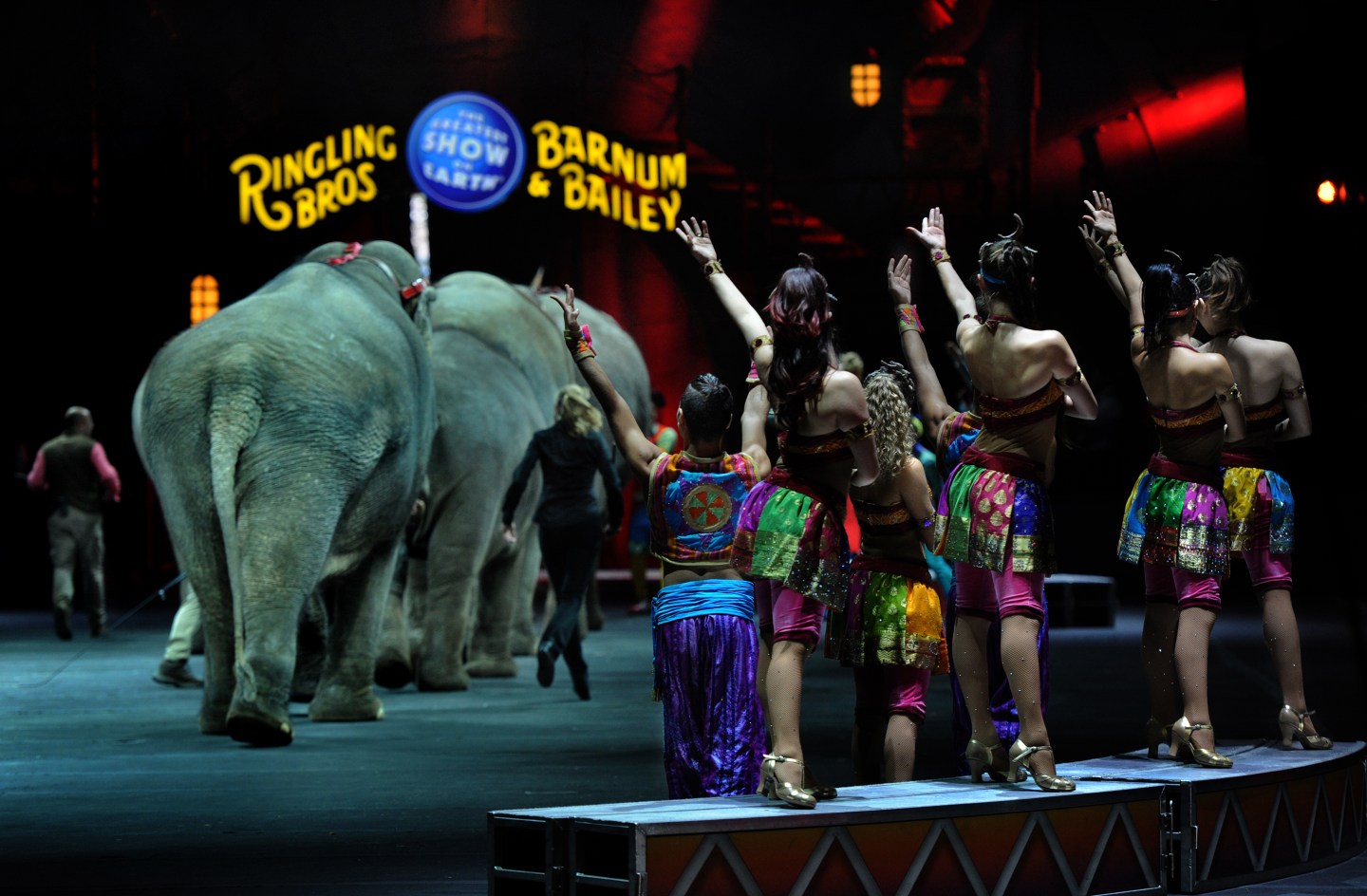
As SeaWorld shapes up, other companies that didn’t heed the signs of a changing audience have had to ship out. After nearly 150 years in business, Ringling Bros. Circus permanently shuttered its big top in 2017. Long maligned over mounting animal welfare concerns, Ringling suffered sluggish sales from an ever-fading fan base. It seems we’ve lost our taste for watching elephants made to stand on their heads.

The fact is, in today’s economy, businesses are under a microscope when it comes to how they interact with the world around them. Subjugating the treatment of animals beneath other commercial concerns may have made business sense in centuries past; but today, that doesn’t fly. Clearly, bettering the lives of beasts used in enterprise is no longer at odds with robust balance sheets, but rather is part and parcel to ensuring them.

Matthew Prescott is senior director of corporate policy for The Humane Society of the United States and author of Food is the Solution: What to Eat to Save the World, forthcoming in spring 2018.


About the Author
By Matthew Prescott
See full bioRight Arrow Button Icon
Add Fortune on Google for similar content.

Latest in Commentary

Finance
Lorem ipsum dolor sit amet, consectetur adipiscing elit, sed do eiusmod tempor incididunt ut labore et dolore magna aliqua. Ut enim ad minim veniam
By Fortune Editors
October 20, 2025
Finance
Lorem ipsum dolor sit amet, consectetur adipiscing elit, sed do eiusmod tempor incididunt ut labore et dolore magna aliqua. Ut enim ad minim veniam
By Fortune Editors
October 20, 2025
Finance
Lorem ipsum dolor sit amet, consectetur adipiscing elit, sed do eiusmod tempor incididunt ut labore et dolore magna aliqua. Ut enim ad minim veniam
By Fortune Editors
October 20, 2025
Finance
Lorem ipsum dolor sit amet, consectetur adipiscing elit, sed do eiusmod tempor incididunt ut labore et dolore magna aliqua. Ut enim ad minim veniam
By Fortune Editors
October 20, 2025
Finance
Lorem ipsum dolor sit amet, consectetur adipiscing elit, sed do eiusmod tempor incididunt ut labore et dolore magna aliqua. Ut enim ad minim veniam
By Fortune Editors
October 20, 2025
Finance
Lorem ipsum dolor sit amet, consectetur adipiscing elit, sed do eiusmod tempor incididunt ut labore et dolore magna aliqua. Ut enim ad minim veniam
By Fortune Editors
October 20, 2025

Most Popular

Finance
Lorem ipsum dolor sit amet, consectetur adipiscing elit, sed do eiusmod tempor incididunt ut labore et dolore magna aliqua. Ut enim ad minim veniam
By Fortune Editors
October 20, 2025
Finance
Lorem ipsum dolor sit amet, consectetur adipiscing elit, sed do eiusmod tempor incididunt ut labore et dolore magna aliqua. Ut enim ad minim veniam
By Fortune Editors
October 20, 2025
Finance
Lorem ipsum dolor sit amet, consectetur adipiscing elit, sed do eiusmod tempor incididunt ut labore et dolore magna aliqua. Ut enim ad minim veniam
By Fortune Editors
October 20, 2025
Finance
Lorem ipsum dolor sit amet, consectetur adipiscing elit, sed do eiusmod tempor incididunt ut labore et dolore magna aliqua. Ut enim ad minim veniam
By Fortune Editors
October 20, 2025
Finance
Lorem ipsum dolor sit amet, consectetur adipiscing elit, sed do eiusmod tempor incididunt ut labore et dolore magna aliqua. Ut enim ad minim veniam
By Fortune Editors
October 20, 2025
Finance
Lorem ipsum dolor sit amet, consectetur adipiscing elit, sed do eiusmod tempor incididunt ut labore et dolore magna aliqua. Ut enim ad minim veniam
By Fortune Editors
October 20, 2025
Fortune Secondary Logo
Rankings
  • 100 Best Companies
  • Fortune 500
  • Global 500
  • Fortune 500 Europe
  • Most Powerful Women
  • World's Most Admired Companies
  • See All Rankings
  • Lists Calendar
Sections
  • Finance
  • Fortune Crypto
  • Features
  • Leadership
  • Health
  • Commentary
  • Success
  • Retail
  • Mpw
  • Tech
  • Lifestyle
  • CEO Initiative
  • Asia
  • Politics
  • Conferences
  • Europe
  • Newsletters
  • Personal Finance
  • Environment
  • Magazine
  • Education
Customer Support
  • Frequently Asked Questions
  • Customer Service Portal
  • Privacy Policy
  • Terms Of Use
  • Single Issues For Purchase
  • International Print
Commercial Services
  • Advertising
  • Fortune Brand Studio
  • Fortune Analytics
  • Fortune Conferences
  • Business Development
  • Group Subscriptions
About Us
  • About Us
  • Press Center
  • Work At Fortune
  • Terms And Conditions
  • Site Map
  • About Us
  • Press Center
  • Work At Fortune
  • Terms And Conditions
  • Site Map
  • Facebook icon
  • Twitter icon
  • LinkedIn icon
  • Instagram icon
  • Pinterest icon

Latest in Commentary

rn
CommentaryCryptocurrency
Former Iran director at NSC: Crypto legislation is a ticket to sanctions evasion
By Richard NephewJuly 2, 2026
18 hours ago
m
Commentary250 Years of Innovation
McKinsey chairs: Building a more resilient industrial base may require $2 trillion in investment
By Eric Kutcher and Shubham SinghalJuly 2, 2026
18 hours ago
em
Commentary250 Years of Innovation
America’s 250th birthday has Elon Musk and a record IPO. Its 15th had Alexander Hamilton — and a stock market bubble
By Owen LamontJuly 2, 2026
22 hours ago
paramount
CommentaryAntitrust
How Paramount’s theater commitments could boost local economies across the nation
By Ike BrannonJuly 2, 2026
22 hours ago
elon
CommentaryChina
China has 400 private space companies. The West is barely paying attention
By Rainer ZitelmannJuly 2, 2026
24 hours ago
senate
CommentaryCongress
One rare bipartisan AI bill is moving through Congress. Here’s why it deserves to pass
By Neil Björkman and Betsy BrewerJuly 1, 2026
2 days ago

Most Popular

As Big Tech showers employees with perks to win the talent war, Nvidia built a nearly $5 trillion company by making people pay for their own lunch
Big Tech
As Big Tech showers employees with perks to win the talent war, Nvidia built a nearly $5 trillion company by making people pay for their own lunch
By Marco Quiroz-GutierrezJuly 1, 2026
2 days ago
Mark Zuckerberg feeds his cows macadamia nuts and beer to create the 'highest-quality beef in the world' on his $300 million estate in Hawaii
Success
Mark Zuckerberg feeds his cows macadamia nuts and beer to create the 'highest-quality beef in the world' on his $300 million estate in Hawaii
By Sasha RogelbergJuly 2, 2026
16 hours ago
Today, Emily Blunt is worth $80 million thanks to her Hollywood career—but she actually wanted to be a UN Spanish translator on $80K
Success
Today, Emily Blunt is worth $80 million thanks to her Hollywood career—but she actually wanted to be a UN Spanish translator on $80K
By Orianna Rosa RoyleJuly 2, 2026
1 day ago
Americans are escaping the U.S. for New Zealand where house prices have hit a new low—but only wealthy Americans with $3 million spare can invest
Success
Americans are escaping the U.S. for New Zealand where house prices have hit a new low—but only wealthy Americans with $3 million spare can invest
By Emma BurleighJuly 2, 2026
18 hours ago
Current price of oil as of July 2, 2026
Personal Finance
Current price of oil as of July 2, 2026
By Joseph HostetlerJuly 2, 2026
19 hours ago
MacKenzie Scott alone accounted for one-third of America's $19.2 billion in megagifts last year
Success
MacKenzie Scott alone accounted for one-third of America's $19.2 billion in megagifts last year
By Sydney LakeJune 25, 2026
8 days ago

© 2026 Fortune Media IP Limited. All Rights Reserved. Use of this site constitutes acceptance of our Terms of Use and Privacy Policy | CA Notice at Collection and Privacy Notice | Do Not Sell/Share My Personal Information
FORTUNE is a trademark of Fortune Media IP Limited, registered in the U.S. and other countries. FORTUNE may receive compensation for some links to products and services on this website. Offers may be subject to change without notice.