• Home
  • Latest
  • Fortune 500
  • Finance
  • Tech
  • Leadership
  • Lifestyle
  • Rankings
  • Multimedia
Commentary

How the New Russia Sanctions Bill Shows How Far the U.S. Has Come

By
J. Paul Pope
J. Paul Pope
and
Bethany Cianciolo
Bethany Cianciolo
Down Arrow Button Icon
By
J. Paul Pope
J. Paul Pope
and
Bethany Cianciolo
Bethany Cianciolo
Down Arrow Button Icon
July 25, 2017, 1:42 PM ET
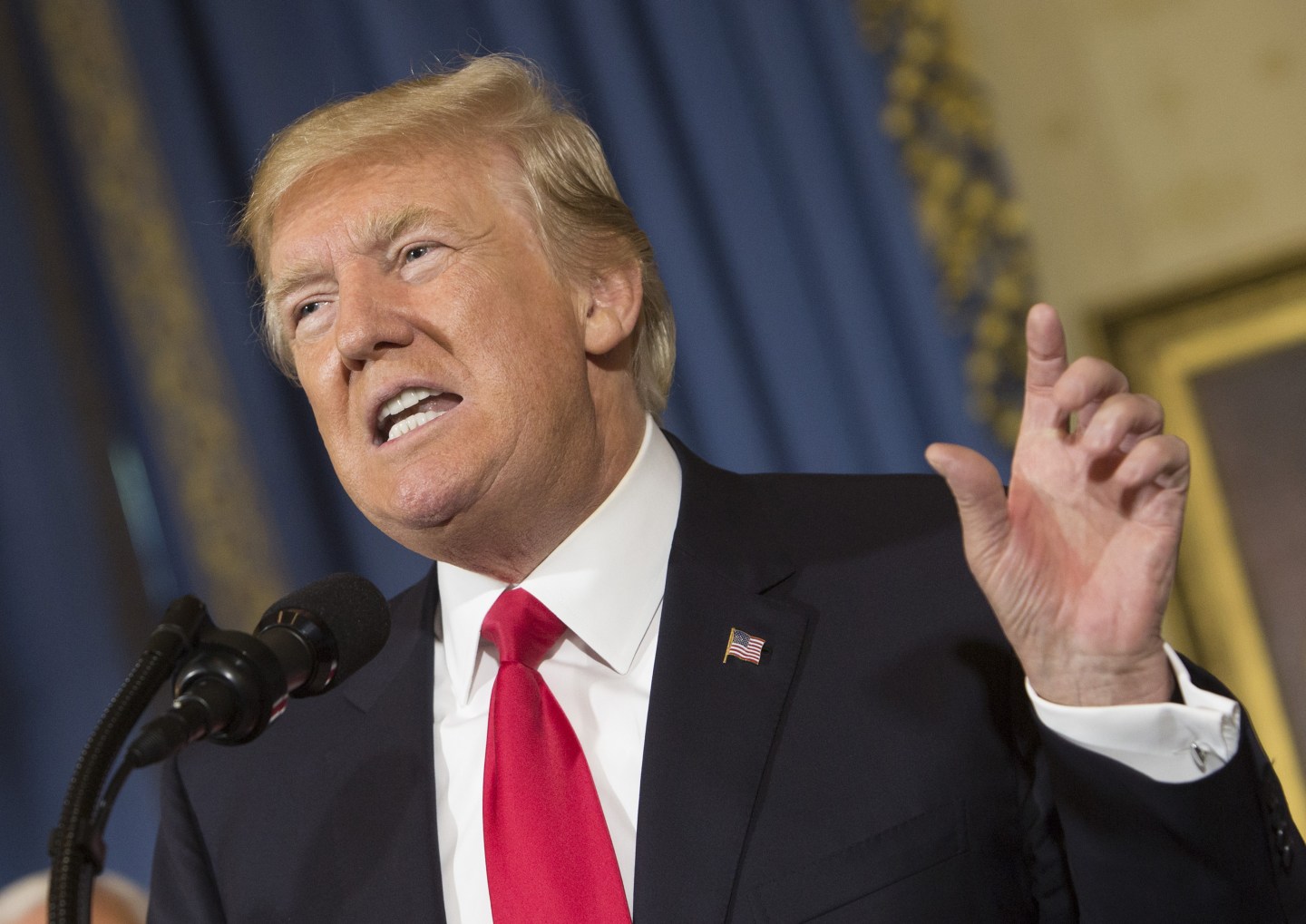
President Trump Delivers Statement On Healthcare At The White House
U.S. President Donald Trump speaks during a press conference on healthcare in the Blue Room of the White House in Washington, D.C., U.S., on Monday, July 24, 2017. Trump called on Senate Republicans to start the process of repealing the Affordable Care Act, warning that anyone who votes not to take up the bill Tuesday is saying they are "fine with the Obamacare nightmare." Photographer: Chris Kleponis/Pool Via BloombergChris Kleponis—Bloomberg via Getty Images

In defiance of President Donald Trump’s wishes, the Republican-led Congress has decided not to wait until Russia or another foreign power has altered or nullified the outcome of an American election before acting. The sanctions bill, which the House is expected to vote on Tuesday, won’t solve the problem, but the strong bipartisan support for it sends an important signal concerning our resolve to protect democratic values. This unusual bipartisanship in Congress happens to coincide with the anniversary of the most important piece of national security legislation ever passed, which also depended on bipartisan cooperation.

Seventy years ago, Democratic President Harry S. Truman signed into law the National Security Act, passed by a Republican Congress. No legislation in U.S. history more fundamentally altered the way security policy is made and executed. It established the Department of Defense, the Air Force as a separate service, the National Security Council, and the Central Intelligence Agency, and it gave permanent standing to the Joint Chiefs of Staff.

The sweeping legacy of this legislation might make bipartisanship seem easier to achieve in the rear view mirror. It wasn’t. Resistance to parts of the 1947 act was strong, with some if its language requiring three years of intense debate to resolve. For example, although we built a massive air armada to win World War II, and the British, Soviets, and Germans entered the war with separate Air Forces, entrenched interests seriously threatened the creation of a separate U.S. air service.

And, while the act laid a strong and enduring foundation for our modern national security establishment, it included many compromises and half measures that left plenty of work for future Congresses. For example, the act was so weak regarding management of the new Defense Department that it had to be significantly amended in 1949, and Congress didn’t mandate the structure and processes necessary for a unified defense establishment until it passed the Goldwater-Nichols Act in 1986.

There was a similar pattern on the intelligence side. The Russians, French, and British had a long history of intelligence services, while the most powerful nation on the planet had none. Though the act established the CIA, the authorities granted for managing the intelligence community were toothless—a shortcoming not addressed until after Sept. 11, 2001.

When there are gaps in governmental capabilities or structure that only legislation can close, only Congress can close them. The executive branch does not need constant legislative tinkering or micromanagement, but effective national security policy requires a Congress that can do more than emote righteous indignation after problems are revealed.


Take the security of our physical and digital infrastructure. Congress has passed legislation in these areas, but what actions would Congress take after a cyberattack succeeded in cutting power to millions of Americans and caused the death of hundreds or thousands? What would it do if terrorists engineered a major and lethal leak of chemicals? You don’t have to be a Hollywood scriptwriter to envision these scenarios, and it’s obvious to the average American that congressional action before the fact narrows the gap between preparation and catastrophe.

Although the historical record shows that Congress is unlikely to do what is needed on national security issues until after a disastrous “teachable moment,” outrage over Russian meddling is proving that it’s not impossible.

No matter the political affiliation, we should all help restore an ethos in which politics are pushed aside when American lives or values are in jeopardy. Concerned Americans need to ask whether their representatives in Congress can shift from hard-fighting partisans on political issues to bipartisan statesmen on national security. We need to reward those who can with our financial support and votes. We need to shame and vote against those who cannot. They endanger us.

J. Paul Pope is a clinical professor in the LBJ School of Public Affairs and a senior fellow in the Intelligence Studies Project at The University of Texas at Austin. He served in the U.S. Army and the Central Intelligence Agency for 45 years.


About the Authors
By J. Paul Pope
See full bioRight Arrow Button Icon
By Bethany Cianciolo
See full bioRight Arrow Button Icon

Latest in Commentary

Finance
Lorem ipsum dolor sit amet, consectetur adipiscing elit, sed do eiusmod tempor incididunt ut labore et dolore magna aliqua. Ut enim ad minim veniam
By Fortune Editors
October 20, 2025
Finance
Lorem ipsum dolor sit amet, consectetur adipiscing elit, sed do eiusmod tempor incididunt ut labore et dolore magna aliqua. Ut enim ad minim veniam
By Fortune Editors
October 20, 2025
Finance
Lorem ipsum dolor sit amet, consectetur adipiscing elit, sed do eiusmod tempor incididunt ut labore et dolore magna aliqua. Ut enim ad minim veniam
By Fortune Editors
October 20, 2025
Finance
Lorem ipsum dolor sit amet, consectetur adipiscing elit, sed do eiusmod tempor incididunt ut labore et dolore magna aliqua. Ut enim ad minim veniam
By Fortune Editors
October 20, 2025
Finance
Lorem ipsum dolor sit amet, consectetur adipiscing elit, sed do eiusmod tempor incididunt ut labore et dolore magna aliqua. Ut enim ad minim veniam
By Fortune Editors
October 20, 2025
Finance
Lorem ipsum dolor sit amet, consectetur adipiscing elit, sed do eiusmod tempor incididunt ut labore et dolore magna aliqua. Ut enim ad minim veniam
By Fortune Editors
October 20, 2025

Most Popular

Finance
Lorem ipsum dolor sit amet, consectetur adipiscing elit, sed do eiusmod tempor incididunt ut labore et dolore magna aliqua. Ut enim ad minim veniam
By Fortune Editors
October 20, 2025
Finance
Lorem ipsum dolor sit amet, consectetur adipiscing elit, sed do eiusmod tempor incididunt ut labore et dolore magna aliqua. Ut enim ad minim veniam
By Fortune Editors
October 20, 2025
Finance
Lorem ipsum dolor sit amet, consectetur adipiscing elit, sed do eiusmod tempor incididunt ut labore et dolore magna aliqua. Ut enim ad minim veniam
By Fortune Editors
October 20, 2025
Finance
Lorem ipsum dolor sit amet, consectetur adipiscing elit, sed do eiusmod tempor incididunt ut labore et dolore magna aliqua. Ut enim ad minim veniam
By Fortune Editors
October 20, 2025
Finance
Lorem ipsum dolor sit amet, consectetur adipiscing elit, sed do eiusmod tempor incididunt ut labore et dolore magna aliqua. Ut enim ad minim veniam
By Fortune Editors
October 20, 2025
Finance
Lorem ipsum dolor sit amet, consectetur adipiscing elit, sed do eiusmod tempor incididunt ut labore et dolore magna aliqua. Ut enim ad minim veniam
By Fortune Editors
October 20, 2025
Fortune Secondary Logo
Rankings
  • 100 Best Companies
  • Fortune 500
  • Global 500
  • Fortune 500 Europe
  • Most Powerful Women
  • Future 50
  • World’s Most Admired Companies
  • See All Rankings
Sections
  • Finance
  • Fortune Crypto
  • Features
  • Leadership
  • Health
  • Commentary
  • Success
  • Retail
  • Mpw
  • Tech
  • Lifestyle
  • CEO Initiative
  • Asia
  • Politics
  • Conferences
  • Europe
  • Newsletters
  • Personal Finance
  • Environment
  • Magazine
  • Education
Customer Support
  • Frequently Asked Questions
  • Customer Service Portal
  • Privacy Policy
  • Terms Of Use
  • Single Issues For Purchase
  • International Print
Commercial Services
  • Advertising
  • Fortune Brand Studio
  • Fortune Analytics
  • Fortune Conferences
  • Business Development
  • Group Subscriptions
About Us
  • About Us
  • Editorial Calendar
  • Press Center
  • Work At Fortune
  • Diversity And Inclusion
  • Terms And Conditions
  • Site Map
  • About Us
  • Editorial Calendar
  • Press Center
  • Work At Fortune
  • Diversity And Inclusion
  • Terms And Conditions
  • Site Map
  • Facebook icon
  • Twitter icon
  • LinkedIn icon
  • Instagram icon
  • Pinterest icon

Latest in Commentary

LI
CommentaryLinkedIn
AI adoption isn’t the hard part, it’s building employee agency
By Teuila Hanson and Mohak ShroffApril 3, 2026
7 hours ago
I helped build Uber and Discord and now my tools help fuel billion-dollar unicorns. But Silicon Valley is losing the AI race to itself
CommentarySilicon Valley
I helped build Uber and Discord and now my tools help fuel billion-dollar unicorns. But Silicon Valley is losing the AI race to itself
By Sumeet VaidyaApril 3, 2026
7 hours ago
messi
CommentaryFlorida
Apollo and FC Barcelona just proved legacy markets are losing their grip on business
By Mike SimasApril 2, 2026
1 day ago
kroenke
CommentarySoccer
Why American billionaires are abandoning Wall Street for English soccer clubs
By Andrés MartinezApril 2, 2026
1 day ago
wyle
CommentaryTV
What HBO’s ‘The Pitt’ gets right—and wrong—about treating alcohol use disorder
By Jonathan Hunt-GlassmanApril 2, 2026
1 day ago
nic
CommentaryInsider trading
Prediction markets caught insider traders in real time. Congress wants to shut them down anyway
By Nic PuckrinApril 2, 2026
1 day ago

Most Popular

Gen Z fled San Francisco for Texas and Florida. Now they’re turning ‘welcomer cities’ into the next big tech towns
Real Estate
Gen Z fled San Francisco for Texas and Florida. Now they’re turning ‘welcomer cities’ into the next big tech towns
By Fortune EditorsApril 2, 2026
2 days ago
Major 4-day workweek study suggests that when we work 5 days we spend one doing basically nothing
Success
Major 4-day workweek study suggests that when we work 5 days we spend one doing basically nothing
By Fortune EditorsApril 2, 2026
1 day ago
Paul Krugman smacks down Trump speech with argument that $4 gas is ‘less than half’ of the Hormuz hit. Here’s what he’s talking about
Economy
Paul Krugman smacks down Trump speech with argument that $4 gas is ‘less than half’ of the Hormuz hit. Here’s what he’s talking about
By Fortune EditorsApril 2, 2026
1 day ago
Current price of oil as of April 2, 2026
Personal Finance
Current price of oil as of April 2, 2026
By Fortune EditorsApril 2, 2026
1 day ago
The Walmart billionaires next door: Quiet backlash is brewing against the heirs who remade the retailer’s hometown
Magazine
The Walmart billionaires next door: Quiet backlash is brewing against the heirs who remade the retailer’s hometown
By Fortune EditorsApril 3, 2026
13 hours ago
Google CEO Sundar Pichai says we’re just a decade away from a new normal of extraterrestrial data centers
Innovation
Google CEO Sundar Pichai says we’re just a decade away from a new normal of extraterrestrial data centers
By Fortune EditorsApril 3, 2026
11 hours ago

© 2026 Fortune Media IP Limited. All Rights Reserved. Use of this site constitutes acceptance of our Terms of Use and Privacy Policy | CA Notice at Collection and Privacy Notice | Do Not Sell/Share My Personal Information
FORTUNE is a trademark of Fortune Media IP Limited, registered in the U.S. and other countries. FORTUNE may receive compensation for some links to products and services on this website. Offers may be subject to change without notice.