• Home
  • Latest
  • Fortune 500
  • Finance
  • Tech
  • Leadership
  • Lifestyle
  • Rankings
  • Multimedia

Exclusive

An hour in the Oval Office with President Trump Fortune Editor-in-Chief: Alyson Shontell sat down with President Trump in the Oval Office for an hour. Tariffs, Intel, AI, Boeing, Iran—and the question every CEO eventually has to answer: who's next?

An hour in the Oval Office with President Trump Fortune Editor-in-Chief: Alyson Shontell sat down with President Trump in the Oval Office for an hour. Tariffs, Intel, AI, Boeing, Iran—and the question every CEO eventually has to answer: who's next?

An hour in the Oval Office with President Trump Fortune Editor-in-Chief: Alyson Shontell sat down with President Trump in the Oval Office for an hour. Tariffs, Intel, AI, Boeing, Iran—and the question every CEO eventually has to answer: who's next?

An hour in the Oval Office with President Trump Fortune Editor-in-Chief: Alyson Shontell sat down with President Trump in the Oval Office for an hour. Tariffs, Intel, AI, Boeing, Iran—and the question every CEO eventually has to answer: who's next?

An hour in the Oval Office with President Trump Fortune Editor-in-Chief: Alyson Shontell sat down with President Trump in the Oval Office for an hour. Tariffs, Intel, AI, Boeing, Iran—and the question every CEO eventually has to answer: who's next?

An hour in the Oval Office with President Trump Fortune Editor-in-Chief: Alyson Shontell sat down with President Trump in the Oval Office for an hour. Tariffs, Intel, AI, Boeing, Iran—and the question every CEO eventually has to answer: who's next?

An hour in the Oval Office with President Trump Fortune Editor-in-Chief: Alyson Shontell sat down with President Trump in the Oval Office for an hour. Tariffs, Intel, AI, Boeing, Iran—and the question every CEO eventually has to answer: who's next?

An hour in the Oval Office with President Trump Fortune Editor-in-Chief: Alyson Shontell sat down with President Trump in the Oval Office for an hour. Tariffs, Intel, AI, Boeing, Iran—and the question every CEO eventually has to answer: who's next?

An hour in the Oval Office with President Trump Fortune Editor-in-Chief: Alyson Shontell sat down with President Trump in the Oval Office for an hour. Tariffs, Intel, AI, Boeing, Iran—and the question every CEO eventually has to answer: who's next?

An hour in the Oval Office with President Trump Fortune Editor-in-Chief: Alyson Shontell sat down with President Trump in the Oval Office for an hour. Tariffs, Intel, AI, Boeing, Iran—and the question every CEO eventually has to answer: who's next?

CommentaryFederal Reserve

Here’s What Central Bankers Should Really Be Focusing on at Jackson Hole

By
Susan Lund
Susan Lund
,
Eckart Windhagen
Eckart Windhagen
, and
Bethany Cianciolo
Bethany Cianciolo
Down Arrow Button Icon
By
Susan Lund
Susan Lund
,
Eckart Windhagen
Eckart Windhagen
, and
Bethany Cianciolo
Bethany Cianciolo
Down Arrow Button Icon
August 24, 2017, 6:00 PM ET
Fed Chair Janet Yellen Testifies At Senate Hearing On Semiannual Monetary Policy Report To Congress
WASHINGTON, DC - JULY 13: Federal Reserve Board Chairwoman Janet Yellen prepares to testify before the Senate Banking, Houseing and Urban Affairs Committee in the Dirksen Senate Office Building on Capitol Hill July 13, 2017 in Washington, DC. Yellen testified during the hearing about "The Semiannual Monetary Policy Report to Congress." (Photo by Chip Somodevilla/Getty Images)Chip Somodevilla Getty Images

A decade since the onset of the global financial crisis, the world’s major central banks have taken on new prominence in banking and capital markets—not by choice, but necessity. As the world’s central bankers gather for their annual meeting at Jackson Hole, Wyo. on Friday, they will take stock of a global financial system that is in much healthier shape and a global economy that is in the throes of recovery.

A main focus of market attention will inevitably be on when and how quickly the central banks will reduce the extraordinary support they have provided to the global financial system through massive purchases of sovereign bonds and other debt securities, as well as credit support for banks; since 2007, the assets of central banks of the United Kingdom, Japan, the Eurozone, and the United States have increased by $9.7 trillion, more than triple their previous size.

Less noticed—but as important for global financial stability—has been the huge shift in the state of financial globalization in the same period: In gross terms, cross-border capital flows of foreign direct investment, purchases of bonds and equities, and lending and other investment have declined by 65% since their peak 2007. Rather than a cause for concern, this is actually a healthy development. The excess liquidity, leverage, and “savings glut” that characterized global finance pre-crisis has been tamed.

Half of the decline in capital flows reflects a broad retreat from overseas business by major banks in Europe and the United States, finds new research from the McKinsey Global Institute. Under pressure from regulators and shareholders to rebuild their capital and profitability and meet new liquidity requirements, banks have shed international portfolios and exited markets. Eurozone banks are leading the retreat: Their foreign claims have slumped by $7.3 trillion, or 45%, since 2007, and nearly half of that has been claims on other borrowers in the Eurozone, particularly other banks.

The retreat has extended beyond the Eurozone: U.K., Swiss, and some U.S. banks have reduced foreign claims as well by selling foreign businesses, exiting some foreign markets, and simply allowing maturing loans to expire. According to Dealogic, banks have divested more than $2 trillion in assets since the crisis. The three largest German banks had two-thirds of their total assets in foreign markets on the eve of the crisis; today it is one-third. French, Dutch, Swiss, and U.K. banks have also significantly reduced the size of their foreign business.

On the available evidence, it does not seem likely that these banks will reverse this retrenchment anytime soon. New international regulations, as well as national policies, have made foreign operations more complex and expensive. New liquidity requirements have increased the cost of operating in many different foreign currencies, resulting in pools of “trapped capital” in far-flung markets. In any case, many banks have discovered with the benefit of hindsight that margins and profits available in foreign markets were not as high as in domestic business. Many risks were misjudged.

The good news is that what remains of financial globalization will arguably be more resilient, and potentially more stable. Two features stand out on this much-altered landscape. First, the mix of cross-border capital flows has changed remarkably, and should promote more stability. Annual flows of cross-border lending, the most volatile type of capital flows, have fallen by two-thirds; but foreign direct investment (FDI), the least volatile type of capital flow, has held up better. All equity-related flows (FDI as well as portfolio investments) now account for 69% of cross-border capital flows, up from 36% before 2007.

Second, global imbalances in national capital and financial accounts have shrunk, from 2.5% of world GDP in 2007 to 1.7% in 2016. The remaining deficits and surpluses are spread over a larger number of countries. In 2005, the United States absorbed 67% of the world’s net capital flows; by 2016, that share had fallen by half. China accounted for 16% of the world’s net capital surplus in 2005; by 2016, that figure was only 1%. Imbalances within the Eurozone have also declined, although Germany’s surplus has grown. Developing countries as a group have become net capital importers once again. All of this should promote stability.


Yet old and new risks remain. Central bankers have more work to do. Despite the positive news, complacency at this juncture would be a mistake. There is always a risk of contagion in what remains a tightly interconnected global financial system. Regulators must continue to build systemic risk monitoring capabilities and ensure prompt reaction to changing market conditions. New tools for managing volatility in capital flows and in reducing financial and capital account imbalances are needed. Equity market valuations are very high in some markets. And volatility in capital flows remains an issue for many emerging economies. Since 2010, one-third of developing countries experienced large fluctuations in total capital inflows in any given year, creating volatility in exchange rates and the broader economy.

The extraordinary measures taken over the past 10 years by central banks, financial regulators, and bank executives themselves have made the global financial system more robust. But if there is one thing we have collectively learned about financial markets, it is that stability is hard-won and can all too easily dissipate.

Susan Lund is a partner at the McKinsey Global Institute. Eckart Windhagen is a senior partner in McKinsey & Company’s banking practice. They are co-authors of The new dynamics of financial globalization.

About the Authors
By Susan Lund
See full bioRight Arrow Button Icon
By Eckart Windhagen
See full bioRight Arrow Button Icon
By Bethany Cianciolo
See full bioRight Arrow Button Icon

Latest in Commentary

Finance
Lorem ipsum dolor sit amet, consectetur adipiscing elit, sed do eiusmod tempor incididunt ut labore et dolore magna aliqua. Ut enim ad minim veniam
By Fortune Editors
October 20, 2025
Finance
Lorem ipsum dolor sit amet, consectetur adipiscing elit, sed do eiusmod tempor incididunt ut labore et dolore magna aliqua. Ut enim ad minim veniam
By Fortune Editors
October 20, 2025
Finance
Lorem ipsum dolor sit amet, consectetur adipiscing elit, sed do eiusmod tempor incididunt ut labore et dolore magna aliqua. Ut enim ad minim veniam
By Fortune Editors
October 20, 2025
Finance
Lorem ipsum dolor sit amet, consectetur adipiscing elit, sed do eiusmod tempor incididunt ut labore et dolore magna aliqua. Ut enim ad minim veniam
By Fortune Editors
October 20, 2025
Finance
Lorem ipsum dolor sit amet, consectetur adipiscing elit, sed do eiusmod tempor incididunt ut labore et dolore magna aliqua. Ut enim ad minim veniam
By Fortune Editors
October 20, 2025
Finance
Lorem ipsum dolor sit amet, consectetur adipiscing elit, sed do eiusmod tempor incididunt ut labore et dolore magna aliqua. Ut enim ad minim veniam
By Fortune Editors
October 20, 2025

Most Popular

Finance
Lorem ipsum dolor sit amet, consectetur adipiscing elit, sed do eiusmod tempor incididunt ut labore et dolore magna aliqua. Ut enim ad minim veniam
By Fortune Editors
October 20, 2025
Finance
Lorem ipsum dolor sit amet, consectetur adipiscing elit, sed do eiusmod tempor incididunt ut labore et dolore magna aliqua. Ut enim ad minim veniam
By Fortune Editors
October 20, 2025
Finance
Lorem ipsum dolor sit amet, consectetur adipiscing elit, sed do eiusmod tempor incididunt ut labore et dolore magna aliqua. Ut enim ad minim veniam
By Fortune Editors
October 20, 2025
Finance
Lorem ipsum dolor sit amet, consectetur adipiscing elit, sed do eiusmod tempor incididunt ut labore et dolore magna aliqua. Ut enim ad minim veniam
By Fortune Editors
October 20, 2025
Finance
Lorem ipsum dolor sit amet, consectetur adipiscing elit, sed do eiusmod tempor incididunt ut labore et dolore magna aliqua. Ut enim ad minim veniam
By Fortune Editors
October 20, 2025
Finance
Lorem ipsum dolor sit amet, consectetur adipiscing elit, sed do eiusmod tempor incididunt ut labore et dolore magna aliqua. Ut enim ad minim veniam
By Fortune Editors
October 20, 2025
Fortune Secondary Logo
Rankings
  • 100 Best Companies
  • Fortune 500
  • Global 500
  • Fortune 500 Europe
  • Most Powerful Women
  • World's Most Admired Companies
  • See All Rankings
  • Lists Calendar
Sections
  • Finance
  • Fortune Crypto
  • Features
  • Leadership
  • Health
  • Commentary
  • Success
  • Retail
  • Mpw
  • Tech
  • Lifestyle
  • CEO Initiative
  • Asia
  • Politics
  • Conferences
  • Europe
  • Newsletters
  • Personal Finance
  • Environment
  • Magazine
  • Education
Customer Support
  • Frequently Asked Questions
  • Customer Service Portal
  • Privacy Policy
  • Terms Of Use
  • Single Issues For Purchase
  • International Print
Commercial Services
  • Advertising
  • Fortune Brand Studio
  • Fortune Analytics
  • Fortune Conferences
  • Business Development
  • Group Subscriptions
About Us
  • About Us
  • Press Center
  • Work At Fortune
  • Terms And Conditions
  • Site Map
  • About Us
  • Press Center
  • Work At Fortune
  • Terms And Conditions
  • Site Map
  • Facebook icon
  • Twitter icon
  • LinkedIn icon
  • Instagram icon
  • Pinterest icon

Latest in Commentary

altman
CommentarySam Altman
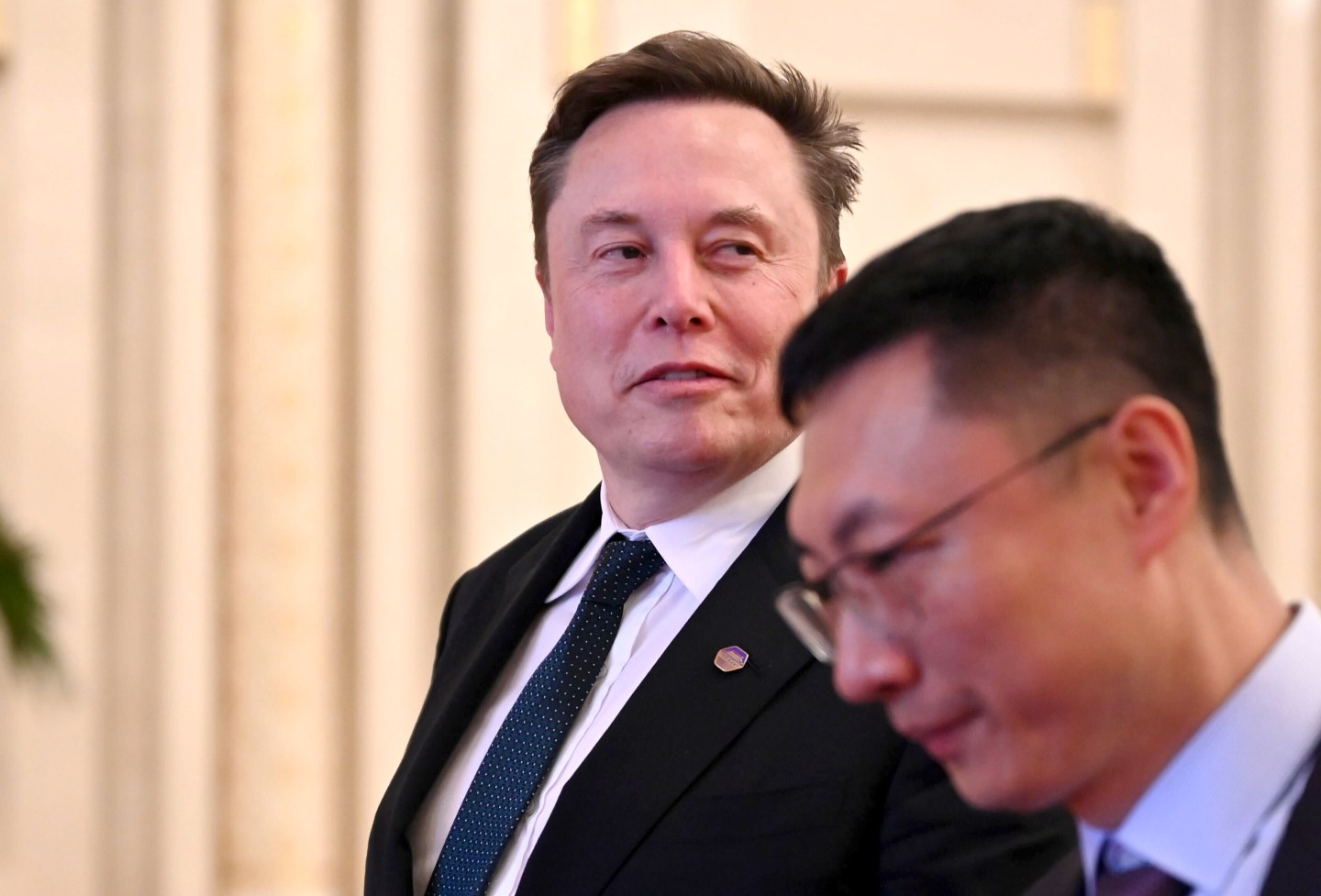
Musk vs. Altman: AI safety cannot be one man’s job
By Stavros GadinisMay 18, 2026
9 hours ago
charlie
CommentarySoftware
Anaplan CEO: AI isn’t eating software. It’s sorting it
By Charlie GottdienerMay 18, 2026
19 hours ago
shyam
CommentaryHealth
World Economic Forum: women’s health gets only 20% of R&D funding. We must seize this $1 trillion opportunity
By Shyam BishenMay 18, 2026
1 day ago
murdochs
CommentaryMedia
OpenAI paid $100 million for a talk show. James Murdoch is eyeing an even bigger deal. The hot new asset class is humanity
By Lin CherryMay 17, 2026
2 days ago
dennis
CommentaryAI agents
Freshworks CEO: why agile enterprises are winning the AI race — and what they did differently
By Dennis WoodsideMay 17, 2026
2 days ago
Mary Moreland-Abbott Executive Vice President of Human Resources.
CommentaryRetirement
Gen X is the most indebted generation in America. Their employers can fix that
By Mary MorelandMay 17, 2026
2 days ago

Most Popular

The Bezos family just donated $100 million to help achieve one of Mayor Zohran Mamdani’s top campaign promises
Politics
The Bezos family just donated $100 million to help achieve one of Mayor Zohran Mamdani’s top campaign promises
By Jake AngeloMay 12, 2026
6 days ago
While Trump insisted the Iran war would end ‘soon,’ an account in his name was buying millions in oil, defense and gold
Economy
While Trump insisted the Iran war would end ‘soon,’ an account in his name was buying millions in oil, defense and gold
By Eva RoytburgMay 18, 2026
12 hours ago
Microsoft AI chief gives it 18 months—for all white-collar work to be automated by AI
AI
Microsoft AI chief gives it 18 months—for all white-collar work to be automated by AI
By Jake AngeloMay 16, 2026
3 days ago
Current price of oil as of May 18, 2026
Personal Finance
Current price of oil as of May 18, 2026
By Joseph HostetlerMay 18, 2026
17 hours ago
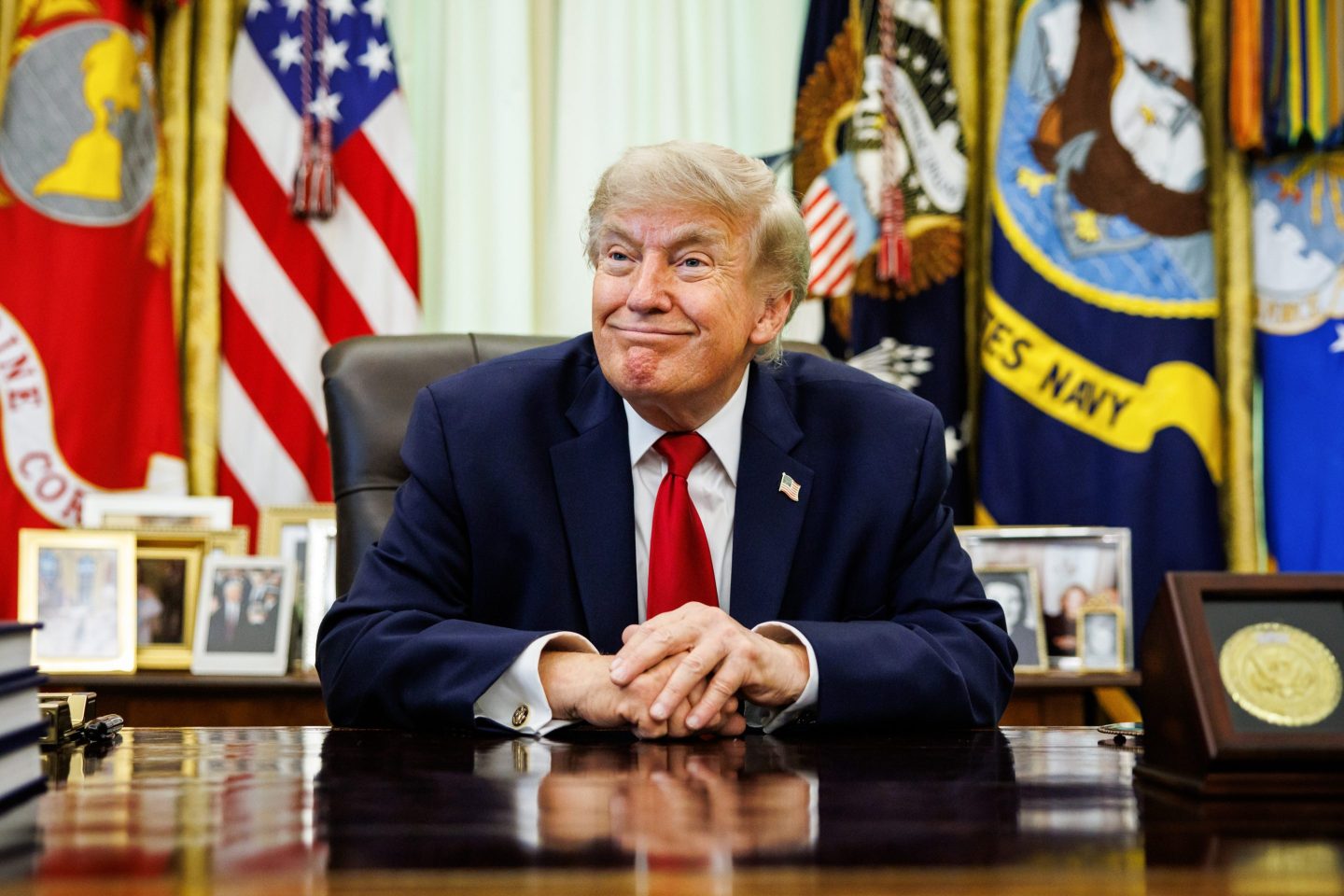
EXCLUSIVE: An hour in the Oval Office with the CEO-in-Chief, President Trump
Politics
EXCLUSIVE: An hour in the Oval Office with the CEO-in-Chief, President Trump
By Alyson ShontellMay 18, 2026
23 hours ago
The top foreign holders of U.S. debt may soon dump Treasury bonds and bring their money back home, potentially spiking borrowing costs
Economy
The top foreign holders of U.S. debt may soon dump Treasury bonds and bring their money back home, potentially spiking borrowing costs
By Jason MaMay 17, 2026
2 days ago

© 2026 Fortune Media IP Limited. All Rights Reserved. Use of this site constitutes acceptance of our Terms of Use and Privacy Policy | CA Notice at Collection and Privacy Notice | Do Not Sell/Share My Personal Information
FORTUNE is a trademark of Fortune Media IP Limited, registered in the U.S. and other countries. FORTUNE may receive compensation for some links to products and services on this website. Offers may be subject to change without notice.