• Home
  • Latest
  • Fortune 500
  • Finance
  • Tech
  • Leadership
  • Lifestyle
  • Rankings
  • Multimedia

Exclusive

An hour in the Oval Office with President Trump Fortune Editor-in-Chief: Alyson Shontell sat down with President Trump in the Oval Office for an hour. Tariffs, Intel, AI, Boeing, Iran—and the question every CEO eventually has to answer: who's next?

An hour in the Oval Office with President Trump Fortune Editor-in-Chief: Alyson Shontell sat down with President Trump in the Oval Office for an hour. Tariffs, Intel, AI, Boeing, Iran—and the question every CEO eventually has to answer: who's next?

An hour in the Oval Office with President Trump Fortune Editor-in-Chief: Alyson Shontell sat down with President Trump in the Oval Office for an hour. Tariffs, Intel, AI, Boeing, Iran—and the question every CEO eventually has to answer: who's next?

An hour in the Oval Office with President Trump Fortune Editor-in-Chief: Alyson Shontell sat down with President Trump in the Oval Office for an hour. Tariffs, Intel, AI, Boeing, Iran—and the question every CEO eventually has to answer: who's next?

An hour in the Oval Office with President Trump Fortune Editor-in-Chief: Alyson Shontell sat down with President Trump in the Oval Office for an hour. Tariffs, Intel, AI, Boeing, Iran—and the question every CEO eventually has to answer: who's next?

An hour in the Oval Office with President Trump Fortune Editor-in-Chief: Alyson Shontell sat down with President Trump in the Oval Office for an hour. Tariffs, Intel, AI, Boeing, Iran—and the question every CEO eventually has to answer: who's next?

An hour in the Oval Office with President Trump Fortune Editor-in-Chief: Alyson Shontell sat down with President Trump in the Oval Office for an hour. Tariffs, Intel, AI, Boeing, Iran—and the question every CEO eventually has to answer: who's next?

An hour in the Oval Office with President Trump Fortune Editor-in-Chief: Alyson Shontell sat down with President Trump in the Oval Office for an hour. Tariffs, Intel, AI, Boeing, Iran—and the question every CEO eventually has to answer: who's next?

An hour in the Oval Office with President Trump Fortune Editor-in-Chief: Alyson Shontell sat down with President Trump in the Oval Office for an hour. Tariffs, Intel, AI, Boeing, Iran—and the question every CEO eventually has to answer: who's next?

An hour in the Oval Office with President Trump Fortune Editor-in-Chief: Alyson Shontell sat down with President Trump in the Oval Office for an hour. Tariffs, Intel, AI, Boeing, Iran—and the question every CEO eventually has to answer: who's next?

Commentary

Commentary: The Only Way Trump Can Improve U.S. Infrastructure

By
Michael Sargent
Michael Sargent
and
Bethany Cianciolo
Bethany Cianciolo
Down Arrow Button Icon
By
Michael Sargent
Michael Sargent
and
Bethany Cianciolo
Bethany Cianciolo
Down Arrow Button Icon
January 31, 2018, 2:43 PM ET

In his first State of the Union Address, President Trump built on his campaign promise to “rebuild our crumbling infrastructure.” While the speech was light on details, the president made the scale of his aspiration clear by increasing his total goal to $1.5 trillion in new investment, up from what started as a $550 million promise and had settled at $1 trillion. With his administration poised to release its proposal within the next several weeks, he’ll have an opportunity to live up to his promise.

But perhaps more importantly than committing to build “gleaming new roads, bridges, highways, railways, and waterways all across our land,” the administration should commit to fundamentally restructuring the outdated way the federal government funds and oversees the nation’s infrastructure.

While the details remain elusive, it initially appears the administration’s plan will spend $200 billion over 10 years, hoping to motivate local governments and the private sector to cough up $800 billion to hit the president’s $1.5 trillion goal.

But why does the administration think it’s necessary for the federal government to siphon billions more to infrastructure in the first place, especially in the current fiscal environment?

The government’s own data on major infrastructure reports that it’s far from “crumbling”: The nation’s bridges are improving apace, major highways are well paved, and airports are capable of moving more people than ever. (Although one could forgive frequenters of New York’s ineptly run public airports for thinking they’re all lousy.) Total public spending on infrastructure has grown some 200% (including inflation) since the late 1950s, while remaining a stable share of the economy.

The “shovel ready” jobs justification rings even more hollow: Unemployment stands at 4.1%, its lowest point since 2000. In fact, many contractors have reported a skilled labor shortage.

That’s not to say nothing can be done; U.S. infrastructure does lag that of other nations in some respects. But that’s not because the federal government is standing idly by. It’s because it’s standing in the way. Though the federal government accounts for just one-quarter of infrastructure spending in the U.S., it has ensnared nearly every type of infrastructure through expansive regulations, mandates, and political control. The federal diktats begin before shovels even hit the ground: which studies must be completed, where the materials and contractors can permissibly be sourced, etc., and proliferate throughout construction.

But the feds’ control doesn’t stop upon project completion—they continue to have say over everything from safety standards down to how airports can portray themselves in advertisements or the amount of artistic flair cities can add to their sidewalks.

Thus, the best way to go about improving the nation’s infrastructure is not by doubling down on this model. It’s to extend the president’s much-touted rollback of federal regulations to the field of infrastructure to unleash vast swaths of investment.

Off the bat, the administration should target regulations that needlessly drive up the cost of federally funded projects. These include the Davis-Bacon Act and project labor agreements, which significantly increase labor costs. Protectionist laws that further increase costs and limit competition, such as Buy America and the Jones Act, should likewise be rolled back. Eradicating these impediments could save more than $100 billion, which could be reinvested in nationally significant projects.

Streamlining the cumbersome environmental review processes would also get a wide array of overregulated projects off the ground much more quickly. It would vastly reduce construction costs, increase certainty, and free up hundreds of billions in investment currently lost to a process that often takes a decade or longer.

More fundamentally, the administration should reform the broken top-down infrastructure-funding paradigm. The current funding system for much of our infrastructure consists of the federal government acting as an impertinent middleman: It collects broad-based taxes from infrastructure users, exposes the revenues to Congressional and bureaucratic meddling, and then redistributes them back to infrastructure projects laden with mandates. Letting users directly pay for the infrastructure they use would be would be much more simple, precise, and efficient—if only it were allowed.


Airports are a prime case: While private airports efficiently serve the majority of traffic in Europe, public airports in the U.S. are hamstrung by Washington, which uses the aviation taxes it collects and redistributes as a cudgel. Giving airports wider autonomy—especially in collecting their own revenues, as is practice in other countries—would be hugely beneficial. The same goes for allowing users to pay for improvements to the nation’s inland waterways infrastructure, which has been strangled by an inadequate federal funding mechanism.

Furthering direct user funding and public-private partnership by repealing the federal ban on tolling the interstate highways would serve a similar goal. This is especially important, as the government needs to look beyond the regressive and increasingly obsolete gas tax as a funding source for road repairs.

Making bold reforms is not always easier for politicians than spending money, no matter how fruitless it may be. But if Trump truly wants to be remembered as a rebuilder, perhaps the best blueprints he can draw up involve releasing the federal shackles and allowing a decentralized market system to flourish.

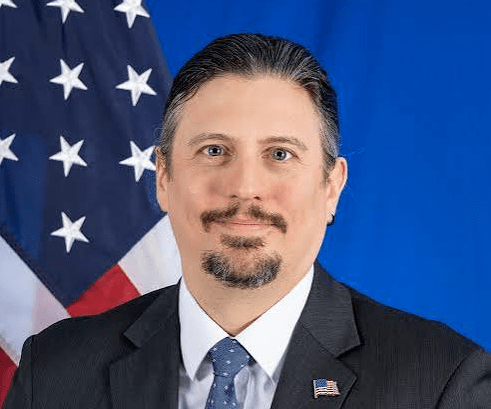
Michael Sargent is a policy analyst specializing in transportation issues at The Heritage Foundation.
About the Authors
By Michael Sargent
See full bioRight Arrow Button Icon
By Bethany Cianciolo
See full bioRight Arrow Button Icon

Latest in Commentary

Finance
Lorem ipsum dolor sit amet, consectetur adipiscing elit, sed do eiusmod tempor incididunt ut labore et dolore magna aliqua. Ut enim ad minim veniam
By Fortune Editors
October 20, 2025
Finance
Lorem ipsum dolor sit amet, consectetur adipiscing elit, sed do eiusmod tempor incididunt ut labore et dolore magna aliqua. Ut enim ad minim veniam
By Fortune Editors
October 20, 2025
Finance
Lorem ipsum dolor sit amet, consectetur adipiscing elit, sed do eiusmod tempor incididunt ut labore et dolore magna aliqua. Ut enim ad minim veniam
By Fortune Editors
October 20, 2025
Finance
Lorem ipsum dolor sit amet, consectetur adipiscing elit, sed do eiusmod tempor incididunt ut labore et dolore magna aliqua. Ut enim ad minim veniam
By Fortune Editors
October 20, 2025
Finance
Lorem ipsum dolor sit amet, consectetur adipiscing elit, sed do eiusmod tempor incididunt ut labore et dolore magna aliqua. Ut enim ad minim veniam
By Fortune Editors
October 20, 2025
Finance
Lorem ipsum dolor sit amet, consectetur adipiscing elit, sed do eiusmod tempor incididunt ut labore et dolore magna aliqua. Ut enim ad minim veniam
By Fortune Editors
October 20, 2025

Most Popular

Finance
Lorem ipsum dolor sit amet, consectetur adipiscing elit, sed do eiusmod tempor incididunt ut labore et dolore magna aliqua. Ut enim ad minim veniam
By Fortune Editors
October 20, 2025
Finance
Lorem ipsum dolor sit amet, consectetur adipiscing elit, sed do eiusmod tempor incididunt ut labore et dolore magna aliqua. Ut enim ad minim veniam
By Fortune Editors
October 20, 2025
Finance
Lorem ipsum dolor sit amet, consectetur adipiscing elit, sed do eiusmod tempor incididunt ut labore et dolore magna aliqua. Ut enim ad minim veniam
By Fortune Editors
October 20, 2025
Finance
Lorem ipsum dolor sit amet, consectetur adipiscing elit, sed do eiusmod tempor incididunt ut labore et dolore magna aliqua. Ut enim ad minim veniam
By Fortune Editors
October 20, 2025
Finance
Lorem ipsum dolor sit amet, consectetur adipiscing elit, sed do eiusmod tempor incididunt ut labore et dolore magna aliqua. Ut enim ad minim veniam
By Fortune Editors
October 20, 2025
Finance
Lorem ipsum dolor sit amet, consectetur adipiscing elit, sed do eiusmod tempor incididunt ut labore et dolore magna aliqua. Ut enim ad minim veniam
By Fortune Editors
October 20, 2025
Fortune Secondary Logo
Rankings
  • 100 Best Companies
  • Fortune 500
  • Global 500
  • Fortune 500 Europe
  • Most Powerful Women
  • World's Most Admired Companies
  • See All Rankings
  • Lists Calendar
Sections
  • Finance
  • Fortune Crypto
  • Features
  • Leadership
  • Health
  • Commentary
  • Success
  • Retail
  • Mpw
  • Tech
  • Lifestyle
  • CEO Initiative
  • Asia
  • Politics
  • Conferences
  • Europe
  • Newsletters
  • Personal Finance
  • Environment
  • Magazine
  • Education
Customer Support
  • Frequently Asked Questions
  • Customer Service Portal
  • Privacy Policy
  • Terms Of Use
  • Single Issues For Purchase
  • International Print
Commercial Services
  • Advertising
  • Fortune Brand Studio
  • Fortune Analytics
  • Fortune Conferences
  • Business Development
  • Group Subscriptions
About Us
  • About Us
  • Press Center
  • Work At Fortune
  • Terms And Conditions
  • Site Map
  • About Us
  • Press Center
  • Work At Fortune
  • Terms And Conditions
  • Site Map
  • Facebook icon
  • Twitter icon
  • LinkedIn icon
  • Instagram icon
  • Pinterest icon

Latest in Commentary

altman
CommentarySam Altman
Musk vs. Altman: AI safety cannot be one man’s job
By Stavros GadinisMay 18, 2026
4 hours ago
charlie
CommentarySoftware
Anaplan CEO: AI isn’t eating software. It’s sorting it
By Charlie GottdienerMay 18, 2026
14 hours ago
shyam
CommentaryHealth
World Economic Forum: women’s health gets only 20% of R&D funding. We must seize this $1 trillion opportunity
By Shyam BishenMay 18, 2026
22 hours ago
murdochs
CommentaryMedia
OpenAI paid $100 million for a talk show. James Murdoch is eyeing an even bigger deal. The hot new asset class is humanity
By Lin CherryMay 17, 2026
2 days ago
dennis
CommentaryAI agents
Freshworks CEO: why agile enterprises are winning the AI race — and what they did differently
By Dennis WoodsideMay 17, 2026
2 days ago
Mary Moreland-Abbott Executive Vice President of Human Resources.
CommentaryRetirement
Gen X is the most indebted generation in America. Their employers can fix that
By Mary MorelandMay 17, 2026
2 days ago

Most Popular

The Bezos family just donated $100 million to help achieve one of Mayor Zohran Mamdani’s top campaign promises
Politics
The Bezos family just donated $100 million to help achieve one of Mayor Zohran Mamdani’s top campaign promises
By Jake AngeloMay 12, 2026
6 days ago
Microsoft AI chief gives it 18 months—for all white-collar work to be automated by AI
AI
Microsoft AI chief gives it 18 months—for all white-collar work to be automated by AI
By Jake AngeloMay 16, 2026
3 days ago
The top foreign holders of U.S. debt may soon dump Treasury bonds and bring their money back home, potentially spiking borrowing costs
Economy
The top foreign holders of U.S. debt may soon dump Treasury bonds and bring their money back home, potentially spiking borrowing costs
By Jason MaMay 17, 2026
1 day ago
SpaceX heads into a record-shattering IPO with the 'deepest moat that exists today' as investors vow to 'never bet against Elon'
Innovation
SpaceX heads into a record-shattering IPO with the 'deepest moat that exists today' as investors vow to 'never bet against Elon'
By Jason MaMay 16, 2026
2 days ago
Mamdani's New York is coming to tax your private jet. Here's how to prepare
Personal Finance
Mamdani's New York is coming to tax your private jet. Here's how to prepare
By Greg RaiffMay 16, 2026
3 days ago
While Trump insisted the Iran war would end ‘soon,’ an account in his name was buying millions in oil, defense and gold
Economy
While Trump insisted the Iran war would end ‘soon,’ an account in his name was buying millions in oil, defense and gold
By Eva RoytburgMay 18, 2026
7 hours ago

© 2026 Fortune Media IP Limited. All Rights Reserved. Use of this site constitutes acceptance of our Terms of Use and Privacy Policy | CA Notice at Collection and Privacy Notice | Do Not Sell/Share My Personal Information
FORTUNE is a trademark of Fortune Media IP Limited, registered in the U.S. and other countries. FORTUNE may receive compensation for some links to products and services on this website. Offers may be subject to change without notice.