• Home
  • Latest
  • Fortune 500
  • Finance
  • Tech
  • Leadership
  • Lifestyle
  • Rankings
  • Multimedia

Trendingnow

1

As Big Tech showers employees with perks to win the talent war, Nvidia built a nearly $5 trillion company by making people pay for their own lunch

2

Mark Zuckerberg feeds his cows macadamia nuts and beer to create the 'highest-quality beef in the world' on his $300 million estate in Hawaii

3

MacKenzie Scott alone accounted for one-third of America's $19.2 billion in megagifts last year

1

As Big Tech showers employees with perks to win the talent war, Nvidia built a nearly $5 trillion company by making people pay for their own lunch

2

Mark Zuckerberg feeds his cows macadamia nuts and beer to create the 'highest-quality beef in the world' on his $300 million estate in Hawaii

3

MacKenzie Scott alone accounted for one-third of America's $19.2 billion in megagifts last year
CommentaryBiotech

Commentary: These Technologies Could Save the Northern White Rhino From Extinction

By
Nishan Degnarain
Nishan Degnarain
and
Ryan Phelan
Ryan Phelan
Down Arrow Button Icon
By
Nishan Degnarain
Nishan Degnarain
and
Ryan Phelan
Ryan Phelan
Down Arrow Button Icon
March 20, 2018, 12:41 PM ET
Add Fortune on Google for similar content.

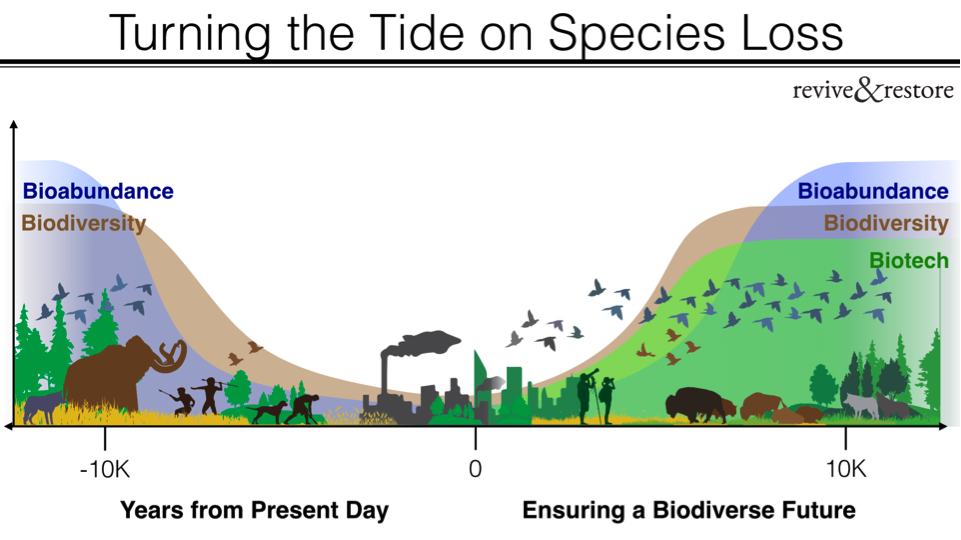
We are facing a global crisis in biodiversity loss. Tens of thousands of animal species are becoming extinct every year and about half of the world’s biodiversity has disappeared since the 1970s. These troubling trends show no signs of slowing down. Indeed, population growth, widespread habitat destruction, invasive species, wildlife diseases, and climate change are worsening the situation.

To safeguard our planet’s biodiversity, we need innovative new approaches. Fortunately, the Fourth Industrial Revolution’s rapid advances in biotechnology hold promise. New genetic and biotechnology tools are already being used in medicine and agricultural systems, particularly with crops and domestic animals. Biotechnology is advancing at an even faster rate than that of Moore’s Law, which saw microchip processing power double every two years while costs fell by half.

The cost of sequencing a genome has fallen from $100 million in 2001 to below $1,000 today. We are now able not just to read biological code faster, but also to write and design with it in new ways.

Genetic scientists Craig Venter and Daniel Cohen have stated that these advances indicate that the 21st century will be known as the “century of biology.” However, we are only just exploring the potential applications of these tools to safeguard nature.

Here are five expanding and emergent fields of biotech that could help safeguard nature:

1. Biobanking

Biobanks store biological samples for research and as a backup resource to preserve genetic diversity. Examples include the San Diego Frozen Zoo, the Frozen Ark projects, and numerous seed banks. Samples provide tissues, cell lines, and genetic information that can form the basis for restoring and recovering endangered wildlife through genomic insight and reproductive technologies, two of the other innovations detailed below. Proper sample collection for conservation purposes is a difficult task, both technically and logistically. We need to better facilitate the ongoing collection of biological samples globally from species facing extinction.

2. Genomics

The rapidly falling costs of genome sequencing has sparked initiatives to sequence the genomes of all living species, and thanks to improved ancient DNA methods the genomes of extinct species such as the woolly mammoth, thylacine, and passenger pigeon are also attainable. This growing database of genomes, combined with advances in big data and artificial intelligence, allows researchers to screen entire communities through DNA left in their environments (eDNA), establishing non-invasive means of tracking species.

All this bioinformatic information provides genomic insight to improve monitoring, management, and restoration of endangered wildlife. The latest DNA sequencing tools bring the science into the field for real-time results and will one day make data-based decisions possible in actionable timeframes. Genomic insight is the foundation for diverse applications of biotechnology, including the other tools that follow.

3. Biosynthesis

Biosynthesis isn’t new; a famous example of it is insulin produced by engineered bacteria. Bacterial production of insulin increased its availability and reduced costs by eliminating the need to harvest it from domestic animals.

This same process can reduce the commercial need to extract biological products from wild species. For instance, effective synthetic alternatives exist that could displace some of the widespread use of horseshoe crab blood in pharmaceutical testing.

When insulin bacteria were first made, the insulin gene was literally lifted from its organic source. But today, we can print DNA or RNA from genomic databases. Synthesized DNA and RNA is not only the base for bioproducts, but also genome editing, gene drives, and overcoming disease. Printed double-stranded RNA chains (dsRNA) can be designed to fight infections, triggering an immune response called RNA interference (RNAi). Double-stranded RNA could be used to combat deadly, currently untreatable, fungal diseases spreading rapidly due to global trade. Wildlife diseases and emergent fungi are killing bats, amphibians, coral reef systems, and many plants worldwide. This technology could slow, or even reverse, the damage safely in many environments.

4. Reproductive technologies

Cloning could be a game-changer when it comes to helping recovering and critically imperiled mammals. Cloning biobanked cell lines could help restore genetic diversity to endangered species.

The last male northern white rhinoceros, Sudan, died Monday, leaving only two females alive. In an effort to save the species, scientists at the San Diego Zoo Global are developing stem cell technologies to create a new generation of northern white rhinos.

One of the newest reproductive tools is genome editing. Using CRISPR-Cas9 technology, University of California, Davis scientists have bred a generation of hornless dairy cattle, a feat that would take traditional selective breeding many generations to accomplish.

This precise breeding method offers wildlife managers a targeted way to activate disease resistance that may be inherent, but dormant, in a species’ genome, or to help a species adapt to climate change.
5. Gene drive

The invasion of non-native pest species (rodents, feral pigs, insects) represents a significant global threat to biodiversity. Traditional approaches to eradicating invasive species, such as toxins, can have harmful collateral effects to native wildlife. New gene editing tools are making it possible to harness a natural process for humane and superiorly effective eradication of non-native pests: the gene drive.

A gene drive is the process by which a variant of a gene is inherited in a way that breaks the 50-50 sex chance rule of sexual reproduction. Gene drives occur throughout nature, and scientists have speculated using them for targeted purposes for years. It is now possible to target drives to any gene. To address the problem of invasive rodents, a gene drive could be applied to alter the sex ratio of an island population of rats so that they become all male and fail to breed. The same process could eliminate vectors of disease, such as mosquitoes, which would save birds from avian malaria.

If responsibly applied, gene drives represent a potentially transformative new tool in the control of invasive species. However, despite the possibilities, their high inheritance makes field application risky and demands innovations for safe localization and exact specificity. Many new versions of gene drives are currently in progress to solve these problems.

More to come

Advances in biotechnology are occurring so fast that we expect more genetic interventions to be just around the corner. The challenge now is to bridge the fields of biotech and conservation in a way that is thoughtful and keeps pace with innovation.

Increased public-private partnership will be essential to developing new biotech innovations. Environmental groups, nonprofit organizations, religious groups, and government entities will need to work together to develop a consensus around the proper use of biotech tools and build public acceptance of biotech applications.

With the right genetic tools and dedicated collaboration, we may be able to turn the tide on wildlife extinction.

Nishan Degnarain is the managing director at Breakthrough Ocean Ventures. Ryan Phelan is the executive director of Revive & Restore.


About the Authors
By Nishan Degnarain
See full bioRight Arrow Button Icon
By Ryan Phelan
See full bioRight Arrow Button Icon
Add Fortune on Google for similar content.

Latest in Commentary

Finance
Lorem ipsum dolor sit amet, consectetur adipiscing elit, sed do eiusmod tempor incididunt ut labore et dolore magna aliqua. Ut enim ad minim veniam
By Fortune Editors
October 20, 2025
Finance
Lorem ipsum dolor sit amet, consectetur adipiscing elit, sed do eiusmod tempor incididunt ut labore et dolore magna aliqua. Ut enim ad minim veniam
By Fortune Editors
October 20, 2025
Finance
Lorem ipsum dolor sit amet, consectetur adipiscing elit, sed do eiusmod tempor incididunt ut labore et dolore magna aliqua. Ut enim ad minim veniam
By Fortune Editors
October 20, 2025
Finance
Lorem ipsum dolor sit amet, consectetur adipiscing elit, sed do eiusmod tempor incididunt ut labore et dolore magna aliqua. Ut enim ad minim veniam
By Fortune Editors
October 20, 2025
Finance
Lorem ipsum dolor sit amet, consectetur adipiscing elit, sed do eiusmod tempor incididunt ut labore et dolore magna aliqua. Ut enim ad minim veniam
By Fortune Editors
October 20, 2025
Finance
Lorem ipsum dolor sit amet, consectetur adipiscing elit, sed do eiusmod tempor incididunt ut labore et dolore magna aliqua. Ut enim ad minim veniam
By Fortune Editors
October 20, 2025

Most Popular

Finance
Lorem ipsum dolor sit amet, consectetur adipiscing elit, sed do eiusmod tempor incididunt ut labore et dolore magna aliqua. Ut enim ad minim veniam
By Fortune Editors
October 20, 2025
Finance
Lorem ipsum dolor sit amet, consectetur adipiscing elit, sed do eiusmod tempor incididunt ut labore et dolore magna aliqua. Ut enim ad minim veniam
By Fortune Editors
October 20, 2025
Finance
Lorem ipsum dolor sit amet, consectetur adipiscing elit, sed do eiusmod tempor incididunt ut labore et dolore magna aliqua. Ut enim ad minim veniam
By Fortune Editors
October 20, 2025
Finance
Lorem ipsum dolor sit amet, consectetur adipiscing elit, sed do eiusmod tempor incididunt ut labore et dolore magna aliqua. Ut enim ad minim veniam
By Fortune Editors
October 20, 2025
Finance
Lorem ipsum dolor sit amet, consectetur adipiscing elit, sed do eiusmod tempor incididunt ut labore et dolore magna aliqua. Ut enim ad minim veniam
By Fortune Editors
October 20, 2025
Finance
Lorem ipsum dolor sit amet, consectetur adipiscing elit, sed do eiusmod tempor incididunt ut labore et dolore magna aliqua. Ut enim ad minim veniam
By Fortune Editors
October 20, 2025
Fortune Secondary Logo
Rankings
  • 100 Best Companies
  • Fortune 500
  • Global 500
  • Fortune 500 Europe
  • Most Powerful Women
  • World's Most Admired Companies
  • See All Rankings
  • Lists Calendar
Sections
  • Finance
  • Fortune Crypto
  • Features
  • Leadership
  • Health
  • Commentary
  • Success
  • Retail
  • Mpw
  • Tech
  • Lifestyle
  • CEO Initiative
  • Asia
  • Politics
  • Conferences
  • Europe
  • Newsletters
  • Personal Finance
  • Environment
  • Magazine
  • Education
Customer Support
  • Frequently Asked Questions
  • Customer Service Portal
  • Privacy Policy
  • Terms Of Use
  • Single Issues For Purchase
  • International Print
Commercial Services
  • Advertising
  • Fortune Brand Studio
  • Fortune Analytics
  • Fortune Conferences
  • Business Development
  • Group Subscriptions
About Us
  • About Us
  • Press Center
  • Work At Fortune
  • Terms And Conditions
  • Site Map
  • About Us
  • Press Center
  • Work At Fortune
  • Terms And Conditions
  • Site Map
  • Facebook icon
  • Twitter icon
  • LinkedIn icon
  • Instagram icon
  • Pinterest icon

Latest in Commentary

rn
CommentaryCryptocurrency
Former Iran director at NSC: Crypto legislation is a ticket to sanctions evasion
By Richard NephewJuly 2, 2026
14 hours ago
m
Commentary250 Years of Innovation
McKinsey chairs: Building a more resilient industrial base may require $2 trillion in investment
By Eric Kutcher and Shubham SinghalJuly 2, 2026
14 hours ago
em
Commentary250 Years of Innovation
America’s 250th birthday has Elon Musk and a record IPO. Its 15th had Alexander Hamilton — and a stock market bubble
By Owen LamontJuly 2, 2026
18 hours ago
paramount
CommentaryAntitrust
How Paramount’s theater commitments could boost local economies across the nation
By Ike BrannonJuly 2, 2026
18 hours ago
elon
CommentaryChina
China has 400 private space companies. The West is barely paying attention
By Rainer ZitelmannJuly 2, 2026
20 hours ago
senate
CommentaryCongress
One rare bipartisan AI bill is moving through Congress. Here’s why it deserves to pass
By Neil Björkman and Betsy BrewerJuly 1, 2026
2 days ago

Most Popular

As Big Tech showers employees with perks to win the talent war, Nvidia built a nearly $5 trillion company by making people pay for their own lunch
Big Tech
As Big Tech showers employees with perks to win the talent war, Nvidia built a nearly $5 trillion company by making people pay for their own lunch
By Marco Quiroz-GutierrezJuly 1, 2026
2 days ago
Mark Zuckerberg feeds his cows macadamia nuts and beer to create the 'highest-quality beef in the world' on his $300 million estate in Hawaii
Success
Mark Zuckerberg feeds his cows macadamia nuts and beer to create the 'highest-quality beef in the world' on his $300 million estate in Hawaii
By Sasha RogelbergJuly 2, 2026
12 hours ago
MacKenzie Scott alone accounted for one-third of America's $19.2 billion in megagifts last year
Success
MacKenzie Scott alone accounted for one-third of America's $19.2 billion in megagifts last year
By Sydney LakeJune 25, 2026
8 days ago
Today, Emily Blunt is worth $80 million thanks to her Hollywood career—but she actually wanted to be a UN Spanish translator on $80K
Success
Today, Emily Blunt is worth $80 million thanks to her Hollywood career—but she actually wanted to be a UN Spanish translator on $80K
By Orianna Rosa RoyleJuly 2, 2026
22 hours ago
Americans are escaping the U.S. for New Zealand where house prices have hit a new low—but only wealthy Americans with $3 million spare can invest
Success
Americans are escaping the U.S. for New Zealand where house prices have hit a new low—but only wealthy Americans with $3 million spare can invest
By Emma BurleighJuly 2, 2026
13 hours ago
Current price of oil as of July 2, 2026
Personal Finance
Current price of oil as of July 2, 2026
By Joseph HostetlerJuly 2, 2026
15 hours ago

© 2026 Fortune Media IP Limited. All Rights Reserved. Use of this site constitutes acceptance of our Terms of Use and Privacy Policy | CA Notice at Collection and Privacy Notice | Do Not Sell/Share My Personal Information
FORTUNE is a trademark of Fortune Media IP Limited, registered in the U.S. and other countries. FORTUNE may receive compensation for some links to products and services on this website. Offers may be subject to change without notice.