• Home
  • Latest
  • Fortune 500
  • Finance
  • Tech
  • Leadership
  • Lifestyle
  • Rankings
  • Multimedia

Trendingnow

1

As Big Tech showers employees with perks to win the talent war, Nvidia built a nearly $5 trillion company by making people pay for their own lunch

2

MacKenzie Scott alone accounted for one-third of America's $19.2 billion in megagifts last year

3

Today, Emily Blunt is worth $80 million thanks to her Hollywood career—but she actually wanted to be a UN Spanish translator on $80K

1

As Big Tech showers employees with perks to win the talent war, Nvidia built a nearly $5 trillion company by making people pay for their own lunch

2

MacKenzie Scott alone accounted for one-third of America's $19.2 billion in megagifts last year

3

Today, Emily Blunt is worth $80 million thanks to her Hollywood career—but she actually wanted to be a UN Spanish translator on $80K
Commentarydata privacy

Commentary: How to Really Protect Your Digital Privacy: Move to Europe

By
Mike Chapple
Mike Chapple
Down Arrow Button Icon
By
Mike Chapple
Mike Chapple
Down Arrow Button Icon
April 17, 2018, 1:14 PM ET
Add Fortune on Google for similar content.

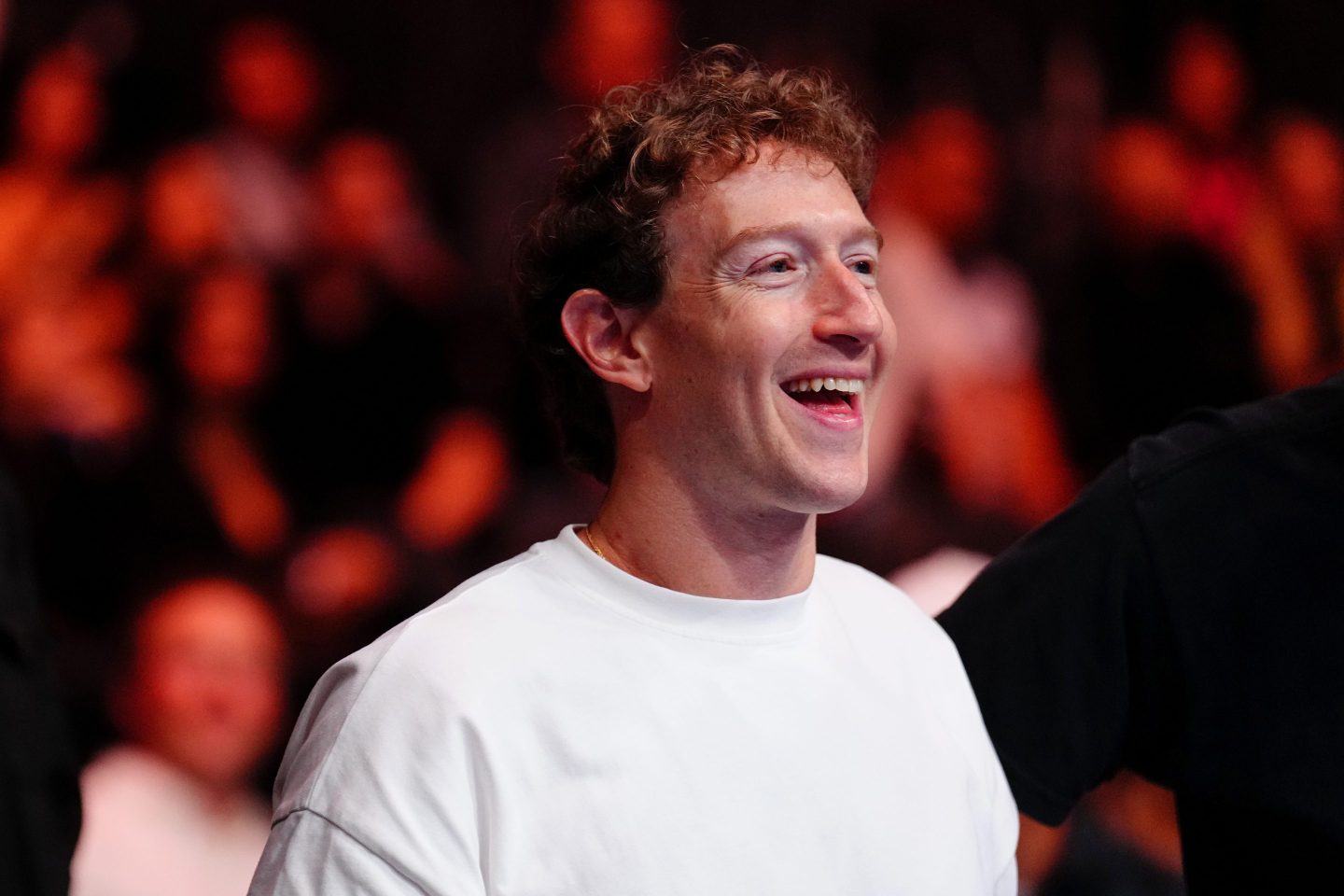
Facebook CEO Mark Zuckerberg’s testimony before Congress last week highlighted the burgeoning importance of digital privacy in the minds of legislators and the American public. It may also mark the beginning of a long-overdue privacy awakening in our country.

Now is the right time for the U.S. government to acknowledge and defend American’s privacy rights by developing a comprehensive framework of legal protections.

The European Union has long embraced privacy in a much more thorough manner than the U.S. has. Global companies, including Facebook, have spent the last two years preparing for a new privacy regime scheduled to arrive in Europe on May 25. The General Data Protection Regulation (GDPR) will implement a 21st century digital bill of rights for EU residents by updating privacy regulations that first went into effect in 1995.

The GDPR applies to all personal information collected about EU residents, requiring that companies notify individuals of the types of information they collect and the ways they will use and share that information. The new regulation also provides individuals with the right to examine the data an organization has collected about them, the right to request the erasure of that information, and the right to withdraw their consent at any time.

The GDPR is more than just a fanciful set of ideals—it’s a regulation with serious teeth. Companies convicted of significant privacy violations under the GDPR face substantial fines, ranging up to €20 million or 4% of worldwide revenue, whichever is greater. Facebook generated $40 billion in revenue last year. If it were fined the maximum amount under the GDPR, it would result in a $1.6 billion penalty. That’s an amount certain to pique the interest of any CEO or corporate director.

The corporate world was already awaiting next month’s launch of the GDPR with bated breath; the Facebook controversy only ratcheted up the tension. Corporate privacy and security specialists want to see how the EU regulators enforce and interpret provisions of the new regulation. Regulators are aware of this corporate scrutiny and are likely eager to demonstrate that they are serious by quickly initiating a GDPR investigation of a major company. The first eight- or nine-figure fine levied against a multinational company will send shockwaves through boardrooms around the world.

During Tuesday’s hearing, the subject of the GDPR came up obliquely. When asked by Sen. Lindsey Graham whether Facebook would “welcome regulation,” Zuckerberg responded, “I think, if it’s the right regulation, then yes.” Graham followed up with “You think the Europeans had it right?” to which Zuckerberg chuckled and replied, “I think they get things right.” A few minutes later, however, we received some unexpected insight into Facebook’s current GDPR compliance status when a photojournalist snapped a shot of Zuckerberg’s talking points, which warned him in boldface, “Don’t say we already do what GDPR requires.” That photo surely caught the attention of European regulators.

America, on the other hand, lacks the comprehensive privacy framework that European regulators have had in place for over two decades. Instead, we’ve approached privacy regulation in a patchwork manner by adopting rules that apply to specific industries and specific types of information. Health care providers and insurers must comply with the privacy provisions of the Health Insurance Portability and Accountability Act (HIPAA). Financial institutions must protect customer information in accordance with the Gramm-Leach-Bliley Act (GLBA). Companies interacting with children online must comply with the Children’s Online Privacy Protection Act (COPPA), while educational institutions are subject to the Family Educational Rights and Privacy Act (FERPA).

The problem with this patchwork of laws is that it contains enormous loopholes. There is, for example, no law that protects the information that social media companies collect from individuals. Facebook, Google, and Twitter may all use their apps to collect information about the online activities and even the physical locations of individuals without any regulatory oversight. While you might think that HIPAA privacy regulations prevent these firms from collecting and sharing individual health information, that’s not the case. HIPAA only applies to health care providers, insurers, and organizations that obtain information from those sources. Facebook and other technology companies fall right through that loophole.

Privacy experts and the media are already raising questions about GDPR-style regulations in the U.S. When reporters questioned Zuckerberg about his views on GDPR last week, he acknowledged that “regulations like this are very positive” and went on to say that Facebook plans to “make all the same controls available everywhere, not just in Europe.” If Facebook does voluntarily adopt GDPR standards worldwide, it would be a major advance in the company’s privacy posture.

However, that won’t be enough to protect Americans’ data.

While Facebook may agree to follow GDPR regulations worldwide, that doesn’t mean that those regulations will have the same teeth in the U.S. that they will have in Europe. Without a legal framework in the U.S., the consequences of failing to protect the privacy of American citizens will likely pale in comparison to the consequences of similar failures that take place in the EU. Additionally, Facebook’s voluntary actions won’t govern the activities of the thousands of other companies that store, process, and transmit sensitive personal information with no oversight.

The time has come for our country to get serious about digital privacy. We need clear and comprehensive regulations governing how organizations may collect, store, and process personal information. Our colleagues in Europe have taken this issue seriously for more than two decades, and we should now look to them for guidance in how we can do the same in the U.S.

Mike Chapple is an associate teaching professor of information technology, analytics, and operations at the University of Notre Dame’s Mendoza College of Business, where he specializes in cybersecurity and privacy issues.


About the Author
By Mike Chapple
See full bioRight Arrow Button Icon
Add Fortune on Google for similar content.

Latest in Commentary

Finance
Lorem ipsum dolor sit amet, consectetur adipiscing elit, sed do eiusmod tempor incididunt ut labore et dolore magna aliqua. Ut enim ad minim veniam
By Fortune Editors
October 20, 2025
Finance
Lorem ipsum dolor sit amet, consectetur adipiscing elit, sed do eiusmod tempor incididunt ut labore et dolore magna aliqua. Ut enim ad minim veniam
By Fortune Editors
October 20, 2025
Finance
Lorem ipsum dolor sit amet, consectetur adipiscing elit, sed do eiusmod tempor incididunt ut labore et dolore magna aliqua. Ut enim ad minim veniam
By Fortune Editors
October 20, 2025
Finance
Lorem ipsum dolor sit amet, consectetur adipiscing elit, sed do eiusmod tempor incididunt ut labore et dolore magna aliqua. Ut enim ad minim veniam
By Fortune Editors
October 20, 2025
Finance
Lorem ipsum dolor sit amet, consectetur adipiscing elit, sed do eiusmod tempor incididunt ut labore et dolore magna aliqua. Ut enim ad minim veniam
By Fortune Editors
October 20, 2025
Finance
Lorem ipsum dolor sit amet, consectetur adipiscing elit, sed do eiusmod tempor incididunt ut labore et dolore magna aliqua. Ut enim ad minim veniam
By Fortune Editors
October 20, 2025

Most Popular

Finance
Lorem ipsum dolor sit amet, consectetur adipiscing elit, sed do eiusmod tempor incididunt ut labore et dolore magna aliqua. Ut enim ad minim veniam
By Fortune Editors
October 20, 2025
Finance
Lorem ipsum dolor sit amet, consectetur adipiscing elit, sed do eiusmod tempor incididunt ut labore et dolore magna aliqua. Ut enim ad minim veniam
By Fortune Editors
October 20, 2025
Finance
Lorem ipsum dolor sit amet, consectetur adipiscing elit, sed do eiusmod tempor incididunt ut labore et dolore magna aliqua. Ut enim ad minim veniam
By Fortune Editors
October 20, 2025
Finance
Lorem ipsum dolor sit amet, consectetur adipiscing elit, sed do eiusmod tempor incididunt ut labore et dolore magna aliqua. Ut enim ad minim veniam
By Fortune Editors
October 20, 2025
Finance
Lorem ipsum dolor sit amet, consectetur adipiscing elit, sed do eiusmod tempor incididunt ut labore et dolore magna aliqua. Ut enim ad minim veniam
By Fortune Editors
October 20, 2025
Finance
Lorem ipsum dolor sit amet, consectetur adipiscing elit, sed do eiusmod tempor incididunt ut labore et dolore magna aliqua. Ut enim ad minim veniam
By Fortune Editors
October 20, 2025
Fortune Secondary Logo
Rankings
  • 100 Best Companies
  • Fortune 500
  • Global 500
  • Fortune 500 Europe
  • Most Powerful Women
  • World's Most Admired Companies
  • See All Rankings
  • Lists Calendar
Sections
  • Finance
  • Fortune Crypto
  • Features
  • Leadership
  • Health
  • Commentary
  • Success
  • Retail
  • Mpw
  • Tech
  • Lifestyle
  • CEO Initiative
  • Asia
  • Politics
  • Conferences
  • Europe
  • Newsletters
  • Personal Finance
  • Environment
  • Magazine
  • Education
Customer Support
  • Frequently Asked Questions
  • Customer Service Portal
  • Privacy Policy
  • Terms Of Use
  • Single Issues For Purchase
  • International Print
Commercial Services
  • Advertising
  • Fortune Brand Studio
  • Fortune Analytics
  • Fortune Conferences
  • Business Development
  • Group Subscriptions
About Us
  • About Us
  • Press Center
  • Work At Fortune
  • Terms And Conditions
  • Site Map
  • About Us
  • Press Center
  • Work At Fortune
  • Terms And Conditions
  • Site Map
  • Facebook icon
  • Twitter icon
  • LinkedIn icon
  • Instagram icon
  • Pinterest icon

Latest in Commentary

rn
CommentaryCryptocurrency
Former Iran director at NSC: Crypto legislation is a ticket to sanctions evasion
By Richard NephewJuly 2, 2026
11 hours ago
m
Commentary250 Years of Innovation
McKinsey chairs: Building a more resilient industrial base may require $2 trillion in investment
By Eric Kutcher and Shubham SinghalJuly 2, 2026
11 hours ago
em
Commentary250 Years of Innovation
America’s 250th birthday has Elon Musk and a record IPO. Its 15th had Alexander Hamilton — and a stock market bubble
By Owen LamontJuly 2, 2026
15 hours ago
paramount
CommentaryAntitrust
How Paramount’s theater commitments could boost local economies across the nation
By Ike BrannonJuly 2, 2026
15 hours ago
elon
CommentaryChina
China has 400 private space companies. The West is barely paying attention
By Rainer ZitelmannJuly 2, 2026
17 hours ago
senate
CommentaryCongress
One rare bipartisan AI bill is moving through Congress. Here’s why it deserves to pass
By Neil Björkman and Betsy BrewerJuly 1, 2026
2 days ago

Most Popular

As Big Tech showers employees with perks to win the talent war, Nvidia built a nearly $5 trillion company by making people pay for their own lunch
Big Tech
As Big Tech showers employees with perks to win the talent war, Nvidia built a nearly $5 trillion company by making people pay for their own lunch
By Marco Quiroz-GutierrezJuly 1, 2026
2 days ago
MacKenzie Scott alone accounted for one-third of America's $19.2 billion in megagifts last year
Success
MacKenzie Scott alone accounted for one-third of America's $19.2 billion in megagifts last year
By Sydney LakeJune 25, 2026
8 days ago
Today, Emily Blunt is worth $80 million thanks to her Hollywood career—but she actually wanted to be a UN Spanish translator on $80K
Success
Today, Emily Blunt is worth $80 million thanks to her Hollywood career—but she actually wanted to be a UN Spanish translator on $80K
By Orianna Rosa RoyleJuly 2, 2026
19 hours ago
Mark Zuckerberg feeds his cows macadamia nuts and beer to create the 'highest-quality beef in the world' on his $300 million estate in Hawaii
Success
Mark Zuckerberg feeds his cows macadamia nuts and beer to create the 'highest-quality beef in the world' on his $300 million estate in Hawaii
By Sasha RogelbergJuly 2, 2026
9 hours ago
Current price of oil as of July 1, 2026
Personal Finance
Current price of oil as of July 1, 2026
By Joseph HostetlerJuly 1, 2026
2 days ago
Americans are escaping the U.S. for New Zealand where house prices have hit a new low—but only wealthy Americans with $3 million spare can invest
Success
Americans are escaping the U.S. for New Zealand where house prices have hit a new low—but only wealthy Americans with $3 million spare can invest
By Emma BurleighJuly 2, 2026
11 hours ago

© 2026 Fortune Media IP Limited. All Rights Reserved. Use of this site constitutes acceptance of our Terms of Use and Privacy Policy | CA Notice at Collection and Privacy Notice | Do Not Sell/Share My Personal Information
FORTUNE is a trademark of Fortune Media IP Limited, registered in the U.S. and other countries. FORTUNE may receive compensation for some links to products and services on this website. Offers may be subject to change without notice.