• Home
  • Latest
  • Fortune 500
  • Finance
  • Tech
  • Leadership
  • Lifestyle
  • Rankings
  • Multimedia

Trendingnow

1

As Big Tech showers employees with perks to win the talent war, Nvidia built a nearly $5 trillion company by making people pay for their own lunch

2

MacKenzie Scott alone accounted for one-third of America's $19.2 billion in megagifts last year

3

The Supreme Court's birthright citizenship ruling hands the U.S. economy a $7.7 trillion win

1

As Big Tech showers employees with perks to win the talent war, Nvidia built a nearly $5 trillion company by making people pay for their own lunch

2

MacKenzie Scott alone accounted for one-third of America's $19.2 billion in megagifts last year

3

The Supreme Court's birthright citizenship ruling hands the U.S. economy a $7.7 trillion win
MagazineFinancial Crisis

One Way the Next Crisis Will Look a Lot Like 2008

Geoff Colvin
By
Geoff Colvin
Geoff Colvin
Senior Editor-at-Large
Down Arrow Button Icon
Geoff Colvin
By
Geoff Colvin
Geoff Colvin
Senior Editor-at-Large
Down Arrow Button Icon
September 21, 2018, 8:00 AM ET
Add Fortune on Google for similar content.

TEN YEARS AFTER the weekend that upended the financial world, its most important lessons lie not in what has changed, vast and profound though that is, but in what hasn’t changed. The main causes of the last crisis—human self-delusion and irrationality—will be the main causes of the next one. If that seems unbearably depressing, cheer up: It tells us what to watch out for.

Lehman Brothers’ bankruptcy announcement in the predawn darkness of Sept. 15, 2008, wasn’t the first or worst event of the financial crisis, but it was the most frightening because it was unthinkable, given the investment bank’s size and exalted stature. It unmoored us from our certainties and set the stage for other disorienting changes, many of which are now embedded in our daily lives.

But those same certainties were built on foundations that turned out to be unfounded. We all knew that U.S. homeownership rises over the long term; that’s part of what America is about. That unshakable confidence helped fuel the easy-credit home-buying frenzy of the early 2000s, a frenzy driven by the belief that an unprecedented spike in property prices would last indefinitely. Big institutional investors—including Lehman—bought into the faith-based rally, betting on the kinds of shaky subprime loans that eventually brought them down and cratered the economy. (As for the homeownership rate, it plunged, erasing 40 years of increase, and is nowhere near recovering.)

Greenspan admitted he was “shocked” that his model of “the critical functioning structure that defines how the world works” didn’t work. He wasn’t alone.Joshua Roberts—Bloomberg via Getty Images
Joshua Roberts—Bloomberg via Getty Images

If delusional optimism led to widespread financial harm, delusional pessimism has kept many Americans from healing.

We’re still less likely to own stocks than we were even after the dotcom meltdown of 2000–01, says the Gallup research firm. More of us are truly terrified of anything associated with finance, which makes us behave bizarrely. A new survey by the Betterment robo-advisory firm finds, incredibly, that 48% of respondents think the stock market hasn’t gone up in the past decade, including 18% who think it has gone down. That’s half of American adults, and it would take them 10 seconds online to learn that stocks are up 140% since Lehman failed. But they don’t look. They’re like the person who can’t open the letter from the IRS. The very thought makes them quiver.

Such self-destructive behavior reminds us of what we relearned in the crisis: Most people don’t behave rationally. Too many on Wall Street believed the madhouse markets reflected people making the machinelike calculations of classical microeconomics. Former Federal Reserve chairman Alan Greenspan, a hyperrational libertarian for 40-plus years, confessed before a congressional committee he was “shocked” that his model of “the critical functioning structure that defines how the world works” didn’t work. He wasn’t alone.

The most damaging irrationality was a dogged but mistaken belief that fundamental rules of valuation no longer applied—that this time is different. The phrase became the title of a bestseller by economists Carmen Reinhart and Kenneth Rogoff, showing that such a belief has fueled financial disasters for centuries. Deep-rooted errors identified by behavioral finance— overconfidence, over-extrapolation, drawing big conclusions from small samples—reinforced the misjudgment.

No one knows what will trigger the next crisis, but we know for sure it will be built on the same kind of mistakes. Don’t count on employers, banks, insurers, or regulators to protect you. But you can shield yourself because you already know how to spot trouble. Specifically:

  • Ask yourself regularly which markets look reasonably priced only if you believe that fundamental rules of valuation no longer apply. To help you identify such hotspots…
  • Listen to the responsible fringe—thinkers with strong records who are contradicting the mainstream view. Last time they included fund manager Jeremy Grantham and economists Robert Shiller and Nouriel Roubini. You can’t know if they’re right, but you can prepare for the possibility that they might be. That means…
  • Don’t predict the future—you can’t. Instead, envision scenarios and plan for each one. Don’t worry that most of your plans will be wasted; it’s better to be prepared for events that don’t happen than unprepared for those that do.

The crisis that erupted 10 years ago reminded us that even in a worldwide financial calamity, not everyone suffers equally. Hedge fund manager John Paulson made billions betting against subprime mortgages, a business that had abandoned usual valuation rules. You may not do so well, but we know that some people will come through the next crisis just fine. Resolve, rationally, to be among them.

A version of this article appears in the October 1, 2018 issue of Fortune with the headline “How to Spot the Next Financial Crisis.”

About the Author
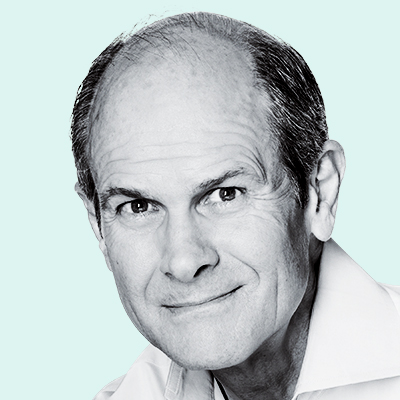
Geoff Colvin
By Geoff ColvinSenior Editor-at-Large
LinkedIn iconTwitter icon

Geoff Colvin is a senior editor-at-large at Fortune, covering leadership, globalization, wealth creation, the infotech revolution, and related issues.

See full bioRight Arrow Button Icon
Add Fortune on Google for similar content.

Latest from the Magazine

Finance
Lorem ipsum dolor sit amet, consectetur adipiscing elit, sed do eiusmod tempor incididunt ut labore et dolore magna aliqua. Ut enim ad minim veniam
By Fortune Editors
October 20, 2025
Finance
Lorem ipsum dolor sit amet, consectetur adipiscing elit, sed do eiusmod tempor incididunt ut labore et dolore magna aliqua. Ut enim ad minim veniam
By Fortune Editors
October 20, 2025
Finance
Lorem ipsum dolor sit amet, consectetur adipiscing elit, sed do eiusmod tempor incididunt ut labore et dolore magna aliqua. Ut enim ad minim veniam
By Fortune Editors
October 20, 2025
Finance
Lorem ipsum dolor sit amet, consectetur adipiscing elit, sed do eiusmod tempor incididunt ut labore et dolore magna aliqua. Ut enim ad minim veniam
By Fortune Editors
October 20, 2025
Finance
Lorem ipsum dolor sit amet, consectetur adipiscing elit, sed do eiusmod tempor incididunt ut labore et dolore magna aliqua. Ut enim ad minim veniam
By Fortune Editors
October 20, 2025
Finance
Lorem ipsum dolor sit amet, consectetur adipiscing elit, sed do eiusmod tempor incididunt ut labore et dolore magna aliqua. Ut enim ad minim veniam
By Fortune Editors
October 20, 2025

Most Popular

Finance
Lorem ipsum dolor sit amet, consectetur adipiscing elit, sed do eiusmod tempor incididunt ut labore et dolore magna aliqua. Ut enim ad minim veniam
By Fortune Editors
October 20, 2025
Finance
Lorem ipsum dolor sit amet, consectetur adipiscing elit, sed do eiusmod tempor incididunt ut labore et dolore magna aliqua. Ut enim ad minim veniam
By Fortune Editors
October 20, 2025
Finance
Lorem ipsum dolor sit amet, consectetur adipiscing elit, sed do eiusmod tempor incididunt ut labore et dolore magna aliqua. Ut enim ad minim veniam
By Fortune Editors
October 20, 2025
Finance
Lorem ipsum dolor sit amet, consectetur adipiscing elit, sed do eiusmod tempor incididunt ut labore et dolore magna aliqua. Ut enim ad minim veniam
By Fortune Editors
October 20, 2025
Finance
Lorem ipsum dolor sit amet, consectetur adipiscing elit, sed do eiusmod tempor incididunt ut labore et dolore magna aliqua. Ut enim ad minim veniam
By Fortune Editors
October 20, 2025
Finance
Lorem ipsum dolor sit amet, consectetur adipiscing elit, sed do eiusmod tempor incididunt ut labore et dolore magna aliqua. Ut enim ad minim veniam
By Fortune Editors
October 20, 2025
Fortune Secondary Logo
Rankings
  • 100 Best Companies
  • Fortune 500
  • Global 500
  • Fortune 500 Europe
  • Most Powerful Women
  • World's Most Admired Companies
  • See All Rankings
  • Lists Calendar
Sections
  • Finance
  • Fortune Crypto
  • Features
  • Leadership
  • Health
  • Commentary
  • Success
  • Retail
  • Mpw
  • Tech
  • Lifestyle
  • CEO Initiative
  • Asia
  • Politics
  • Conferences
  • Europe
  • Newsletters
  • Personal Finance
  • Environment
  • Magazine
  • Education
Customer Support
  • Frequently Asked Questions
  • Customer Service Portal
  • Privacy Policy
  • Terms Of Use
  • Single Issues For Purchase
  • International Print
Commercial Services
  • Advertising
  • Fortune Brand Studio
  • Fortune Analytics
  • Fortune Conferences
  • Business Development
  • Group Subscriptions
About Us
  • About Us
  • Press Center
  • Work At Fortune
  • Terms And Conditions
  • Site Map
  • About Us
  • Press Center
  • Work At Fortune
  • Terms And Conditions
  • Site Map
  • Facebook icon
  • Twitter icon
  • LinkedIn icon
  • Instagram icon
  • Pinterest icon

Latest from the Magazine

Europe must take opportunity to ‘dream bigger’ if it’s to seize its innovation moment
Magazineeuropean economy
Europe must take opportunity to ‘dream bigger’ if it’s to seize its innovation moment
By Francesca CassidyJune 22, 2026
10 days ago
REE Corp. chair Nguyen Thi Mai Thanh spent 40 years navigating Vietnam’s economy. Here’s what she thinks comes next
MagazineVietnam
REE Corp. chair Nguyen Thi Mai Thanh spent 40 years navigating Vietnam’s economy. Here’s what she thinks comes next
By Nicholas GordonJune 16, 2026
16 days ago
Vietnam is becoming the hottest tourist hotspot in Southeast Asia—and trying to avoid Thailand’s mistakes
Magazinetourism
Vietnam is becoming the hottest tourist hotspot in Southeast Asia—and trying to avoid Thailand’s mistakes
By Angelica AngJune 16, 2026
16 days ago
More than manufacturing: Vietnam has hopes to become Asia’s next cultural powerhouse
MagazineMedia
More than manufacturing: Vietnam has hopes to become Asia’s next cultural powerhouse
By Lee WilliamsonJune 16, 2026
16 days ago
Vietnam’s economy is one of the fastest-growing in the world. Can it make the leap into the ranks of middle-income countries?
MagazineVietnam
Vietnam’s economy is one of the fastest-growing in the world. Can it make the leap into the ranks of middle-income countries?
By Nicholas GordonJune 16, 2026
16 days ago
The Southeast Asia 500 has a new engine: Vietnam
MagazineSoutheast Asia 500
The Southeast Asia 500 has a new engine: Vietnam
By Andrew StaplesJune 15, 2026
16 days ago

Most Popular

As Big Tech showers employees with perks to win the talent war, Nvidia built a nearly $5 trillion company by making people pay for their own lunch
Big Tech
As Big Tech showers employees with perks to win the talent war, Nvidia built a nearly $5 trillion company by making people pay for their own lunch
By Marco Quiroz-GutierrezJuly 1, 2026
1 day ago
MacKenzie Scott alone accounted for one-third of America's $19.2 billion in megagifts last year
Success
MacKenzie Scott alone accounted for one-third of America's $19.2 billion in megagifts last year
By Sydney LakeJune 25, 2026
7 days ago
The Supreme Court's birthright citizenship ruling hands the U.S. economy a $7.7 trillion win
Newsletters
The Supreme Court's birthright citizenship ruling hands the U.S. economy a $7.7 trillion win
By Diane BradyJuly 1, 2026
1 day ago
Current price of oil as of July 1, 2026
Personal Finance
Current price of oil as of July 1, 2026
By Joseph HostetlerJuly 1, 2026
22 hours ago
Philanthropy leader at Warren Buffett and Bill Gates’ Giving Pledge says children of billionaires are pushing them to give their wealth away faster
Success
Philanthropy leader at Warren Buffett and Bill Gates’ Giving Pledge says children of billionaires are pushing them to give their wealth away faster
By Preston ForeJune 27, 2026
5 days ago
Elon Musk on MacKenzie Scott giving away $26 billion of her fortune: 'Sadly,' it makes the world a worse place
Success
Elon Musk on MacKenzie Scott giving away $26 billion of her fortune: 'Sadly,' it makes the world a worse place
By Sydney LakeJune 29, 2026
3 days ago

© 2026 Fortune Media IP Limited. All Rights Reserved. Use of this site constitutes acceptance of our Terms of Use and Privacy Policy | CA Notice at Collection and Privacy Notice | Do Not Sell/Share My Personal Information
FORTUNE is a trademark of Fortune Media IP Limited, registered in the U.S. and other countries. FORTUNE may receive compensation for some links to products and services on this website. Offers may be subject to change without notice.