• Home
  • Latest
  • Fortune 500
  • Finance
  • Tech
  • Leadership
  • Lifestyle
  • Rankings
  • Multimedia

Trendingnow

1

As Big Tech showers employees with perks to win the talent war, Nvidia built a nearly $5 trillion company by making people pay for their own lunch

2

Mark Zuckerberg feeds his cows macadamia nuts and beer to create the 'highest-quality beef in the world' on his $300 million estate in Hawaii

3

Today, Emily Blunt is worth $80 million thanks to her Hollywood career—but she actually wanted to be a UN Spanish translator on $80K

1

As Big Tech showers employees with perks to win the talent war, Nvidia built a nearly $5 trillion company by making people pay for their own lunch

2

Mark Zuckerberg feeds his cows macadamia nuts and beer to create the 'highest-quality beef in the world' on his $300 million estate in Hawaii

3

Today, Emily Blunt is worth $80 million thanks to her Hollywood career—but she actually wanted to be a UN Spanish translator on $80K
Commentary

It’s Time to Nix the Two-Week Pay Cycle

By
Steve Barha
Steve Barha
Down Arrow Button Icon
By
Steve Barha
Steve Barha
Down Arrow Button Icon
December 6, 2018, 4:29 PM ET
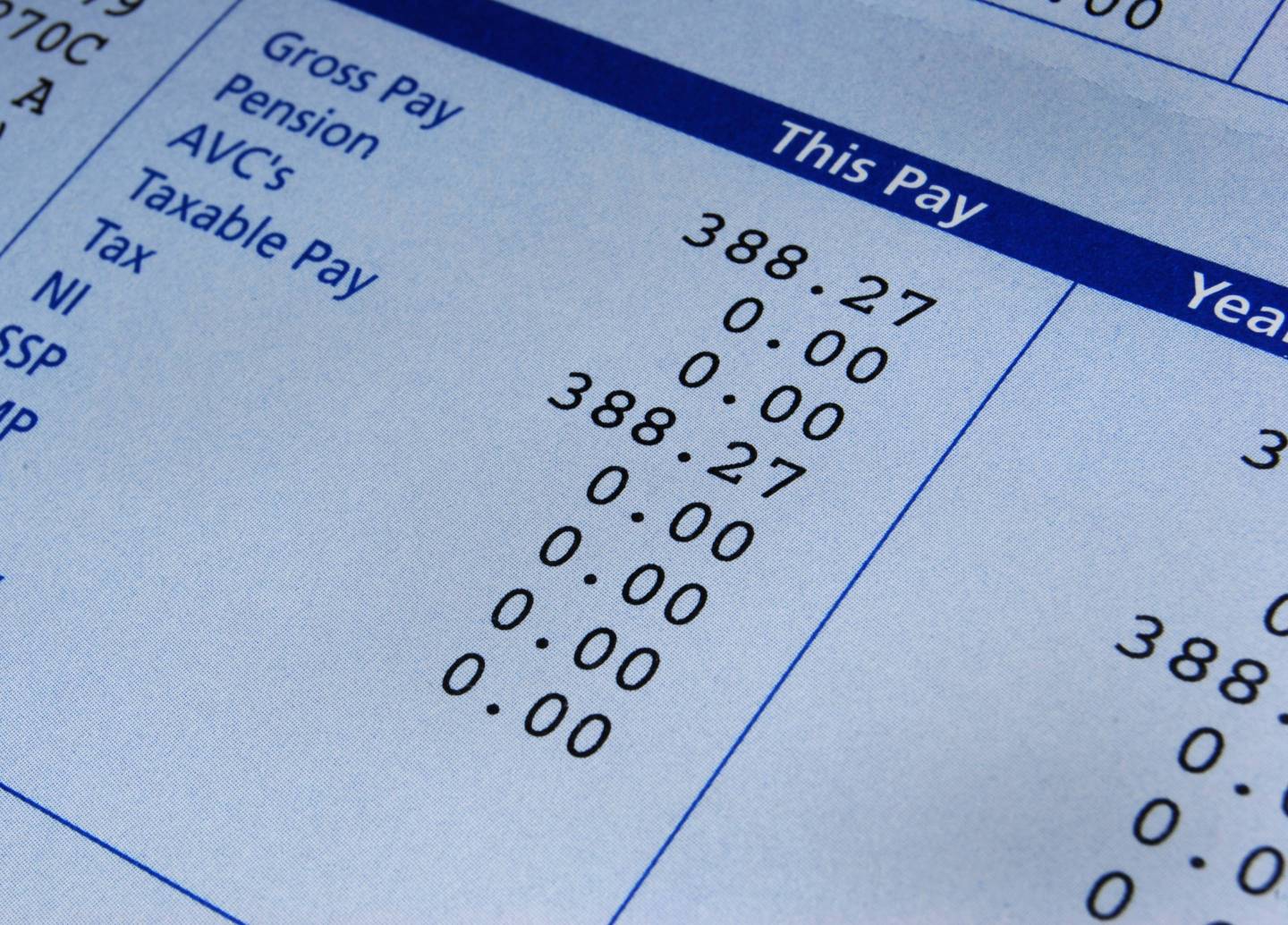
A paycheck
PayslipMJHollinshead—Getty Images
Add Fortune on Google for similar content.

There’s a general preconception about the kind of person who struggles to make ends meet between paychecks: low income, marginally employed, entry level. Maybe it’s a single mom working two or three jobs to support her kids, or maybe it’s a student working part time and shouldering loads of debt.

But the truth about who’s really living paycheck to paycheck is quite different: It isn’t just hourly workers in entry-level roles. It’s many of us.

A 2018 report from the Board of Governors of the Federal Reserve System notes that 40% of adults in the U.S. don’t have enough savings to cover a $400 emergency bill. Additionally, a 2017 CareerBuilder study showed that 78% of Americans can’t cover expenses between paychecks. And the problem isn’t just limited to middle- or lower-income earners—almost 10% of workers making at least $100,000 are struggling financially.

The solution to this situation is simple: We need to pay our workers more often.

The high cost of cash-strapped living

It’s easy to assume that solving the payday gap comes down to personal responsibility and basic budgeting—especially for those earning middle-class incomes or better.

But in reality, people living paycheck to paycheck are far from irresponsible with their finances. They keep extraordinarily close tabs on their funds because they need to account for every cent to cover basic living expenses. When they’re hit with an unexpected bill, car trouble, or a medical emergency, they have no choice but to turn to costly alternatives that can kickstart a cycle of crippling debt.

That’s what leads Americans to spend $9 billion annually on interest from payday loans, $34 billion in bank overdraft fees, and $927 billion on credit card debt, in addition to the interest and late fees incurred from overdue bills.

And the costs of this cycle go well beyond a simple bank balance. A study we commissioned from the Center for Generational Kinetics revealed that out of more than 1,000 workers surveyed, nearly half worry weekly that they’ll run out of money before payday, and 34% of respondents said they regularly lose sleep due to financial stress. To make up for payday shortfalls, people often resort to drastic acts: 33% cut back on buying groceries, 25% take an extra job, and 20% delay continued education. Shockingly, 15% of those surveyed said they had sold their blood for extra cash between paychecks.

Given all that, it’s no wonder debt and financial stress are major factors in mental health issues, marital and family breakdown, and poor work performance.

Rethinking an outdated pay cycle

Given the scope of the problem, it’s surprising how little money most people need to alleviate their payday stress. The same survey found that more than 80% of people say they need less than $250 to make ends meet; nearly half said they need $100 or less.

That’s an amount that could be provided simply by changing a simple, outmoded habit.

Millions of people are locked into getting paid just twice a month, on the first and on the 15th. But what if we modernized payroll practices to allow people to access their own money when they earn it, rather than weeks later?

Just as tech has streamlined everything from ordering dinner to booking a hotel, advances are opening the door to real-time payroll. Companies like Uber and Lyft already offer same-day pay for their drivers. And new technology is allowing any employer to offer this service, regardless of industry (which is why I founded Instant, one of several new tools employers can use to offer on-demand pay to employees). Interestingly, the benefits can extend both ways: Workers get money when they need it, and employers may see returns in morale.

Upgrading pay cycles isn’t about enabling people to overspend; it’s about freeing up their earned income by allowing them to avoid the financial trap set by late and overdraft fees and predatory lenders. And the spinoff effects would benefit our entire economy. In addition to the aforementioned survey showing the drastic measures people take to cover expenses between paychecks, researchers in the UK found that 69% of employers felt that their employees’ job performance was negatively impacted by financial pressures, according to a 2018 study. Meanwhile, one U.S. employer who offers same-day pay has seen a 10% reduction in turnover.

The Center for Generational Kinetics study also demonstrates how beneficial workers would find this service. More than a quarter of all employees would use an on-demand pay option weekly, and more than 40% say real-time pay would translate to more control over finances and better peace of mind. Moreover, nearly half of those surveyed report that an instant pay option would make them more interested in applying for a job, while 44% said immediate access to pay would inspire more effort in their work and make them more loyal to an employer.

With more than three-quarters of Americans living in a shaky financial situation, this is an innovation whose time has come. Real-time pay isn’t a panacea for all economic problems, but when that $400 emergency hits having money in our pockets does offer a healthier alternative than entering a cycle of debt.

Steve Barha is the CEO of Instant Financial and a financial technology expert. Follow him on Twitter.


About the Author
By Steve Barha
See full bioRight Arrow Button Icon
Add Fortune on Google for similar content.

Latest in Commentary

Finance
Lorem ipsum dolor sit amet, consectetur adipiscing elit, sed do eiusmod tempor incididunt ut labore et dolore magna aliqua. Ut enim ad minim veniam
By Fortune Editors
October 20, 2025
Finance
Lorem ipsum dolor sit amet, consectetur adipiscing elit, sed do eiusmod tempor incididunt ut labore et dolore magna aliqua. Ut enim ad minim veniam
By Fortune Editors
October 20, 2025
Finance
Lorem ipsum dolor sit amet, consectetur adipiscing elit, sed do eiusmod tempor incididunt ut labore et dolore magna aliqua. Ut enim ad minim veniam
By Fortune Editors
October 20, 2025
Finance
Lorem ipsum dolor sit amet, consectetur adipiscing elit, sed do eiusmod tempor incididunt ut labore et dolore magna aliqua. Ut enim ad minim veniam
By Fortune Editors
October 20, 2025
Finance
Lorem ipsum dolor sit amet, consectetur adipiscing elit, sed do eiusmod tempor incididunt ut labore et dolore magna aliqua. Ut enim ad minim veniam
By Fortune Editors
October 20, 2025
Finance
Lorem ipsum dolor sit amet, consectetur adipiscing elit, sed do eiusmod tempor incididunt ut labore et dolore magna aliqua. Ut enim ad minim veniam
By Fortune Editors
October 20, 2025

Most Popular

Finance
Lorem ipsum dolor sit amet, consectetur adipiscing elit, sed do eiusmod tempor incididunt ut labore et dolore magna aliqua. Ut enim ad minim veniam
By Fortune Editors
October 20, 2025
Finance
Lorem ipsum dolor sit amet, consectetur adipiscing elit, sed do eiusmod tempor incididunt ut labore et dolore magna aliqua. Ut enim ad minim veniam
By Fortune Editors
October 20, 2025
Finance
Lorem ipsum dolor sit amet, consectetur adipiscing elit, sed do eiusmod tempor incididunt ut labore et dolore magna aliqua. Ut enim ad minim veniam
By Fortune Editors
October 20, 2025
Finance
Lorem ipsum dolor sit amet, consectetur adipiscing elit, sed do eiusmod tempor incididunt ut labore et dolore magna aliqua. Ut enim ad minim veniam
By Fortune Editors
October 20, 2025
Finance
Lorem ipsum dolor sit amet, consectetur adipiscing elit, sed do eiusmod tempor incididunt ut labore et dolore magna aliqua. Ut enim ad minim veniam
By Fortune Editors
October 20, 2025
Finance
Lorem ipsum dolor sit amet, consectetur adipiscing elit, sed do eiusmod tempor incididunt ut labore et dolore magna aliqua. Ut enim ad minim veniam
By Fortune Editors
October 20, 2025
Fortune Secondary Logo
Rankings
  • 100 Best Companies
  • Fortune 500
  • Global 500
  • Fortune 500 Europe
  • Most Powerful Women
  • World's Most Admired Companies
  • See All Rankings
  • Lists Calendar
Sections
  • Finance
  • Fortune Crypto
  • Features
  • Leadership
  • Health
  • Commentary
  • Success
  • Retail
  • Mpw
  • Tech
  • Lifestyle
  • CEO Initiative
  • Asia
  • Politics
  • Conferences
  • Europe
  • Newsletters
  • Personal Finance
  • Environment
  • Magazine
  • Education
Customer Support
  • Frequently Asked Questions
  • Customer Service Portal
  • Privacy Policy
  • Terms Of Use
  • Single Issues For Purchase
  • International Print
Commercial Services
  • Advertising
  • Fortune Brand Studio
  • Fortune Analytics
  • Fortune Conferences
  • Business Development
  • Group Subscriptions
About Us
  • About Us
  • Press Center
  • Work At Fortune
  • Terms And Conditions
  • Site Map
  • About Us
  • Press Center
  • Work At Fortune
  • Terms And Conditions
  • Site Map
  • Facebook icon
  • Twitter icon
  • LinkedIn icon
  • Instagram icon
  • Pinterest icon

Latest in Commentary

rn
CommentaryCryptocurrency
Former Iran director at NSC: Crypto legislation is a ticket to sanctions evasion
By Richard NephewJuly 2, 2026
16 hours ago
m
Commentary250 Years of Innovation
McKinsey chairs: Building a more resilient industrial base may require $2 trillion in investment
By Eric Kutcher and Shubham SinghalJuly 2, 2026
16 hours ago
em
Commentary250 Years of Innovation
America’s 250th birthday has Elon Musk and a record IPO. Its 15th had Alexander Hamilton — and a stock market bubble
By Owen LamontJuly 2, 2026
20 hours ago
paramount
CommentaryAntitrust
How Paramount’s theater commitments could boost local economies across the nation
By Ike BrannonJuly 2, 2026
20 hours ago
elon
CommentaryChina
China has 400 private space companies. The West is barely paying attention
By Rainer ZitelmannJuly 2, 2026
21 hours ago
senate
CommentaryCongress
One rare bipartisan AI bill is moving through Congress. Here’s why it deserves to pass
By Neil Björkman and Betsy BrewerJuly 1, 2026
2 days ago

Most Popular

As Big Tech showers employees with perks to win the talent war, Nvidia built a nearly $5 trillion company by making people pay for their own lunch
Big Tech
As Big Tech showers employees with perks to win the talent war, Nvidia built a nearly $5 trillion company by making people pay for their own lunch
By Marco Quiroz-GutierrezJuly 1, 2026
2 days ago
Mark Zuckerberg feeds his cows macadamia nuts and beer to create the 'highest-quality beef in the world' on his $300 million estate in Hawaii
Success
Mark Zuckerberg feeds his cows macadamia nuts and beer to create the 'highest-quality beef in the world' on his $300 million estate in Hawaii
By Sasha RogelbergJuly 2, 2026
13 hours ago
Today, Emily Blunt is worth $80 million thanks to her Hollywood career—but she actually wanted to be a UN Spanish translator on $80K
Success
Today, Emily Blunt is worth $80 million thanks to her Hollywood career—but she actually wanted to be a UN Spanish translator on $80K
By Orianna Rosa RoyleJuly 2, 2026
23 hours ago
Americans are escaping the U.S. for New Zealand where house prices have hit a new low—but only wealthy Americans with $3 million spare can invest
Success
Americans are escaping the U.S. for New Zealand where house prices have hit a new low—but only wealthy Americans with $3 million spare can invest
By Emma BurleighJuly 2, 2026
15 hours ago
Current price of oil as of July 2, 2026
Personal Finance
Current price of oil as of July 2, 2026
By Joseph HostetlerJuly 2, 2026
17 hours ago
MacKenzie Scott alone accounted for one-third of America's $19.2 billion in megagifts last year
Success
MacKenzie Scott alone accounted for one-third of America's $19.2 billion in megagifts last year
By Sydney LakeJune 25, 2026
8 days ago

© 2026 Fortune Media IP Limited. All Rights Reserved. Use of this site constitutes acceptance of our Terms of Use and Privacy Policy | CA Notice at Collection and Privacy Notice | Do Not Sell/Share My Personal Information
FORTUNE is a trademark of Fortune Media IP Limited, registered in the U.S. and other countries. FORTUNE may receive compensation for some links to products and services on this website. Offers may be subject to change without notice.