• Home
  • Latest
  • Fortune 500
  • Finance
  • Tech
  • Leadership
  • Lifestyle
  • Rankings
  • Multimedia

Trendingnow

1

MacKenzie Scott alone accounted for one-third of America's $19.2 billion in megagifts last year

2

As Big Tech showers employees with perks to win the talent war, Nvidia built a nearly $5 trillion company by making people pay for their own lunch

3

Philanthropy leader at Warren Buffett and Bill Gates’ Giving Pledge says children of billionaires are pushing them to give their wealth away faster

1

MacKenzie Scott alone accounted for one-third of America's $19.2 billion in megagifts last year

2

As Big Tech showers employees with perks to win the talent war, Nvidia built a nearly $5 trillion company by making people pay for their own lunch

3

Philanthropy leader at Warren Buffett and Bill Gates’ Giving Pledge says children of billionaires are pushing them to give their wealth away faster
Commentarydata privacy

Why Paying for Facebook Might Be a Good Thing

By
Jeremy Tillman
Jeremy Tillman
Down Arrow Button Icon
By
Jeremy Tillman
Jeremy Tillman
Down Arrow Button Icon
December 18, 2018, 4:51 PM ET
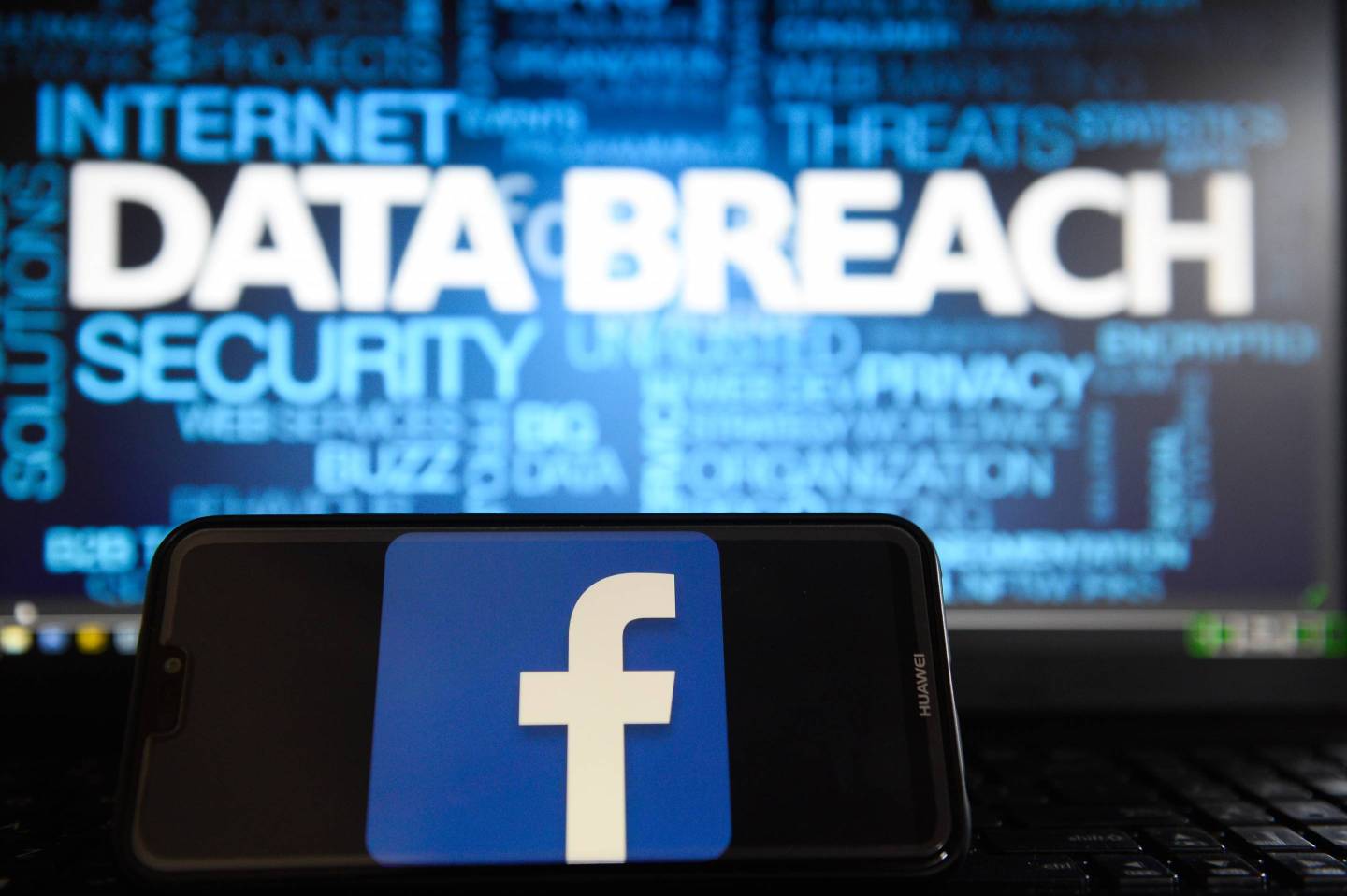
The Facebook logo is seen on a smartphone.
The Facebook logo is seen on a smartphone. Facebook, Netflix, and other big tech companies should offer data privacy as a paid service.Omar Marques—SOPA Images/LightRocket via Getty Images
Add Fortune on Google for similar content.

Online advertising is the lifeblood of today’s digital economy, generating billions of dollars of revenue for ad-supported businesses—$88 billion in 2017 alone—as companies try to capture and monopolize consumer attention. With the currency being attention and data rather than dollars and cents, this surveillance capitalism extracts a huge cost on individuals.

This year has been riddled with a slew of data scandals that have consumers worried about the ways in which companies collect and store their personal data. Not only do consumers want to trust the companies they share personal data with, but they also want to feel confident that the company won’t go selling their information to unknown third-parties. As a result, there is an increasing demand for privacy-friendly business models where transactions are straightforward, with the costs clearly communicated.

This increased demand for privacy parallels another market trend: the rise of subscriptions. In the past five years, the subscription market has grown massively, exploding from $57 million in revenue in 2011 to $2.6 billion in 2016 in e-commerce alone. Netflix, one of the so-called FANG stocks, is Exhibit A that subscription businesses can earn massive revenue.

Considering consumer demand for both privacy and subscription services, it’s time for the top tech companies of the world to deliver on it.

Privacy in action

To explore the potential of subscriptions built on the principle of consumer privacy, let’s consider an alternate universe where Facebook offered a paid product.

To capitalize on this moment, Facebook could offer a premium version of its platform that is completely ad- and tracker-free and market it as the world’s first widely used, privacy-friendly social network. With an $8 to $10 monthly subscription, “Facebook Premium” could help the company attract a privacy-conscious audience that is increasingly less engaged with its platform, and potentially generate the same amount of revenue as it does from advertising in the U.S. and Canada.

As a paid product with no ads, Facebook Premium would no longer have the impetus to monopolize user attention to maximize ad impressions, nor would it need to harvest data to maximize conversion rates. Instead, it could deliver utility and value to its users as justification for the subscription cost. To entice users to subscribe, it could offer additional features for its messaging app, premium content for video, a curated (and finite) social experience that replaces its bottomless newsfeed, and other product innovations that focus on useful and personalized features rather than user engagement.

While privacy-friendly subscription services could open new market opportunities for Facebook, it isn’t the only company that could benefit from this new model. There are several tech giants that could benefit in similar ways.

For example, Google and Amazon already offer paid subscriptions. Google, which has more trackers across the web than any other company, according to a study done by our researchers, already charges users for increased storage on Google One. Google could build on this subscription structure to offer private versions of Gmail, Google Maps, and other services for a nominal fee.

Similarly, Amazon already offers Prime, its wildly successful subscription service with over 100 million members worldwide in 2018. Though Amazon is seeing impressive growth in digital advertising, pulling in $4 billion in revenue last year, it’s still dwarfed by the other ad giants—Google raked in a whopping $95 billion, and Facebook generated almost $40 billion. Rather than fight that uphill battle, Amazon could enhance its Prime membership with a new tier that grants users unprecedented privacy in e-commerce shopping.

In this way, both companies could essentially put a price on privacy, and let its users choose whether they want to pay for their technologies with money—or with data.

The bigger picture: data ownership

A critical foundation of privacy-friendly subscription services would be a data hub where users can see—and have an active role in choosing—what data these companies have related to them. More importantly, if and when a user wants to, they could completely delete, edit, or export their data. In this way, users’ privacy and control over their social and digital footprint could be turned into a product that is packaged and sold as a paid user experience. Not only would this approach offer tremendous consumer value, but it would also inoculate these businesses against aggressive privacy regulation like the General Data Protection Regulation (GDPR).

In a world where big tech is facing harsh criticism, this privacy as a paid service business model would pave the way for a mutually beneficial relationship between users and businesses. Netflix and other subscription companies have already created the basis for a subscription-based future, and now it’s up to the leading tech organizations of the world to put privacy at the forefront of their business.

Jeremy Tillman is the director of product at Ghostery.
About the Author
By Jeremy Tillman
See full bioRight Arrow Button Icon
Add Fortune on Google for similar content.

Latest in Commentary

Finance
Lorem ipsum dolor sit amet, consectetur adipiscing elit, sed do eiusmod tempor incididunt ut labore et dolore magna aliqua. Ut enim ad minim veniam
By Fortune Editors
October 20, 2025
Finance
Lorem ipsum dolor sit amet, consectetur adipiscing elit, sed do eiusmod tempor incididunt ut labore et dolore magna aliqua. Ut enim ad minim veniam
By Fortune Editors
October 20, 2025
Finance
Lorem ipsum dolor sit amet, consectetur adipiscing elit, sed do eiusmod tempor incididunt ut labore et dolore magna aliqua. Ut enim ad minim veniam
By Fortune Editors
October 20, 2025
Finance
Lorem ipsum dolor sit amet, consectetur adipiscing elit, sed do eiusmod tempor incididunt ut labore et dolore magna aliqua. Ut enim ad minim veniam
By Fortune Editors
October 20, 2025
Finance
Lorem ipsum dolor sit amet, consectetur adipiscing elit, sed do eiusmod tempor incididunt ut labore et dolore magna aliqua. Ut enim ad minim veniam
By Fortune Editors
October 20, 2025
Finance
Lorem ipsum dolor sit amet, consectetur adipiscing elit, sed do eiusmod tempor incididunt ut labore et dolore magna aliqua. Ut enim ad minim veniam
By Fortune Editors
October 20, 2025

Most Popular

Finance
Lorem ipsum dolor sit amet, consectetur adipiscing elit, sed do eiusmod tempor incididunt ut labore et dolore magna aliqua. Ut enim ad minim veniam
By Fortune Editors
October 20, 2025
Finance
Lorem ipsum dolor sit amet, consectetur adipiscing elit, sed do eiusmod tempor incididunt ut labore et dolore magna aliqua. Ut enim ad minim veniam
By Fortune Editors
October 20, 2025
Finance
Lorem ipsum dolor sit amet, consectetur adipiscing elit, sed do eiusmod tempor incididunt ut labore et dolore magna aliqua. Ut enim ad minim veniam
By Fortune Editors
October 20, 2025
Finance
Lorem ipsum dolor sit amet, consectetur adipiscing elit, sed do eiusmod tempor incididunt ut labore et dolore magna aliqua. Ut enim ad minim veniam
By Fortune Editors
October 20, 2025
Finance
Lorem ipsum dolor sit amet, consectetur adipiscing elit, sed do eiusmod tempor incididunt ut labore et dolore magna aliqua. Ut enim ad minim veniam
By Fortune Editors
October 20, 2025
Finance
Lorem ipsum dolor sit amet, consectetur adipiscing elit, sed do eiusmod tempor incididunt ut labore et dolore magna aliqua. Ut enim ad minim veniam
By Fortune Editors
October 20, 2025
Fortune Secondary Logo
Rankings
  • 100 Best Companies
  • Fortune 500
  • Global 500
  • Fortune 500 Europe
  • Most Powerful Women
  • World's Most Admired Companies
  • See All Rankings
  • Lists Calendar
Sections
  • Finance
  • Fortune Crypto
  • Features
  • Leadership
  • Health
  • Commentary
  • Success
  • Retail
  • Mpw
  • Tech
  • Lifestyle
  • CEO Initiative
  • Asia
  • Politics
  • Conferences
  • Europe
  • Newsletters
  • Personal Finance
  • Environment
  • Magazine
  • Education
Customer Support
  • Frequently Asked Questions
  • Customer Service Portal
  • Privacy Policy
  • Terms Of Use
  • Single Issues For Purchase
  • International Print
Commercial Services
  • Advertising
  • Fortune Brand Studio
  • Fortune Analytics
  • Fortune Conferences
  • Business Development
  • Group Subscriptions
About Us
  • About Us
  • Press Center
  • Work At Fortune
  • Terms And Conditions
  • Site Map
  • About Us
  • Press Center
  • Work At Fortune
  • Terms And Conditions
  • Site Map
  • Facebook icon
  • Twitter icon
  • LinkedIn icon
  • Instagram icon
  • Pinterest icon

Latest in Commentary

senate
CommentaryCongress
One rare bipartisan AI bill is moving through Congress. Here’s why it deserves to pass
By Neil Björkman and Betsy BrewerJuly 1, 2026
12 hours ago
I know how Gen Z can survive the ‘jobpocalypse’ because I built an AI company — in 2015
CommentaryCareers
I know how Gen Z can survive the ‘jobpocalypse’ because I built an AI company — in 2015
By Jeremy FainJuly 1, 2026
13 hours ago
mr
Commentary250 Years of Innovation
America needs 3.8 million manufacturing workers. This CEO has a blueprint to find them
By Mark RayfieldJuly 1, 2026
13 hours ago
usa
Commentary250 Years of Innovation
America at 250: why the Constitution was built to restrain government, not celebrate majority rule
By Steve H. HankeJuly 1, 2026
13 hours ago
t
CommentaryMedia
Netflix could turn NBC into its biggest bet yet — and this time, the math actually works
By Jeffrey Sonnenfeld and Steven TianJune 30, 2026
1 day ago
wb
CommentaryLeadership
I grew BDO from $600 million to $3.4 billion. Here’s the 3-part formula that made it possible
By Wayne BersonJune 30, 2026
1 day ago

Most Popular

MacKenzie Scott alone accounted for one-third of America's $19.2 billion in megagifts last year
Success
MacKenzie Scott alone accounted for one-third of America's $19.2 billion in megagifts last year
By Sydney LakeJune 25, 2026
7 days ago
As Big Tech showers employees with perks to win the talent war, Nvidia built a nearly $5 trillion company by making people pay for their own lunch
Big Tech
As Big Tech showers employees with perks to win the talent war, Nvidia built a nearly $5 trillion company by making people pay for their own lunch
By Marco Quiroz-GutierrezJuly 1, 2026
16 hours ago
Philanthropy leader at Warren Buffett and Bill Gates’ Giving Pledge says children of billionaires are pushing them to give their wealth away faster
Success
Philanthropy leader at Warren Buffett and Bill Gates’ Giving Pledge says children of billionaires are pushing them to give their wealth away faster
By Preston ForeJune 27, 2026
5 days ago
The Supreme Court's birthright citizenship ruling hands the U.S. economy a $7.7 trillion win
Newsletters
The Supreme Court's birthright citizenship ruling hands the U.S. economy a $7.7 trillion win
By Diane BradyJuly 1, 2026
14 hours ago
Elon Musk on MacKenzie Scott giving away $26 billion of her fortune: 'Sadly,' it makes the world a worse place
Success
Elon Musk on MacKenzie Scott giving away $26 billion of her fortune: 'Sadly,' it makes the world a worse place
By Sydney LakeJune 29, 2026
2 days ago
The U.S. Army is opening military bases to private billions — here's why that changes everything for the next 250 years
Commentary
The U.S. Army is opening military bases to private billions — here's why that changes everything for the next 250 years
By Marc AndersenJune 30, 2026
1 day ago

© 2026 Fortune Media IP Limited. All Rights Reserved. Use of this site constitutes acceptance of our Terms of Use and Privacy Policy | CA Notice at Collection and Privacy Notice | Do Not Sell/Share My Personal Information
FORTUNE is a trademark of Fortune Media IP Limited, registered in the U.S. and other countries. FORTUNE may receive compensation for some links to products and services on this website. Offers may be subject to change without notice.