• Home
  • Latest
  • Fortune 500
  • Finance
  • Tech
  • Leadership
  • Lifestyle
  • Rankings
  • Multimedia

Trendingnow

1

As Big Tech showers employees with perks to win the talent war, Nvidia built a nearly $5 trillion company by making people pay for their own lunch

2

MacKenzie Scott alone accounted for one-third of America's $19.2 billion in megagifts last year

3

The Supreme Court's birthright citizenship ruling hands the U.S. economy a $7.7 trillion win

1

As Big Tech showers employees with perks to win the talent war, Nvidia built a nearly $5 trillion company by making people pay for their own lunch

2

MacKenzie Scott alone accounted for one-third of America's $19.2 billion in megagifts last year

3

The Supreme Court's birthright citizenship ruling hands the U.S. economy a $7.7 trillion win
CommentaryFintech

Regulate Fintechs for What They Do, Not What They Don’t

By
Kathryn Petralia
Kathryn Petralia
Down Arrow Button Icon
By
Kathryn Petralia
Kathryn Petralia
Down Arrow Button Icon
August 15, 2019, 1:40 PM ET
Two hands bound by red tape.
Two hands bound by red tape, depicting difficulties, frustration and regulations. Art on separate and easily edited layers. Download includes a large high res jpeg. Credit: stevegrahamstevegraham—Getty Images
Add Fortune on Google for similar content.

During Fortune’s Brainstorm Finance conference in June, my panel was asked whether fintech, as an industry, faces too much or too little regulation. Panelists answered the question differently depending on their product and a common theme emerged: It depends.

Fintech companies face costly compliance with a mountain of financial regulations, most of which describe work we don’t do. Like many technology-driven industries, our regulations are horribly outdated, authored at a time when an app meant fries for the whole table, and spam was just canned meat. Imagine running a business under laws written before your industry or product ever existed. That’s the reality for most fintechs. Congress’s directions for regulators about what “banks” are and do are based on how banking worked in the 1970s.

Regulators and lawmakers we meet with regularly tell us: “We know the laws are outdated and need to be scrapped and rewritten, but it’s just too big, too hard, and too much work.” To some extent, they’re right. Bank board members and federal regulators can’t grasp the scope or pace of change, or possibly keep up if they insist on treating every company like a bank and every loan like a 30-year mortgage.

Banks, as institutions, don’t really exist anymore. Customer activities exist and financial services exist—and they’re part of a complex and perpetually shifting network of problems and solutions. 

To keep up, the U.K. takes a novel approach that America should examine. The U.K. regulates services—what businesses actually do. Separate licenses and standards govern lending to home buyers or small businesses. Processing payments between banks doesn’t pose the same risk as deposits, so risk-sensitive regulations in the U.K. are relaxed.

Giving up the one-size-fits-all model of financial relationships, such as the brick-and-mortar bank or middle-class mortgage, opens the door to customization, specialization, and reimagining customer-business relationships. Dated regulations treating Pandora and Spotify like 1970s record labels or radio stations led to a total copyright overhaul. Customers’ expectations have changed every bit as much for financial services as for the music industry. Change is overdue.

Tala, a California-based company offering microloans in developing countries, is using mobile phone habits to determine creditworthiness. If a potential borrower tops up his minutes at regular intervals, has a wide network of contacts who he’s known for years and stays in contact with, and pays his other bills regularly, he’s very likely to repay the loan of $50 to stock his fruit stand or $250 for a motorbike. Similarly, for any type or source of data fintech models find predictive, the would-be borrower may consent to share, or not. 

Modern regulation should allow the customer to determine who has access to their data, choosing what to share or not to share for a certain service, including underwriting, investing, processing payments, and deposits. This is the path toward transparency and innovation. 

Until recently, customers weren’t entitled to access their credit bureau data, which banks were using to make decisions about borrowers’ financial futures. Forward-thinking regulation gave customers the right to see these records and challenge their accuracy, despite resistance from the data holders. It’s certainly important that we develop regulations to give customers control of their financial data and banking services, instead of the banks.

But we can’t take this too far. Monolithic regulatory frameworks don’t allow for the dynamic, interwoven range of options and diversified offerings customers have come to expect, whether they’re rock songs or small business loans. Letting radio stations log what songs you listen to late at night might have seemed absurd back in the day, but now people love the custom experience and curated suggestions provided by companies collecting that data.

Banking is changing fast, whether banks and regulators are ready or not. Very few millennials value walking into a bank branch and speaking to a teller—that’s not what “banking” means to them. If you don’t intend to buy a home, have a child, go to college, or directly deposit a paycheck, PayPal’s the only bank you need. 

If you want something else, there’s a company out there that can do it. Let people opt into the world they want, instead of forcing them into the one that was easier yesterday.

Kathryn Petralia is the co-founder and president of Kabbage.

More opinion in Fortune:

—The root causes of the U.S.-China trade war
—Bernie Sanders: America is drowning in student debt. Here’s my plan to end it
—Youth employment is still declining. How summer jobs programs can help
—Most states still enforce noncompete agreements—and it’s stifling innovation
—Why recent antitrust regulation isn’t really about consumer protection
Listen to our audio briefing, Fortune 500 Daily
About the Author
By Kathryn Petralia
See full bioRight Arrow Button Icon
Add Fortune on Google for similar content.

Latest in Commentary

Finance
Lorem ipsum dolor sit amet, consectetur adipiscing elit, sed do eiusmod tempor incididunt ut labore et dolore magna aliqua. Ut enim ad minim veniam
By Fortune Editors
October 20, 2025
Finance
Lorem ipsum dolor sit amet, consectetur adipiscing elit, sed do eiusmod tempor incididunt ut labore et dolore magna aliqua. Ut enim ad minim veniam
By Fortune Editors
October 20, 2025
Finance
Lorem ipsum dolor sit amet, consectetur adipiscing elit, sed do eiusmod tempor incididunt ut labore et dolore magna aliqua. Ut enim ad minim veniam
By Fortune Editors
October 20, 2025
Finance
Lorem ipsum dolor sit amet, consectetur adipiscing elit, sed do eiusmod tempor incididunt ut labore et dolore magna aliqua. Ut enim ad minim veniam
By Fortune Editors
October 20, 2025
Finance
Lorem ipsum dolor sit amet, consectetur adipiscing elit, sed do eiusmod tempor incididunt ut labore et dolore magna aliqua. Ut enim ad minim veniam
By Fortune Editors
October 20, 2025
Finance
Lorem ipsum dolor sit amet, consectetur adipiscing elit, sed do eiusmod tempor incididunt ut labore et dolore magna aliqua. Ut enim ad minim veniam
By Fortune Editors
October 20, 2025

Most Popular

Finance
Lorem ipsum dolor sit amet, consectetur adipiscing elit, sed do eiusmod tempor incididunt ut labore et dolore magna aliqua. Ut enim ad minim veniam
By Fortune Editors
October 20, 2025
Finance
Lorem ipsum dolor sit amet, consectetur adipiscing elit, sed do eiusmod tempor incididunt ut labore et dolore magna aliqua. Ut enim ad minim veniam
By Fortune Editors
October 20, 2025
Finance
Lorem ipsum dolor sit amet, consectetur adipiscing elit, sed do eiusmod tempor incididunt ut labore et dolore magna aliqua. Ut enim ad minim veniam
By Fortune Editors
October 20, 2025
Finance
Lorem ipsum dolor sit amet, consectetur adipiscing elit, sed do eiusmod tempor incididunt ut labore et dolore magna aliqua. Ut enim ad minim veniam
By Fortune Editors
October 20, 2025
Finance
Lorem ipsum dolor sit amet, consectetur adipiscing elit, sed do eiusmod tempor incididunt ut labore et dolore magna aliqua. Ut enim ad minim veniam
By Fortune Editors
October 20, 2025
Finance
Lorem ipsum dolor sit amet, consectetur adipiscing elit, sed do eiusmod tempor incididunt ut labore et dolore magna aliqua. Ut enim ad minim veniam
By Fortune Editors
October 20, 2025
Fortune Secondary Logo
Rankings
  • 100 Best Companies
  • Fortune 500
  • Global 500
  • Fortune 500 Europe
  • Most Powerful Women
  • World's Most Admired Companies
  • See All Rankings
  • Lists Calendar
Sections
  • Finance
  • Fortune Crypto
  • Features
  • Leadership
  • Health
  • Commentary
  • Success
  • Retail
  • Mpw
  • Tech
  • Lifestyle
  • CEO Initiative
  • Asia
  • Politics
  • Conferences
  • Europe
  • Newsletters
  • Personal Finance
  • Environment
  • Magazine
  • Education
Customer Support
  • Frequently Asked Questions
  • Customer Service Portal
  • Privacy Policy
  • Terms Of Use
  • Single Issues For Purchase
  • International Print
Commercial Services
  • Advertising
  • Fortune Brand Studio
  • Fortune Analytics
  • Fortune Conferences
  • Business Development
  • Group Subscriptions
About Us
  • About Us
  • Press Center
  • Work At Fortune
  • Terms And Conditions
  • Site Map
  • About Us
  • Press Center
  • Work At Fortune
  • Terms And Conditions
  • Site Map
  • Facebook icon
  • Twitter icon
  • LinkedIn icon
  • Instagram icon
  • Pinterest icon

Latest in Commentary

elon
CommentaryChina
China has 400 private space companies. The West is barely paying attention
By Rainer ZitelmannJuly 2, 2026
2 hours ago
senate
CommentaryCongress
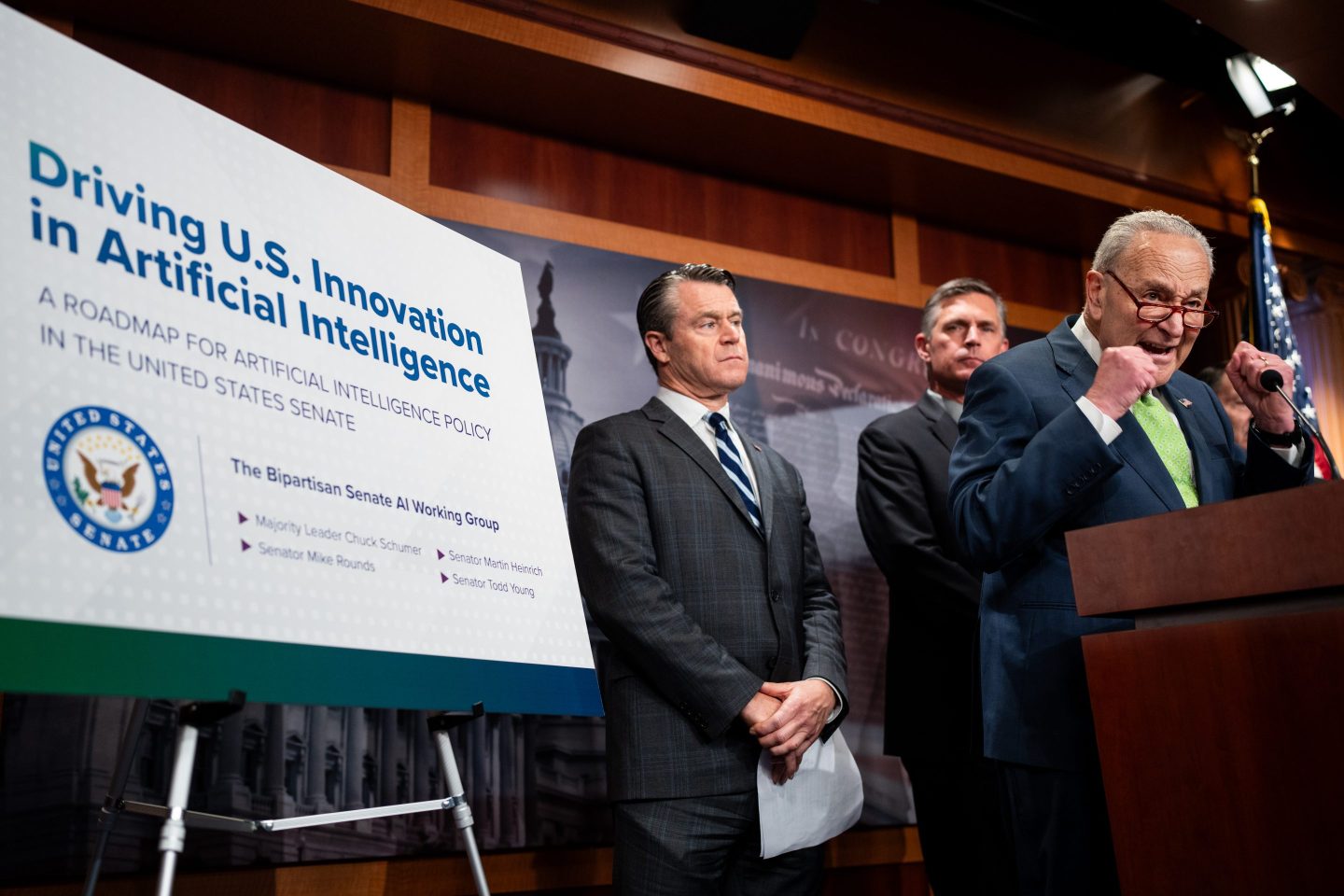
One rare bipartisan AI bill is moving through Congress. Here’s why it deserves to pass
By Neil Björkman and Betsy BrewerJuly 1, 2026
24 hours ago
I know how Gen Z can survive the ‘jobpocalypse’ because I built an AI company — in 2015
CommentaryCareers
I know how Gen Z can survive the ‘jobpocalypse’ because I built an AI company — in 2015
By Jeremy FainJuly 1, 2026
1 day ago
mr
Commentary250 Years of Innovation
America needs 3.8 million manufacturing workers. This CEO has a blueprint to find them
By Mark RayfieldJuly 1, 2026
1 day ago
usa
Commentary250 Years of Innovation
America at 250: why the Constitution was built to restrain government, not celebrate majority rule
By Steve H. HankeJuly 1, 2026
1 day ago
t
CommentaryMedia
Netflix could turn NBC into its biggest bet yet — and this time, the math actually works
By Jeffrey Sonnenfeld and Steven TianJune 30, 2026
2 days ago

Most Popular

As Big Tech showers employees with perks to win the talent war, Nvidia built a nearly $5 trillion company by making people pay for their own lunch
Big Tech
As Big Tech showers employees with perks to win the talent war, Nvidia built a nearly $5 trillion company by making people pay for their own lunch
By Marco Quiroz-GutierrezJuly 1, 2026
1 day ago
MacKenzie Scott alone accounted for one-third of America's $19.2 billion in megagifts last year
Success
MacKenzie Scott alone accounted for one-third of America's $19.2 billion in megagifts last year
By Sydney LakeJune 25, 2026
7 days ago
The Supreme Court's birthright citizenship ruling hands the U.S. economy a $7.7 trillion win
Newsletters
The Supreme Court's birthright citizenship ruling hands the U.S. economy a $7.7 trillion win
By Diane BradyJuly 1, 2026
1 day ago
Current price of oil as of July 1, 2026
Personal Finance
Current price of oil as of July 1, 2026
By Joseph HostetlerJuly 1, 2026
22 hours ago
Philanthropy leader at Warren Buffett and Bill Gates’ Giving Pledge says children of billionaires are pushing them to give their wealth away faster
Success
Philanthropy leader at Warren Buffett and Bill Gates’ Giving Pledge says children of billionaires are pushing them to give their wealth away faster
By Preston ForeJune 27, 2026
5 days ago
Elon Musk on MacKenzie Scott giving away $26 billion of her fortune: 'Sadly,' it makes the world a worse place
Success
Elon Musk on MacKenzie Scott giving away $26 billion of her fortune: 'Sadly,' it makes the world a worse place
By Sydney LakeJune 29, 2026
3 days ago

© 2026 Fortune Media IP Limited. All Rights Reserved. Use of this site constitutes acceptance of our Terms of Use and Privacy Policy | CA Notice at Collection and Privacy Notice | Do Not Sell/Share My Personal Information
FORTUNE is a trademark of Fortune Media IP Limited, registered in the U.S. and other countries. FORTUNE may receive compensation for some links to products and services on this website. Offers may be subject to change without notice.