• Home
  • Latest
  • Fortune 500
  • Finance
  • Tech
  • Leadership
  • Lifestyle
  • Rankings
  • Multimedia

Trendingnow

1

Egg companies made $1.22 billion in profit off a $6 carton — now they’re buying their way out of a price-fixing case with 53 million donated eggs

2

Meet the Zillennials: The luckiest micro-generation in the workforce, born between 1993 and 1998

3

Even as Elon Musk calls philanthropy ‘very hard,’ every day Americans gave a record $617 billion—despite feeling the squeeze over the cost of living

1

Egg companies made $1.22 billion in profit off a $6 carton — now they’re buying their way out of a price-fixing case with 53 million donated eggs

2

Meet the Zillennials: The luckiest micro-generation in the workforce, born between 1993 and 1998

3

Even as Elon Musk calls philanthropy ‘very hard,’ every day Americans gave a record $617 billion—despite feeling the squeeze over the cost of living
Commentary

How Learning Can Catch Up With Technological Change

By
Fred Swaniker
Fred Swaniker
Down Arrow Button Icon
By
Fred Swaniker
Fred Swaniker
Down Arrow Button Icon
August 27, 2019, 6:00 AM ET
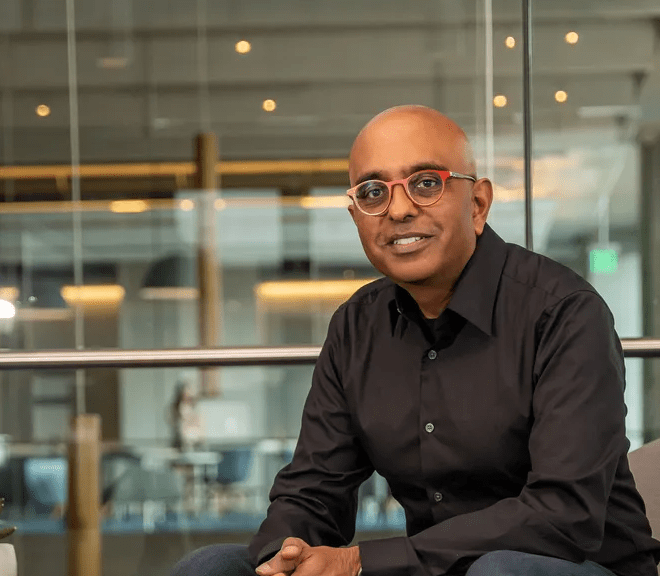
African Leadership University founder Fred Swaniker speaks with students.
African Leadership University founder Fred Swaniker speaks with students. (Courtesy of African Leadership University)Courtesy of African Leadership University
Add Fortune on Google for similar content.

As I meet with senior executives around the globe, one concern haunts them more than any other: the deficit in the leadership talent necessary for their companies to compete in today’s highly dynamic, uncertain, and volatile world. Organizations of all stripes are increasingly realizing that the education system that propelled their success in the past is failing to produce the entrepreneurial and collaborative problem-solving talent necessary to thrive in the future. 

Ten years ago, who would have imagined that jobs like “drone operator,” “virtual reality producer,” or “machine learning engineer” would have existed? The growing influence and efficacy of artificial intelligence, digitization, and automation means that the pace of such change is getting faster and faster. 

Unfortunately, conventional universities are not keeping pace with this rapidly evolving future of work. Many are based on traditions that were established almost a thousand years ago, when universities were first created. A lot has changed since then.

We need a new breed of learning institution that is designed for the 21st century. This type of institution must focus on what I call “just-in-time learning.”

A just-in-time learning institution is designed around three key principles.

First, it starts but never ends. Just imagine entering the institution at the age of 18 but never “graduating” from it. For the first three to four years, you spend eight months learning and four months working. Then, for the rest of your professional life, you spend one month learning and 11 months working. This institution equips you with continuous, real-time feedback from your colleagues to give you a sense of the skills you’re mastering and the gaps you need to address. This adaptive road map is the basis for your personalized learning at the lifelong institution.

Second, success is not measured by your ability to recall facts and figures, but by how well you “learn how to learn.” In our rapidly changing world, where, according to the McKinsey Global Institute, about 50% of current work tasks could be automated, the ability to rapidly learn new skills enables you to reinvent yourself and remain productive as the world changes.

Third, you learn from multiple methods, not just from the classroom. This is because according to research conducted by the Center for Creative Leadership, only 10% of skills are developed in a classroom. Roughly 20% come from developmental relationships with peers and mentors, and a whopping 70% come from experience.

Simply put, we learn best by doing. At a just-in-time learning institution, your performance is not assessed by exams, but by actual projects you implement and by feedback from your peers and managers. You build prototypes, conduct experiments, interview experts, and perform research. You apprentice under professionals. 

This is why medical university education is one of the more conventional university education models that actually still works. Doctors will tell you that the most powerful aspects of medical school are their clinical rotations. They learn surgery by doing surgery. They learn how to engage with patients by engaging with them.

One of the most exciting trends approaching this model of learning today can be seen in training providers like General Assembly, which offer short courses in scarce technology skills like data science. Or look at online programs like Udacity, which deliver “badges” and “nano-degrees” in intense bursts of a few weeks. The downside of offerings like these is that they are overly focused on technology and data science, and many of them are only offered online—lacking the developmental relationships with peers and mentors that are so crucial to growth.  

We need just-in-time learning in all disciplines—not just in technology—and at every stage of life. That was the inspiration for the lifelong leadership development platform we have been building over the past 15 years—from our pre-university African Leadership Academy to our African Leadership University undergraduate and MBA programs to the new, large-scale, lifelong learning institution we launched last year, ALX.

The success of these experiential-focused endeavors is encouraging. For example, earlier this year we took 100 mid-level managers through a six-month, applied leadership development program which blended interactive, peer-based learning with immediate, real-world application of new skills to their teams at work. Fifteen of these managers were promoted before they even completed the program, and one of them even became CEO at his organization. 

The lines are blurring between the “university” and the “real world.” Companies must be willing to let their employees pivot between work and learning if they want them to have the skills necessary to remain relevant. Conventional universities were never designed with this in mind. New vehicles are needed.

The organizations and executives that are courageous enough to break with convention and rethink learning are those who will thrive in the coming tsunami of technological disruption. 

Fred Swaniker is the founder and CEO of African Leadership Group. He has no investments in or associations with the companies mentioned in this article.

More opinion in Fortune:

—Girls Who Code CEO: Men need to be brave in the service of women
—Delivering on the promise of purpose beyond profits
—Regulate fintechs for what they do, not what they don’t
—Retaining good employees is tougher than ever, but offering paid family leave can help
—Supporting LGBT employees is a patriotic act
Listen to our audio briefing, Fortune 500 Daily


About the Author
By Fred Swaniker
See full bioRight Arrow Button Icon
Add Fortune on Google for similar content.

Latest in Commentary

Finance
Lorem ipsum dolor sit amet, consectetur adipiscing elit, sed do eiusmod tempor incididunt ut labore et dolore magna aliqua. Ut enim ad minim veniam
By Fortune Editors
October 20, 2025
Finance
Lorem ipsum dolor sit amet, consectetur adipiscing elit, sed do eiusmod tempor incididunt ut labore et dolore magna aliqua. Ut enim ad minim veniam
By Fortune Editors
October 20, 2025
Finance
Lorem ipsum dolor sit amet, consectetur adipiscing elit, sed do eiusmod tempor incididunt ut labore et dolore magna aliqua. Ut enim ad minim veniam
By Fortune Editors
October 20, 2025
Finance
Lorem ipsum dolor sit amet, consectetur adipiscing elit, sed do eiusmod tempor incididunt ut labore et dolore magna aliqua. Ut enim ad minim veniam
By Fortune Editors
October 20, 2025
Finance
Lorem ipsum dolor sit amet, consectetur adipiscing elit, sed do eiusmod tempor incididunt ut labore et dolore magna aliqua. Ut enim ad minim veniam
By Fortune Editors
October 20, 2025
Finance
Lorem ipsum dolor sit amet, consectetur adipiscing elit, sed do eiusmod tempor incididunt ut labore et dolore magna aliqua. Ut enim ad minim veniam
By Fortune Editors
October 20, 2025

Most Popular

Finance
Lorem ipsum dolor sit amet, consectetur adipiscing elit, sed do eiusmod tempor incididunt ut labore et dolore magna aliqua. Ut enim ad minim veniam
By Fortune Editors
October 20, 2025
Finance
Lorem ipsum dolor sit amet, consectetur adipiscing elit, sed do eiusmod tempor incididunt ut labore et dolore magna aliqua. Ut enim ad minim veniam
By Fortune Editors
October 20, 2025
Finance
Lorem ipsum dolor sit amet, consectetur adipiscing elit, sed do eiusmod tempor incididunt ut labore et dolore magna aliqua. Ut enim ad minim veniam
By Fortune Editors
October 20, 2025
Finance
Lorem ipsum dolor sit amet, consectetur adipiscing elit, sed do eiusmod tempor incididunt ut labore et dolore magna aliqua. Ut enim ad minim veniam
By Fortune Editors
October 20, 2025
Finance
Lorem ipsum dolor sit amet, consectetur adipiscing elit, sed do eiusmod tempor incididunt ut labore et dolore magna aliqua. Ut enim ad minim veniam
By Fortune Editors
October 20, 2025
Finance
Lorem ipsum dolor sit amet, consectetur adipiscing elit, sed do eiusmod tempor incididunt ut labore et dolore magna aliqua. Ut enim ad minim veniam
By Fortune Editors
October 20, 2025
Fortune Secondary Logo
Rankings
  • 100 Best Companies
  • Fortune 500
  • Global 500
  • Fortune 500 Europe
  • Most Powerful Women
  • World's Most Admired Companies
  • See All Rankings
  • Lists Calendar
Sections
  • Finance
  • Fortune Crypto
  • Features
  • Leadership
  • Health
  • Commentary
  • Success
  • Retail
  • Mpw
  • Tech
  • Lifestyle
  • CEO Initiative
  • Asia
  • Politics
  • Conferences
  • Europe
  • Newsletters
  • Personal Finance
  • Environment
  • Magazine
  • Education
Customer Support
  • Frequently Asked Questions
  • Customer Service Portal
  • Privacy Policy
  • Terms Of Use
  • Single Issues For Purchase
  • International Print
Commercial Services
  • Advertising
  • Fortune Brand Studio
  • Fortune Analytics
  • Fortune Conferences
  • Business Development
  • Group Subscriptions
About Us
  • About Us
  • Press Center
  • Work At Fortune
  • Terms And Conditions
  • Site Map
  • About Us
  • Press Center
  • Work At Fortune
  • Terms And Conditions
  • Site Map
  • Facebook icon
  • Twitter icon
  • LinkedIn icon
  • Instagram icon
  • Pinterest icon

Latest in Commentary

k
Commentary250 Years of Innovation
Media leadership unity in defying Trump’s assault on Free speech: standing tall against historic comparisons
By Jeffrey Sonnenfeld, Jeff Bewkes, Kay Koplovitz, Tom Glocer and Marvin KalbJuly 4, 2026
5 hours ago
ds
CommentarySoftware
I argued with the father of open source for 2 years. Now the AI fight is the same — only bigger
By David SiegelJuly 3, 2026
1 day ago
ashok
Commentary250 Years of Innovation
The greatest startup in history: What we can learn from America’s founders at today’s AI frontier
By Ashok N. SrivastavaJuly 3, 2026
1 day ago
2
Commentary250 Years of Innovation
America’s secret weapon isn’t just innovation — It’s the freedom to fail
By Keith KrachJuly 3, 2026
1 day ago
rn
CommentaryCryptocurrency
Former Iran director at NSC: Crypto legislation is a ticket to sanctions evasion
By Richard NephewJuly 2, 2026
2 days ago
m
Commentary250 Years of Innovation
McKinsey chairs: Building a more resilient industrial base may require $2 trillion in investment
By Eric Kutcher and Shubham SinghalJuly 2, 2026
2 days ago

Most Popular

Egg companies made $1.22 billion in profit off a $6 carton — now they’re buying their way out of a price-fixing case with 53 million donated eggs
Law
Egg companies made $1.22 billion in profit off a $6 carton — now they’re buying their way out of a price-fixing case with 53 million donated eggs
By Wyatte Grantham-Philips and The Associated PressJuly 2, 2026
2 days ago
Meet the Zillennials: The luckiest micro-generation in the workforce, born between 1993 and 1998
AI
Meet the Zillennials: The luckiest micro-generation in the workforce, born between 1993 and 1998
By Nick LichtenbergJuly 3, 2026
1 day ago
Even as Elon Musk calls philanthropy ‘very hard,’ every day Americans gave a record $617 billion—despite feeling the squeeze over the cost of living
Success
Even as Elon Musk calls philanthropy ‘very hard,’ every day Americans gave a record $617 billion—despite feeling the squeeze over the cost of living
By Preston ForeJuly 4, 2026
9 hours ago
Economists have found an answer to slowing cognitive decline: Avoid retiring early, study finds
Economy
Economists have found an answer to slowing cognitive decline: Avoid retiring early, study finds
By Sasha RogelbergJuly 2, 2026
2 days ago
$25 billion CEO says one-hour interviews are a waste of time—he puts candidates through six hours of tests and wants them to order wine at lunch
Success
$25 billion CEO says one-hour interviews are a waste of time—he puts candidates through six hours of tests and wants them to order wine at lunch
By Orianna Rosa RoyleJuly 3, 2026
1 day ago
On Wall Street, analysts increasingly don’t believe the U.S. government’s 'misleading' job numbers
Economy
On Wall Street, analysts increasingly don’t believe the U.S. government’s 'misleading' job numbers
By Jim EdwardsJuly 3, 2026
1 day ago

© 2026 Fortune Media IP Limited. All Rights Reserved. Use of this site constitutes acceptance of our Terms of Use and Privacy Policy | CA Notice at Collection and Privacy Notice | Do Not Sell/Share My Personal Information
FORTUNE is a trademark of Fortune Media IP Limited, registered in the U.S. and other countries. FORTUNE may receive compensation for some links to products and services on this website. Offers may be subject to change without notice.