• Home
  • Latest
  • Fortune 500
  • Finance
  • Tech
  • Leadership
  • Lifestyle
  • Rankings
  • Multimedia

Trendingnow

1

Egg companies made $1.22 billion in profit off a $6 carton — now they’re buying their way out of a price-fixing case with 53 million donated eggs

2

Meet the Zillennials: The luckiest micro-generation in the workforce, born between 1993 and 1998

3

Economists have found an answer to slowing cognitive decline: Avoid retiring early, study finds

1

Egg companies made $1.22 billion in profit off a $6 carton — now they’re buying their way out of a price-fixing case with 53 million donated eggs

2

Meet the Zillennials: The luckiest micro-generation in the workforce, born between 1993 and 1998

3

Economists have found an answer to slowing cognitive decline: Avoid retiring early, study finds
FinanceRecession

Are We Near a Recession? The Godfather of the Inverted Yield Curve Says It’s ‘Code Red’

Lucinda Shen
By
Lucinda Shen
Lucinda Shen
Down Arrow Button Icon
Lucinda Shen
By
Lucinda Shen
Lucinda Shen
Down Arrow Button Icon
September 9, 2019, 6:30 AM ET
Add Fortune on Google for similar content.

Is the U.S. nearing a recession?

It’s the multi-trillion dollar question on the minds of executives and investors around the world. The inverted yield curve, a key predictor for financial downturns, has appeared in recent months at a time when international markets have soured.

Yet U.S. stock markets are still near their all-time high while U.S. retail sales appear upbeat. So some are arguing the yield curve inversion that has predicted each of the last seven downturns, is mistaken this time around.

But the academic who discovered the correlation between an inverted yield curve and the subsequent downturn stands by its predictive power in this particular case.

“I have gone on the record to issue a recession code red,” says Campbell Harvey, a professor of finance at the Fuqua School of Business at Duke University. “Growth will slow according to my model.”

Indeed the spread between the 10-year and the 3-month has sustained its inversion almost perfectly for exactly a quarter—minus one singular bright spot in late July when the yields of the two treasuries dallied at around the same levels. One of the initial curves that Harvey examined, the 5-year to the 3-month, has been inverted since February. And in what seems like confirmation of the fact, the 10-year and 2 year, which has also predicted past recessions, also has turned red in August.

Harvey notes that indicators such as GDP, unemployment rates, and the stock market are all lagging indicators—they give a snapshot of what is happening over the past quarter or now, for example. Instead, he points to a recent Chief Financial Officer survey conducted by Duke, in which 67% of CFOs said they expect a recession in late 2020. These surveys, says Harvey, can indicate how key decision makers plan to spend their money in the future.

In 1986, at a time when many other economists were focusing on the stock market as a predictor for a recession, Harvey was examining the relationship between the yield spreads—specifically the 10-year Treasury and the 3-month bill as well as the relationship between the 5-month to 3 month—to four historical recessions.

Typically, long-term treasuries offer higher yields. Harvey though focused in particular on the rare times when the yield on the 10-year falls below that of the 2-year or the 3-month—creating an inverted yield curve. The research bore fruit. In those moments when the atypical occurred for a period of a quarter or longer, a recession followed.

Distilling it down, he theorizes that when investors around the world sense incoming financial danger, they turn to the world’s safest asset—the U.S. 10-year treasury, a move that drives the yield of that product down relative to that its short-term brethren.

Certainly there is space for doubt. The curve inversion reflects high uncertainty and high expectations of a recession, rather than directly determining a recession itself. Thus, the 5 year 3 month has been wrong at least once in 1998, when the curve inverted for over a quarter, per data from the Federal Reserve Bank of St. Louis. But that inversion did predict sentiment: it occured at a time when investors were severely concerned that the implosion of hedge fund giant, Long-Term Capital Management, would lead to a global financial crisis. And perhaps of interest, the 10-year-3 month did not invert in the same period, nor did the 10-year to 2-year curve.

Some critics argue there haven’t been enough recessions for the data to be reliable. And recently, former Federal Reserve Chairwoman Janet Yellen spoke with Fox Business, and said that the quantitative easing—in which the Federal Reserve acquired government bonds in order to inject liquidity into the market—had shifted the balance of the yield curve and made the signal less reliable, a point that Harvey assiduously disputes in a recent LinkedIn post.

Another point about the curve’s limited usability: An inverted yield curve doesn’t exactly predict when a recession is coming. In the past, it has typically taken between 12 months to 18 months for a recession to materialize.

“This does not look like an economy that is rolling over. Nor is it,” wrote David R. Kotok, CIO of Cumberland Advisors in a recent note. “Economic slowdowns are far from synchronous with inversions. Growth continued for a year and a half after the yield curve inverted in 2006.”

But Harvey at least has done well to stick to his own thesis. The professor applied his paper to his personal life, cycling out of riskier assets in 2006 ahead of the financial crisis, and reallocating some of his equity holdings into assets such as bonds or cash. That softened the blow of the downturn at a time when well-respected giants like the Lehman Brothers had yet to blow up for their investments in subprime mortgages.

And while Harvey admits there is a possibility of a “false signal,” he’s not taking any chances. His holdings today has also shifted toward a more “defensive portfolio.”

More must-read stories from Fortune:

—A rare tech company where women dominate
—Why WeWork won’t be in the S&P 500 after its IPO
—Is it “only human” to feel anxious about money? Talking finance with Sophia the Robot
—Europe’s cyber watchdog for banks has a problem—it keeps getting hacked
—Listen to our audio briefing, Fortune 500 Daily
Follow Fortune on Flipboard to stay up-to-date on the latest news and analysis.

About the Author
Lucinda Shen
By Lucinda Shen
See full bioRight Arrow Button Icon
Add Fortune on Google for similar content.

Latest in Finance

Finance
Lorem ipsum dolor sit amet, consectetur adipiscing elit, sed do eiusmod tempor incididunt ut labore et dolore magna aliqua. Ut enim ad minim veniam
By Fortune Editors
October 20, 2025
Finance
Lorem ipsum dolor sit amet, consectetur adipiscing elit, sed do eiusmod tempor incididunt ut labore et dolore magna aliqua. Ut enim ad minim veniam
By Fortune Editors
October 20, 2025
Finance
Lorem ipsum dolor sit amet, consectetur adipiscing elit, sed do eiusmod tempor incididunt ut labore et dolore magna aliqua. Ut enim ad minim veniam
By Fortune Editors
October 20, 2025
Finance
Lorem ipsum dolor sit amet, consectetur adipiscing elit, sed do eiusmod tempor incididunt ut labore et dolore magna aliqua. Ut enim ad minim veniam
By Fortune Editors
October 20, 2025
Finance
Lorem ipsum dolor sit amet, consectetur adipiscing elit, sed do eiusmod tempor incididunt ut labore et dolore magna aliqua. Ut enim ad minim veniam
By Fortune Editors
October 20, 2025
Finance
Lorem ipsum dolor sit amet, consectetur adipiscing elit, sed do eiusmod tempor incididunt ut labore et dolore magna aliqua. Ut enim ad minim veniam
By Fortune Editors
October 20, 2025

Most Popular

Finance
Lorem ipsum dolor sit amet, consectetur adipiscing elit, sed do eiusmod tempor incididunt ut labore et dolore magna aliqua. Ut enim ad minim veniam
By Fortune Editors
October 20, 2025
Finance
Lorem ipsum dolor sit amet, consectetur adipiscing elit, sed do eiusmod tempor incididunt ut labore et dolore magna aliqua. Ut enim ad minim veniam
By Fortune Editors
October 20, 2025
Finance
Lorem ipsum dolor sit amet, consectetur adipiscing elit, sed do eiusmod tempor incididunt ut labore et dolore magna aliqua. Ut enim ad minim veniam
By Fortune Editors
October 20, 2025
Finance
Lorem ipsum dolor sit amet, consectetur adipiscing elit, sed do eiusmod tempor incididunt ut labore et dolore magna aliqua. Ut enim ad minim veniam
By Fortune Editors
October 20, 2025
Finance
Lorem ipsum dolor sit amet, consectetur adipiscing elit, sed do eiusmod tempor incididunt ut labore et dolore magna aliqua. Ut enim ad minim veniam
By Fortune Editors
October 20, 2025
Finance
Lorem ipsum dolor sit amet, consectetur adipiscing elit, sed do eiusmod tempor incididunt ut labore et dolore magna aliqua. Ut enim ad minim veniam
By Fortune Editors
October 20, 2025
Fortune Secondary Logo
Rankings
  • 100 Best Companies
  • Fortune 500
  • Global 500
  • Fortune 500 Europe
  • Most Powerful Women
  • World's Most Admired Companies
  • See All Rankings
  • Lists Calendar
Sections
  • Finance
  • Fortune Crypto
  • Features
  • Leadership
  • Health
  • Commentary
  • Success
  • Retail
  • Mpw
  • Tech
  • Lifestyle
  • CEO Initiative
  • Asia
  • Politics
  • Conferences
  • Europe
  • Newsletters
  • Personal Finance
  • Environment
  • Magazine
  • Education
Customer Support
  • Frequently Asked Questions
  • Customer Service Portal
  • Privacy Policy
  • Terms Of Use
  • Single Issues For Purchase
  • International Print
Commercial Services
  • Advertising
  • Fortune Brand Studio
  • Fortune Analytics
  • Fortune Conferences
  • Business Development
  • Group Subscriptions
About Us
  • About Us
  • Press Center
  • Work At Fortune
  • Terms And Conditions
  • Site Map
  • About Us
  • Press Center
  • Work At Fortune
  • Terms And Conditions
  • Site Map
  • Facebook icon
  • Twitter icon
  • LinkedIn icon
  • Instagram icon
  • Pinterest icon

Latest in Finance

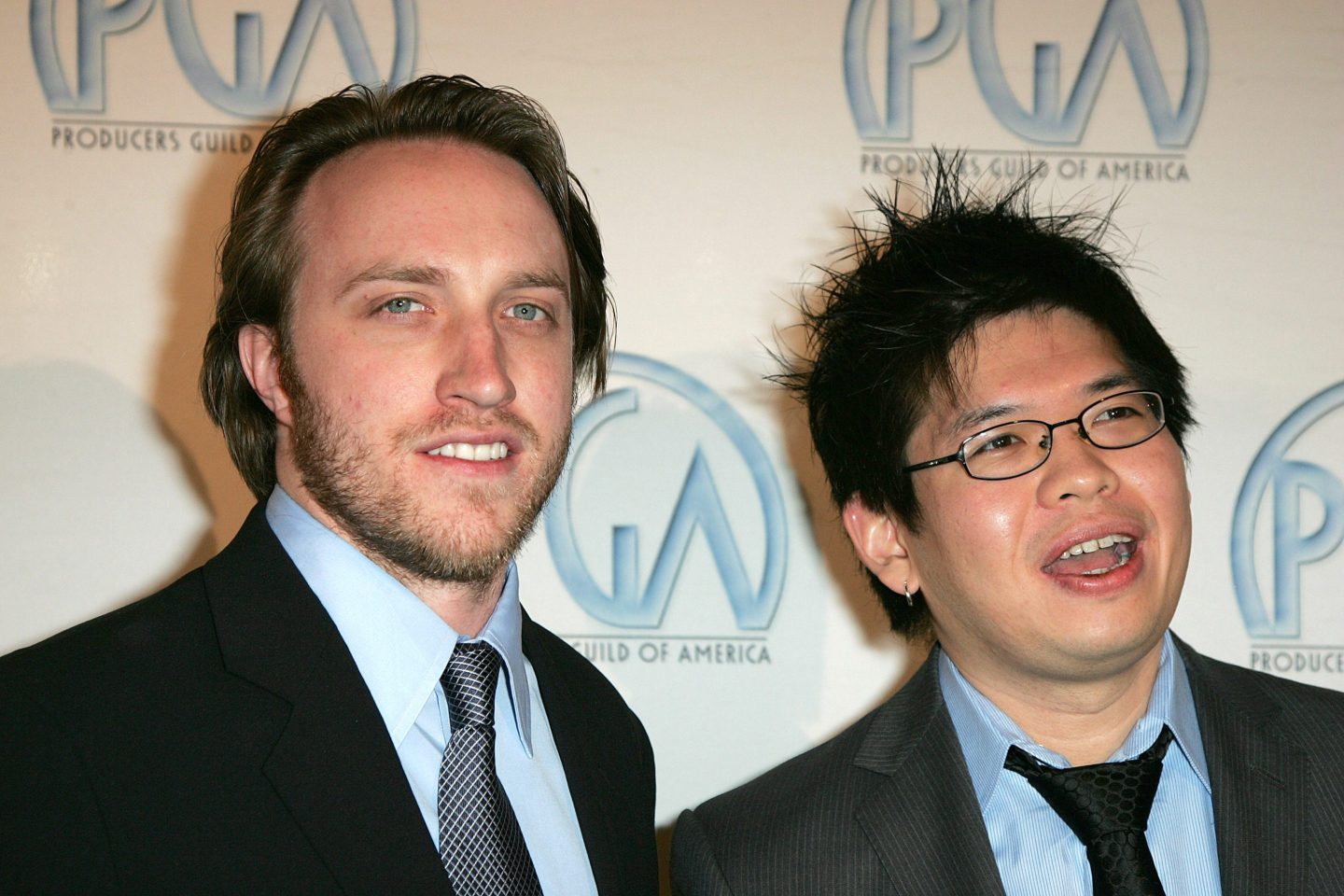
Chad Hurley and Steven Chen wearing suits
SuccessWealth
YouTube’s founders split over $650 million when they sold to Google in 2006—had they held out, they could have taken a slice of $550 billion
By Preston ForeJuly 3, 2026
13 hours ago
Photo: Paris, france
Environmentclimate change
Brutal heatwave in France is killing 2,000 people per week, undertakers are overwhelmed, and health agency says there’s worse to come
By John Leicester and The Associated PressJuly 3, 2026
13 hours ago
Photo: World Cup fans drinking.
EconomyEconomics
On Wall Street, analysts increasingly don’t believe the U.S. government’s ‘misleading’ job numbers
By Jim EdwardsJuly 3, 2026
16 hours ago
U.S. President Donald Trump talks to reporters after signing an executive order dealing with automobile repairs with Environmental Protection Agency Administrator Lee Zeldin in the Oval Office at the White House on June 29, 2026 in Washington, DC.
EconomyFed
Trump is already causing a headache for his new Fed chairman, saying the central bank’s board is ‘hostile’ and ‘doing the wrong thing’
By Eleanor PringleJuly 3, 2026
17 hours ago
A $75 billion valuation, 75 million global customers and on its way to America—Revolut is London’s disruptor extraordinaire
EuropeLetter from London
A $75 billion valuation, 75 million global customers and on its way to America—Revolut is London’s disruptor extraordinaire
By Kamal AhmedJuly 3, 2026
17 hours ago
Man in a black hat and jacket
InvestingSpace Exploration
Elon Musk can’t sell a single SpaceX share for a year—and then all the locks crack open at once
By Amanda GerutJuly 3, 2026
18 hours ago

Most Popular

Egg companies made $1.22 billion in profit off a $6 carton — now they’re buying their way out of a price-fixing case with 53 million donated eggs
Law
Egg companies made $1.22 billion in profit off a $6 carton — now they’re buying their way out of a price-fixing case with 53 million donated eggs
By Wyatte Grantham-Philips and The Associated PressJuly 2, 2026
1 day ago
Meet the Zillennials: The luckiest micro-generation in the workforce, born between 1993 and 1998
AI
Meet the Zillennials: The luckiest micro-generation in the workforce, born between 1993 and 1998
By Nick LichtenbergJuly 3, 2026
21 hours ago
Economists have found an answer to slowing cognitive decline: Avoid retiring early, study finds
Economy
Economists have found an answer to slowing cognitive decline: Avoid retiring early, study finds
By Sasha RogelbergJuly 2, 2026
1 day ago
On Wall Street, analysts increasingly don’t believe the U.S. government’s 'misleading' job numbers
Economy
On Wall Street, analysts increasingly don’t believe the U.S. government’s 'misleading' job numbers
By Jim EdwardsJuly 3, 2026
16 hours ago
$25 billion CEO says one-hour interviews are a waste of time—he puts candidates through six hours of tests and wants them to order wine at lunch
Success
$25 billion CEO says one-hour interviews are a waste of time—he puts candidates through six hours of tests and wants them to order wine at lunch
By Orianna Rosa RoyleJuly 3, 2026
21 hours ago
Current price of oil as of July 2, 2026
Personal Finance
Current price of oil as of July 2, 2026
By Joseph HostetlerJuly 2, 2026
2 days ago

© 2026 Fortune Media IP Limited. All Rights Reserved. Use of this site constitutes acceptance of our Terms of Use and Privacy Policy | CA Notice at Collection and Privacy Notice | Do Not Sell/Share My Personal Information
FORTUNE is a trademark of Fortune Media IP Limited, registered in the U.S. and other countries. FORTUNE may receive compensation for some links to products and services on this website. Offers may be subject to change without notice.