• Home
  • Latest
  • Fortune 500
  • Finance
  • Tech
  • Leadership
  • Lifestyle
  • Rankings
  • Multimedia

Trendingnow

1

Despite having a $165 million net worth, Scarlett Johansson says work-life balance doesn’t exist—and the first step to success is admitting that

2

Microsoft AI chief gives it 18 months—for all white-collar work to be automated by AI

3

The Bezos family just donated $100 million to help achieve one of Mayor Zohran Mamdani’s top campaign promises

1

Despite having a $165 million net worth, Scarlett Johansson says work-life balance doesn’t exist—and the first step to success is admitting that

2

Microsoft AI chief gives it 18 months—for all white-collar work to be automated by AI

3

The Bezos family just donated $100 million to help achieve one of Mayor Zohran Mamdani’s top campaign promises
Commentary

To Lower Health Care Costs, Look to International Innovations

By
Vijay Govindarajan
Vijay Govindarajan
Down Arrow Button Icon
By
Vijay Govindarajan
Vijay Govindarajan
Down Arrow Button Icon
September 10, 2019, 6:00 AM ET

It’s hardly surprising that health care is shaping up to be a central issue of the 2020 U.S. presidential campaign. Despite several plans floated by Democratic candidates, much of the debate still comes down to one question: Who will get stuck with the bill? 

That’s a good question, to be sure, but it misses the most important point. That bill is outrageously high: More than $3.6 trillion in 2018. Instead, the first question lawmakers should be asking is this: Can America provide quality health care for less money?

The answer is yes, and that’s evident by the health care delivery innovations seen in many developing countries. Take India as an example: In 2018, more than 70 million people lived in abject poverty, and much of the state-run health care system is terrible. Yet some privately-owned Indian health care systems are providing services that rivals the quality of care found at the best U.S. hospitals—and for a fraction of the cost.

One of those companies is India’s Narayana Health, a private for-profit hospital system, which also made Fortune’s Change the World list (at no. 33). While it would cost a patient anywhere from $20,000 to $100,000 in a U.S. research hospital, Narayana performs heart surgeries for around $2,100. And its outcomes are excellent, even by U.S. standards. They do it by lowering costs throughout their system. They use generic drugs. They practice telemedicine. They manufacture their own supplies. They train patients’ family members to deliver post-op care. They sterilize and reuse medical devices (like the steel clamp used to hold the heart in place during open-heart surgery).

Narayana Health even provides free or subsidized care to 55% of its patients—and still makes a profit. It might seem that the more subsidized patients the hospital treats, the more money the hospital would be expected to lose. Narayana’s mission to serve the underserved drives cost innovations to high levels, and the resulting ultra-low-cost position boosts profit margins on the paying patients. Consequently, the hospital is financially sustainable despite the charitable care.

Could Narayana’s cost-saving strategies work in the first world? Some could and some are. In fact, Narayana has its own operation in the Grand Cayman, where it built a 105-bed tertiary care hospital in 2014. There, most medical care is priced 60% to 75% below prices charged in the U.S. 

Meanwhile, Narayana’s approach to telemedicine is saving money and lives in rural Mississippi. In India, Narayana’s telemedicine network connects its 24 urban-based specialty hospitals to 800 centers, extending its reach into Indian’s vast and impoverished countryside at very little cost. Telemedicine enables a hub-and-spoke system to efficiently and economically serve patients seeking care, thereby lowering the out-of-pocket expenses (lost wages during time away from work, the cost of travel, and room and board) for the patients in rural areas. In Mississippi, the state with the worst patient-to-physician ratio, a similar network connects 17 rural hospitals and more than 200 health care sites to medical specialists at the University of Mississippi Medical Center in Jackson. The network allows patients to receive expert consultation and care near where they live, saving the high costs that they would pay at specialty hospitals. It also makes it easy to regularly monitor patients with chronic conditions, like diabetes, which can decrease the frequency of emergency room visits.

There are other innovations borrowed from the developing world offered in medicalized urban centers. For instance, Boston-based Iora Health, a primary care provider, depends on a service model that co-founder and CEO Rushika Fernandopulle saw practiced in parts of Africa and the Caribbean. The company uses health coaches rather than doctors to handle the vast majority of patient observation and care, and the highly-trained coaches cost much less than doctors. Iora reports that their primary care focused model has reduced patients’ hospitalization by 40%, and emergency room visits by 20%.

And such innovations born in developing countries also include technological advances. In 2016, Forus Health, a Bengaluru medical startup, won FDA approval for its inexpensive and portable imaging device that scans for cataracts and other eye problems. And, that same year, Forus launched a California-based subsidiary to market its products—another example of health care innovation from a developing country being adopted in the U.S., and bringing down costs.

These companies are showing health care providers can make a profit while providing more access to services for a reduced cost. So it’s time to stop arguing about who pays what, and start slashing that $3.6 trillion bill. And focusing on health care delivery innovations offers a way to do just that.

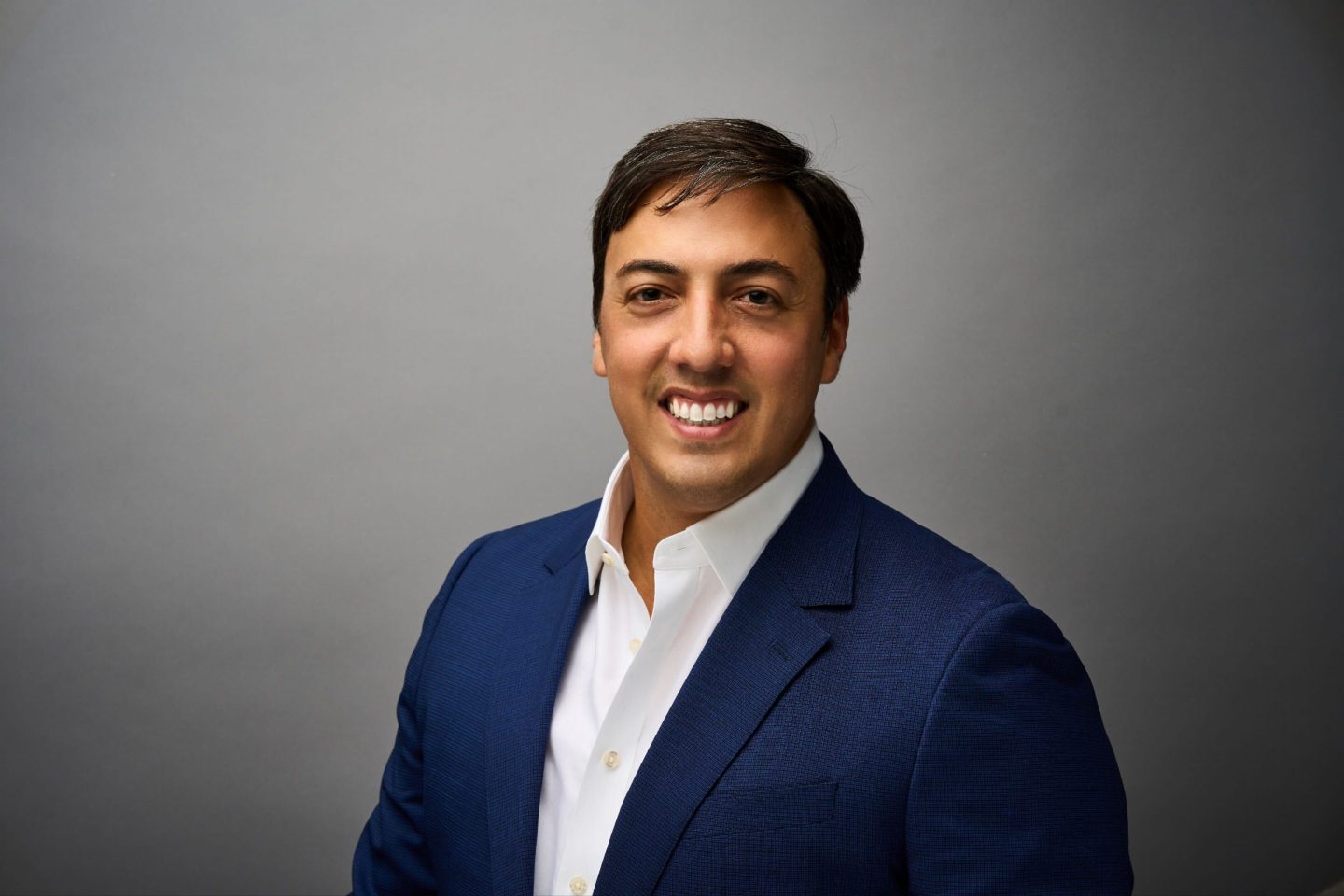
Vijay Govindarajan is the Coxe Distinguished Professor at Dartmouth’s Tuck School of Business and co-author of Reverse Innovation in Health Care: How to Make Value-Based Delivery Work.

More opinion in Fortune:

—We can fix the racial wealth gap by reforming hiring practices
—The trade war’s invisible damage
—If hospitals made efforts to go green, health care costs would go down
—Why won’t the Senate pass the Paycheck Fairness Act?
—Supporting LGBT employees is a patriotic act
Listen to our audio briefing, Fortune 500 Daily.
About the Author
By Vijay Govindarajan
See full bioRight Arrow Button Icon

Latest in Commentary

Finance
Lorem ipsum dolor sit amet, consectetur adipiscing elit, sed do eiusmod tempor incididunt ut labore et dolore magna aliqua. Ut enim ad minim veniam
By Fortune Editors
October 20, 2025
Finance
Lorem ipsum dolor sit amet, consectetur adipiscing elit, sed do eiusmod tempor incididunt ut labore et dolore magna aliqua. Ut enim ad minim veniam
By Fortune Editors
October 20, 2025
Finance
Lorem ipsum dolor sit amet, consectetur adipiscing elit, sed do eiusmod tempor incididunt ut labore et dolore magna aliqua. Ut enim ad minim veniam
By Fortune Editors
October 20, 2025
Finance
Lorem ipsum dolor sit amet, consectetur adipiscing elit, sed do eiusmod tempor incididunt ut labore et dolore magna aliqua. Ut enim ad minim veniam
By Fortune Editors
October 20, 2025
Finance
Lorem ipsum dolor sit amet, consectetur adipiscing elit, sed do eiusmod tempor incididunt ut labore et dolore magna aliqua. Ut enim ad minim veniam
By Fortune Editors
October 20, 2025
Finance
Lorem ipsum dolor sit amet, consectetur adipiscing elit, sed do eiusmod tempor incididunt ut labore et dolore magna aliqua. Ut enim ad minim veniam
By Fortune Editors
October 20, 2025

Most Popular

Finance
Lorem ipsum dolor sit amet, consectetur adipiscing elit, sed do eiusmod tempor incididunt ut labore et dolore magna aliqua. Ut enim ad minim veniam
By Fortune Editors
October 20, 2025
Finance
Lorem ipsum dolor sit amet, consectetur adipiscing elit, sed do eiusmod tempor incididunt ut labore et dolore magna aliqua. Ut enim ad minim veniam
By Fortune Editors
October 20, 2025
Finance
Lorem ipsum dolor sit amet, consectetur adipiscing elit, sed do eiusmod tempor incididunt ut labore et dolore magna aliqua. Ut enim ad minim veniam
By Fortune Editors
October 20, 2025
Finance
Lorem ipsum dolor sit amet, consectetur adipiscing elit, sed do eiusmod tempor incididunt ut labore et dolore magna aliqua. Ut enim ad minim veniam
By Fortune Editors
October 20, 2025
Finance
Lorem ipsum dolor sit amet, consectetur adipiscing elit, sed do eiusmod tempor incididunt ut labore et dolore magna aliqua. Ut enim ad minim veniam
By Fortune Editors
October 20, 2025
Finance
Lorem ipsum dolor sit amet, consectetur adipiscing elit, sed do eiusmod tempor incididunt ut labore et dolore magna aliqua. Ut enim ad minim veniam
By Fortune Editors
October 20, 2025
Fortune Secondary Logo
Rankings
  • 100 Best Companies
  • Fortune 500
  • Global 500
  • Fortune 500 Europe
  • Most Powerful Women
  • World's Most Admired Companies
  • See All Rankings
  • Lists Calendar
Sections
  • Finance
  • Fortune Crypto
  • Features
  • Leadership
  • Health
  • Commentary
  • Success
  • Retail
  • Mpw
  • Tech
  • Lifestyle
  • CEO Initiative
  • Asia
  • Politics
  • Conferences
  • Europe
  • Newsletters
  • Personal Finance
  • Environment
  • Magazine
  • Education
Customer Support
  • Frequently Asked Questions
  • Customer Service Portal
  • Privacy Policy
  • Terms Of Use
  • Single Issues For Purchase
  • International Print
Commercial Services
  • Advertising
  • Fortune Brand Studio
  • Fortune Analytics
  • Fortune Conferences
  • Business Development
  • Group Subscriptions
About Us
  • About Us
  • Press Center
  • Work At Fortune
  • Terms And Conditions
  • Site Map
  • About Us
  • Press Center
  • Work At Fortune
  • Terms And Conditions
  • Site Map
  • Facebook icon
  • Twitter icon
  • LinkedIn icon
  • Instagram icon
  • Pinterest icon

Latest in Commentary

liberman
Commentarystart-ups
We watched social media concentrate. The same thing is happening in AI, only at a deeper layer
By David Liberman and Daniil LibermanMay 16, 2026
7 hours ago
olivier
CommentaryAnthropic
I’ve been studying Big Tech for a long time. What just happened with Anthropic and the Pentagon terrifies me
By Olivier SylvainMay 16, 2026
9 hours ago
lawyer
CommentaryLaw
Would you hire the lawyer who just got sanctioned for using AI?
By Alexandra SmythMay 16, 2026
10 hours ago
greg
Personal FinanceAviation
Mamdani’s New York is coming to tax your private jet. Here’s how to prepare
By Greg RaiffMay 16, 2026
12 hours ago
chase
CommentaryCities
San Francisco has $2 trillion in AI wealth and can’t fix its own city. That’s every city’s problem
By Chase GarbarinoMay 15, 2026
1 day ago
lori
Commentarymental health
I run Valvoline Instant Oil Change and work with young people every day. They’re in crisis—and we all have to try to help
By Lori FleesMay 15, 2026
1 day ago

Most Popular

Despite having a $165 million net worth, Scarlett Johansson says work-life balance doesn’t exist—and the first step to success is admitting that
Success
Despite having a $165 million net worth, Scarlett Johansson says work-life balance doesn’t exist—and the first step to success is admitting that
By Preston ForeMay 13, 2026
3 days ago
Microsoft AI chief gives it 18 months—for all white-collar work to be automated by AI
AI
Microsoft AI chief gives it 18 months—for all white-collar work to be automated by AI
By Jake AngeloMay 16, 2026
8 hours ago
The Bezos family just donated $100 million to help achieve one of Mayor Zohran Mamdani’s top campaign promises
Politics
The Bezos family just donated $100 million to help achieve one of Mayor Zohran Mamdani’s top campaign promises
By Jake AngeloMay 12, 2026
4 days ago
Current price of oil as of May 15, 2026
Personal Finance
Current price of oil as of May 15, 2026
By Joseph HostetlerMay 15, 2026
1 day ago
Meet the 20-year-old CEO who launched a company in high school to solve Gen Z's entry-level job crisis
Future of Work
Meet the 20-year-old CEO who launched a company in high school to solve Gen Z's entry-level job crisis
By Jake AngeloMay 16, 2026
12 hours ago
‘You’re not a hero, you’re a liability’: Shark Tank’s Kevin O’Leary warns Gen Z founders to stop glorifying hustle culture
Future of Work
‘You’re not a hero, you’re a liability’: Shark Tank’s Kevin O’Leary warns Gen Z founders to stop glorifying hustle culture
By Jacqueline MunisMay 16, 2026
8 hours ago

© 2026 Fortune Media IP Limited. All Rights Reserved. Use of this site constitutes acceptance of our Terms of Use and Privacy Policy | CA Notice at Collection and Privacy Notice | Do Not Sell/Share My Personal Information
FORTUNE is a trademark of Fortune Media IP Limited, registered in the U.S. and other countries. FORTUNE may receive compensation for some links to products and services on this website. Offers may be subject to change without notice.