• Home
  • Latest
  • Fortune 500
  • Finance
  • Tech
  • Leadership
  • Lifestyle
  • Rankings
  • Multimedia
Taiwan

How the Re-Election of Taiwan’s President, a China Critic, Could Reshape Asia’s Economic Landscape

Grady McGregor
By
Grady McGregor
Grady McGregor
Down Arrow Button Icon
Grady McGregor
By
Grady McGregor
Grady McGregor
Down Arrow Button Icon
January 13, 2020, 8:30 AM ET
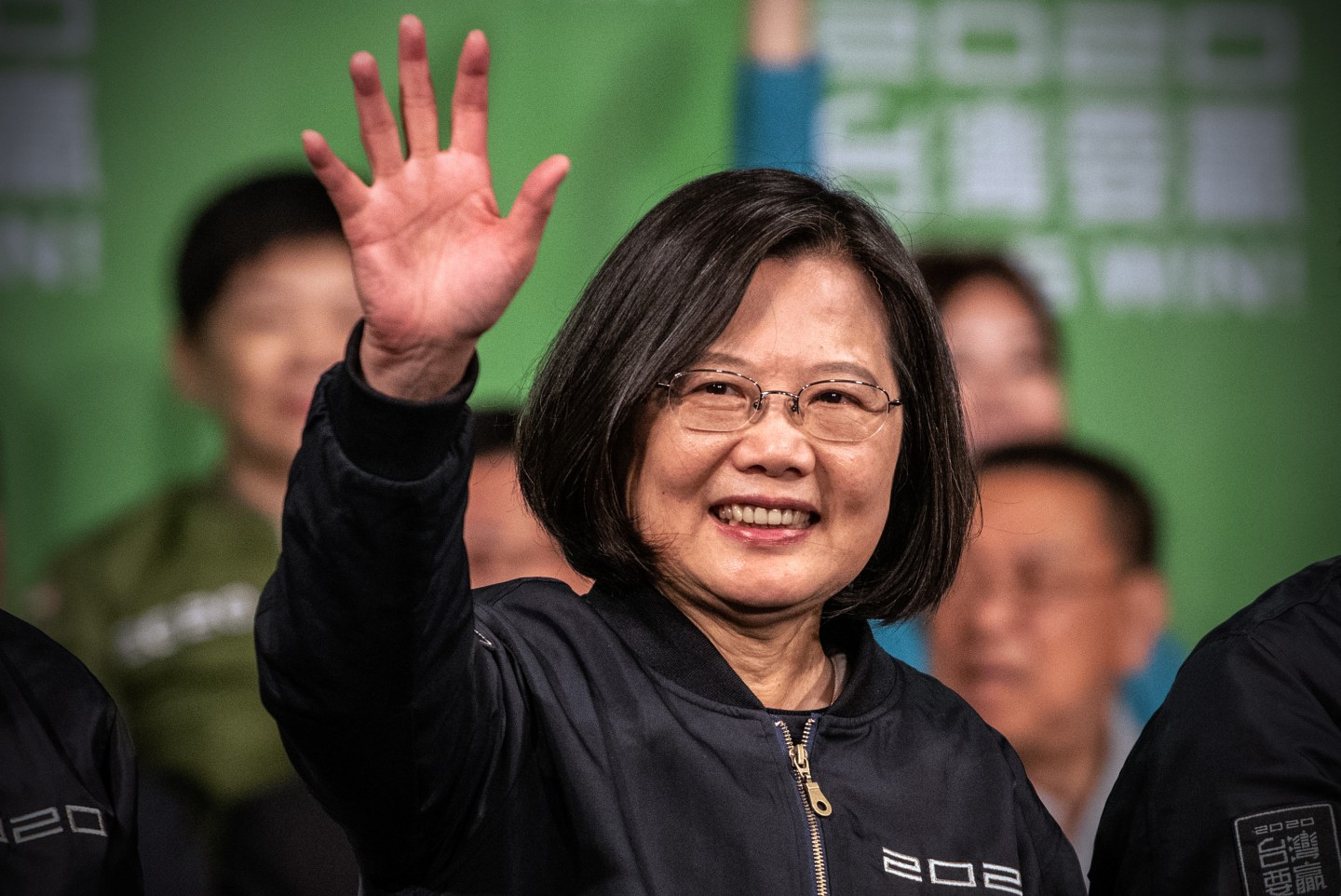
TAIPEI, TAIWAN - JANUARY 11: Tsai Ing-Wen waves after addressing supporters following her re-election as President of Taiwan on January 11, 2020 in Taipei, Taiwan. Tsai Ing-Wen of the Democratic Progressive Party (DPP) has been re-elected as Taiwans president as voters displayed their disapproval of Beijing by opting for a leader who had campaigned on defending their country from China. (Photo by Carl Court/Getty Images)
TAIPEI, TAIWAN - JANUARY 11: Tsai Ing-Wen waves after addressing supporters following her re-election as President of Taiwan on January 11, 2020 in Taipei, Taiwan. Tsai Ing-Wen of the Democratic Progressive Party (DPP) has been re-elected as Taiwans president as voters displayed their disapproval of Beijing by opting for a leader who had campaigned on defending their country from China. (Photo by Carl Court/Getty Images)Carl Court—Getty Images

Over the weekend, millions in Taiwan opted to reject Mainland China’s economic and political vision for its future, setting the self-governed island on an economic course that looks set to be veering away from Beijing as fast as possible.

Incumbent president Tsai Ing-wen of Taiwan’s Democratic Progressive Party (DPP) took 58% of Taiwan’s vote against challenger Han Kuo-Yu of the Kuomintang Party (KMT) on Saturday. Tsai, a former law professor with a technocratic reputation, has led Taiwan for the last four years, promoting progressive social policies, such as marriage equality; led the country through unpopular safety net reforms; and has been a notable critic of Beijing.

Han, on the other hand, is a populist mayor of Kaohsiung, a city in the south of Taiwan. Han, who had only recently emerged as a political star after winning in a city traditionally heavily tilted towards the opposing party, ran on a platform of growing Taiwan’s economy through closer economic integration with Beijing.

Tsai’s landslide victory had once been thought a long shot, as she was deeply unpopular in Taiwan for much of her first term. A speech from Chinese President Xi Jinping early last year, where he posed the idea of exercising greater political control over Taiwan, and months of intense protests against China’s government in Hong Kong rejuvenated her campaign, however, as voters sought to reject Beijing’s encroaching influence over the island.

While the election result largely revolved around politics, it also sets forth a distinct economic path for Taiwan’s future. In lieu of relative economic safety through partnership with Beijing, the election may push Taiwan into closer alignment with other countries across Asia and the U.S.

Carrots and sticks

In dealing with Taiwan, Beijing has employed a system of doling out preferential treatments and economic benefits to certain groups or political parties it supports (such as the KMT), and punishments to those who oppose their actions (such as Tsai and the DPP).

Syaru Shirly Lin, a world politics professor at the University of Virginia who focuses on China and Taiwan, calls this a “carrot and stick strategy” used to promote behaviors and policies more friendly to Beijing.

It is a strategy that has only ramped up in recent years.

“Under Xi Jinping, the benefits have been greater” for those friendly to Beijing, said Lin. “On the stick side, there is no doubt that both the military pressure as well as business pressure is greater than ever before to conform to Beijing’s goals.”

While tourism isn’t one of Taiwan’s most important economic sectors, it illustrates this ‘carrot and stick’ method for dealing with Taiwan.

In 2008, under the leadership of President Tsai’s predecessor Ma Ying-Jeou, a KMT member and Beijing-friendly politician, Taiwan and China agreed for the first time to allow mainland Chinese tourists to visit Taiwan.

After taking in almost a million Chinese tourists in 2009, Taiwan took in over four million mainland tourists at its peak in 2015, making up almost half of total arrivals, according to Taiwan’s Tourism Bureau. At the time, this meant that China was responsible for a large portion of the over $14 billion in annual revenue brought in from tourism.

“Tourism was expanded rapidly during the Ma administration, and you could say this was a weapon meant to support the KMT and build reliance on Chinese tourism,” said Ian Rowen, a professor of geography and urban planning at Nanyang Technological University in Singapore. “That was an incentive-based approach that’s shifted to a punitive approach under Tsai.”

In the lead up to Tsai’s re-election over the last year, China significantly curtailed group tours and banned individual mainlanders from visiting the island altogether. China’s State Council said in October the moves were aimed at deterring the DPP’s “independence” activities, which “destroyed the foundation and conditions” for travel.

For Lin, the possibilities and potential perils in Taiwan’s relationship with China come down to the mainland’s economic power.

“The gravitational force of the Chinese market and the economic benefits that Beijing provides is more attractive than ever before,” said Lin. “[But] being reliant on one particular customer, which is also politically driven to subsume you, is very dangerous.”

Broader implications

China and Taiwan’s economies have long been deeply intertwined and many of Taiwan’s largest companies, such as the electronics manufacturer Foxconn, have relied on Chinese factories to build their products. In the last several years, China has also become an increasingly important market to sell to, especially for companies like Taiwan Semiconductor Manufacturing Company (TSMC) which sells semiconductor chips to China’s booming electronics market.  
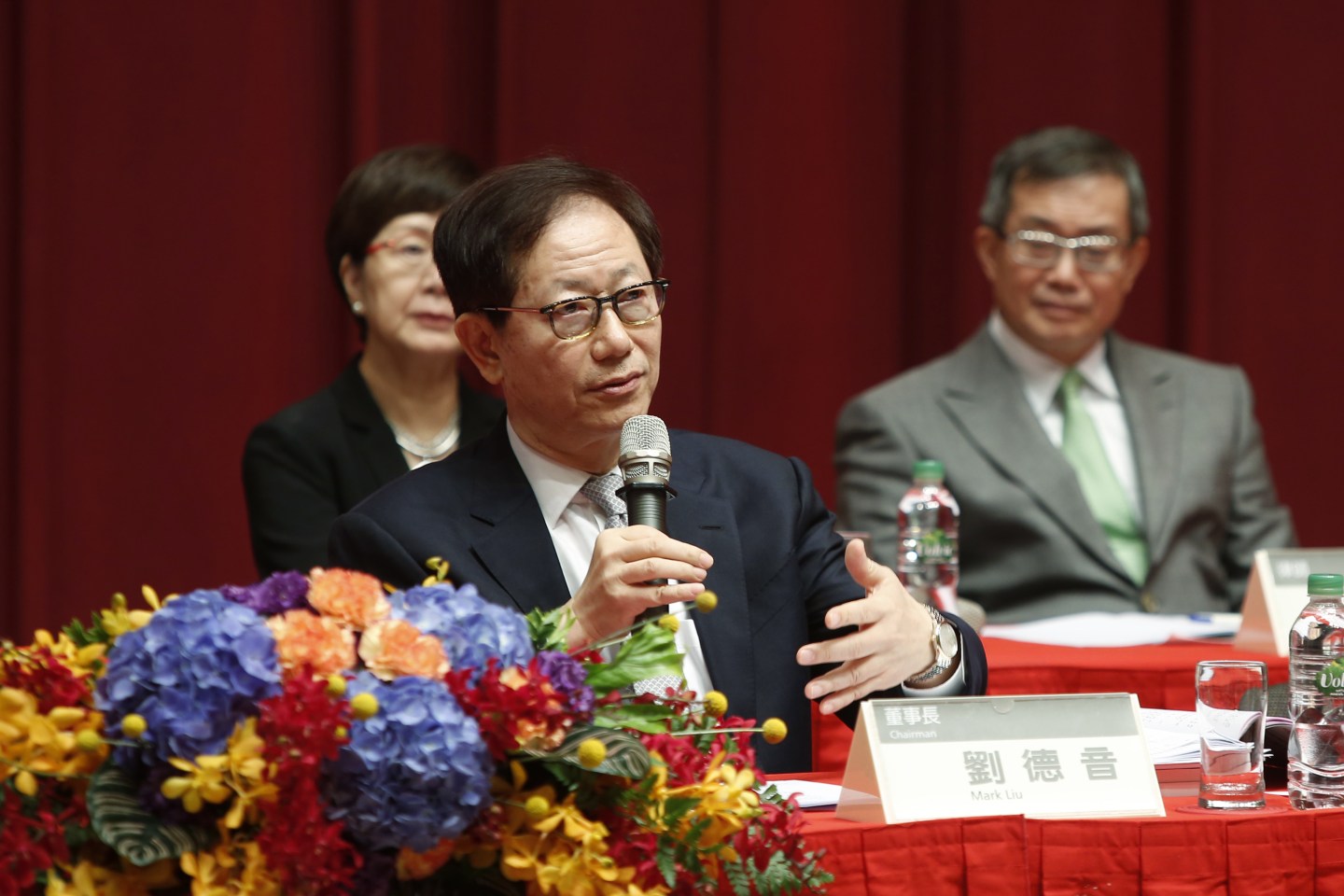
Mark Liu, chairman of Taiwan Semiconductor Manufacturing Co. (TSMC), speaks during the company's annual general meeting in Hsinchu, Taiwan, on June 5, 2019. Liu didn't reaffirm a previous forecast that the company will grow slightly in 2019, saying uncertainty was too great at the moment. Photographer: Ashley Pon/Bloomberg via Getty Images
Mark Liu, chairman of Taiwan Semiconductor Manufacturing Co. (TSMC), speaks during the company’s annual general meeting in Hsinchu, Taiwan, on June 5, 2019. TSMC has been stuck in the midst of a nearly two-year long trade war between the U.S. and China.
Ashley Pon—Bloomberg via Getty Images

With Taiwan’s defiance of Beijing now cemented for at least the next four years, the question becomes one of whether and how this economic relationship will continue.

Alex Tan, professor of political science and international relations at the University of Canterbury, specializes in Sino-Taiwanese relations. He says that even if Beijing is thinking about further punishing Taipei, it might be running out of options.

“The question for Taiwan is, will China use the next four years to squeeze their economic space even more?” said Tan. “I’m not sure there is more to be done in the domestic space, but probably more in the international space.”

Under Tsai Ing-Wen in the last few years, Taiwan has pursued a new ‘southbound’ strategy, attempting to develop closer economic and educational ties with countries in south and southeast Asia.

According to Lin, this was in part brought on by a desire to diversify away from China’s economy, but also was due to the fact that Chinese suppliers simply do not supply the same low-cost manufacturing that they used to.

At the same time, however, China has embarked on its own investment scheme through the Belt and Road Initiative (BRI) across Asia and beyond, with investments and projects that far exceed what Taiwan could offer. One battlefield, Tan suggests, might therefore take place in regional trade agreements and other mechanisms as China leverages its power to thwart Taiwan.

However, in the end the U.S. will likely have the most say over the degree to which Taiwan can exercise economic autonomy from China.

The U.S., Taiwan’s most powerful ally and military protector, has been engaged in a nearly two-year long trade war with China that has come to involve Taiwan. Many Taiwanese companies trade with both the U.S. and China, and the U.S. government reportedly asked TSMC to stop selling chips to Chinese tech giant Huawei earlier this year.

TSMC, however, continues to supply Chinese tech firms with chips that they desperately need, and a number of Taiwanese and Chinese businesses remain committed to cross-strait ventures, Tan said. This means that however tense relations are between President Tsai and Beijing, economic relations will likely largely stay intact unless the U.S.-China trade further deteriorates.

Still, the difficulty in doing business in both Taiwan and China is only increasing, which may be a signal towards the rising fragmentation of the world’s economy.

“It’s getting harder and harder to operate a business that moves between Taiwan and China, absolutely,” said Lin. “Businesses walk this impossible tight rope, they are at the front line of this China dilemma… Taiwan is a litmus test for different actors all around the world.”

More must-read stories from Fortune:

—Geopolitical events just don’t bounce oil prices like they used to
—As investors shrug off Iran concerns, analysts find the complacency ‘disconcerting’
—Greenpeace ranks China’s tech giants on renewable energy
—Laws meant to close down tax havens and shut loopholes could have opposite effect
—7 M&As that defined a decade of dealmaking and reshaped the economy
Catch up with Data Sheet, Fortune’s daily digest on the business of tech.

Sign up for the Fortune Features email list so you don’t miss our biggest features, exclusive interviews, and investigations.
About the Author
Grady McGregor
By Grady McGregor
LinkedIn iconTwitter icon
See full bioRight Arrow Button Icon

Latest in

Finance
Lorem ipsum dolor sit amet, consectetur adipiscing elit, sed do eiusmod tempor incididunt ut labore et dolore magna aliqua. Ut enim ad minim veniam
By Fortune Editors
October 20, 2025
Finance
Lorem ipsum dolor sit amet, consectetur adipiscing elit, sed do eiusmod tempor incididunt ut labore et dolore magna aliqua. Ut enim ad minim veniam
By Fortune Editors
October 20, 2025
Finance
Lorem ipsum dolor sit amet, consectetur adipiscing elit, sed do eiusmod tempor incididunt ut labore et dolore magna aliqua. Ut enim ad minim veniam
By Fortune Editors
October 20, 2025
Finance
Lorem ipsum dolor sit amet, consectetur adipiscing elit, sed do eiusmod tempor incididunt ut labore et dolore magna aliqua. Ut enim ad minim veniam
By Fortune Editors
October 20, 2025
Finance
Lorem ipsum dolor sit amet, consectetur adipiscing elit, sed do eiusmod tempor incididunt ut labore et dolore magna aliqua. Ut enim ad minim veniam
By Fortune Editors
October 20, 2025
Finance
Lorem ipsum dolor sit amet, consectetur adipiscing elit, sed do eiusmod tempor incididunt ut labore et dolore magna aliqua. Ut enim ad minim veniam
By Fortune Editors
October 20, 2025

Most Popular

Finance
Lorem ipsum dolor sit amet, consectetur adipiscing elit, sed do eiusmod tempor incididunt ut labore et dolore magna aliqua. Ut enim ad minim veniam
By Fortune Editors
October 20, 2025
Finance
Lorem ipsum dolor sit amet, consectetur adipiscing elit, sed do eiusmod tempor incididunt ut labore et dolore magna aliqua. Ut enim ad minim veniam
By Fortune Editors
October 20, 2025
Finance
Lorem ipsum dolor sit amet, consectetur adipiscing elit, sed do eiusmod tempor incididunt ut labore et dolore magna aliqua. Ut enim ad minim veniam
By Fortune Editors
October 20, 2025
Finance
Lorem ipsum dolor sit amet, consectetur adipiscing elit, sed do eiusmod tempor incididunt ut labore et dolore magna aliqua. Ut enim ad minim veniam
By Fortune Editors
October 20, 2025
Finance
Lorem ipsum dolor sit amet, consectetur adipiscing elit, sed do eiusmod tempor incididunt ut labore et dolore magna aliqua. Ut enim ad minim veniam
By Fortune Editors
October 20, 2025
Finance
Lorem ipsum dolor sit amet, consectetur adipiscing elit, sed do eiusmod tempor incididunt ut labore et dolore magna aliqua. Ut enim ad minim veniam
By Fortune Editors
October 20, 2025
Fortune Secondary Logo
Rankings
  • 100 Best Companies
  • Fortune 500
  • Global 500
  • Fortune 500 Europe
  • Most Powerful Women
  • Future 50
  • World’s Most Admired Companies
  • See All Rankings
Sections
  • Finance
  • Fortune Crypto
  • Features
  • Leadership
  • Health
  • Commentary
  • Success
  • Retail
  • Mpw
  • Tech
  • Lifestyle
  • CEO Initiative
  • Asia
  • Politics
  • Conferences
  • Europe
  • Newsletters
  • Personal Finance
  • Environment
  • Magazine
  • Education
Customer Support
  • Frequently Asked Questions
  • Customer Service Portal
  • Privacy Policy
  • Terms Of Use
  • Single Issues For Purchase
  • International Print
Commercial Services
  • Advertising
  • Fortune Brand Studio
  • Fortune Analytics
  • Fortune Conferences
  • Business Development
  • Group Subscriptions
About Us
  • About Us
  • Editorial Calendar
  • Press Center
  • Work At Fortune
  • Diversity And Inclusion
  • Terms And Conditions
  • Site Map
  • About Us
  • Editorial Calendar
  • Press Center
  • Work At Fortune
  • Diversity And Inclusion
  • Terms And Conditions
  • Site Map
  • Facebook icon
  • Twitter icon
  • LinkedIn icon
  • Instagram icon
  • Pinterest icon

Latest in

trump
Economynational debt
Trump wants to add nearly $7 trillion to the $39 trillion national debt with his new military budget, watchdog warns
By Nick LichtenbergApril 2, 2026
1 hour ago
paul krugman
EconomyIran
Paul Krugman smacks down Trump speech with argument that $4 gas is ‘less than half’ of the Hormuz hit. Here’s what he’s talking about
By Jake AngeloApril 2, 2026
2 hours ago
messi
CommentaryFlorida
Apollo and FC Barcelona just proved legacy markets are losing their grip on business
By Mike SimasApril 2, 2026
2 hours ago
Image showing multiple computer screens with code.
CybersecuritySecurity
Mercor, a $10 billion AI startup that works with companies including OpenAI and Anthropic, confirms major data breach
By Beatrice NolanApril 2, 2026
3 hours ago
picture of the word "solana"
CryptoCryptocurrency
Latest crypto hack sees thieves make off with $280 million from Solana DeFi platform Drift
By Carlos GarciaApril 2, 2026
3 hours ago
kroenke
CommentarySoccer
Why American billionaires are abandoning Wall Street for English soccer clubs
By Andrés MartinezApril 2, 2026
4 hours ago

Most Popular

Gen Z fled San Francisco for Texas and Florida. Now they’re turning ‘welcomer cities’ into the next big tech towns
Real Estate
Gen Z fled San Francisco for Texas and Florida. Now they’re turning ‘welcomer cities’ into the next big tech towns
By Fortune EditorsApril 2, 2026
14 hours ago
Current price of gold as of April 1, 2026
Personal Finance
Current price of gold as of April 1, 2026
By Fortune EditorsApril 1, 2026
1 day ago
Two-thirds of parents say their adult Gen Z kids still rely on them financially  for support—even though it's putting them under strain
Success
Two-thirds of parents say their adult Gen Z kids still rely on them financially  for support—even though it's putting them under strain
By Fortune EditorsMarch 31, 2026
2 days ago
Current price of oil as of April 1, 2026
Personal Finance
Current price of oil as of April 1, 2026
By Fortune EditorsApril 1, 2026
1 day ago
The tax escape map: Billionaires are bolting for Florida from the West Coast and taking billions in tax revenue with them
Real Estate
The tax escape map: Billionaires are bolting for Florida from the West Coast and taking billions in tax revenue with them
By Fortune EditorsApril 2, 2026
15 hours ago
Deutsche Bank asked AI if it’s true that AI will solve the economy’s inflation problems. The robots answered
Economy
Deutsche Bank asked AI if it’s true that AI will solve the economy’s inflation problems. The robots answered
By Fortune EditorsApril 1, 2026
1 day ago

© 2026 Fortune Media IP Limited. All Rights Reserved. Use of this site constitutes acceptance of our Terms of Use and Privacy Policy | CA Notice at Collection and Privacy Notice | Do Not Sell/Share My Personal Information
FORTUNE is a trademark of Fortune Media IP Limited, registered in the U.S. and other countries. FORTUNE may receive compensation for some links to products and services on this website. Offers may be subject to change without notice.